
A chandelier for the living room—crystal, black, or modern? How to choose one and at what height to hang it
A chandelier is the only light fixture capable of defining an entire interior on its own. When chosen well, it becomes the starting point for every conversation about the living room. When chosen poorly, it hangs over you like a constant reminder for the next decade. In this guide, we’ll walk you through all the decisions one by one: style (crystal, black, classic, or modern), the number of arms and size, the height above the floor and table, and finally—the bulbs that will bring out the chandelier’s full brilliance.

Table of Contents
- Chandelier or ceiling light – when to choose which?
- Chandelier styles: from crystal to minimalism
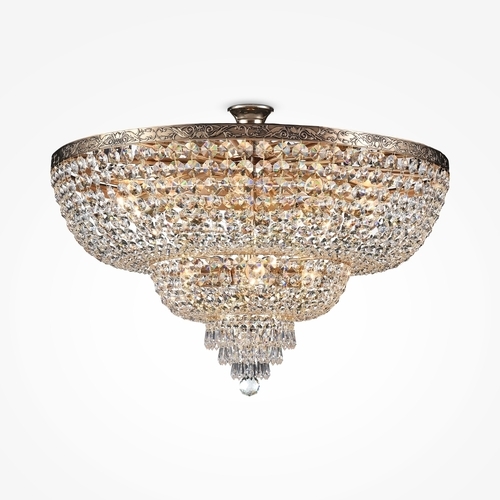
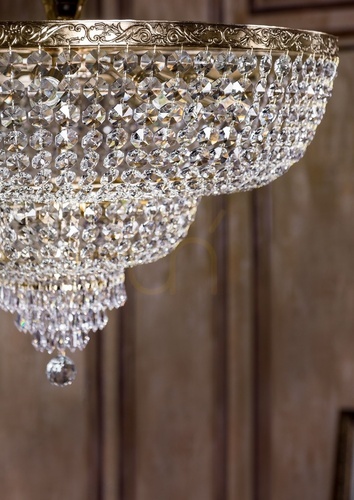
- Crystal chandelier – how to style a classic for today
- Black chandelier – a bold accent for modern interiors
- How to choose the size and number of arms?
- At what height should you hang a chandelier?
- What kind of light bulbs for a chandelier?
- Installation and maintenance
- Integrated LED or incandescent bulbs? CRI and dimming
- Summary
Chandelier or ceiling light – when to choose which?
The first decision is straightforward: ceiling height. A chandelier needs space—if hung too low, it overwhelms the room and you’ll keep bumping your head on it. Practical guidelines:
- under 2.6 m – a ceiling light or ceiling-mounted chandelier (so-called. semi-flush) with a height of up to 30–40 cm,
- 2.6–2.9 m – classic chandeliers of moderate height. Most living rooms fall into this category,
- over 2.9 m – complete freedom, ranging from expansive crystal structures to cascading installations in the voids above the stairs.
A ceiling light has one more advantage: even, shadowless light. That’s why modern, decorative ceiling lights —such as LED rings, geometric designs, and crystal-effect shades—are a good choice for living rooms with lower ceilings. They retain the look of a chandelier without taking up any space overhead.
Chandelier styles: from crystal to minimalism
Four main styles to help narrow down your choices:
- Crystal and glamour – classic icicles and contemporary, geometric interpretations. They bring out the maximum brilliance from every bulb. However, they require space and a calm background.
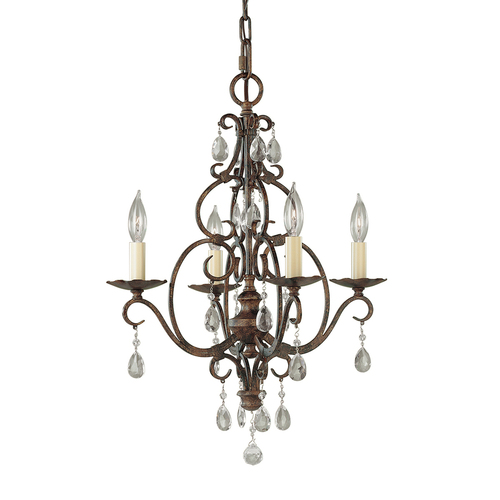
- Classic multi-armed candlestick-style designs made of patinated metal, brass, or with lampshades. Perfect for elegant, traditional living rooms and dining rooms.
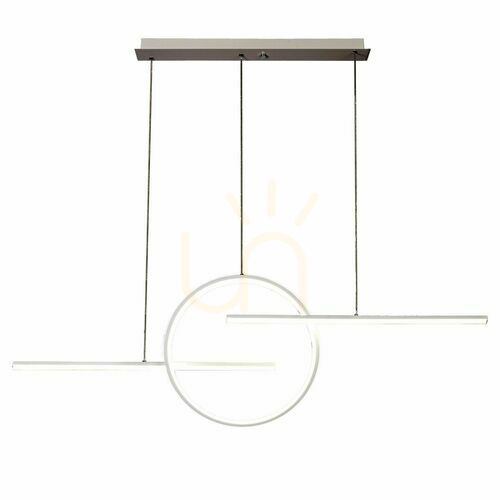
- Modern and minimalist —clean lines, black, white, brushed brass, often featuring integrated LED lighting in the form of rings or lines. Perfect for modern and Japandi interiors.
- Natural and boho —rattan, wood, fabric. The chandelier becomes a soft sculpture, and the light takes on a lace-like pattern of shadows.
A practical rule: a chandelier should complement two or three interior elements (the color of the metal door handles, the mirror frame, the table legs), but it doesn’t have to be from the same era as the furniture. A crystal chandelier set against raw concrete creates a striking contrast that defines the interior.
A crystal chandelier—how to wear a classic in a modern way
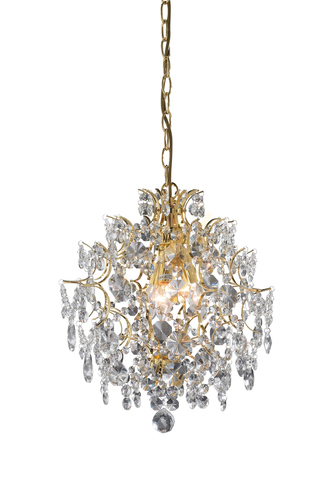
Crystal chandeliers are experiencing a renaissance—but in a new form. Instead of opulent palace-style designs, contemporary models emphasize compact forms and clean lines: gold or black frames in which the crystals sparkle like jewelry rather than like a costume. What should you look for?
- Cut and material: crystal glass with distinct facets refracts light into rainbow-colored reflections—it is this effect that distinguishes crystal from ordinary glass pendants. Acrylic is lighter and cheaper, but it doesn’t “shine” as well.
- Background: a crystal chandelier looks best against a plain ceiling and subdued walls. It pales in comparison to bold patterns.
- Spotlight, not diffused light: crystal comes alive with exposed, shiny light sources (candle bulbs, clear filament bulbs). Dull light bulbs take all the magic out of it.
- Less is more: a smaller, densely "draped" model often provides more sparkle than a sprawling chandelier with sparsely arranged crystals.


A black chandelier – a bold accent in modern interiors
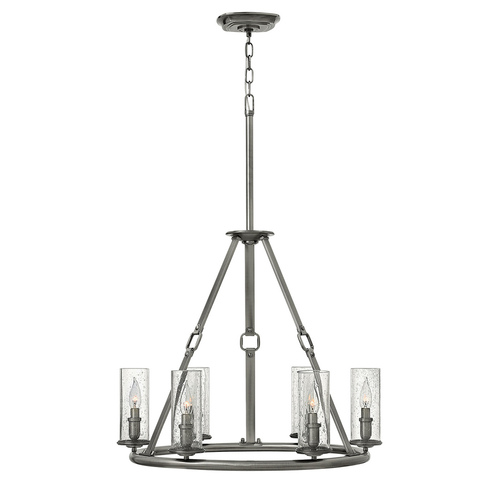
A black chandelier is the surest way to add a graphic accent to the ceiling. Black brings order to a composition, frames the space, and complements nearly any color palette—from white and wood to the bottle-green walls. It works well in three variations: black metal + glass (loft), black shades on a multi-arm frame (modern classic), and black with gold-lined shades, which add warmth and elegance.
One caveat: the black, solid form visually takes up more space than a light-colored one. In a small living room, choose black chandeliers with an openwork, wire-frame design —they stand out against the ceiling like a sketch, without overwhelming the space.


How do you choose the size and number of arms?
The simplest and surprisingly effective formula designers use for determining the diameter of a chandelier:
(room length in meters + room width in meters) × 8 = chandelier diameter in centimeters.
For a 5 × 4 m living room, this comes out to (5+4) × 8 = 72 cm —and indeed, in such a space, a chandelier with a diameter of 70–80 cm looks proportionate. Other guidelines:
- Number of arms and power: each arm typically uses an E14 bulb with a luminous flux of 250–470 lm. A 20-square-meter living room needs about. 4,000–6,000 lumens total, so a 5-arm chandelier (approx. 2,000–2,400 lm) must be supplemented by wall sconces or floor lamps—and that’s normal. A chandelier should never be the only light source in the living room.
- Above the table in the dining area, treat the chandelier as if it were a table lamp: diameter approx. half the width of the tabletop, hung lower (more on that in a moment).
- In long, narrow rooms, two smaller, identical chandeliers placed symmetrically work better than one large one.
At what height should a chandelier be hung?
Three situations, three rules:
- Above open floor space (center of the living room): the bottom edge of the chandelier should be at least 200–210 cm above the floor —high enough so that no one risks bumping into it. In practice: with a ceiling height of 270 cm, there is 60–70 cm left for the light fixture, which explains the popularity of ceiling-mounted models.
- Above the table: the bottom edge should be 70–80 cm above the tabletop —a chandelier can hang low because no one walks underneath it. This is the best spot for striking, expansive chandeliers in rooms with lower ceilings.
- In the empty space above the stairs or a mezzanine: hang a cascading chandelier so that its center is at eye level for someone standing on the upper level—this way, it can be admired from both floors.
Most chandeliers have an adjustable drop (chain or cord). When purchasing, check the adjustment range in both directions, especially the minimum total height.
What kind of light bulbs should you use for a chandelier?
Light bulbs can transform the same chandelier beyond recognition:
- Color temperature: 2700 K for the living room—a warm white in which crystal, brass, and wood look their most elegant. Avoid mixing colors between the arms.
- Shape: for chandeliers with exposed light sources— candle-shaped or spherical filament bulbs with a clear glass shade. For models with lampshades, the shape is up to you, but the size matters (usually E14).
- Dimmability: a chandelier with 5–8 light points practically begs for a dimmer—full power for family gatherings, 30% for an evening movie. Check for the "dimmable" label on the bulbs and choose a dimmer suitable for LEDs.
- Power with care: for a multi-arm chandelier, 4–5 W LED bulbs (approx. 470 lm each) are sufficient. Stronger light sources in exposed fixtures can become glaring.
Installation and maintenance
Chandeliers weigh anywhere from 2 to over a dozen kilograms— the hook or ceiling mount must be anchored into the ceiling structure, not just the drywall itself. For heavier models (crystals!), secure them to the structural ceiling or to a dedicated reinforcement in the suspended ceiling—plasterboard profiles alone are not designed to support heavy point loads. Always disconnect the power before working on the connections, and if in doubt, leave it to an electrician.
Maintenance is easier than the legend suggests: dust from the crystals can be removed with a microfiber cloth dampened with water and a little window cleaner, panel by panel, once or twice a year. When giving the unit a thorough cleaning, the crystals on most models can be removed (take a photo of their layout with your phone beforehand—it will come in handy when putting them back).
Integrated LED or incandescent bulbs? CRI and dimming
Before buying, it’s worth deciding on one issue that catalogs don’t mention: replaceable or integrated light source?
- A chandelier for incandescent bulbs (E14/E27) – you can replace the light source whenever you want: choose the color, wattage, and dimmability, and after years of use, simply screw in a new bulb. For exposed light fixtures, choose decorative filament bulbs with a warm 2700 K color temperature.
- Chandelier with integrated LEDs – sleeker and often brighter, but when the LED module fails after several years, the entire fixture (or the hard-to-find controller) usually needs to be replaced. When buying this model, check the stated lifespan (e.g. L70) and parts availability.
Regardless of your choice, pay attention to two comfort parameters:
- CRI ≥ 90 – in the living room, where we look at faces, wood, and fabrics, color accuracy makes a difference,
- dimming – a 5–8-light chandelier practically begs for a dimmer (full power for meetings, 20–30% for a movie). The light sources must be dimmable, and the dimmer must be compatible with the LEDs (trailing-edge), otherwise the light will flicker.
Summary
Choosing a chandelier comes down to four decisions: a style that matches the interior, a diameter based on the formula (room length + width) × 8, a height of 200+ cm above the floor (or 70–80 cm above the table), and warm 2700 K bulbs—filament bulbs where they’re visible, with a dimmer where the living room comes alive in the evenings. Leave the rest to your heart: in the Chandeliers category, you'll find over a thousand styles, ranging from crystal classics to sleek, modern black designs.
Victoria


Maybe you will be interested in products from these categories?
Chandeliers, Pendant Lights
Tags & Blog Categories