Lighting poles and masts are the supporting structures of outdoor lighting — from low garden poles, through street and park columns, to tall masts that floodlight squares and industrial sites. We bring both solutions together in one place because, although they're often confused, they answer different needs. This guide helps you quickly work out what you're really after.
Put simply: a pole lights along a line (a road, path or car park), while a mast floodlights a large area from a single high point. Answer the question "line or area?" and the right category is settled.
Lighting poles
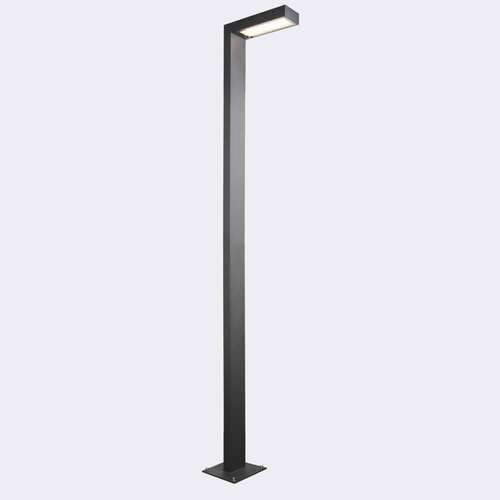
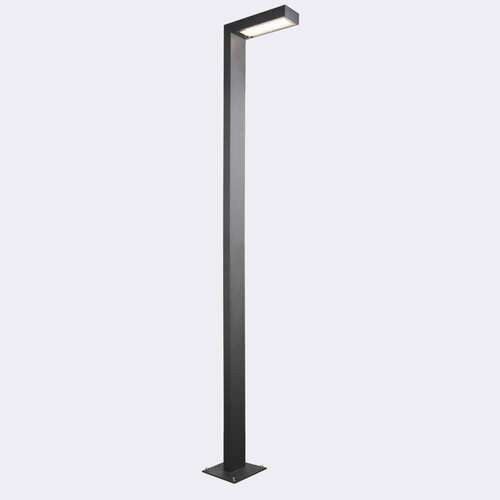
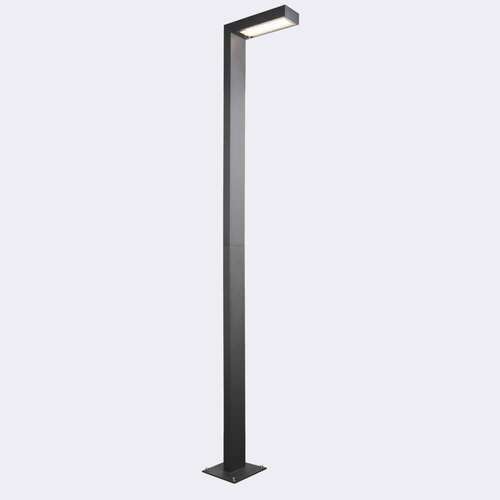
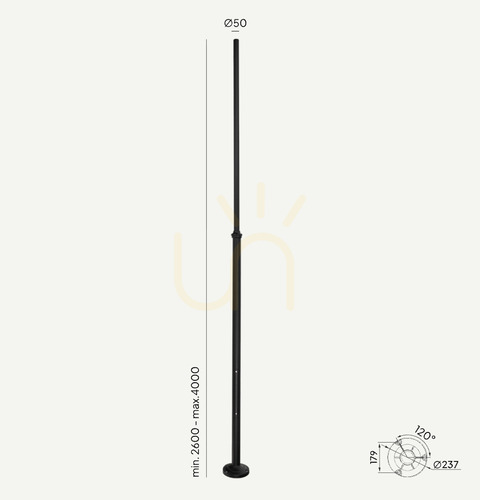
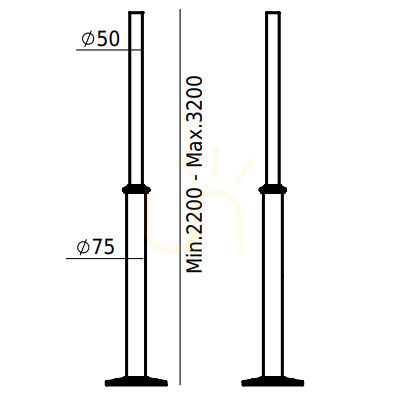
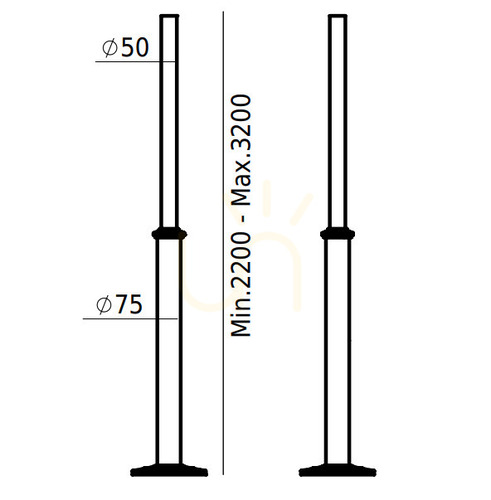
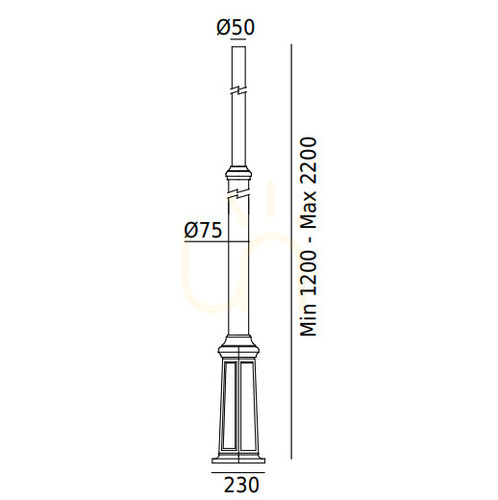
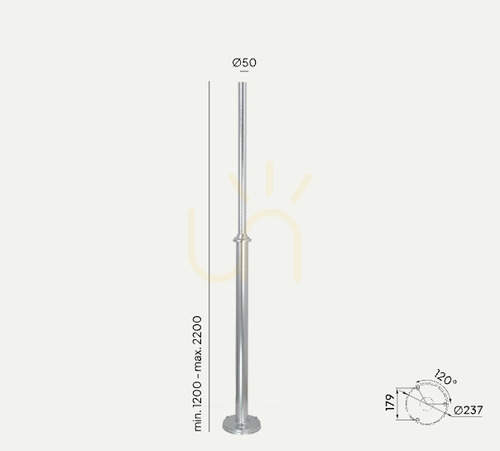
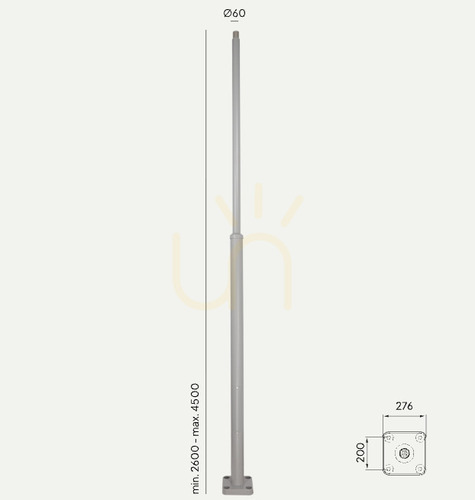
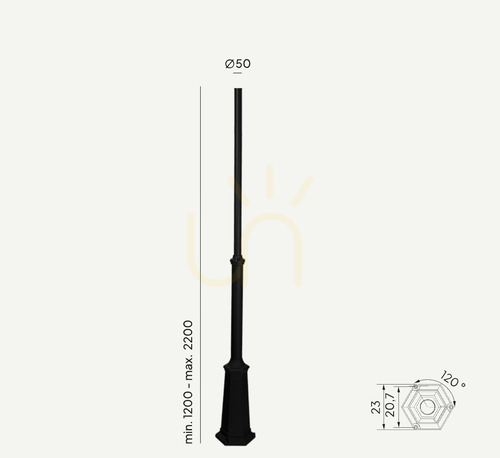
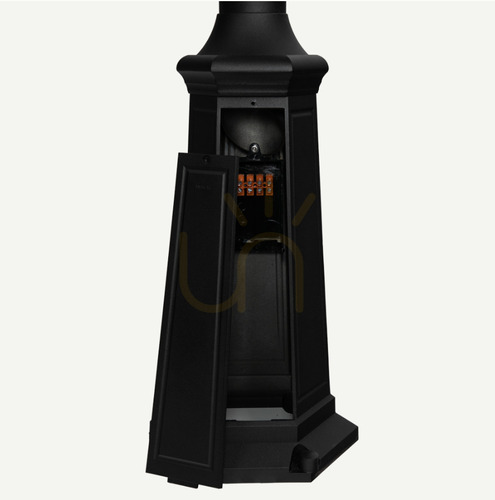
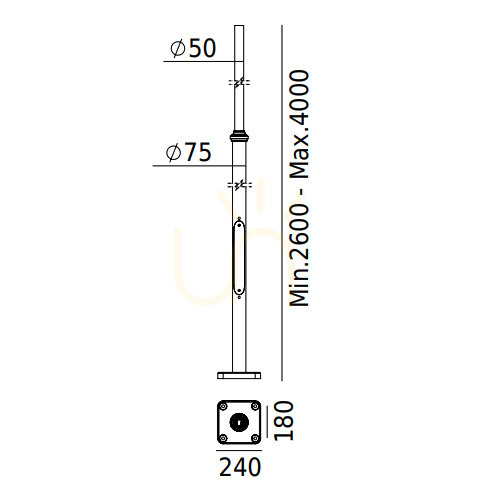
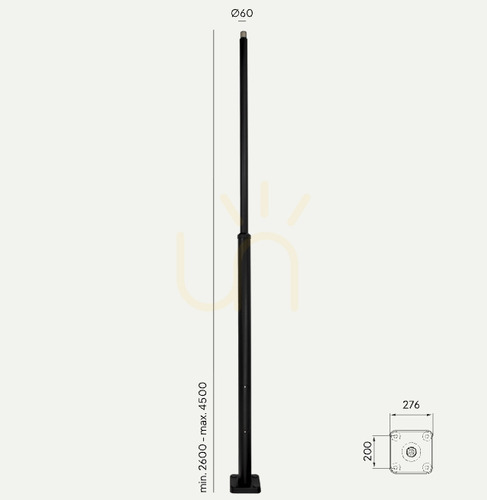
Lighting poles and lamp posts are the usual choice for gardens, housing estates, car parks and streets. They carry a single luminaire at 2.6 to 6 m and are set in a rhythm along a route. Available in steel (hot-dip galvanised) and aluminium, as garden, park and street types — ready for LED, post-top or on a bracket.
-
When a pole — garden, avenue, driveway, patio, estate street, car park.
-
Typical height — 2.6–3 m for gardens, 4–4.5 m for paths and driveways, 6 m for streets.
Lighting masts
Lighting masts are tall, fixed structures that evenly floodlight large, open areas from one point. On a shared head (crown) they carry several floodlights, so one mast replaces a dozen luminaires — fewer foundations, less cabling.
-
When a mast — square, large car park, sports pitch, industrial or logistics site, traffic node.
-
Typical height — from 6–8 m to 12 m and above, depending on the size of the area.
Note: these are fixed masts on a foundation, not portable masts with a generator or battery.
Pole or mast — the quick comparison
FeaturePoleMast
Light distributionlinear (along the route)point (all around)
Number of luminairesusually 1several on the crown
Height2.6–6 m6–12 m and above
Typical placegarden, street, car parksquare, pitch, industrial site
Material, height and foundation
Two materials dominate both categories: hot-dip galvanised steel (strongest, in the widest height range) and aluminium (lighter, corrosion-resistant, elegant). Low garden poles are often dug in; taller poles and masts sit on a pre-cast foundation with an anchor cage. For roadside and tall structures, EN 40 and the wind-load class apply.
Where they work
-
Gardens and patios — low, decorative poles.
-
Estates, streets, car parks — park and street columns.
-
Squares, pitches, industrial sites — lighting masts.
Frequently asked questions
How does a lighting pole differ from a mast?
A pole usually carries one luminaire and lights a road or path along a line. A mast is taller, carries several floodlights on one head and floodlights a large area from a single point.
What should I choose for a garden?
For gardens, paths and driveways, lighting poles at 2.6–4.5 m are the right fit.
What should I choose to light a square or pitch?
For large, open areas, lighting masts with several floodlights on the crown work better.
Which material is more durable?
Hot-dip galvanised steel is the toughest, while aluminium resists corrosion best and looks smarter in a garden. Both, well protected, last for many years.
Know what you're after? Head to lighting poles or lighting masts and narrow the range with the height and material filters.