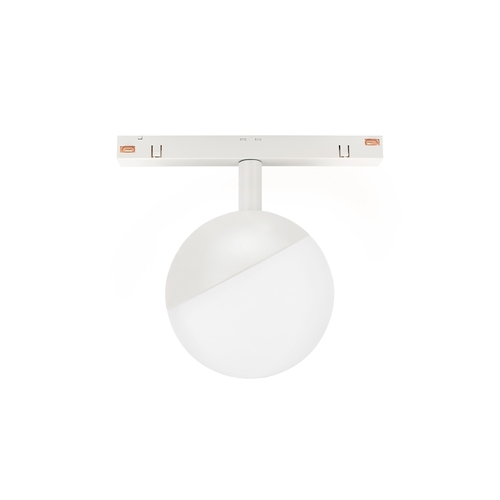
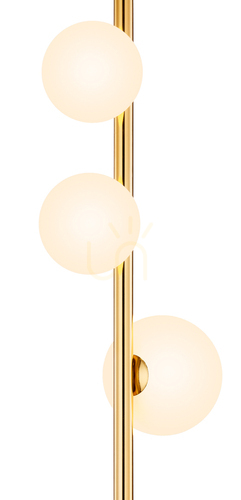
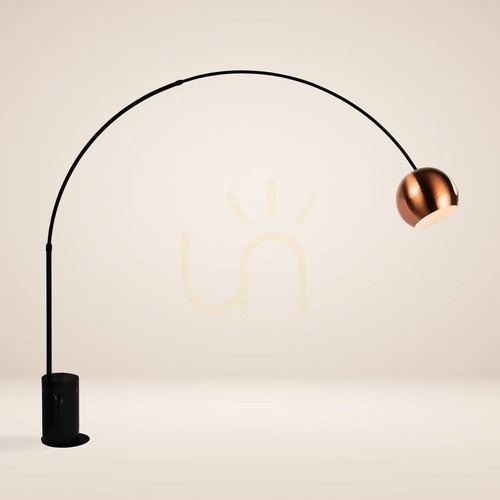
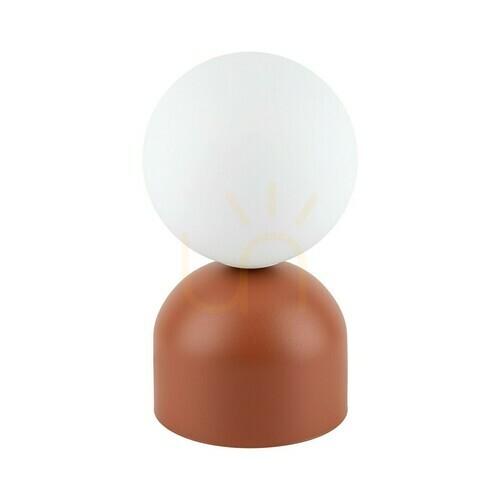
A sphere is the least complicated shape a shade can be, which is probably why globe lights have outlived every lighting trend of the last century. There is no front, no back and no correct angle, so a globe never looks wrongly hung. Put one over a round table and it simply belongs there.
This section gathers globe lights for indoors: pendants over dining tables and kitchen islands, flush and semi-flush ceiling fittings for low rooms, multi-globe chandeliers, table and floor lamps, wall lights, and bathroom-rated fittings. Sizing is where most people come unstuck — a 40 cm sphere that looks elegant in a photograph of a bright open-plan room can swallow a small sitting room whole.
What a globe light actually is
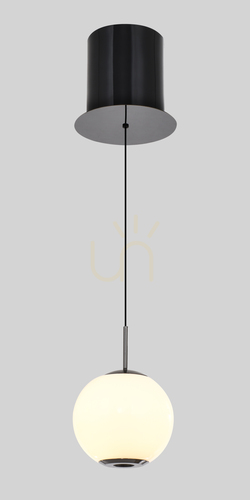
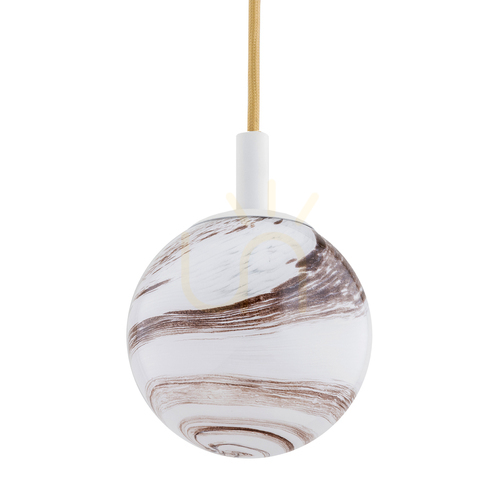
A globe light is any fitting whose shade forms a complete sphere with the lamp sitting inside it. The sphere is usually glass — opal, milk white, frosted, smoked, amber or clear — and occasionally acrylic, ceramic or woven rattan. Because the shade wraps the source in every direction, a globe throws light outwards rather than down in a cone, which makes it excellent ambient lighting and poor task lighting.
Types of globe light
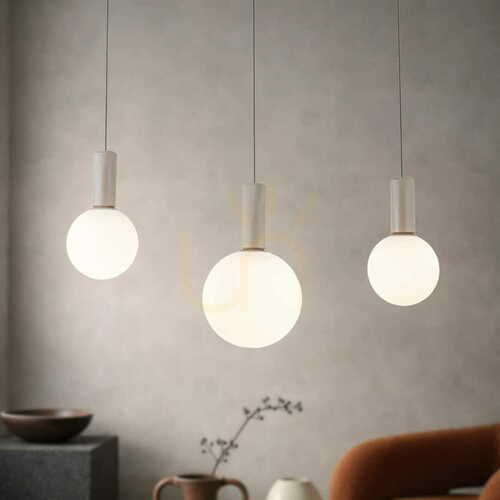
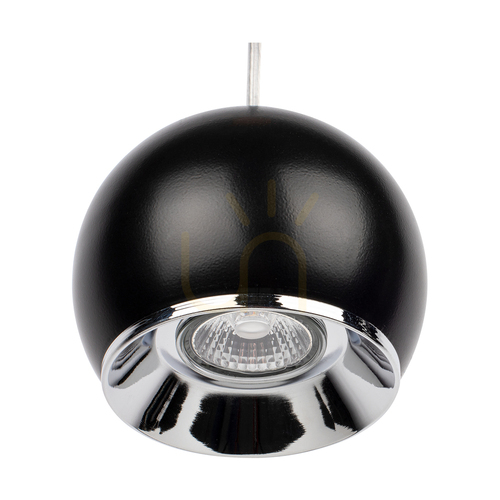
Globe pendant lights
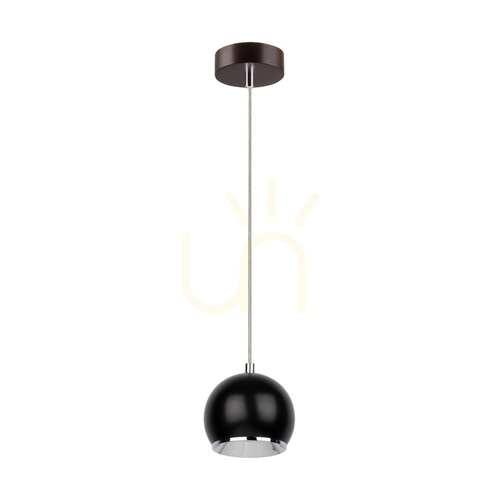
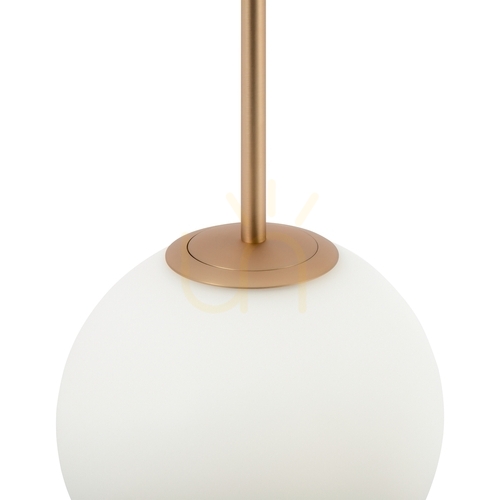
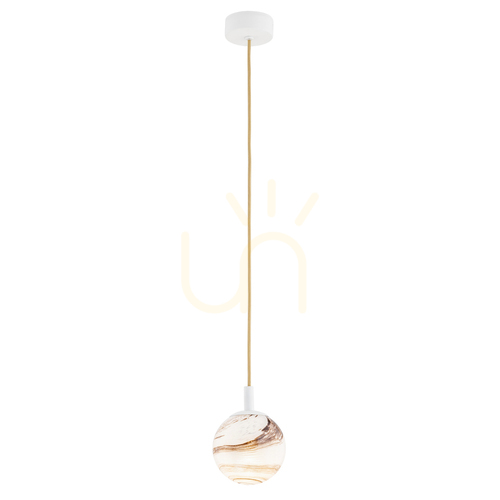
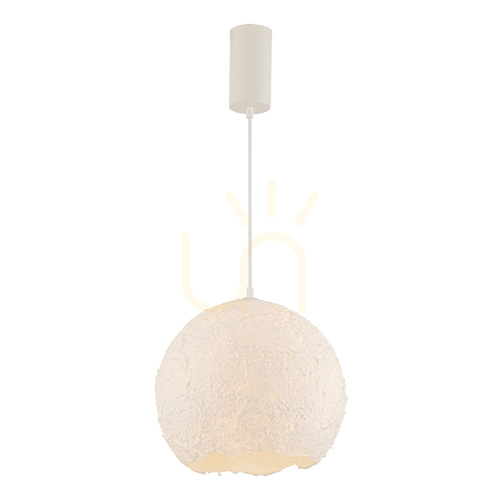
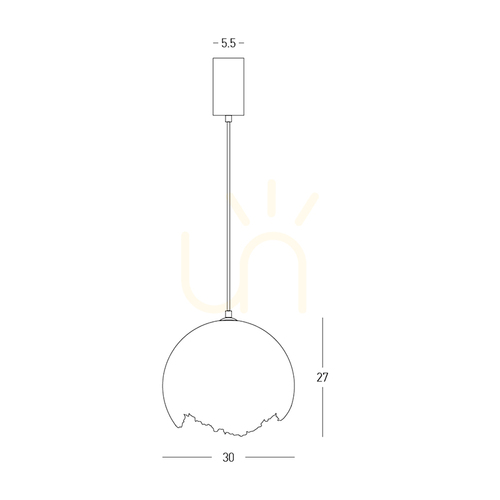
The most common form by a distance. A single sphere on flex, cable or a rigid rod, normally E27 or E14, hung over a table, an island, a bedside table or a narrow hallway. Flex versions shorten at the ceiling rose; rod versions come in fixed segments, so check the maximum and minimum drop before you order rather than after.
Globe ceiling lights and flush fittings
A sphere fixed straight to the ceiling with no drop at all. This is the answer for a room with a 2.4 m ceiling, and for hallways, landings, wardrobes and children's rooms where anything hanging will eventually be hit by a door or a football. Flush globes usually have one flattened face so they can sit against the ceiling plate.
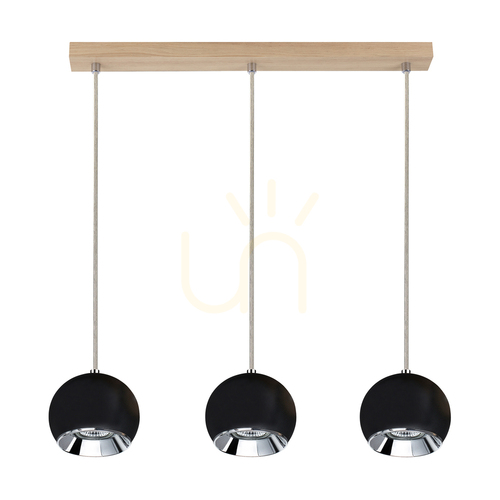
Globe chandeliers and multi-globe fittings
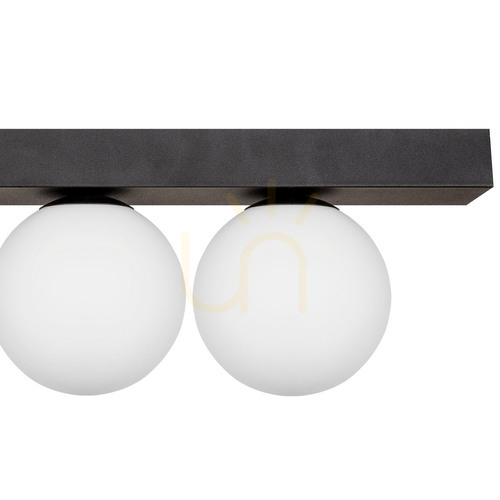
Several spheres on one frame: in a line on a horizontal bar over a long table, scattered at staggered drops like a cloud, or splayed out on arms in the sputnik style. Multi-light frames are often split across two circuits, so an eight-globe fitting wired 4+4 can be run at half brightness — worth looking for.
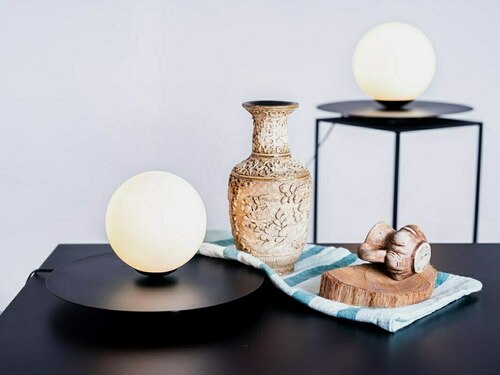
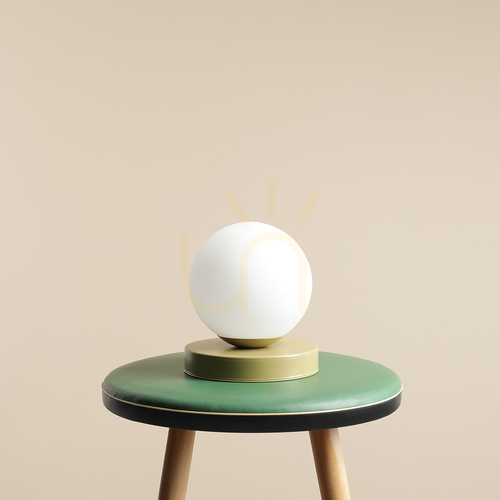
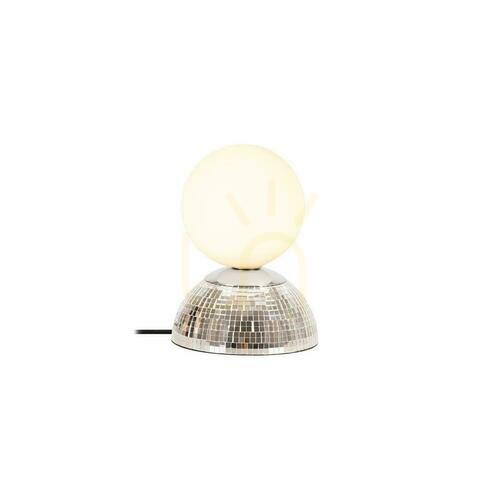
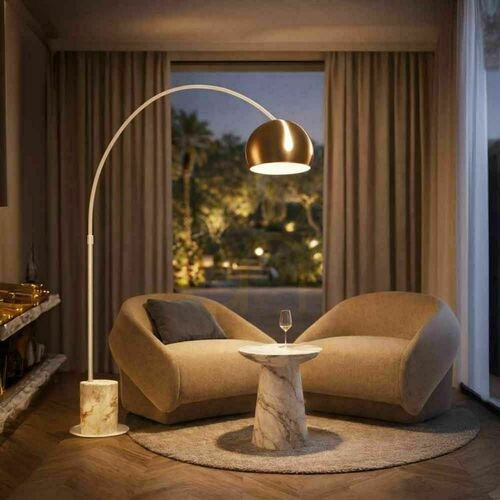
Globe table lamps and floor lamps
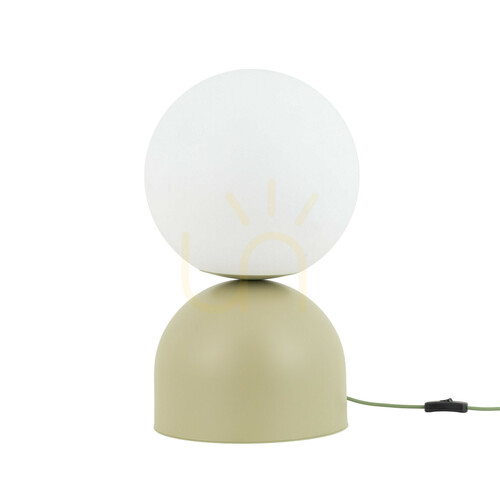
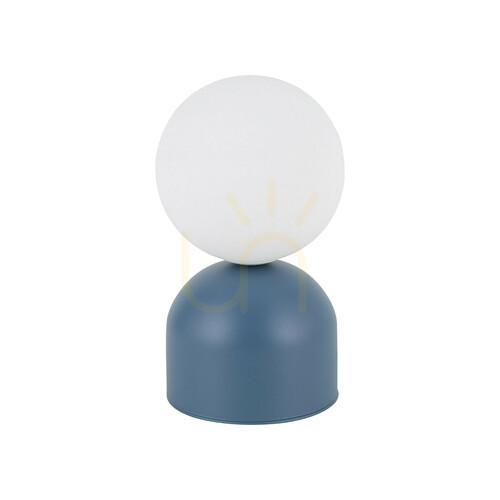
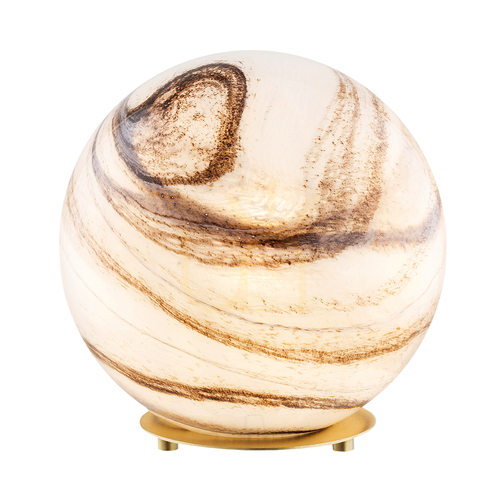
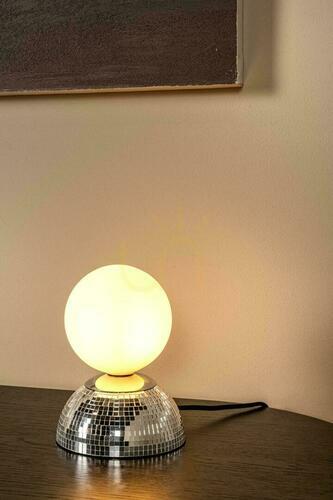
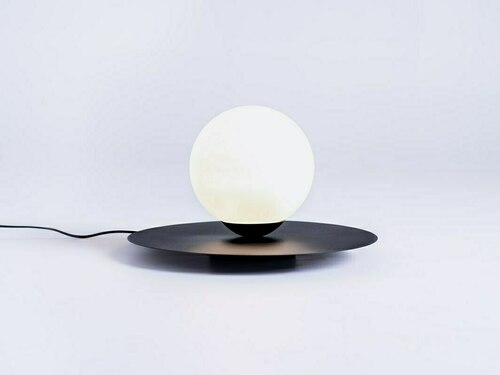
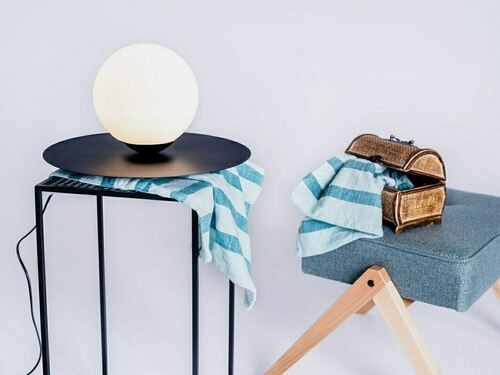
A sphere on a base, or a sphere resting straight on the floor. A 15–25 cm globe table lamp works beside a bed or on a sideboard; a 30–40 cm floor globe reads as soft corner light in a living room. Rechargeable cordless versions have become common and move happily between a windowsill and a dinner table.
Globe wall lights
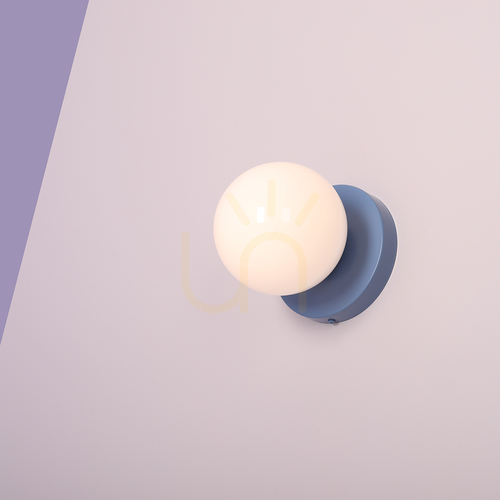
A sphere on a short arm or half-recessed into the wall plate. A bathroom classic either side of a mirror, and equally good used as a pair beside a bed instead of bedside lamps.
Choosing the diameter
Globe diameter against room and position
| Diameter |
Works best |
Notes |
| 12–15 cm |
wall lights, bedside lamps, clustered sets |
usually G9 or E14; only a small lamp will fit inside |
| 20 cm |
hallway, cloakroom, single pendant over a breakfast bar |
the safe choice when you are unsure about scale |
| 25 cm |
four-seat dining table, kitchen, bedroom |
the most versatile size for an E27 fitting |
| 30 cm |
living room, six-seat table, stairwell |
becomes the focal point of the room, needs space around it |
| 40 cm and up |
double-height rooms, open plan, over a stairwell |
heavy; check the ceiling fixing and the available drop |
Over a dining table the working rule is a shade roughly one third of the table width. A standard 90 cm table takes a 25–30 cm globe comfortably. Over a 200 cm table three smaller globes beat one large one: they spread light along the whole surface and nobody ends up talking around a shade.
Glass finishes and what each one does
How the glass changes the light
| Glass |
Quality of light |
Lamp visible? |
Best for |
| Opal / milk |
even, soft, no hard shadows |
hidden completely |
general room lighting, bedrooms, nurseries |
| Frosted / satin |
diffused with a brighter core |
outline visible |
living and dining rooms, period interiors |
| Smoked / grey |
subdued, atmospheric, noticeably dimmer |
clearly visible |
lounge corners, bars, dark schemes |
| Amber |
warm and golden, tints everything |
clearly visible |
retro and industrial rooms, hospitality |
| Clear |
sharp, sparkling, glare if unshielded |
fully exposed |
decorative filament lamps on a dimmer only |
One rule carries most of the weight here: clear and smoked glass demands a good-looking lamp. A plain frosted bulb inside a clear sphere looks like an unfinished job. Inside opal glass the opposite is true — nothing of the lamp is visible, so only its colour and output matter.
Metal finishes
The ceiling plate, suspension and shade ring are usually the only metal on the whole fitting, and they are what fixes its style. Matt black is the safest and quietly disappears against a ceiling. Brass and gold warm up opal glass and sit well with oak and walnut. Chrome and satin nickel read cool and modern alongside greys. White genuinely vanishes on a white ceiling. Copper and antique bronze suit older houses and patinate over time. If the room already has one metal on handles, taps or sockets, match the light to that rather than to the walls.
Caps, lamps and what will fit inside
-
E27 — the standard large screw cap, used in globes from about 20 cm upwards. The widest choice of lamps and the easiest to replace.
-
E14 — small screw cap, found in 12–20 cm globes and in multi-light chandeliers.
-
G9 — a short capsule on two pins, standard in compact decorative globes and wall lights because it fits where a screw lamp will not.
-
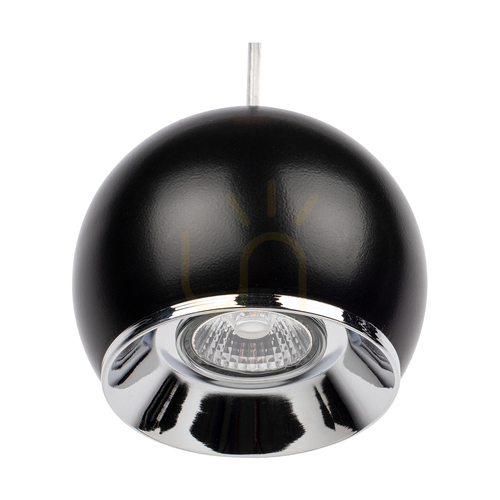
Integrated LED — a module built in permanently. Very even output and a slim body, but when the module reaches the end of its life the whole fitting is replaced.
On a fitting supplied without a lamp, the wattage printed in the specification is the maximum per lampholder. It is a ceiling not to exceed, not a statement of how bright the light will be.
Globe bulbs: G80, G95 and G125
Where the glass is clear or smoked, the usual choice is a globe-shaped lamp, coded G plus its diameter in millimetres: G80 at 8 cm, G95 at 9.5 cm and G125 at 12.5 cm. A sphere inside a sphere looks superb, but two things need checking first — that the lamp clears the inside of the shade, and that it will physically pass through the shade opening. A G125 will not go into a 20 cm globe with a narrow neck. Behind opal glass a plain A60 does exactly the same job.
Colour temperature, output and dimming
For a home, choose 2700 K warm white in living rooms and bedrooms, or 3000 K where you want a little more crispness, typically a kitchen. Leave 4000 K for garages and utility rooms; behind opal glass, neutral white turns clinical very quickly.
Brightness is measured in lumens, not watts. A single pendant with an 800–1000 lm lamp is comfortable over a dining table, but the same fitting alone will not light a 20 m² living room — that needs roughly 2000–3000 lm spread over several fittings. Opal glass absorbs part of the output, so slightly less light reaches the room than the lamp packaging suggests.
Dimming changes a globe more than it changes any other fitting: turned down, a warm sphere stops being a ceiling light and becomes part of the evening. The lamp has to be marked dimmable and the dimmer has to be a trailing-edge type rated for LED loads. On integrated-LED fittings, check that the driver supports dimming at all — a standard wall dimmer will not make a non-dimmable driver behave.
Hanging height
Over a dining table, the bottom of the shade wants to sit 70–85 cm above the table top. Lower and it blocks eye contact, higher and it stops defining the table. Large globes hang towards the top of that range, small ones lower.
The same rule applies over a kitchen island, but people stand at an island, so 80 cm gives better clearance than 70. Anywhere you walk underneath, keep the bottom of the fitting at least 210 cm above the floor — which is why a room with a 2.4 m ceiling is usually better served by a flush globe or a short drop no wider than 25 cm. On a staircase, measure from the nearest tread, never from the landing.
Arranging more than one
-
A row over a long table — three identical globes, evenly spaced, all at the same height. Calm and almost impossible to get wrong.
-
Mixed diameters in a group — say 15, 20 and 30 cm hung close together. Always an odd number, and always with one clearly dominant sphere.
-
A pair over an island — two globes on the centre line, each set in about a quarter of the island's length from its end.
Bathrooms and damp rooms
In a bathroom the IP rating is not a detail. An ordinary indoor fitting is IP20 and may only be used outside the zones. Above a basin or near a bath you need at least IP44, which is protection against splashing from any direction. Globes have a real advantage here: the sealed shade keeps steam off the lamp, and a smooth sphere collects no dust in folds or pleats. Check that the manufacturer states IP44 for the complete fitting, not only for the glass.
Fitting and cleaning
A 30 cm glass sphere can weigh several kilograms, so a hook screwed into plasterboard is not enough — it needs a proper anchor or a fixing into the joist. Handle the shade with a cloth while you fit it: finger grease bakes onto hot glass and stays there.
Cleaning is where the shape earns its keep. There are no ribs, grooves or pleats. Switch the circuit off, let the glass cool, wipe with a microfibre cloth dampened with water and a drop of washing-up liquid, then buff dry. Avoid cream cleaners and anything abrasive — on frosted glass they leave permanent dull streaks. Once a year it is worth unscrewing the shade and cleaning the inside, which is where dust actually settles.
Frequently asked questions
Are globe lights still in style?
The sphere never really goes out of fashion because it does not belong to one style. What changes is everything around it — a few years ago brass and smoked glass dominated, now there is more white, more opal and slimmer, near-invisible suspensions. The shade itself stays the same.
What size globe pendant should I hang over a dining table?
About one third of the table's width. For a typical 80–90 cm table that means a 25–30 cm globe. On a table narrower than 80 cm, stay at 20 cm so nobody catches their head on it standing up.
How many globe pendants over a table?
One up to about 120 cm of table length, two at 160–180 cm, three above 200 cm. Space them symmetrically about the centre of the table, not the centre of the room.
Do I need a globe bulb in a globe light?
Only when the glass is clear or smoked and the lamp is on show. Behind opal glass a standard A60 performs identically and usually costs less.
Can a globe light go in a bathroom?
Yes, provided its IP rating suits the zone it will sit in. Outside the zones IP20 is enough; near a basin or bath you need IP44 as a minimum.
Does opal glass reduce the light?
Slightly, because part of the output stays in the glass. In exchange you get light with no glare and no hard shadows. If you want maximum brightness, fit a higher-lumen lamp rather than looking for thinner glass.
What is the difference between a flush globe and a globe pendant?
How it mounts and what you see. A flush fitting sits against the ceiling and throws light downwards and sideways; a pendant leaves space above the shade, so it lights the ceiling too and makes the room feel taller.
Where to start
Settle three things in order: where the light will hang and how much room it has above it, what diameter that position will carry, and only then which glass suits the rest of the room. Cap type and colour temperature follow from those decisions rather than leading them.
The rest of the house is covered in indoor lighting. If what you actually want is illuminated spheres for a terrace, a lawn or a garden pond, those are built and sealed quite differently and live under garden ball lights.