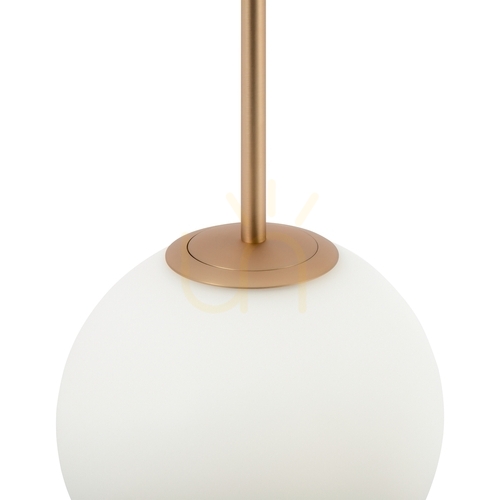
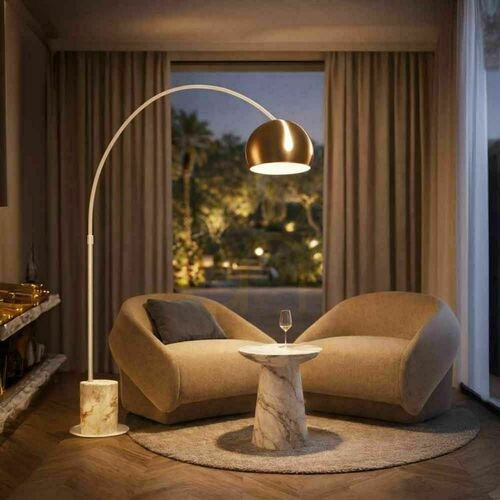
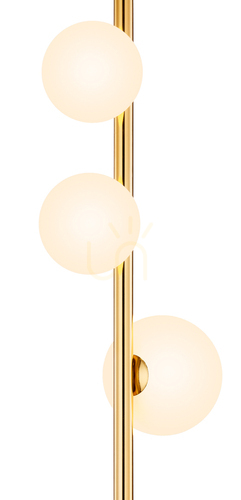
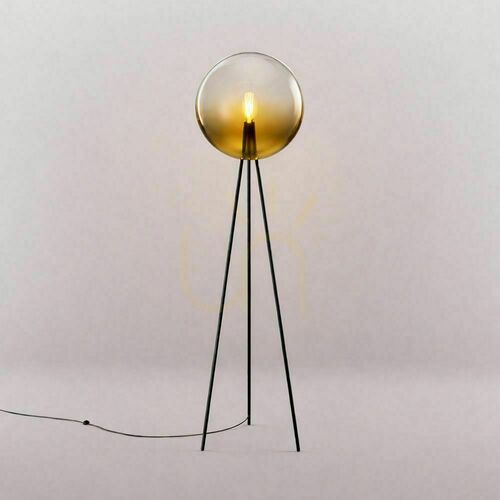
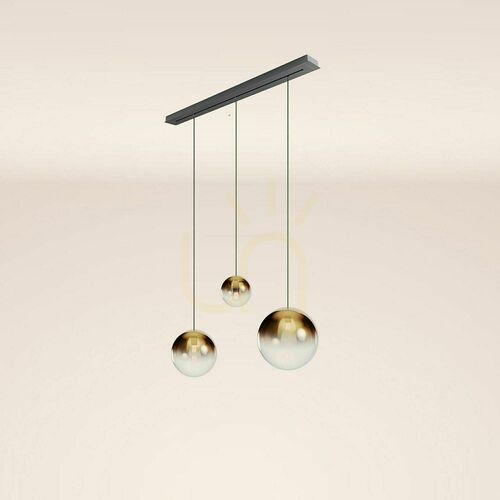
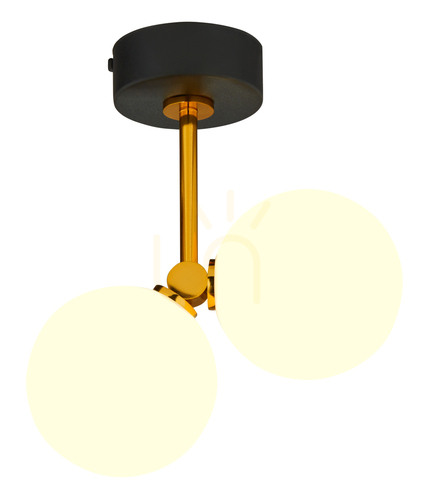
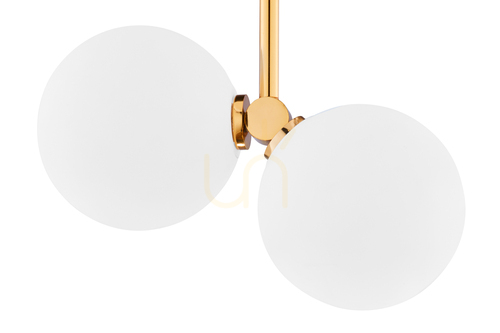
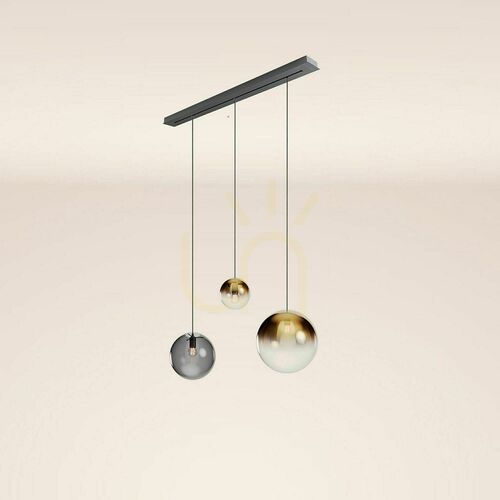
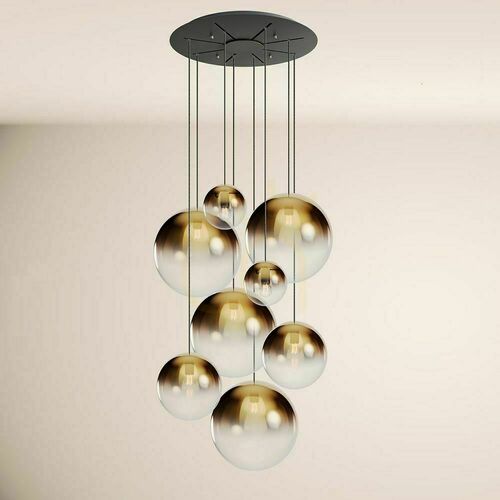
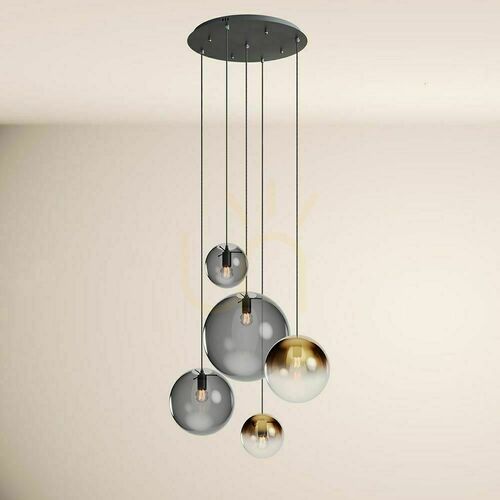
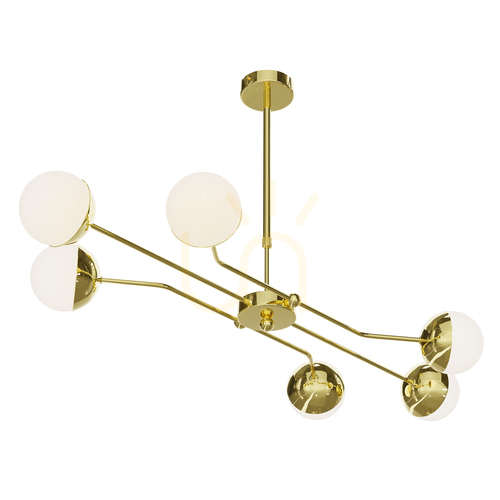
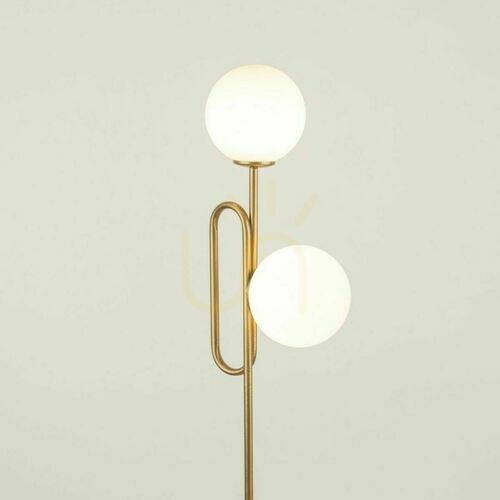
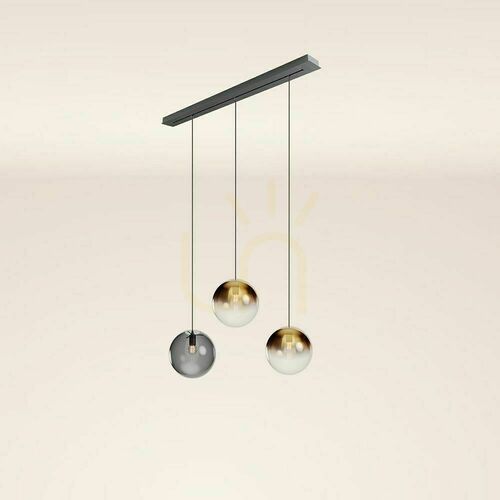
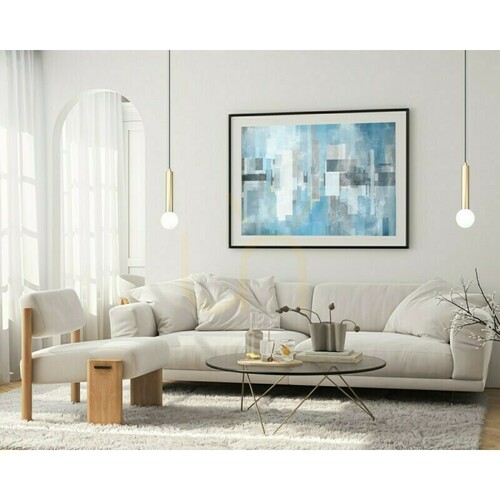
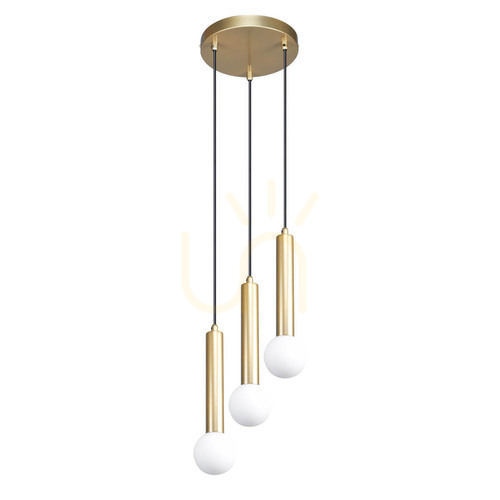
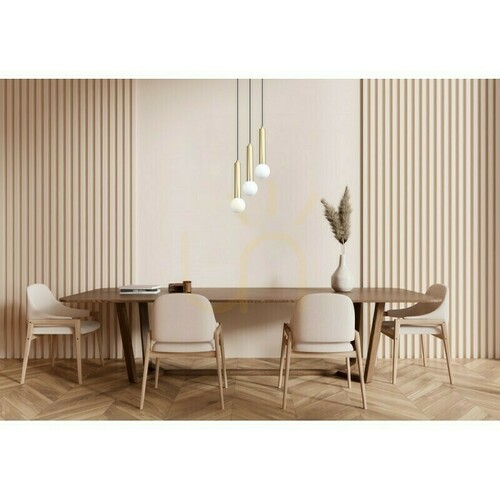
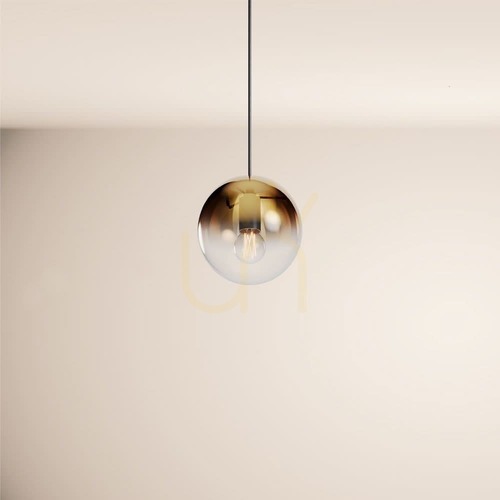
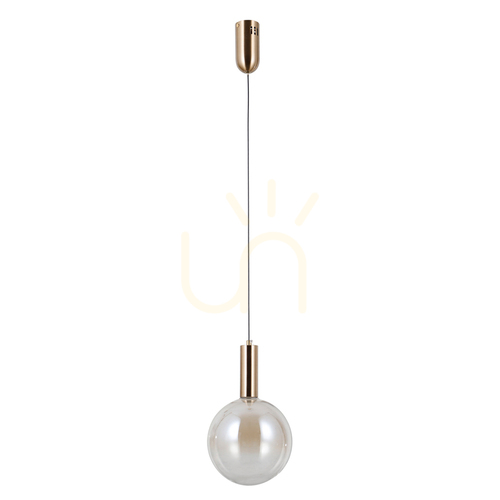
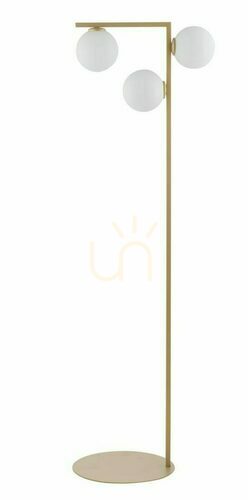
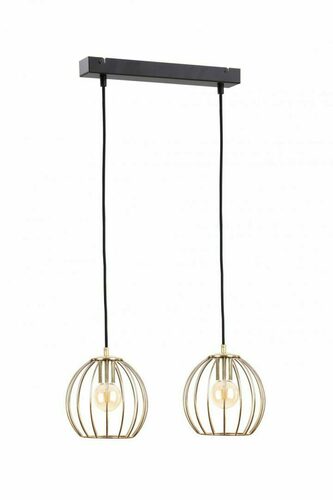
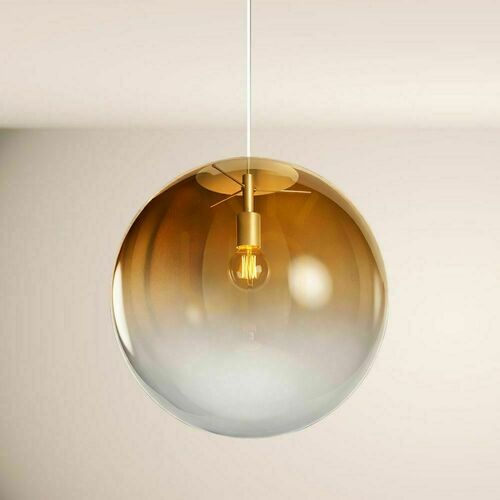
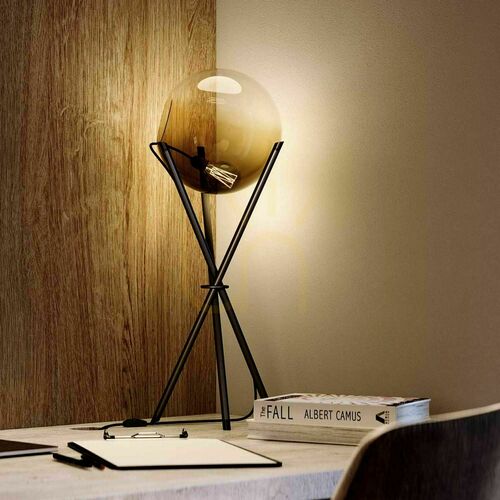
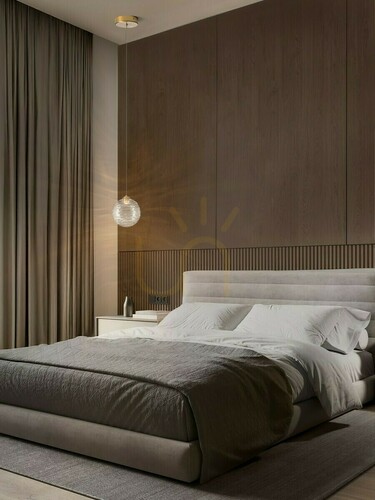
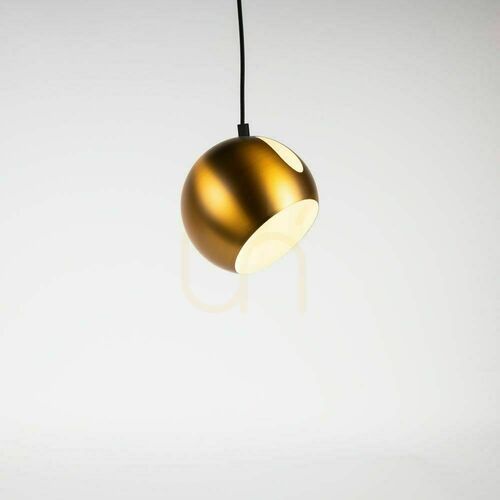
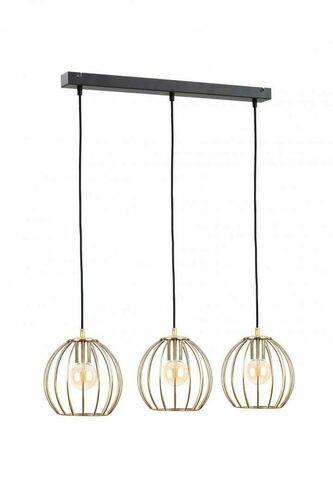
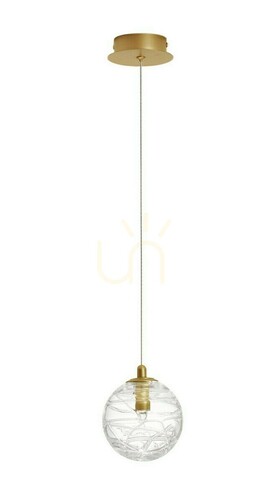
A gold globe light usually pairs a spherical glass shade with gold-toned metalwork – the ceiling rose, rod, frame, arms or lampholder – though some have a gold metal or metallised sphere instead. A glass sphere throws light in every direction and the metal catches it, so the room feels warmer the moment the lamp is switched on. How warm, and how smart rather than showy, comes down to the style, the metal finish and the glass you pick.
Modern or vintage: two very different looks
The same idea – a ball of glass held by gold metal – ends up in two quite different camps. Modern versions keep the metal slim: a thin rod, a small brushed canopy, a crisp opal sphere. They sit happily in plain, pale rooms and next to black accents. Vintage versions lean on Art Deco and mid-century references – polished or antique brass, clear or amber glass, exposed filament bulbs, sputnik arms bristling with small globes. They want richer colours around them: bottle green, navy, walnut, marble.
A rough test before you buy: if the room already has plenty of pattern and colour, a modern design keeps things calm. If it is mostly white and grey, a vintage piece can carry the character on its own.
Brass, plated or champagne – what “gold” really means
Solid brass is an alloy of copper and zinc, gold-coloured all the way through. Unlacquered brass darkens and takes on a patina over time; lacquered brass keeps its tone and needs little attention. More often, the gold is a finish on steel or aluminium – electroplated, lacquered or powder-coated. It looks similar and weighs less, but a knock or a harsh cleaner can wear it through to the base metal.
Polished gold is mirror-bright and suits glamorous schemes, though it shows every fingerprint. Brushed or satin gold is softer and more forgiving on a light you reach up to adjust. Antique brass, bronze and champagne tones are muted and easier to mix with other metals in the same room.
Which glass works with gold
-
Opal (white) glass hides the bulb and gives an even, glare-free glow; the gold becomes the accent.
-
Clear glass shows the bulb and makes the metal sparkle most – pair it with a good-looking filament lamp.
-
Amber and smoked glass dim the output noticeably and add depth. Lovely over a table, less so as the only light in a living room.
-
Fluted or frosted glass breaks up reflections and softens the hot spot of the bulb.
Sizing, bulbs and colour temperature
| Where |
Typical globe size |
Bulb cap |
Worth knowing |
| Wall light, bedside, landing |
12–20 cm |
G9 or SES (E14) |
small globes put the bulb close to the glass – use a frosted one |
| Kitchen island, multi-globe bar |
15–25 cm |
SES or ES (E27) |
bottom of the globes about 65–80 cm above the worktop |
| Dining table |
30–45 cm single globe |
ES (E27) |
roughly a third to half the table width |
| Living room, main light |
40–60 cm, or a multi-arm design |
ES (E27) |
keep at least 2.1 m clear where people walk |
| Standard 2.4 m ceiling |
flush or semi-flush with globes |
ES, SES or integrated LED |
sits close to the ceiling, no head-bumping |
Gold looks its best under warm white light of 2700–3000 K; at 4000 K and above, brass turns greyish and flat. Inside opal glass, a standard LED bulb of 800–1,000 lm (about a 60–75 W old-style equivalent) gives plenty of diffused light. Behind clear glass, choose a filament bulb with a high colour rendering index, CRI 90 or above. Check the neck of the globe, too: some only take a 45 mm golf-ball bulb, not a standard 60 mm one.
Fitting and looking after it
A large glass globe can weigh several kilograms, and a multi-globe fitting more, so make sure the ceiling fixing can take it. Metal fittings are usually Class I and need an earth connection. Have a qualified electrician connect anything to the mains; in England, electrical work in a home falls under Part P of the Building Regulations, and the wiring should meet BS 7671. In bathrooms, zones 1 and 2 call for at least IPX4, which most bathroom fittings meet as IP44.
- Wipe plated gold with a dry or barely damp microfibre cloth – no alcohol, ammonia or abrasive creams.
- Brass polish revives unlacquered brass but strips the patina, which then starts building again.
- Let the bulb cool before removing a globe; wash glass in warm soapy water and dry it straight away.
- In kitchens and bathrooms, wipe the metal after steam – grease and moisture mark it faster.
Frequently asked questions
Single globe or multi-globe ceiling light?
A single globe suits round tables, hallways and smaller rooms. Multi-globe bars and clusters spread light along a long dining table or kitchen island, and multi-arm designs light a whole living room better than one sphere.
How big is an extra large globe pendant?
Usually 50 cm and up. It needs a high ceiling or a big table beneath it – in a typical 2.4 m room, hang it only over furniture, never over a walkway.
Can I put a brass globe wall light in a bathroom?
Only if it carries the right IP rating for its zone – IPX4 or better in zone 2, usually marked IP44 – and a qualified electrician installs it. Outside the zones an ordinary wall light is fine, but wipe the brass after steamy showers.
Does white glass with brass look dated?
Not if the proportions are clean. Opal glass with brushed brass reads calm and modern; with polished, ornate brass it tips towards a period look – which is right in an older house.
Are gold globe lights dimmable?
Most are, provided the bulb is dimmable and the dimmer is LED-compatible. Dim-to-warm bulbs drop towards amber as they dim, which flatters gold.
How high should a gold globe pendant hang over a table?
Around 65–80 cm from tabletop to the bottom of the globe, so the light stays out of people’s eyes and you can still see across the table.
For shapes, materials and sizes of spheres in general, see globe lights. More on hanging spheres over a table or island: globe pendant lights.