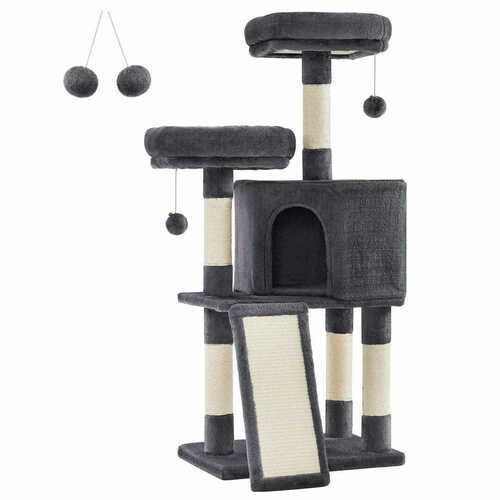
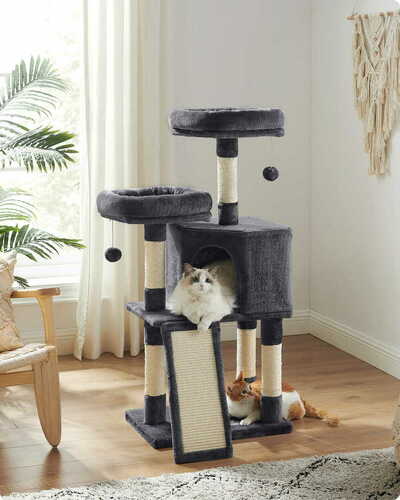
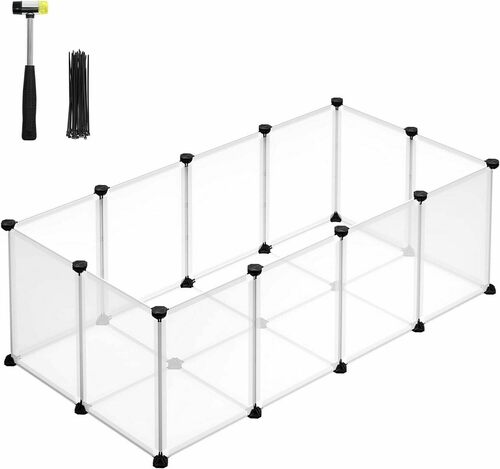
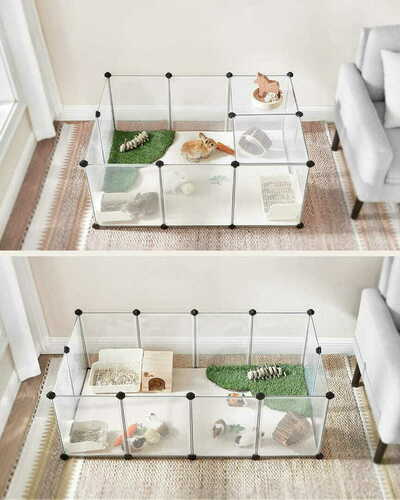
Pet accessories for cats start with a cat tree: one piece of furniture that gives a cat somewhere to climb, scratch, rest and watch the room from above. Alongside cat trees and scratching posts there are playpens for small animals such as guinea pigs or dwarf rabbits.
Cats scratch to keep their claws in shape, stretch their backs and leave their scent. Give them a sturdy post in the right place and the sofa usually gets left alone.
Types of cat furniture
-
Scratching posts – a single sisal-wrapped post on a weighted base, sometimes with a small platform on top. Compact, and ideal next to the furniture a cat already targets.
-
Small cat trees – roughly 90–120 cm tall, with two or three levels, a hammock or a hideaway. A good start for kittens and flats with little space.
-
Tall cat trees – up to about 2 m, with many posts, platforms at several heights, cubbies and perches. They suit active cats, homes with more than one cat and rooms where floor space is short but height is not.
-
Small-animal playpens – panels that clip together into a run, so a guinea pig or rabbit can stretch its legs safely indoors.
How to choose a cat tree
| What to check |
Typical guide |
| Height |
90–120 cm for kittens and small rooms; 150 cm and more for climbers |
| Base |
wide and heavy; on tall trees, about a third to half of the height |
| Posts |
at least 8–9 cm across for adult cats, tightly wound with sisal rope |
| Platforms and beds |
big enough for your cat to lie stretched out; larger breeds need wider perches |
| Wall anchor |
essential on trees taller than about 150 cm |
Cat trees are usually built from chipboard, with posts wrapped in sisal rope and platforms covered in plush fabric. Sisal stands up to claws; plush makes the resting spots comfortable.
Placement and care
Put the tree on a level floor by a window or in the room where the family spends its time, not in a far corner: cats like to watch what is going on. Fix tall trees to the wall with an anti-tip strap. A few treats on the platforms or a little catnip on the posts helps a hesitant cat take to it. Check the screws every few weeks and tighten them, vacuum the plush, and replace worn sisal or a damaged hammock before it gives way. For a playpen, choose a spot away from radiators, direct sun and draughts, and give the animal a hideout and water inside.
FAQ
Which cat tree is best for large cats?
One with a broad, heavy base, thick posts and wide platforms and beds. Check the platform sizes, not just the overall height.
How tall should a cat tree be?
For a kitten or a small flat, 90–120 cm is plenty. Confident climbers enjoy trees of 150 cm and more, anchored to the wall.
Scratching post or cat tree?
A post handles scratching in a small space. A tree adds climbing, resting and a lookout, which keeps indoor cats busier.
For other small finds for the home, take a look at gadgets.