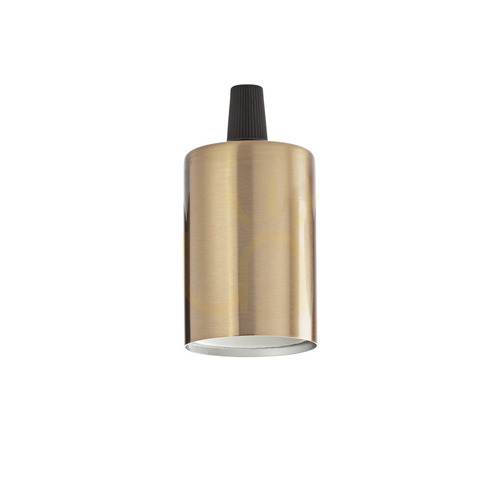
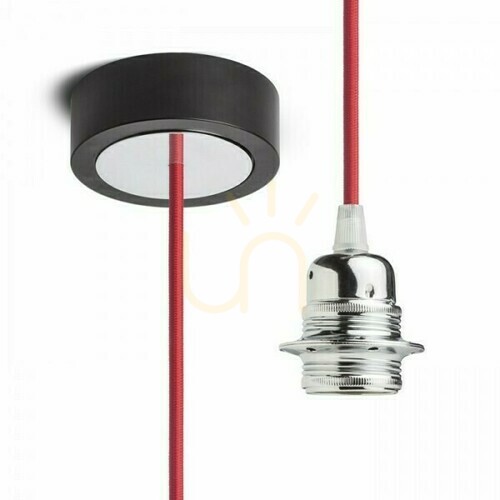
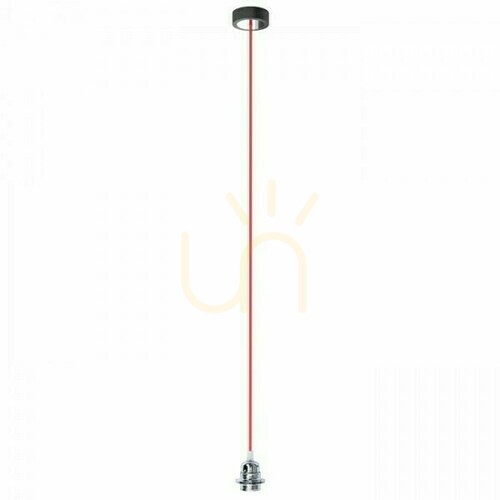
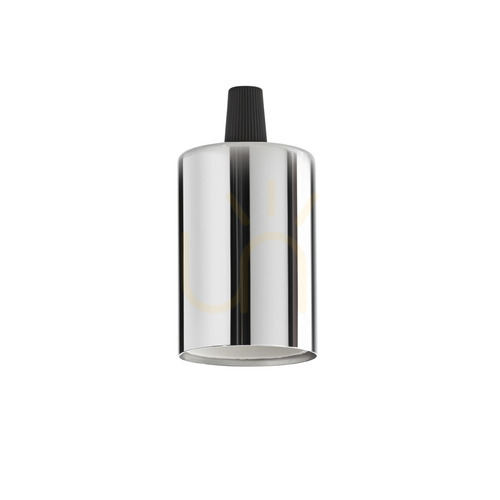
Lamp holders support a light bulb and make the electrical connection to its cap. They are components of a light fitting, whether hidden inside a shade or left visible as part of a pendant. Choosing a replacement means matching the bulb connection, the way the holder attaches to the fitting and the conditions in which it will operate.
Start by identifying what needs replacing. A decorative outer cover, a shade ring, a ceiling rose and a lamp holder do different jobs. Parts can look similar in a photograph while having different threads, fixings and electrical arrangements. The correct choice is the component that suits the complete fitting, rather than simply the one with the nearest colour or shape.
Identify the bulb cap before comparing finishes
In everyday UK lighting terminology, BC usually means bayonet cap and ES means Edison screw. These are different connections. B22 is a familiar bayonet format, while E27 is a screw format; E14 is a smaller screw cap. An E27 bulb does not fit directly into a B22 holder, even if the two bulbs appear similar in size.
The number in E27 or E14 refers to the nominal diameter of the bulb’s screw cap in millimetres. It does not describe the outside of the holder, the shade opening or the mounting thread at the other end. Keeping those measurements separate makes it much easier to compare replacement components.
| Connection |
How the bulb is retained |
What else to check |
| E27 / ES |
A screw cap turns into the holder |
Holder body dimensions, mounting arrangement and bulb clearance |
| E14 / SES |
A smaller screw-cap connection |
Shade space and the exact construction of the existing fitting |
| B22 / BC |
A bayonet connection secures the cap |
Correct cap designation and compatibility with the complete fitting |
| GU10 |
Short contacts lock into position with a turn |
Holder fixing, source dimensions and the electrical requirements of the fitting |
| GU5.3 |
Two straight pins enter the matching holder |
Exact connection and the supply arrangement specified for the lamp |
Do not identify a spotlight connection from the diameter of the reflector alone. GU10 and GU5.3 light sources can have a similar overall appearance while requiring different holders and supply arrangements. Read the actual markings and the fitting documentation before choosing a component.
A bulb holder must also fit the light fitting
Once the cap type is established, compare the mechanical connection to the lamp. A holder may attach to a stem, bracket, threaded tube or another specified support. That fixing is independent of the connection into which the bulb goes. Two E27 holders can therefore accept the same bulb while being unsuitable replacements for one another.
Check overall length, maximum body diameter, cable entry and the space available beneath any cover. A small change in the position of a terminal or fixing can matter inside a compact light fitting. The new component should sit as intended, with enough room for the wiring and without pushing against the shade or housing.
For a repair, useful information includes the light fitting’s model, the markings on the original holder and its dimensions. A photograph is helpful for understanding the shape, but it cannot establish all the ratings. If markings are missing or the old part is damaged, have the fitting assessed rather than selecting a replacement by appearance.
Pendant holders, fixed holders and cord support
A pendant holder must be used with the support arrangement intended for it. The cable connection and the mechanical support have separate roles. A cord grip helps prevent a pull on the flex from being transferred to the electrical connection; it is not a reason to ignore the permitted weight of the shade or the rest of the suspension.
A holder intended for a fixed lamp may use a different attachment from one designed to hang on a flex. Some decorative assemblies also include hooks, covers or ceiling roses. Check the complete list of parts and how the load is supported. A decorative sleeve around a holder is not automatically a finished pendant assembly.
When comparing a replacement, consider the position in which it will be installed. Cable entry, shade support and bulb access need to work together. Electrical components for mains-powered fittings should be selected and fitted by someone competent to assess the complete arrangement.
Shade rings and holder barrels
Shade rings secure a suitable shade to the outside of a holder. The shade’s opening and support arrangement must match the holder barrel and rings. The bulb cap designation does not define this entire system, so “E27” on two components is not sufficient evidence that a particular shade will fit.
Some shades use an insert to suit a particular opening. Others are supported by a frame or another part of the lamp. Compare the actual dimensions and construction rather than assuming that a shade reducer and a bulb-cap adaptor do the same job. One adjusts a shade attachment; the other changes the connection to the light source.
Check the final position of the bulb as well. A shade can attach correctly while leaving too little clearance for the chosen bulb or making it difficult to change. The assembly needs to retain the clearances and conditions specified for the light fitting, including the way heat can escape.
Metal, ceramic and plastic lamp holders
A holder’s visible finish and its internal construction are not necessarily the same material. A metal decorative shell may contain an insulating component, while a ceramic part may be hidden beneath a cover. Assess the electrical and mechanical details independently from the colour of the outside.
| Material or construction |
Buying considerations |
Assumption to avoid |
| Ceramic insulating component |
Condition, fixings and the stated temperature rating |
Ceramic does not permit an unlimited bulb wattage |
| Plastic body |
The material and ratings specified for the actual component |
Different plastics can have different heat resistance |
| Metal outer shell |
Insulation, connection requirements and the construction of the fitting |
A metal appearance does not identify the electrical protection class |
| Externally threaded barrel |
Shade-ring dimensions and the intended way of supporting a shade |
The shade thread is not the same measurement as the bulb-cap thread |
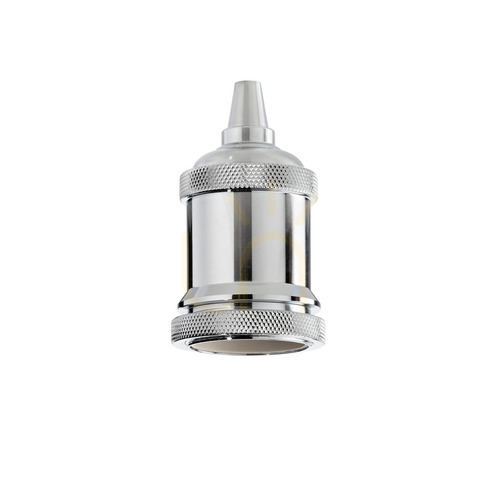
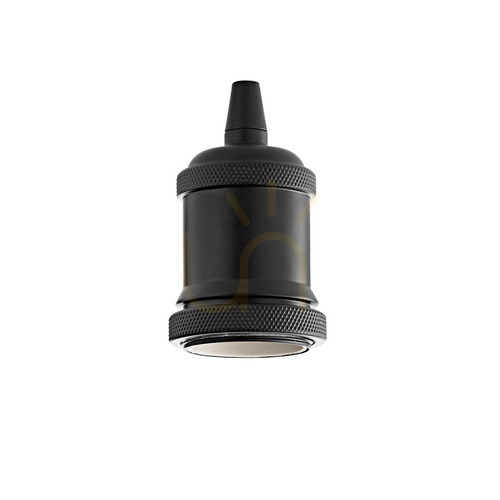
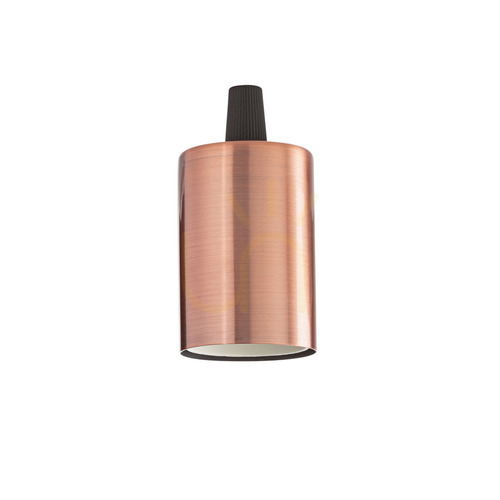
For an exposed holder, finish can be an important part of the design. Polished metal, aged tones, matt surfaces and simple coloured covers give different effects beside a visible bulb and flex. For a concealed replacement, the dimensions and fixing may matter more than the outside finish. Both uses still require a technically suitable component.
Read the ratings as limits for a component
The holder’s voltage, current, temperature and power information apply to that component under its stated conditions. The complete light fitting may impose a lower limit. A shade, cable, switch or enclosure can therefore affect which bulb may be used even when the holder itself appears to allow more.
Do not use an old incandescent-equivalent description as the electrical power of an LED bulb. Compare the bulb’s actual wattage with the limits of the fitting. Lumens describe light output, while watts describe power consumption; neither the holder’s cap type nor its colour tells you how bright the light will be.
Temperature suitability also depends on the complete arrangement. A component used in an open pendant may experience different conditions inside a small enclosed shade. The relevant documents and markings should guide the choice. Replacing one part should not introduce a new restriction that the rest of the fitting cannot meet.
Using LED bulbs in a compatible holder
An LED bulb needs the correct cap, a suitable supply and enough physical space. Its electronics and heat management remain relevant even though its power consumption can differ from an older bulb. Check whether the light source is suitable for the fitting’s enclosure and operating conditions.
The holder itself does not set brightness, colour temperature or colour rendering. Those are properties of the light source and, where relevant, its control system. Replacing a holder with the same cap type will not by itself make a lamp warmer in colour or easier to dim.
For dimming, confirm that the source and the control are compatible. A switched holder provides on/off control when used as intended; it should not be confused with a dimmer. Wireless bulbs introduce another consideration, since cutting their supply at a conventional switch can interrupt their connection.
Switched holders and accessible controls
A switch at the holder can be useful on a table or standard lamp when it remains easy to reach. Its location may be less practical inside a deep shade or high above a table. Consider how the lamp will be used after it has been assembled, rather than viewing the switch as an isolated feature.
Check whether a switch is actually part of the component supplied. A similar-looking cover or body may be offered without the same internal parts. The holder, switch, flex, cord grip, shade rings and ceiling rose are separate items unless the product information explicitly describes them as an assembly.
For an existing light fitting, the replacement should preserve the intended electrical arrangement. Changing where a lamp switches or how it is wired is a separate decision from selecting a compatible replacement holder. Have that change assessed as part of the complete fitting.
Indoor fittings, moisture and exposed components
A holder for a dry indoor light fitting is not automatically suitable for an exposed garden light or a damp location. Protection depends on the complete enclosure, seals, cable entries, mounting position and the conditions declared for the product. A ceramic body or a metal cover alone does not establish weather resistance.
Where protection against water or dust is needed, check the relevant IP information for the complete arrangement. An IP marking and an electrical protection class describe different characteristics. One cannot stand in for the other, and a visually similar replacement should not be assumed to preserve either.
When a holder is part of a sealed fitting, consult the fitting’s own service information. A replacement selected only because it accepts the same bulb can alter the way the enclosure fits together. The complete light should remain suitable for its intended location after the repair.
A practical replacement checklist
- Identify the bulb-cap type from markings or documentation.
- Compare the mounting connection as well as the opening for the bulb.
- Measure the body, cable entry and available space inside the fitting.
- Check voltage, load, temperature and the limits of the complete lamp.
- Confirm shade-ring compatibility and bulb clearance where a shade is attached.
- Check what is supplied, including rings, covers, flex and support components.
This comparison separates three questions that are easy to combine by mistake: will the bulb fit, will the holder fit the lamp and will the assembled fitting be suitable for use? A successful replacement needs all three answers. Choosing a decorative finish comes after those points have been resolved.
Questions about lamp holders
Are E27 and B22 lamp holders interchangeable?
No. E27 is a screw-cap connection and B22 is a bayonet connection. A change requires more than matching the apparent size of a bulb. The holder, fitting and supply arrangement all need to remain suitable.
Does E27 describe the size of the shade ring?
No. It describes the nominal screw-cap diameter of the bulb. Shade-ring and barrel dimensions are separate measurements. Compare them with the shade’s actual attachment rather than using the cap marking alone.
Can I use an LED bulb in an older holder?
Possibly, if the cap, supply, dimensions and operating conditions are compatible. Check the limits of the complete fitting and any dimmer. The fact that a bulb screws in does not establish every part of its suitability.
Does a ceramic holder allow a more powerful bulb?
Its stated ratings and the limits of the lamp still apply. The shade, cable and enclosure can impose their own restrictions. The material name alone is not permission to increase the load.
What is the difference between GU10 and GU5.3?
They have different contacts and retention methods. GU10 locks with a turn, whereas GU5.3 uses straight pins in a matching holder. The correct supply arrangement must also be confirmed from the equipment information.
Will every holder support a lamp shade?
No. Shade support depends on the body, rings or other attachment provided for that design. A suitable bulb connection does not automatically provide the correct mechanical support for a shade.
Does a metal cover make a holder weatherproof?
No. Weather suitability depends on the complete construction and its declared protection. The cover’s appearance does not establish resistance to rain or dust.
What if I need more than the holder itself?
Check the included parts and identify any separate flex, covers or support components needed for a compatible assembly. Explore the wider lighting accessories using the fitting’s dimensions and requirements as your starting point.