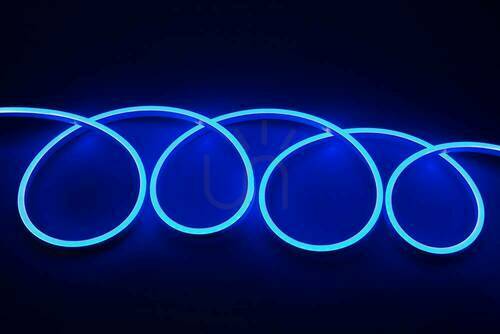
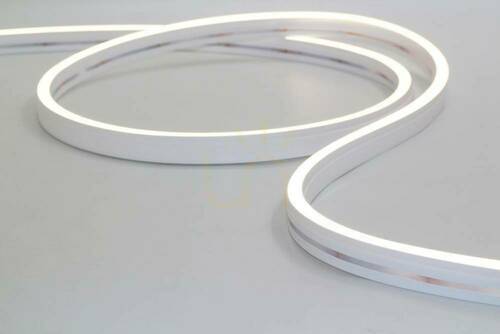
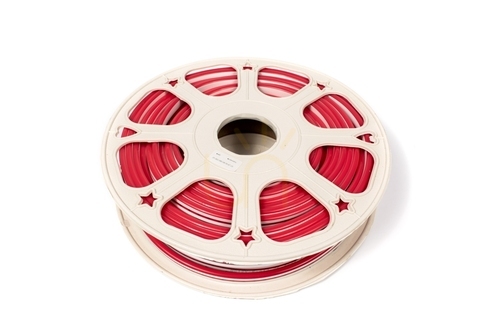
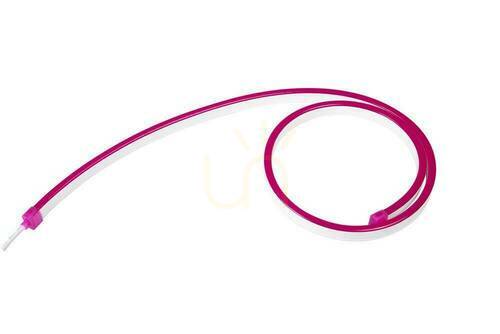
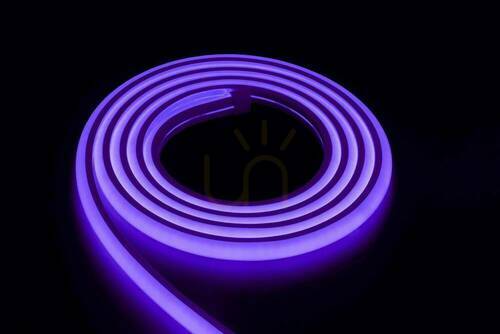
LED neon flex is a flexible strip of LEDs moulded into a silicone body that turns the dots into one smooth, continuous line of light. It looks like classic glass neon but runs on safe low voltage, bends by hand and can be cut to length, which is why neon strip lights are used for signs, lettering, coves, furniture edges and building outlines.
How neon flex differs from an LED strip
An ordinary LED strip shows individual points of light unless it sits deep in a profile with a diffuser. In neon flex the diffuser is the body itself: a thick, opal silicone sleeve that spreads the light evenly, protects the LEDs from dust and water and survives knocks. The result needs no extra profile to look finished, although aluminium channels are available where a perfectly straight line or a recessed fit is wanted.
Types of neon flex
-
Vertical bend (top bend). Light comes out of the narrow top face and the strip bends up and down, which suits outlines on a wall and lettering.
-
Horizontal bend (side bend). The strip bends sideways, so it can follow a curved edge flat on a surface.
-
Dual or free bend. Bends in both directions, for three-dimensional shapes.
-
360° round. A tube that glows all the way round, often hung as a pendant line or shaped into a ring.
How to choose
| Parameter |
Typical values |
What it means |
| Voltage |
12 V or 24 V DC |
24 V allows longer runs from one feed |
| Power |
about 9–20 W/m |
sizes the power supply |
| Light output |
from under 100 lm/m (colours) to around 1,100 lm/m (white) |
accent glow or real working light |
| Colour |
2700–6500 K white, single colours, RGB, RGBW |
warm, neutral or cool white, or colour control |
| Protection |
IP54, IP65 or IP67 |
IP65–IP67 for outdoor use and wet areas |
| Cut points |
from “cut anywhere” to every few centimetres |
how exactly the line can end |
For the power supply, multiply watts per metre by the total length and add a margin of about 20%. Check the maximum run from one feed point; longer lines may need power at both ends or several feeds.
Installation
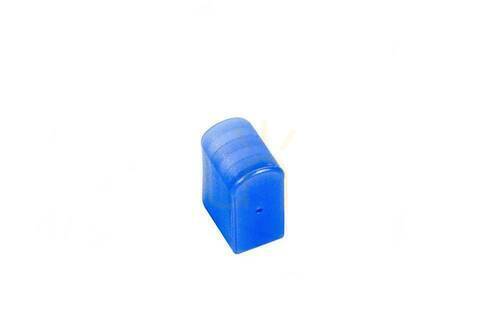
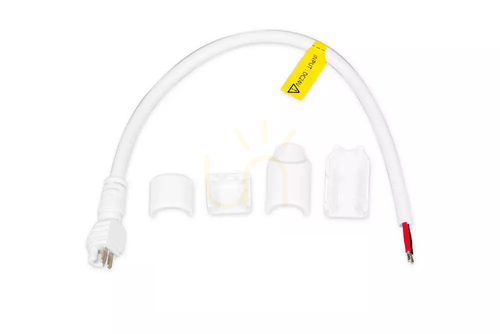
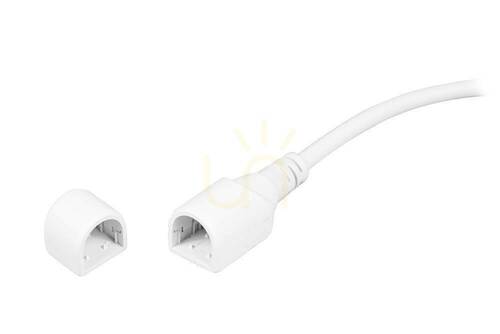
Each line has its own cross-section, so end caps, power connectors and mounting clips must match that exact line. Power connectors come with straight, side or bottom cable exits, depending on whether the cable should run along the surface or through it. Mount the strip with its clips or a profile, respect its minimum bending radius and seal cut ends with the proper caps outdoors. The low-voltage side is simple, but connecting the power supply to 230 V is work for a qualified electrician.
Care and pitfalls
Silicone neon needs little more than a wipe with a damp cloth. The common mistakes are cutting between cut marks, which kills that section, bending tighter than the stated radius and using a power supply that runs at its limit. Keep the power supply dry and ventilated.
Frequently asked questions
Can you cut neon flex?
Yes, but only at the cut marks printed on the strip. Some lines can be cut almost anywhere, others only at set intervals, so plan the length before you buy.
Can neon flex be used outdoors?
Choose IP65 or IP67 neon flex with sealed end caps and connectors, and keep the power supply in a dry, protected place.
What power supply does neon flex need?
A constant-voltage LED power supply matching the strip's voltage, 12 V or 24 V, with about 20% more power than the strip draws.
Are neon strip lights good for a bedroom?
Yes. Warm white around 2700–3000 K behind a headboard or along a shelf gives a soft glow, and dimmable or RGB lines let you set the mood.
Finish the job with matching end caps, power connectors and mounting accessories.