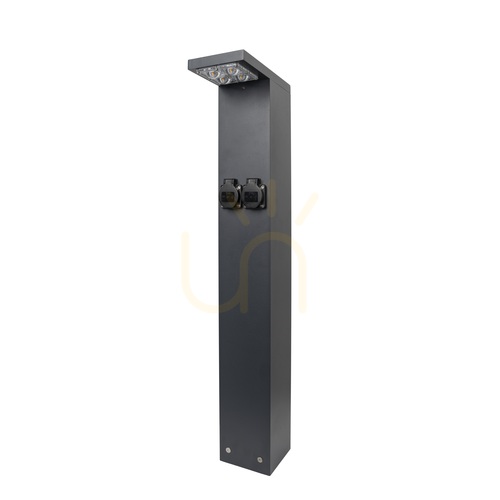
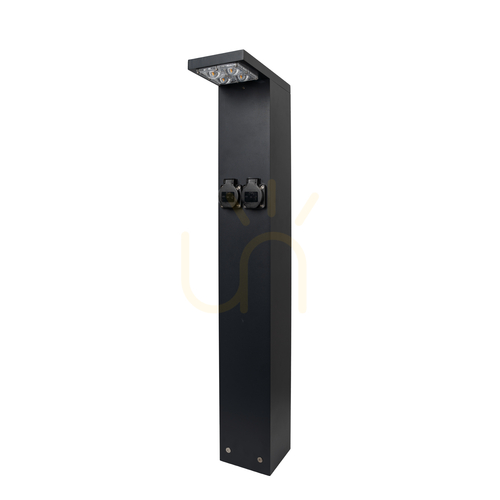
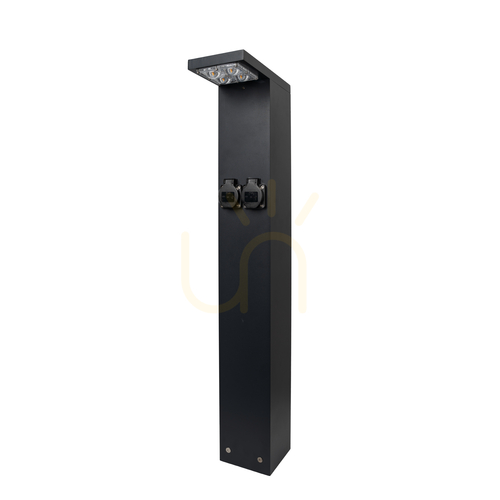
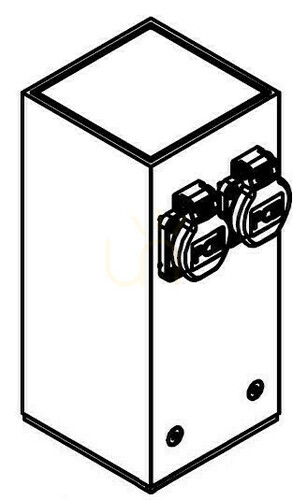
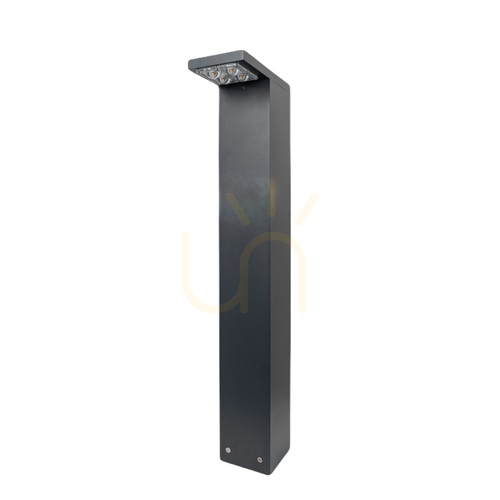
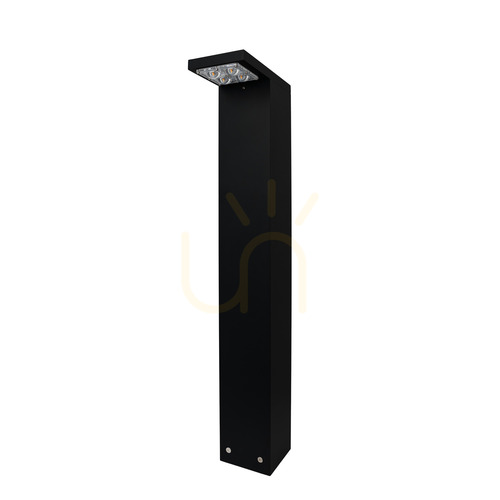
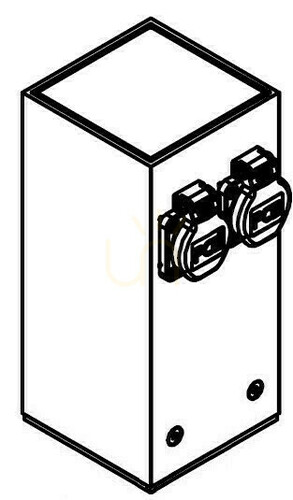
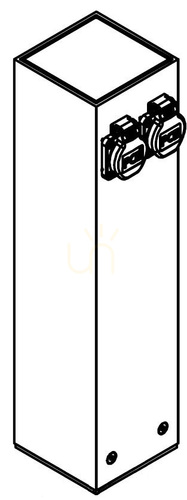
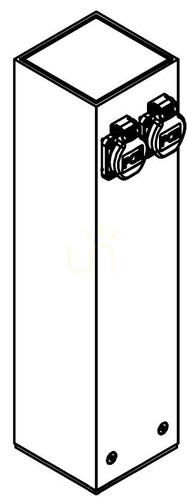
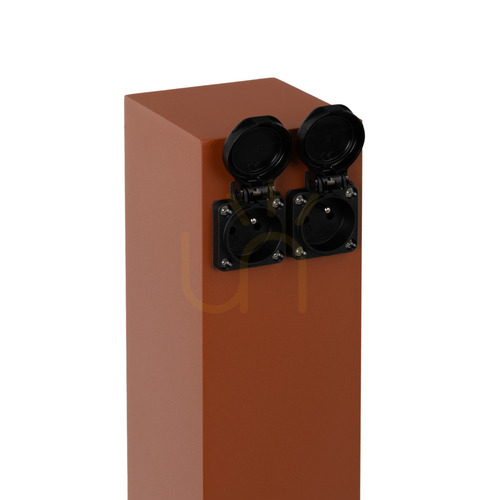
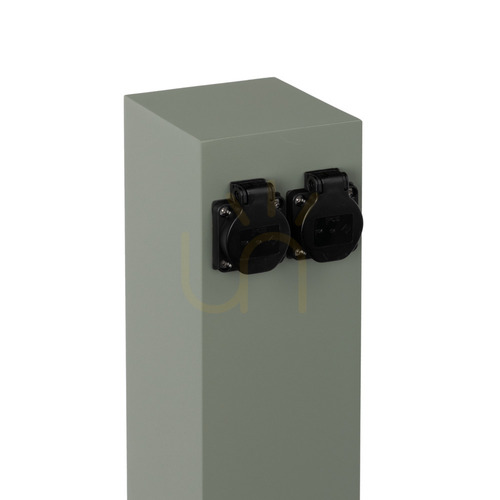
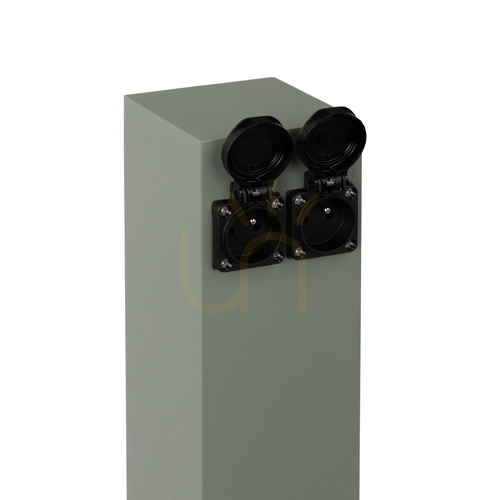
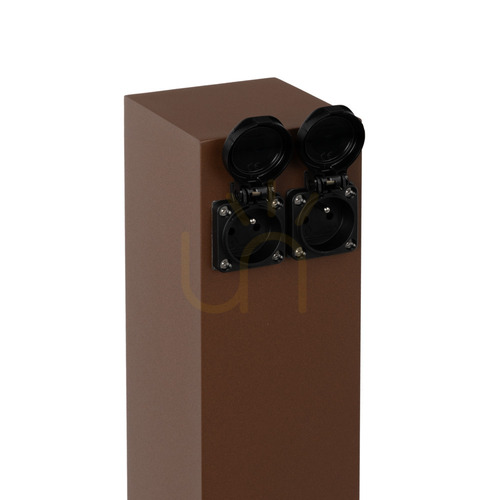
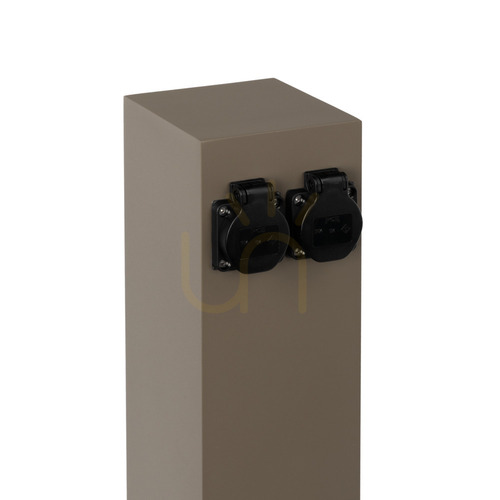
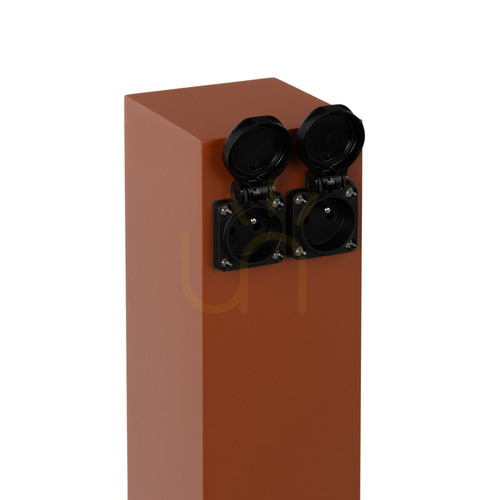
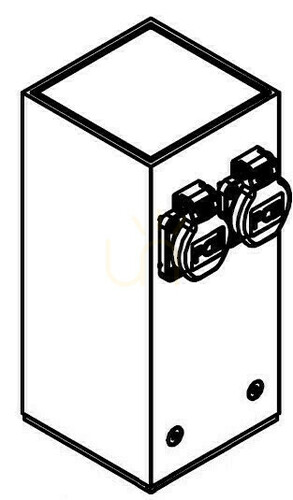
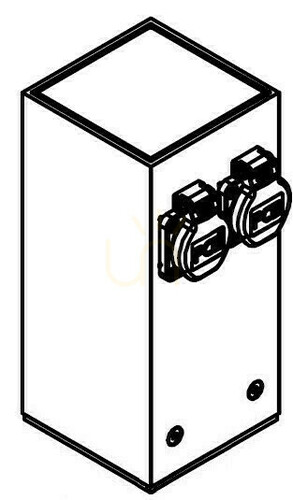
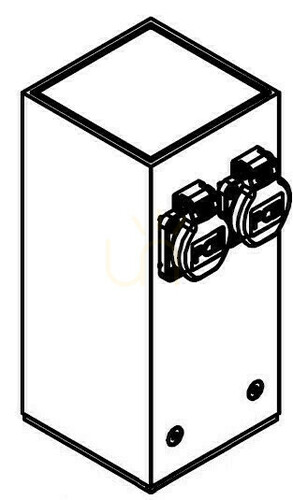
A garden power post puts a mains socket where you actually need it: by the terrace, next to the pond pump, at the far end of the lawn or beside the drive. An outdoor socket post is a short weatherproof column, usually 25–50 cm high, with one or two hinged-lid sockets near the top and a cable fed to it underground. It saves you from running extension leads across the grass every time you mow, plug in string lights or charge a hedge trimmer.
Types of garden power posts
-
Low posts, around 25–30 cm. Discreet among plants or at the edge of a terrace, where you plug in and leave a cable in place.
-
Taller posts, around 45–50 cm. Easier to reach without bending, and the sockets sit further from splashing water and wet grass.
-
Bollards with sockets. A path light and a power point in one column, which keeps the number of posts in the garden down.
Posts are usually aluminium, extruded or die-cast, and powder-coated in black, graphite, white, grey or rust-toned finishes so they match nearby outdoor wall lights and bollards.
What to check before buying
| Feature |
Typical value |
Why it matters |
| Socket standard |
Type E or Schuko (type F) |
Your plugs must fit; UK three-pin plugs do not fit these sockets |
| Number of sockets |
1–2 |
Two sockets let a pump and lights run side by side |
| Protection |
IP44–IP54 |
Hinged lids keep rain out of sockets not in use |
| Maximum load |
Up to 16 A, about 3500–3600 W in total |
The limit is for the whole post, not each socket |
| Height |
25–50 cm |
Taller posts are easier to use and stay drier |
| Through-wiring |
Terminals for up to 3 × 4 mm² |
Several posts can be fed from one buried cable |
The socket standard is easy to overlook. Many posts sold across continental Europe carry type E or Schuko sockets, which accept the round two-pin plugs used on most European appliances. Check the product page and compare it with the plugs of the tools and lights you plan to use.
Installation and safety
A power post is part of the fixed mains installation, so it must be connected by a qualified electrician. The circuit should be protected by a 30 mA RCD, and the buried feed is normally an armoured or suitably protected cable laid at a safe depth and marked with warning tape. The post itself is fixed to a concrete base, a ground anchor or a mounting plate through holes in its foot. Plan the cable route before laying a new terrace or path, so you are not lifting paving later.
Care and common mistakes
Keep the lids closed when nothing is plugged in, and do not leave a plug in the socket under a lid that cannot close over it during heavy rain. Clear soil and mulch away from the base so water drains off. Once a year, look for cracked lids and check that the RCD trips when you press its test button. Avoid running heavy loads such as a heater and a pressure washer at the same time from one post.
Frequently asked questions
Can I install an outdoor socket post myself?
Fixing the post in place is simple, but connecting it to the mains, laying the cable and adding RCD protection is work for a qualified electrician.
Do outdoor sockets need RCD protection?
Yes. Outdoor circuits should be protected by a 30 mA RCD, which cuts the power quickly if current leaks to earth, for example through a damaged cable.
What cable is used for underground garden power?
Usually an armoured cable or a cable in a protective duct, sized by the electrician for the load and the length of the run.
To light the same spot, see bollard lights and mounts for garden lamps.