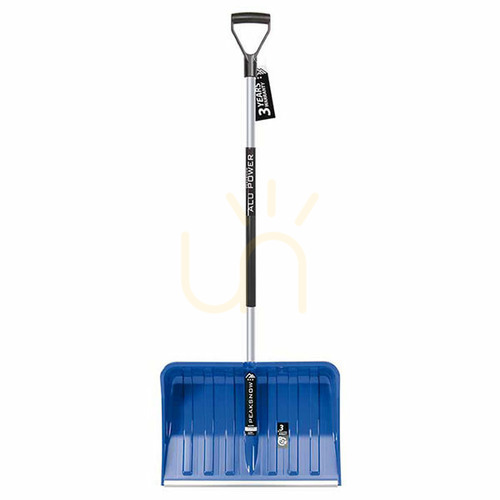
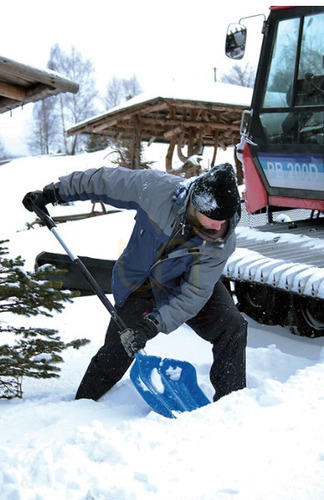
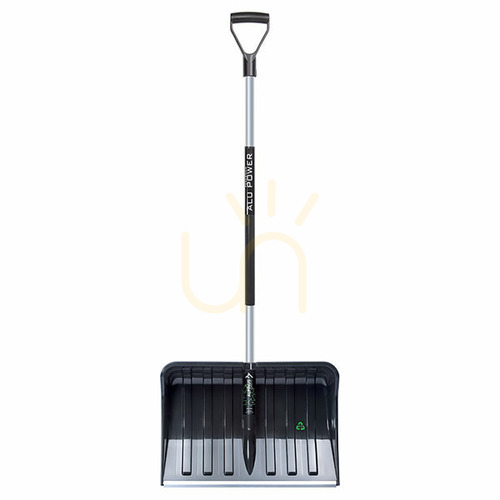
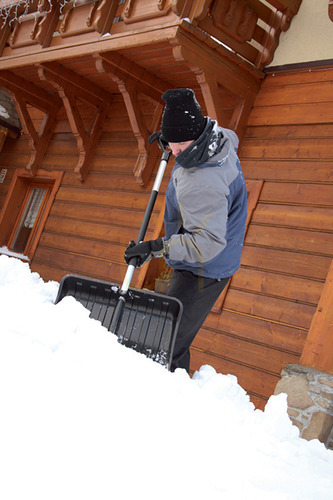
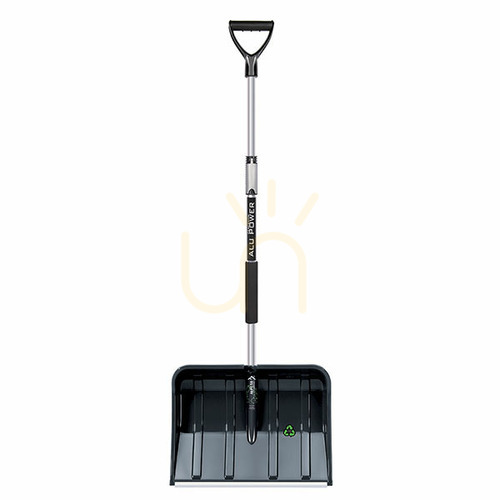
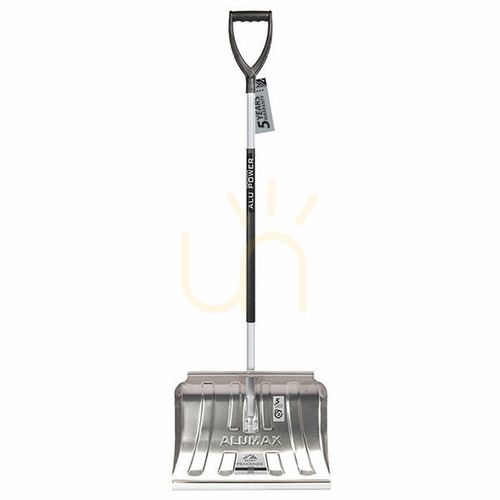
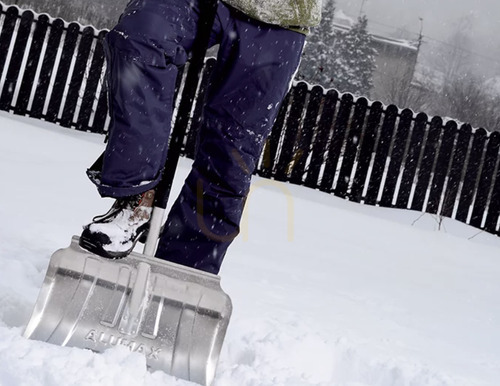
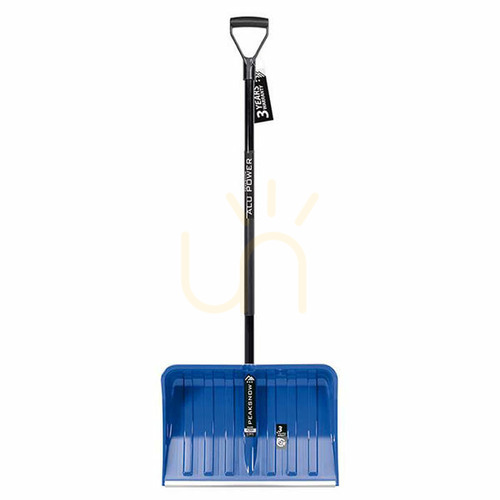
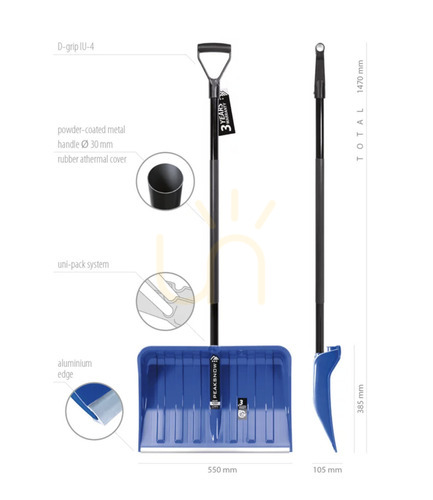
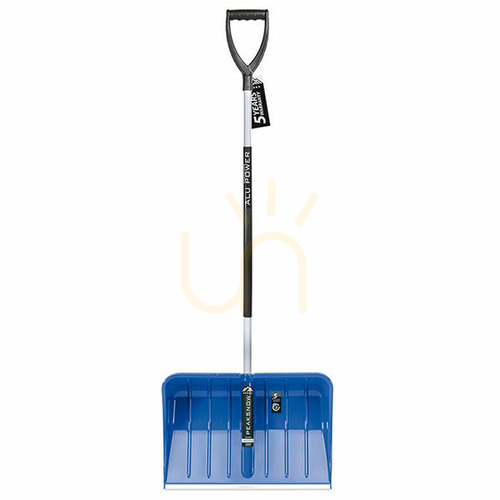
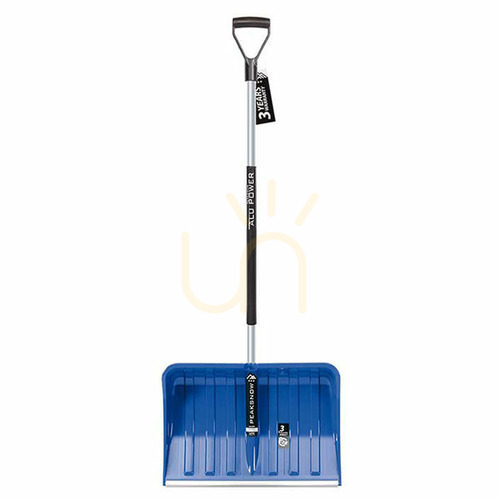
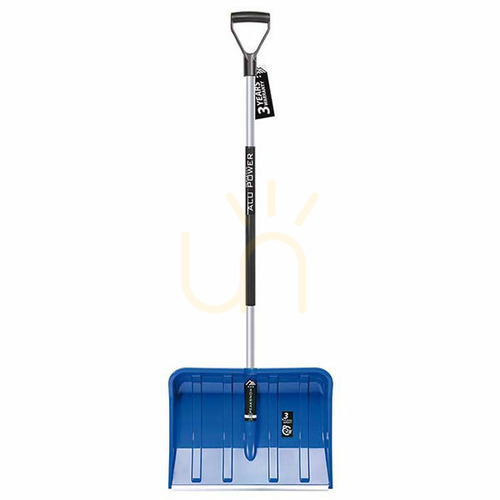
Good snow shovels let you clear a drive, path or doorstep before the snow is trodden into ice, without wrecking your back or the paving underneath. The right one depends on the job: a wide pusher for open drives, a deep scoop for heavier drifts, and a steel ice chopper for the frozen crust that a shovel just skates over.
In Britain snow tends to arrive suddenly and in small doses, so most households want one dependable tool that is light, stores easily and is ready the morning it is needed.
Types of snow shovel and scraper
-
Scoop shovels – a deep blade for lifting and throwing snow to the side. Best for paths and steps where there is nowhere to push it.
-
Snow pushers – a wide, shallow blade, often 50 cm or more, that you push ahead of you like a small plough. Quicker on drives and car parks, with far less lifting.
-
Ergonomic shovels – a bent shaft or a second grip that keeps your back straighter while you work.
-
Telescopic shovels – the shaft extends to suit your height and shortens for the shed or the car boot.
-
Ice choppers – a flat steel blade on a long handle for breaking up compacted snow and ice on paths before you shovel it away.
How to choose
| Feature |
Options |
What it means in use |
| Blade material |
plastic, plastic with aluminium edge, metal |
Plastic is light and gentle on paving; a metal edge resists wear and scrapes packed snow cleanly. |
| Blade width |
usually 40–55 cm |
Wider clears faster but gets heavy in wet snow. |
| Shaft |
aluminium, wood, fixed or telescopic |
Aluminium is light and does not rot; telescopic suits different users. |
| Length |
typically 120–160 cm |
Longer lets you stand upright; compact ones fit in a car. |
| Grip |
D-handle or straight |
A D-handle gives better control and is easier with gloves on. |
Using a snow shovel safely
Push wherever you can rather than lift, take small loads, and bend your knees instead of your back. Wet snow can weigh several times more than fresh powder, so clear little and often during a heavy fall. Pile the snow on a lawn or bed rather than against walls or drains, and spread grit or salt once the surface is clear.
On soft stone, resin-bound paths and decking, use a plastic edge and keep the ice chopper for concrete and tarmac – a steel blade can chip or score delicate surfaces.
Care and storage
Knock off snow and let the tool dry before putting it away, keep plastic blades out of strong sunlight in summer, and check the screws or rivets that hold the blade to the shaft before winter starts. A shovel kept in the car boot is worth having on rural roads.
Frequently asked questions
What is the best snow shovel?
For most homes, a light plastic shovel with an aluminium wear edge and a D-handle covers drives and paths. Add an ice chopper if your path freezes over regularly.
Is a snow pusher better than a shovel?
On open, flat areas yes – pushing is faster and easier on the back. Where snow has to be lifted over a kerb or away from steps, a scoop shovel is more practical.
Plastic or aluminium snow shovel?
Plastic is lighter and kinder to paving but can crack on hard ice. Aluminium blades and edges last longer and do not rust, at the cost of a little weight.
How do you remove ice from a path?
Break it up with an ice chopper, shovel the pieces away and then grit the surface so it does not refreeze.
For the rest of the outdoor kit, see garden accessories, or look at winter accessories for sledges and snow toys.