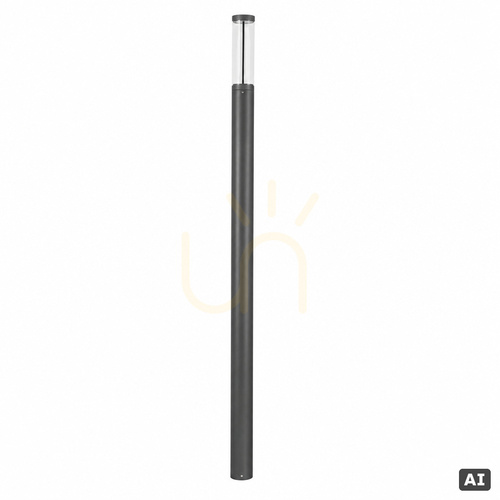
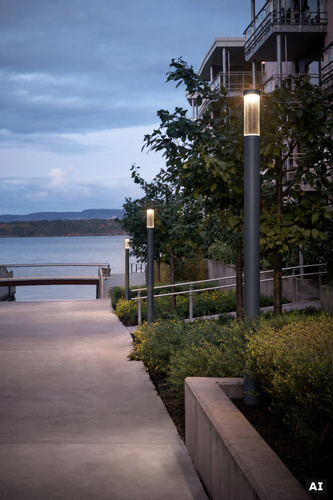
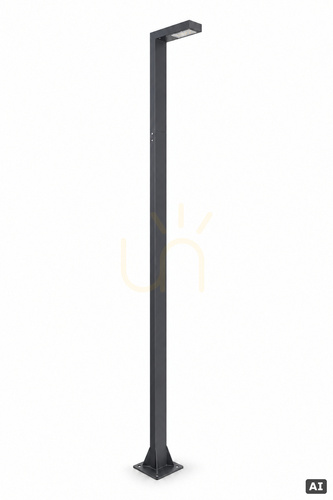
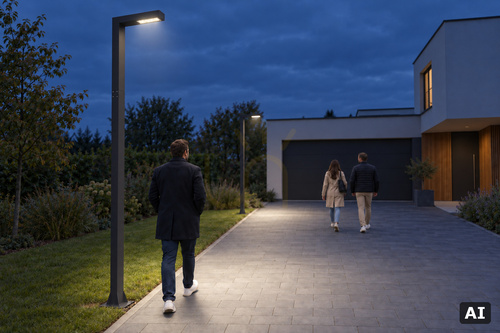
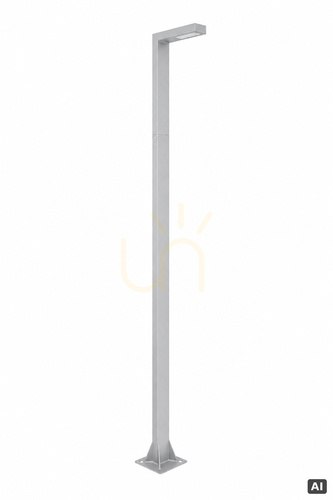
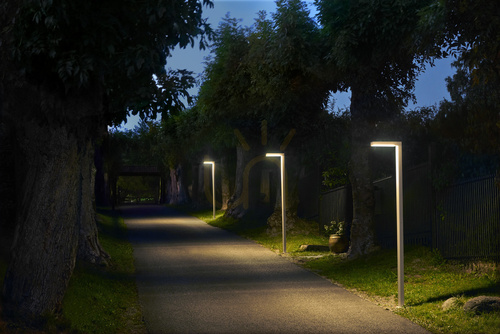
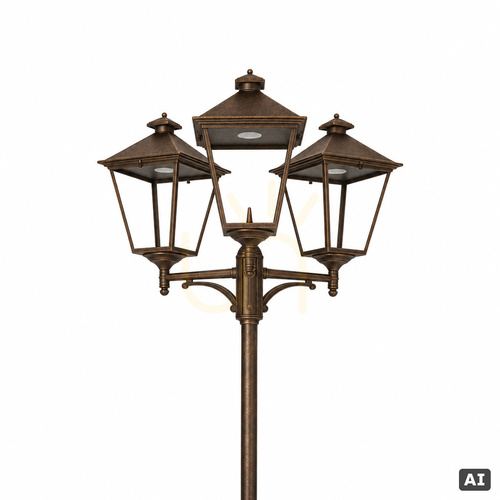
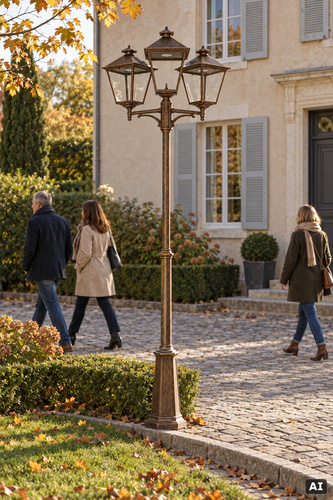
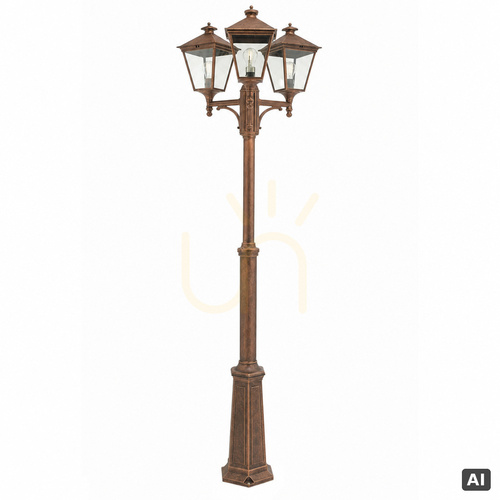
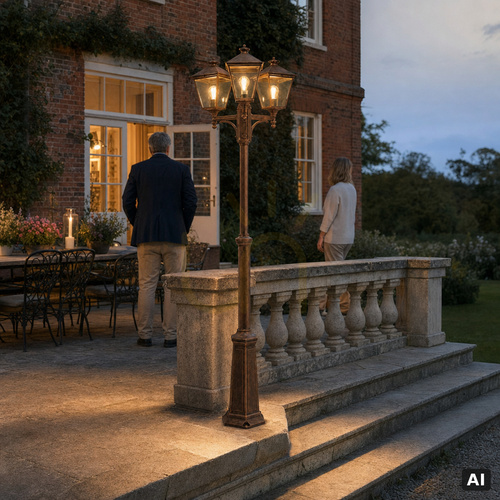
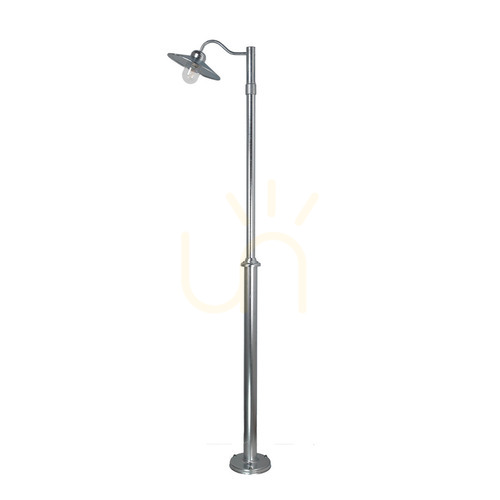
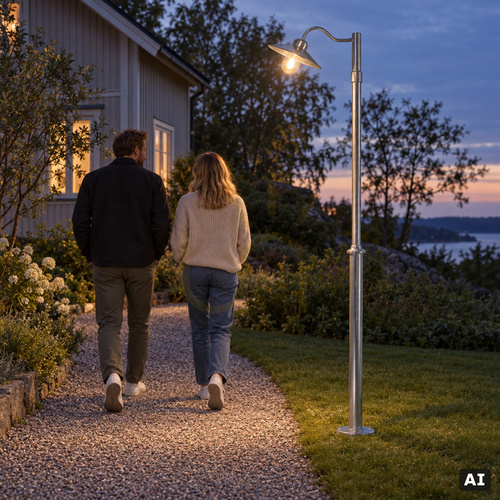
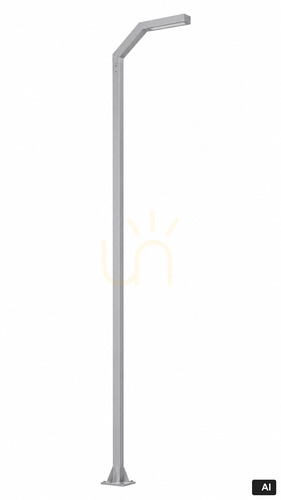
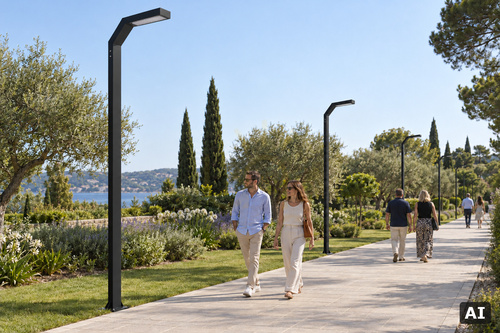
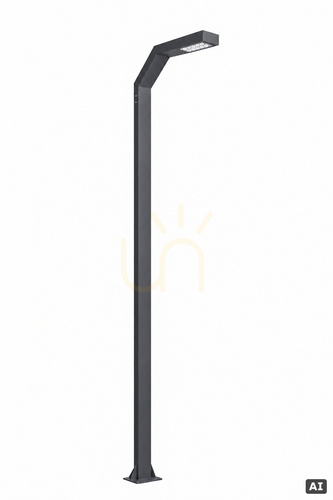
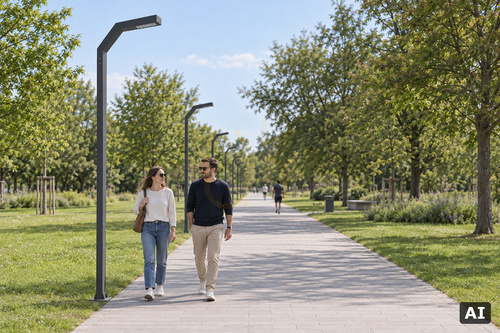
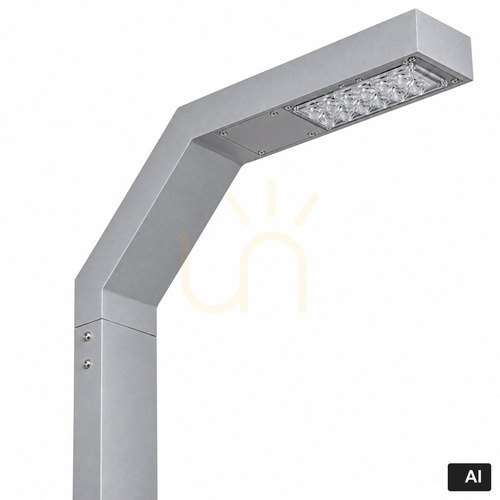
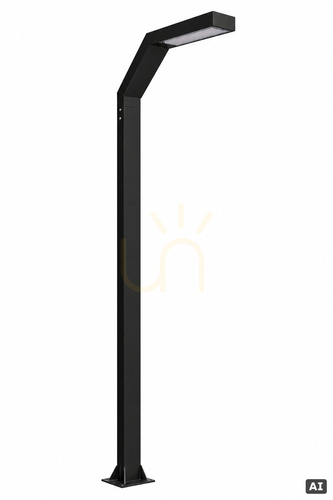
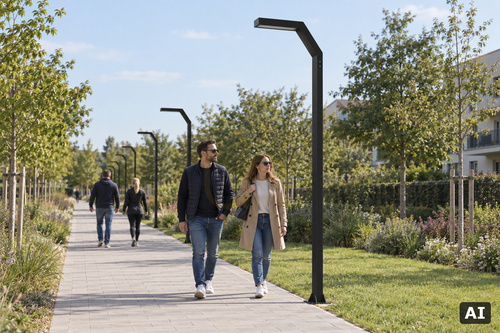
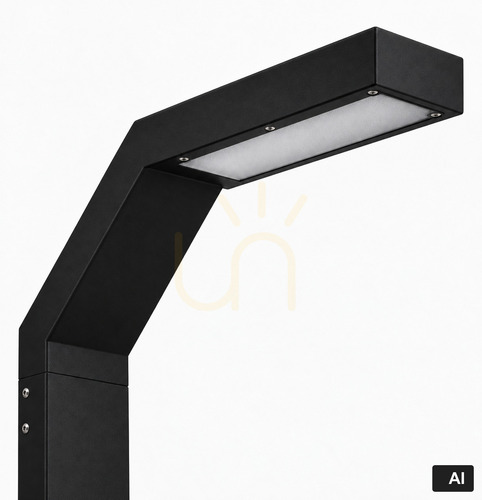
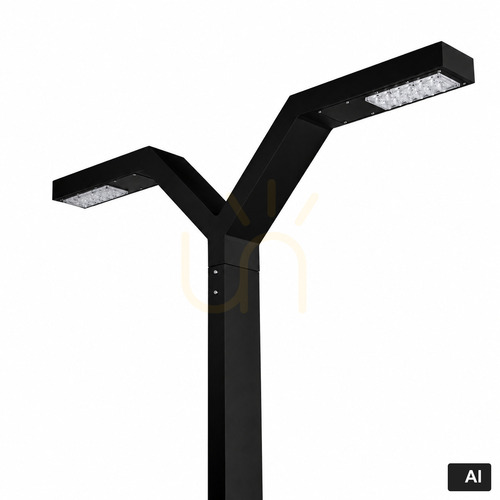
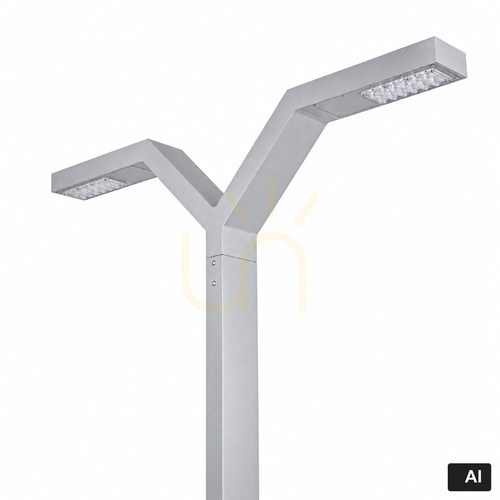
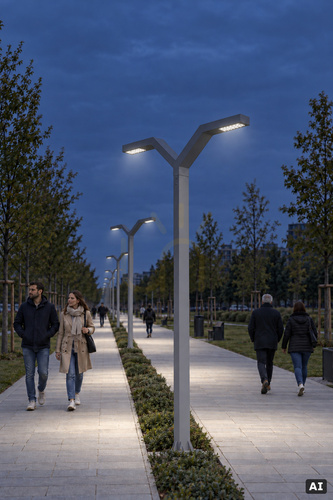
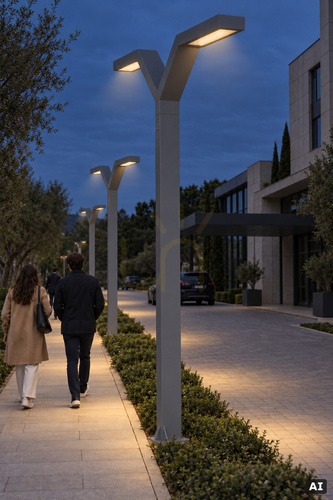
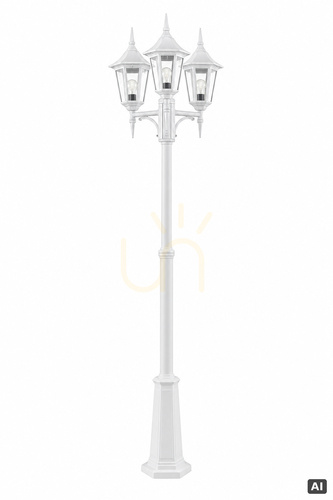
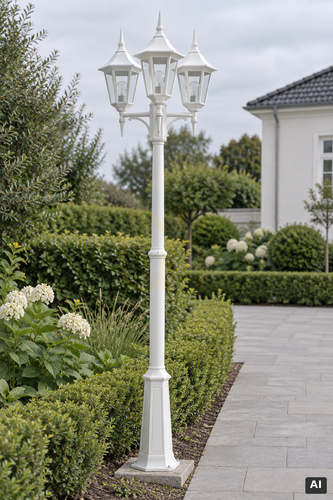
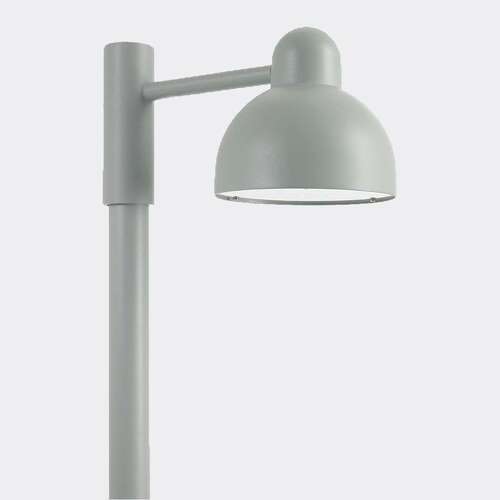
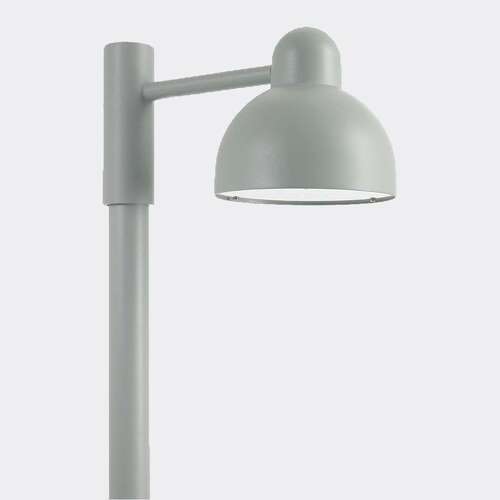
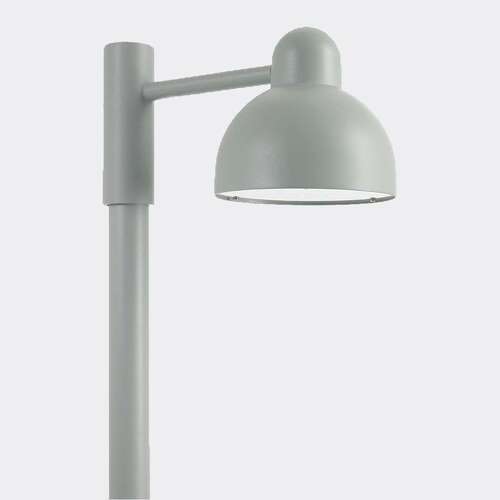
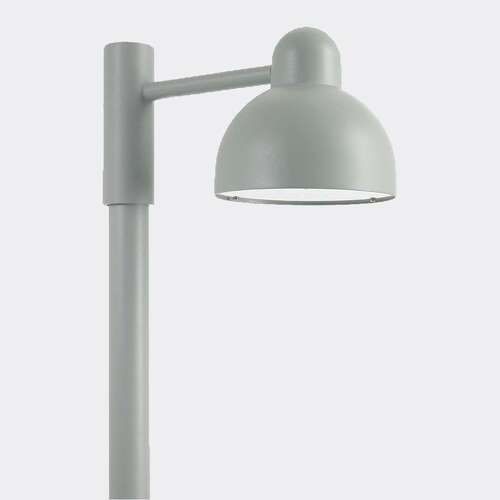
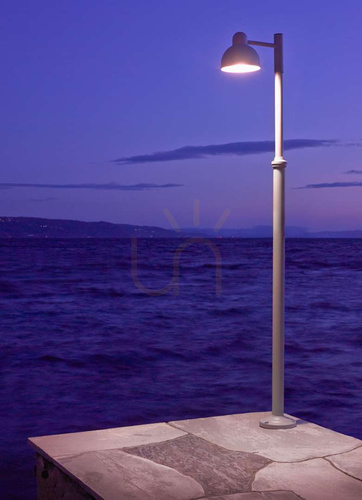
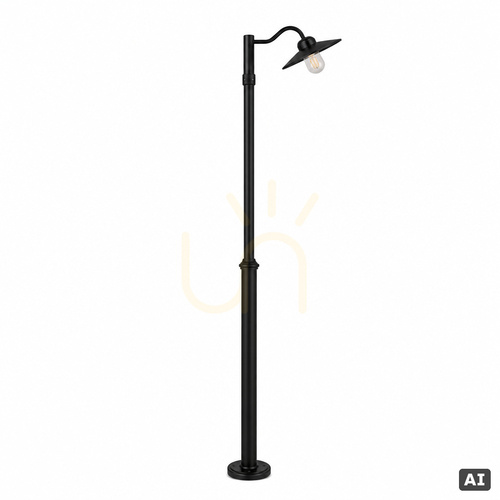
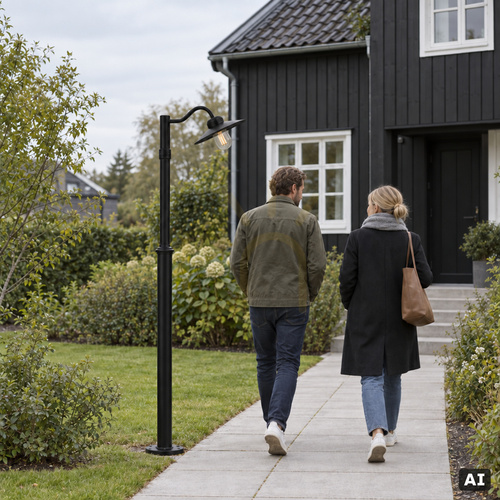
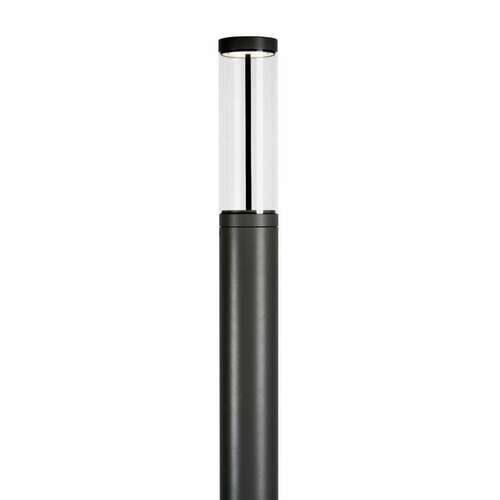
Lighting poles, columns and lamp posts raise the luminaire to working height and spread light evenly across a garden, path, driveway or car park. Put simply: the right lighting pole decides whether you can actually see the steps and the gate after dark, or only guess where they are. This category brings together garden lamp posts, park columns and street lighting poles — in steel and aluminium, from 2.6 to 6 metres, ready for modern LED luminaires.
Know what trips most people up? Not the purchase itself, but matching the height, material and mounting to a specific spot. This guide walks you through each of those decisions — with real numbers, tables and an FAQ — so the post you order genuinely fits your site.
What a lighting pole is and what it's made of
A lighting pole (in lower, decorative form usually called a lamp post; in commercial use a lighting column) is a vertical support with a fitting for the luminaire — either post-top or on an outreach bracket. Cabling runs inside, and from about 4 m up you'll find an access door with a fuse/cut-out. A typical set is post, base or root, an optional bracket and the LED lantern — matched to each other, from spigot diameter to wind-load class.
Types of lighting pole and lamp post
Poles are usually grouped by use, material and cross-section. For gardens and parks these matter most:
-
Garden lamp posts — low to medium (2.6–4.5 m), decorative, for paths, patios, driveways and entrances; often Victorian, swan-neck or hexagonal styles.
-
Park columns — 4–6 m, for greens, promenades and estate footways; frequently with a heritage lantern.
-
Street lighting columns — from 6 m up, for internal roads, car parks and roundabouts; usually with an outreach bracket.
-
Post-top vs bracket-mounted — a bracket swings the light out over the carriageway or footway; post-top suits classic garden and park lanterns.
-
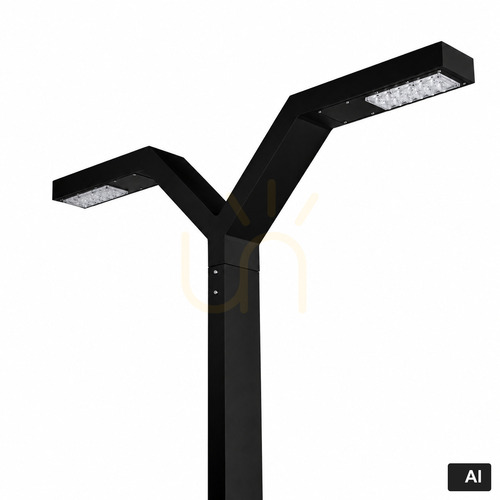
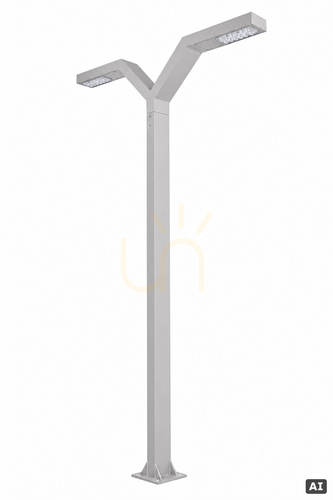
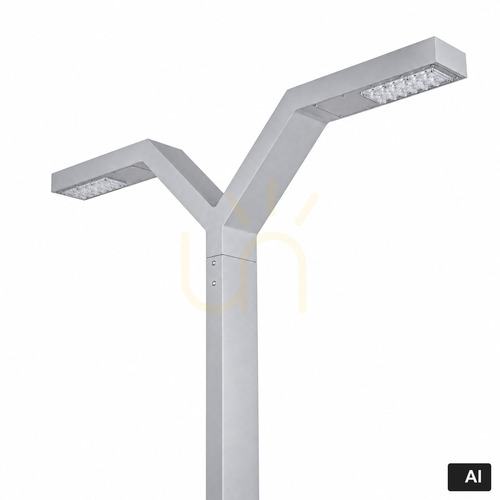
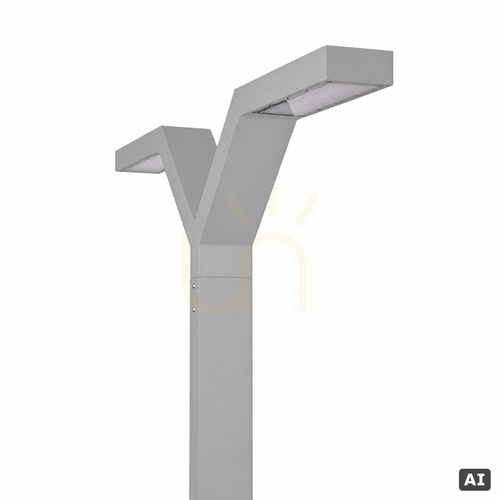
Multi-headed and CCTV columns — dual lanterns, or a column that also carries a camera; one structure instead of two.
By cross-section you'll meet round (tapered), square and octagonal columns. In a garden looks lead the decision; on a road, aerodynamics and wind-load class matter too.
Aluminium, steel or cast iron — which material?
This question comes up in almost every conversation. Each material has its own character:
| Material |
Strengths |
Watch out for |
Best for |
| Aluminium (incl. cast) |
Light, rust-free, elegant; anodised or powder-coated in RAL colours |
Dearer than steel |
Gardens, parks, prestige settings |
| Steel, hot-dip galvanised |
Very strong, affordable, widest height range |
Heavier; needs a coating (galv + powder) |
Roads, car parks, estate streets |
| Cast iron |
Authentic heritage look, solid feel |
Heavy; needs repainting over time |
Victorian, conservation-area schemes |
Honestly? For a typical garden aluminium usually wins — light, smart and it won't rust. Hot-dip galvanised steel comes into its own where budget and load matter, while cast iron nails the period look for heritage settings.
Which height should a lighting pole be?
The rule is simple: the taller the pole, the wider the spacing and the larger the lit area — but also the stronger the luminaire and the more serious the foundation. This table helps you match height to place:
| Height |
Where |
Typical spacing |
| 2.6–3 m |
Paths, patios, entrances |
approx. 8–12 m |
| 4–4.5 m |
Garden paths, driveways, private car parks, foot and cycle ways |
approx. 12–16 m |
| 6 m |
Estate streets, larger car parks, roundabouts |
approx. 20–25 m |
Not sure? Narrow the range with the height filter to 3 m, 4 m, 4.5 m or 6 m posts and compare models side by side. In gardens and residential settings the 4–4.5 m band is chosen most often.
Mounting and foundations
How a pole is anchored matters as much as its height — it decides stability for years to come:
-
Root-mounted (dig-in) — the base section is set straight into the ground or a ground socket; quick and economical for lower garden posts (usually up to 4 m). Mind the planting depth.
-
Flange / base-plate mounted — bolted to a pre-cast foundation with an anchor cage; the standard for taller posts and roadside columns.
-
Access door and earthing — the door reaches the fuse cut-out and wiring; proper earthing is a condition of safe installation.
For roadside columns, note compliance with BS EN 40 and the wind-load class — set by height and the luminaire's wind area. Passively-safe columns are also available for roads. In a garden the requirements are lighter, but a solid base still pays off.
Lanterns, brackets and spigot size
Before ordering a lantern, check the spigot (top) diameter — a common standard is Ø60 mm — and the fixing: post-top over the tube, or on a bracket. For outdoor use the IP rating counts: IP44 suits sheltered spots, while IP54–IP65 is the safe choice for free-standing posts. LED modules and E27 lampholders (for LED retrofit) dominate as light sources. A single post can carry more than one lantern where paths cross.
Colours and finishes
Finish is about both looks and durability. The most common are:
-
Hot-dip galvanising — a very tough coating on steel, often the base for paint.
-
Powder coating — the full RAL palette; black, anthracite and graphite are favourites.
-
Anodising — for aluminium; a hard, elegant, scratch-resistant finish.
-
Verdigris and heritage effects — for period cast schemes.
Dark tones recede by day and let the light take the stage at night. Match the colour to the façade and the rest of your outdoor furniture.
Light colour, temperature and control
It isn't only the pole that sets the mood — the light hanging on it matters just as much. In a garden, warm white (2700–3000 K) works best: cosy and less attractive to insects. For paths, car parks and roads, neutral white (4000 K) renders contrast and colour better. Three extras are worth considering:
-
Dusk sensor (photocell) — the post switches on at sunset and off at dawn, no timer needed.
-
Motion sensor — full brightness only on approach; dimmed the rest of the night.
-
Dimming and zone control — night-time set-back saves energy and cuts light pollution.
Choosing the right lumen output
This isn't about "as bright as possible", but even, comfortable light. In practice a garden path is well served by 800–1500 lm, while an estate street calls for 3000–6000 lm and above. Watch the distribution — asymmetric throws light over the carriageway, symmetric spreads it across a square — and the upward share (ULOR). Less sky-glow means better sleep and a friendlier night sky.
Layout ideas with lamp posts
A few proven scenarios to start from:
-
Entrance drive — a row of low posts in an even rhythm draws the eye to the house and marks the axis.
-
Patio and seating area — a single, taller post with warm light instead of several points; fewer shadows on faces.
-
Garden paths — 2.6–3 m posts every dozen metres, topped up with low fittings by the planting.
-
Car park and driveway — 4–6 m posts with a wide-throw luminaire to avoid dark gaps.
Good tip: light in layers — posts give the general light, while spike spots and wall lights add accents.
Durability and maintenance
A well-protected pole lasts many years. Hot-dip galvanised, powder-coated steel and anodised aluminium are practically maintenance-free — an occasional check of the fuse cut-out, tightening of connections and a look at the coating after winter are enough. Cast iron rewards an occasional repaint to keep its finish.
Frequently asked questions
What height of lamp post for a garden?
Paths and patios are fine with 2.6–3 m; garden paths and driveways suit 4–4.5 m. Leave taller 6 m posts for estate streets and larger car parks.
Aluminium or steel?
Aluminium is lighter, won't rust and looks smarter in a garden; hot-dip galvanised steel is cheaper and tougher under load. Choose aluminium for prestige settings, steel for heavily used routes.
Do LED lanterns fit these posts?
Yes. Posts in this category are prepared for LED luminaires — post-top or on a bracket. Check the spigot diameter (often Ø60 mm) and the fixing method.
Root-mounted or on a foundation?
Low garden posts are usually dug in or set in a ground socket. Posts from about 4 m up sit on a pre-cast foundation with an anchor cage — safer, and required roadside.
Which IP rating do I need?
IP44 suffices in sheltered spots; for free-standing posts in the rain, IP54 to IP65 is recommended. The rating mainly concerns the luminaire.
Is the pole protected against corrosion?
Steel poles are hot-dip galvanised and powder-coated; aluminium is anodised or RAL-painted; cast iron is painted. So they shrug off rain, frost and sun for years.
What light colour for a garden?
Warm white 2700–3000 K is recommended — cosy and less insect-attracting. Neutral white 4000 K suits car parks and roads where contrast matters.
How many lumens do I need?
A garden path usually needs 800–1500 lm; an estate street 3000–6000 lm and more. Even distribution matters more than the raw number.
Ready to choose? Browse the models above, use the height and material filters — and if you need to floodlight a large, open area from a single tall point, see our lighting masts.