Lighting cables for the details that stay on show
A pendant flex draws a line through the room; a table lamp cable often sits beside the objects you use every day. Choosing its colour is part of designing the light, but choosing its construction comes first. The right lighting cable must suit the fitting, its protection requirements, the cable entries and the way it is supported. Once those conditions are met, fabric braid or a clear outer finish can give the cable a deliberate place in the scheme.
This category concerns separate cables for lighting, rather than complete pendant sets or prewired fittings. A length of lamp flex does not automatically include a plug, switch, ceiling rose or lamp holder. Check the product contents as carefully as its dimensions. If you need a complete assembly, a photograph of a cable beside a bulb does not establish that all of those parts are supplied or compatible.
Begin with the fitting you are supplying
For a replacement cable, the starting point is the luminaire documentation and its original electrical design. Note its protection class, the required number of conductors and the permitted cable type. A lamp that requires a protective earth cannot be converted to two-core flex simply because its new LED bulb uses little power. The earth requirement concerns protection against a fault, rather than the amount of electricity used during normal lighting.
Equally, adding a three-core cable does not by itself turn an old lamp into a correctly earthed fitting. The lamp holder, internal wiring, metal parts, terminals and cable retention need to form a suitable whole. The material of the visible base is not enough to determine the protection arrangements. If an older lamp has no reliable markings or documentation, have its construction assessed by a suitably qualified person before deciding which cable to use.
Lighting flex is also different from cable intended for the fixed wiring of a building. Being flexible, decorative or marked with a familiar cross-section does not establish approval for installation within a wall. Nor is a mains lamp cable an automatic substitute for a low-voltage LED connection, control lead or manufacturer-specific wiring harness. Match the intended circuit and equipment requirements, including any specified connectors, rather than relying on appearance.
Core count, conductor area and cable diameter
In a designation such as 2 × 0.75 mm², the first figure gives the number of cores and the second gives the cross-sectional area of each conductor. It does not describe the outside diameter of the flex. This distinction matters when comparing a new cable with an existing one: the conductors might have the same area while the finished cable, including its textile covering, is considerably larger.
A designation using G identifies a cable with a protective conductor in that cable designation; confirm the full description and manufacturer information. Core count alone is not a complete specification. Rated voltage, insulation material, temperature limits and the stated application also matter. Do not infer an earth conductor from a photograph of a textile covering or assume that two three-core products have the same internal construction.
The conductor area is relevant to electrical selection, while the outside dimensions govern entry into the fitting and retention by its cord grip. Both must be checked. A cable may pass through a hole yet remain too small for the grip to hold correctly. At the other extreme, forcing a thick braided flex into a narrow entry can damage its covering or insulation. A round, flat or twisted profile may also require different mechanical accommodation.
What fabric covering does, and what it does not establish
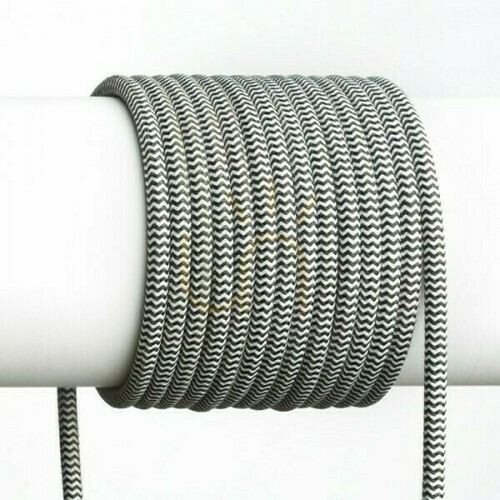
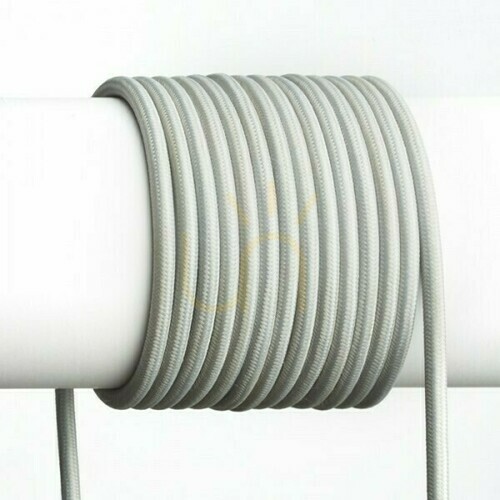
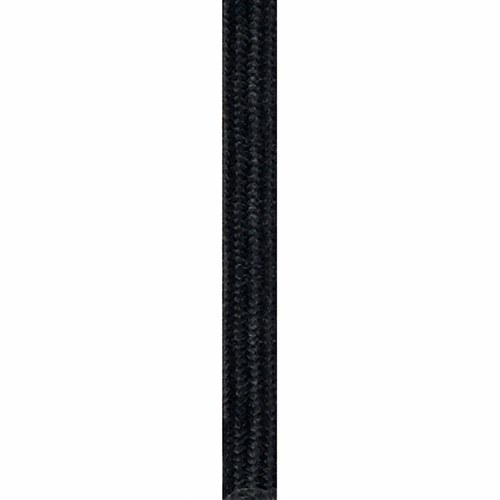
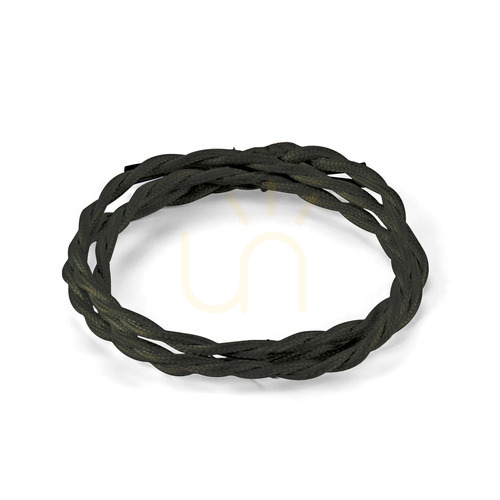
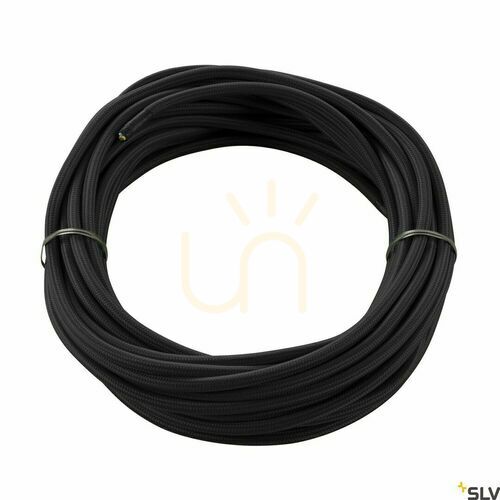
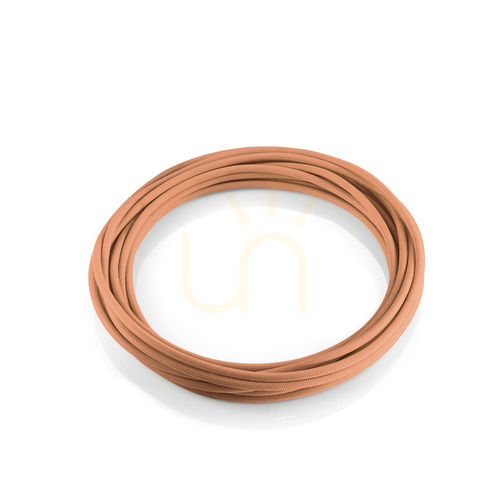
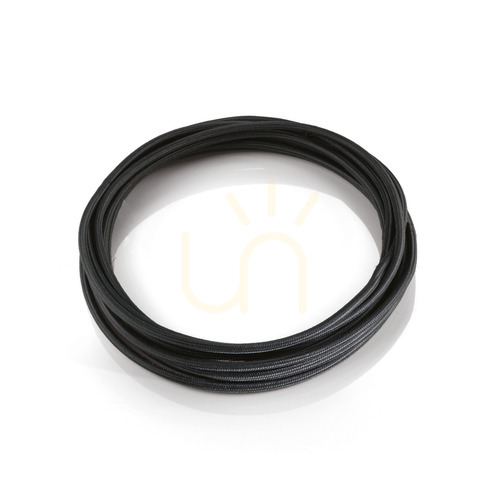
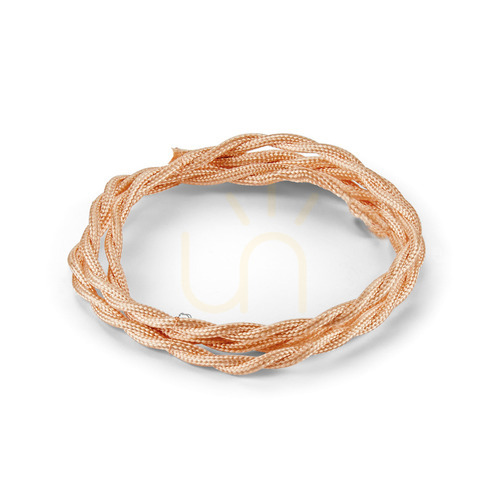
Fabric-covered lighting cable makes the supply lead part of the finish. A smooth braid gives a simple continuous line, while a twisted or patterned covering is more noticeable along an exposed run. Descriptions such as linen effect, cotton braid or silk-like finish concern the outer material or its appearance. They do not establish the electrical insulation rating or the permissible temperature of the complete cable.
The decorative layer should never be treated as a replacement for the specified insulating layers. Likewise, a natural-looking braid is not evidence that the cable can tolerate proximity to a hot lamp holder. Check the actual cable specification and the clearances or routing required by the fitting manufacturer. Different cables with similar coverings can have different insulation materials underneath.
A clear cable can be useful where a contrasting textile line would interrupt a glass or metallic design. Transparency is an appearance, however, rather than a technical material specification. FEP must be expressly identified if that is the required insulation material; a clear finish alone is insufficient. Use the ratings of the selected product and avoid transferring temperature or application claims from another clear cable.
| Selection point |
Why it matters |
Information to compare |
| Two-core or three-core construction |
The fitting may require a protective earth |
Luminaire protection class and full cable designation |
| Conductor cross-sectional area |
Electrical suitability and terminal acceptance depend on it |
Each conductor's area and the permitted conductor construction |
| Outside diameter and profile |
Entries and cord grips must fit the complete cable |
Dimensions including any fabric covering |
| Braided or clear finish |
The exposed cable becomes part of the visual design |
Actual insulation material and stated temperature limits |
| Length and supply format |
A cut length is different from an assembled lead |
Unit of sale, finished length and included end fittings |
Coordinate the cable with the lamp holder and cord grip
The connection hardware must accept the selected conductors. Fine-stranded flexible conductors are not automatically suitable for every terminal intended for a rigid wire. Check the accepted conductor types, area range and any required preparation in the terminal manufacturer's instructions. There is no universal rule that one end treatment will suit every lamp holder, inline switch and connection block.
Mechanical compatibility deserves the same attention. A cord grip should retain the cable as intended for the fitting, rather than leave electrical terminals to resist pulling forces. Its permitted cable range must include the actual finished flex. A visible metal edge needs the protection provided by the lamp design; decorative braid should not be relied on to prevent damage where the cable passes through an unsuitable opening.
For a floor or desk lamp, consider where movement will occur. A cable that is repeatedly bent at a tight exit may be unsuitable even if the colour and conductor area look right. Respect any minimum bend radius and installation conditions specified for the cable. Allow the lamp's design to determine the route, particularly around hinged arms or adjustable sections, rather than forcing the flex into an attractive but restrictive shape.
Separate electrical supply from structural suspension
A thick-looking cable does not carry a general promise that it can support a pendant. The suspended weight, cable retention and supporting parts must be assessed as a complete arrangement. Some fittings are designed to hang using an appropriate retained flex; others use a separate wire, chain or dedicated suspension. Do not assume that a fabric-covered cable can take the weight of a shade merely because another pendant uses a similar-looking cord.
Where a separate support is required, it must carry the load in the way specified for the fitting. Conductor area is not a substitute for a suspension rating, and a textile finish gives no dependable indication of tensile capacity. The same principle applies when replacing a shade with a heavier one: the existing cable and fixing arrangement cannot be judged solely by how firmly the old light appeared to hang.
Plan the length along the actual route
Measure the route the cable will follow, including its passage through the lamp base or ceiling rose and the space needed for terminations under the relevant instructions. A straight measurement from ceiling to shade may omit part of the required length. There is no single spare allowance that suits every fitting, so use its construction to determine the final requirement.
For a table lamp, consider the distance to the intended supply point with the lamp in its usual position. The lead should not be pulled taut or create a loose loop across a walkway. For a group of pendants, plan each drop individually and check the supporting arrangement. Moving the light away from the ceiling point may require suitable routing components; extra cable length alone does not provide those components.
Read how the product length is stated. Metre-length cable, a fixed cut length and a finished cord set are different purchase formats. A cable sold by length may have no prepared ends, while a preassembled lead should identify its fitted parts. Do not assume that an illustrated run represents the exact length supplied or that ordering several units necessarily produces one continuous piece.
Use colour and texture with the rest of the room
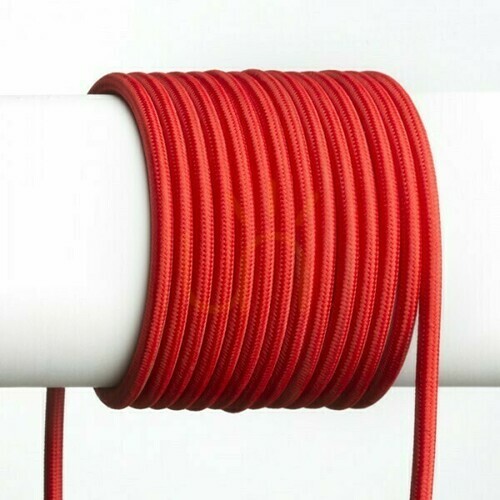
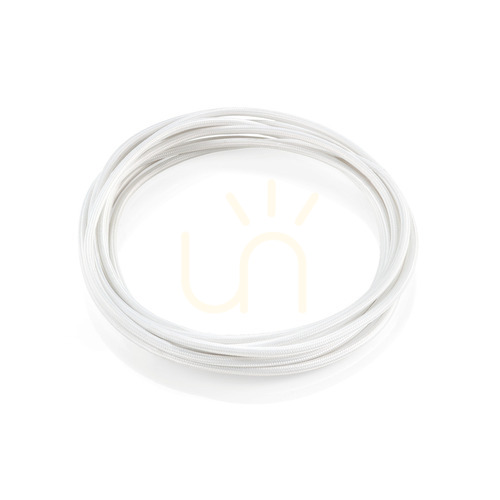
A black flex can define a pendant against a pale ceiling and echo dark furniture or a metal frame. White or cream reduces contrast in a lighter interior. A natural-looking braid brings a visible texture to simple ceramic or timber forms, while a bright cable is more effective when it relates to another deliberate detail. These are visual choices within the range of technically suitable cables.
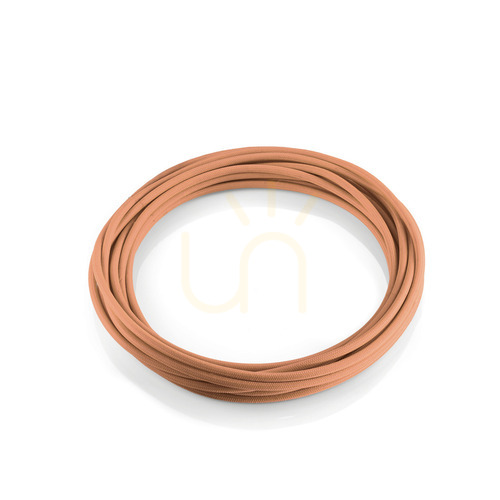
View patterned braid over the full intended run. A small pattern can merge into a single tone at room distance, whereas a twisted profile remains more pronounced in side light. A gold- or copper-coloured outer finish does not identify the conductor material inside. Similarly, choosing a soft-looking textile does not establish that the cable will bend or hang in the same way as the lead being replaced.
Replacement, environment and ongoing care
Renewing a vintage lamp calls for more than covering old wiring with new fabric. Deteriorated insulation, damaged holders and missing retention need their own assessment. A new cable cannot correct an unsuitable internal connection or an incomplete protective arrangement. If the old lead has been cut, crushed or worn at its entry, identify the cause so the replacement is not exposed to the same damage.
Do not treat an indoor decorative flex as an outdoor cable. Resistance to moisture, sunlight and temperature changes must be documented for the particular application, and the complete fitting and connections need suitable protection. A textile covering does not make a lead weatherproof, and transparency does not indicate suitability for burial or permanent wet conditions. The same care is needed when a cable route approaches a heater or another hot surface.
Keep maintenance consistent with the material instructions. Inspect the cable and its entry points when a lamp is moved or serviced, and stop using a lead with visible damage. A fabric sleeve should not conceal a repair or be used to make a damaged cable look presentable. Electrical replacement and the assessment of a mains-powered fitting should be carried out by someone with the appropriate competence.
Questions about lamp flex
Is lighting cable the same as a complete pendant kit?
No. Separate flex supplies the cable element. A kit should explicitly list its lamp holder, ceiling rose, connection parts and any suspension components. Check the stated contents and intended assembly; a styled photograph cannot confirm that all the items pictured are supplied or suited to one another.
Can I use two-core flex with an LED bulb?
The bulb technology does not decide this. The fitting's protection class and construction determine whether a protective earth is required. A low-wattage LED lamp does not remove that requirement. Follow the luminaire documentation and have an undocumented older fitting assessed before selecting its replacement lead.
Does 0.75 mm² describe the overall cable thickness?
It describes the cross-sectional area of a conductor. Outside diameter is a separate measurement, normally given in millimetres, and includes the insulating layers and any outer braid. Terminal selection and cord-grip selection therefore require different dimensions, even when replacing a familiar-looking cable.
Is every clear lighting cable made from FEP?
No. Clear describes its appearance. The insulation material must be stated in the product information, together with the relevant operating limits. Only use FEP properties when that material and the particular cable rating are confirmed; an apparently identical clear coating is not sufficient evidence.
Can fabric flex support a glass shade?
Only where the fitting, cable and retention arrangement are designed for that suspension. Neither braid thickness nor conductor area provides a general load rating. A separate support may be required, particularly if the shade or its weight has changed. Check the specified arrangement rather than copying another light.
How much spare length should I allow?
Use the actual route and the fitting's termination and retention requirements. Include hidden sections within the lamp or ceiling assembly, but avoid an arbitrary allowance that leaves excess cable where it can snag. Check the supplied length and unit of sale before ordering, especially for several different pendant drops.
Does textile covering make a cable heat resistant?
Not by itself. The complete cable's specified temperature range and the lamp's routing requirements govern its suitability. Fabric names and decorative finishes do not establish heat resistance. Pay particular attention to the area around the holder and other warm components without assuming that a familiar braid is suitable.
Can indoor lamp flex be used on a patio?
Only if the selected cable is explicitly suitable for the conditions and the complete lighting assembly is designed accordingly. Outdoor use involves more than rain, including sunlight, temperature and mechanical exposure. An indoor decorative cable should not be treated as a garden supply lead simply because it has an outer covering.
For the other parts of a suitable lamp assembly, explore our lighting accessories and compare each component's requirements with those of the chosen flex.