Find out what IP rating to choose for home and garden lighting ✅ How to light a bathroom What external factors to consider.
Victoria


Good garden accessories make a garden or terrace easier to use: they give shade where the sun is too strong and privacy where neighbours or the street can see in. In this section the focus is on natural shade and screening: coconut-fibre shade sails, coconut-fibre screening rolls and fence slats that close the gaps in an existing fence.
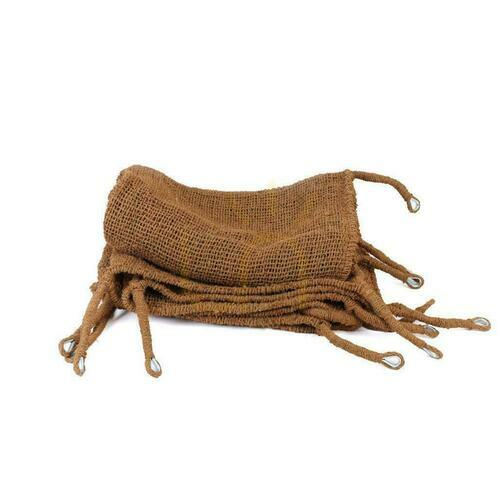
A coconut-fibre shade sail is a thick, hand-woven mat of natural fibre with rope edges, stretched between walls, posts or trees. Unlike a closed, waterproof fabric sail, it lets air through the open weave, so warm air escapes and the shade underneath stays cooler, while the light falls in a dappled pattern rather than a flat dark patch. Triangular and rectangular sails suit terraces, pergolas and pool sides. Coconut fibre resists rot well, and in the weather it slowly turns from brown to a silvery grey.
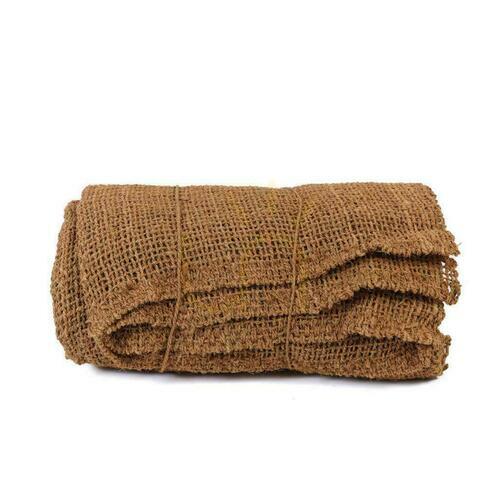
Coconut-fibre screening comes as a long roll, about 1.5 m high, that you fix along posts, a railing or an existing fence. It is soft, so it needs a support along its length. For a modern wire panel fence, plastic fence slats are the tidier option: strips threaded vertically into the panel that hide the view and hold up well in the weather.
| Need | Good choice | Points to check |
|---|---|---|
| Shade over a terrace | coconut-fibre shade sail | sail size, solid fixing points, height of at least 2.5–3 m |
| Natural-looking privacy | coconut-fibre screening roll | roll height and length, posts or fence to fix it to |
| Privacy in a wire panel fence | fence slats | panel height and length the set is made for, colour |
A coconut sail is heavy, and much heavier when wet, so every fixing point needs to carry real load: wall anchors in brick or concrete, sturdy posts set in the ground or mature trees. Lay the sail out on the ground first, fix two opposite corners at light tension, then tension the rest with rope or turnbuckles, ideally with two people. Hang it high enough to walk under comfortably. Natural fibre relaxes when wet and tightens as it dries, so check the tension after the first rains. Screening rolls are tied to posts or a fence with cable ties or wire every few tens of centimetres, top and bottom.
Coconut fibre needs no treatment. In snowy areas take the sail down for the winter and store it dry and ventilated. Fence slats only need a rinse with water now and then.
No. It gives shade, not shelter: rain runs through the weave, which also means it does not hold water like a fabric sail.
High enough to walk and sit comfortably underneath, usually around 2.5–3 m, with larger sails hung higher.
Yes. Screening rolls are tied onto the fence, and fence slats are made to slide into the panels of a wire fence.
To furnish the shaded spot, see garden furniture, or bring green to a wall with vertical gardens.


Find out what IP rating to choose for home and garden lighting ✅ How to light a bathroom What external factors to consider.