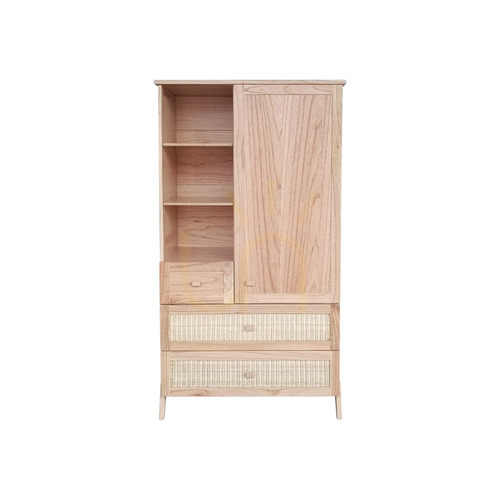
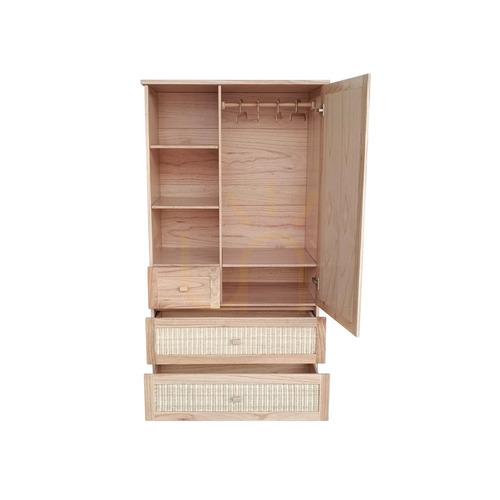
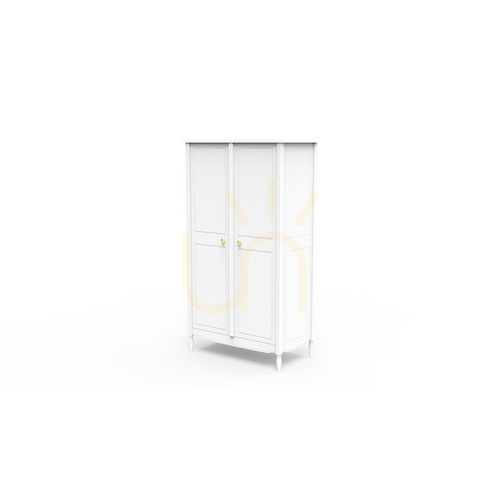
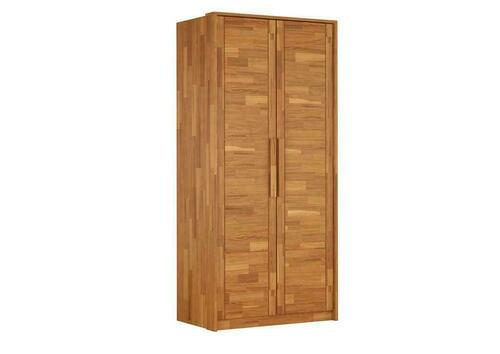
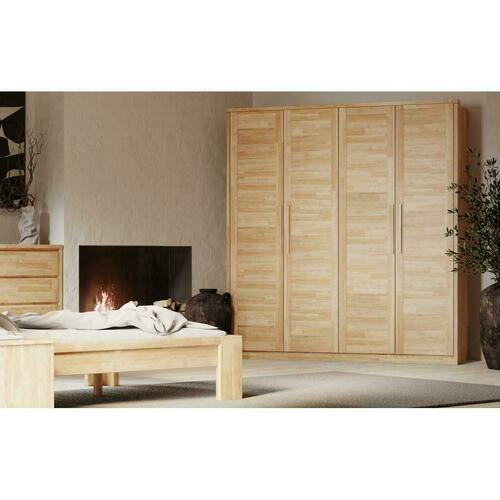
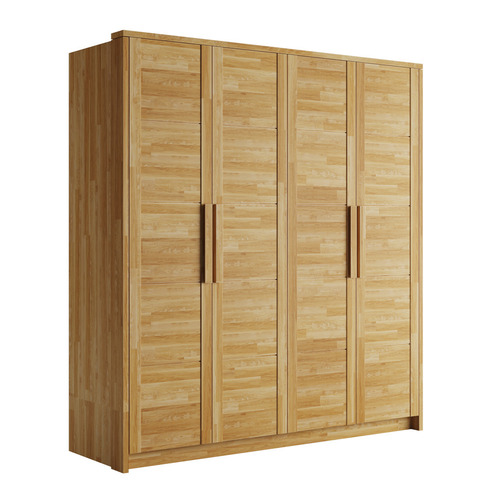
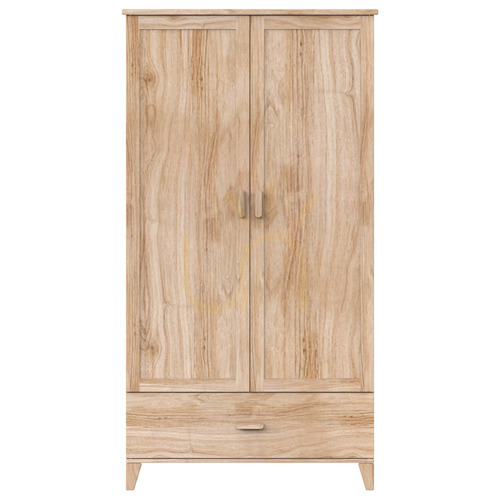
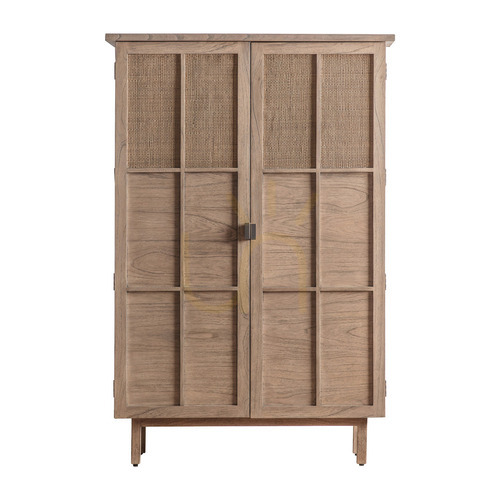
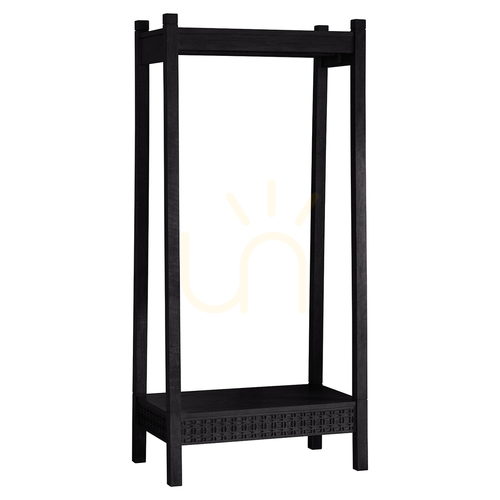
A wardrobe is the one piece of bedroom furniture you notice every morning, so it has to fit three things: the room, the clothes and the way you live. Here you will find freestanding wardrobes in solid oak and beech, cane-fronted and mango-wood designs, children’s wardrobes, open hanging units and light textile wardrobes on a steel frame.
Types of wardrobe
-
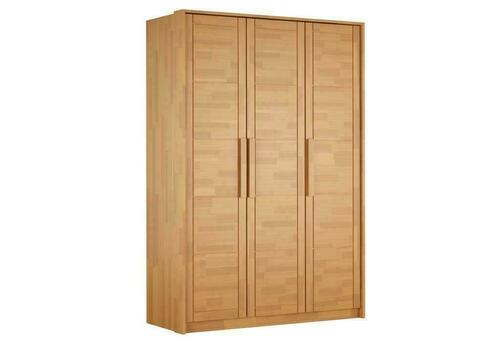
Solid wood wardrobes. Oak or beech, oiled or lacquered, with hinged doors. Heavy and stable, they are bought for decades rather than for one flat.
-
Veneered and MDF wardrobes. Smooth painted or oak-effect fronts, often with a mirror on one door. Lighter to move and easier to fit into a modern scheme.
-
Rattan and cane-door wardrobes. Woven panels let air reach the clothes and soften the look of a large piece. They suit boho, coastal and Japandi bedrooms.
-
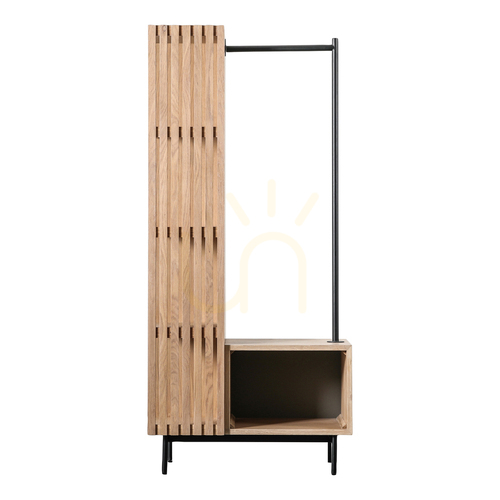
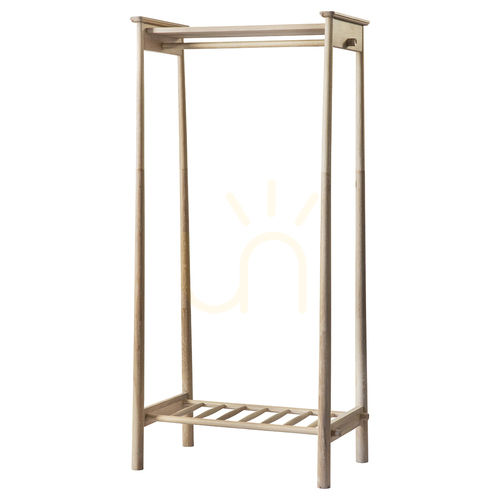
Open wardrobes. A frame with a hanging rail and shelves but no doors. Good for a spare room or a capsule wardrobe you want to see at a glance, less so for a dusty street-facing room.
-
Children’s wardrobes. Usually lower and shallower, with two short hanging zones and shelves, because small clothes waste a full-height rail.
-
Fabric wardrobes. A tube frame with a breathable cover and a zip or roll-up front. They go up without tools, pack flat and make sense for students, rentals and seasonal storage.
How to choose the right size
Measure the room before you fall in love with a finish. Note the ceiling height, the skirting board, any radiator or socket behind the planned spot, and how far the doors will swing. Then check the inside, not just the outside.
| Measurement |
Typical value |
Why it matters |
| Internal depth for a crosswise rail |
60 cm minimum, 65–67 cm comfortable |
Below about 55 cm hangers sit at an angle and the doors catch the sleeves |
| Height of a single rail |
about 175–180 cm |
Long coats and dresses hang clear of the floor |
| Lower rail in a double hang |
about 85–90 cm |
Shirts and trousers fit in two layers |
| Shelf spacing |
35–40 cm |
Room for a stack of jumpers without toppling |
| Width of one hinged door |
usually up to 60 cm |
Wider doors strain the hinges and need more floor in front |
A double wardrobe 90–120 cm wide usually holds one adult’s everyday clothes; couples tend to need more, or a wardrobe plus a chest of drawers for folded items. Shallow, open or child-size units are fine where you mostly fold rather than hang.
Materials and finishes
Solid oak takes knocks well and can be re-oiled; lacquered beech is easy to wipe. Painted MDF gives a clean colour but chips if hit with a hard edge. Rattan and cane are light and breathable, but sharp objects can tear the weave. For a children’s room, look for water-based paint and doors that close gently, so small fingers are not caught.
Assembly and safety
Most wardrobes arrive flat-packed in several boxes, and a tall one is a two-person job. Assemble it lying down close to where it will stand, then raise it carefully: a 200 cm wardrobe needs ceiling clearance when tipped upright. Fix tall wardrobes to the wall with an anti-tip strap or bracket, especially where children can open the doors and climb.
Care
Dust wood with a dry or slightly damp cloth and avoid silicone sprays. Give oiled oak a fresh coat of furniture oil once it looks dry. Keep any wardrobe a few centimetres from a radiator and leave the doors open now and then, so damp does not build up behind the clothes.
Frequently asked questions
How deep should a wardrobe be?
For hanging clothes on a rail that runs side to side, aim for at least 60 cm inside. Coats and suits are happier at 65 cm or more. Shallower units work as shelving or for children’s clothes.
Is a fabric wardrobe worth buying?
For temporary or extra storage, yes: it is light, cheap to move and keeps dust off. It will not carry as much weight as a wooden wardrobe, so keep heavy coats to a minimum and do not hang it full of winter wear for years.
Open wardrobe or one with doors?
Open designs make a small room feel bigger and let clothes air, but everything stays on show and gathers dust. Doors hide clutter and protect delicate fabrics from light.
Hinged or sliding doors?
Hinged doors open the whole interior at once but need free floor in front. Sliding doors save that space but only ever show half the wardrobe, and they need a little more depth for the track.
To finish the bedroom, add drawer storage with chests of drawers or browse the wider furniture section.