Linear LED lighting turns light into a line rather than a point: a slim, continuous run that can follow a ceiling, a wall, a kitchen island or a whole warehouse aisle. A linear system takes the idea further, giving you profiles, modules, connectors and supplies designed to work together, so a line can be as short as a shelf or several metres long without visible gaps or patchy brightness.
What counts as a linear lighting system
The term covers several quite different products:
-
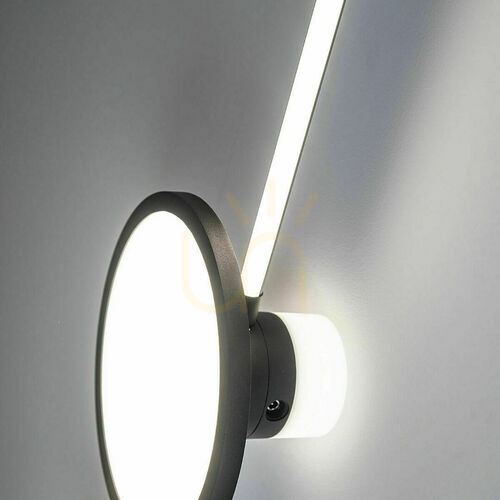
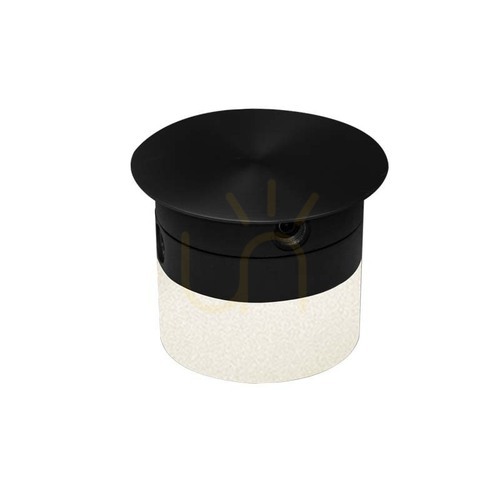
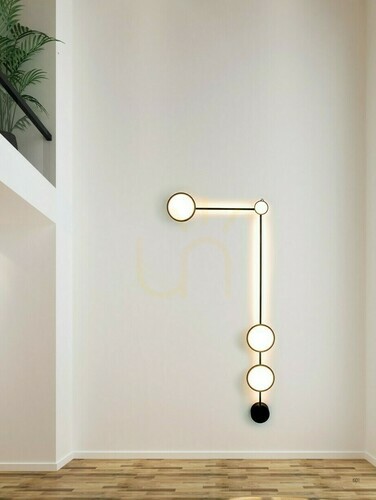
Plug-and-play modular systems. Low-voltage (typically 24 V) bars and light points that click together with jack plugs. No screw terminals, no junction boxes: you build the shape you want from modules of different lengths fed from one supply point.
-
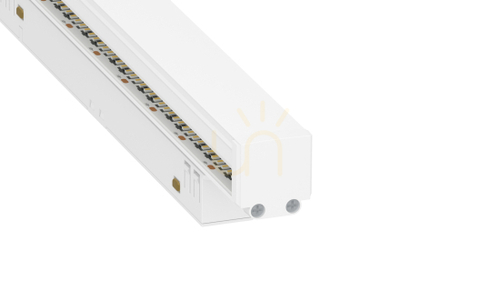
Profile kits. An aluminium or polycarbonate profile supplied with a matching LED strip, diffuser and end caps, ready to connect to a 24 V or 48 V DC driver. Some stand off the wall, and some are sealed to IP68 for wet locations.
-
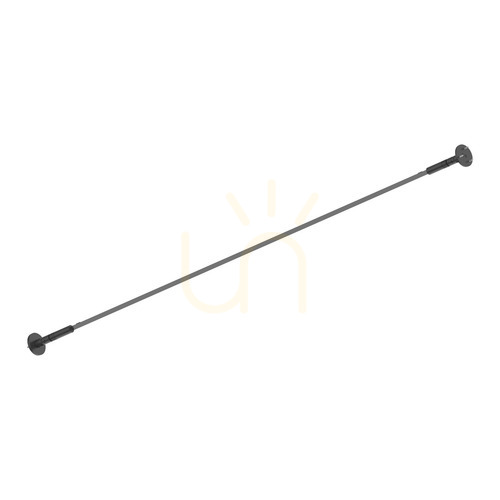
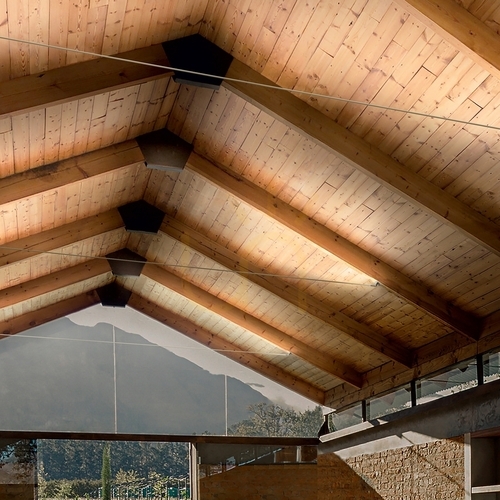
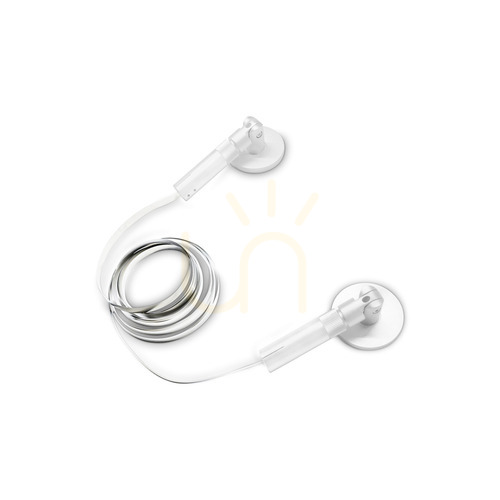
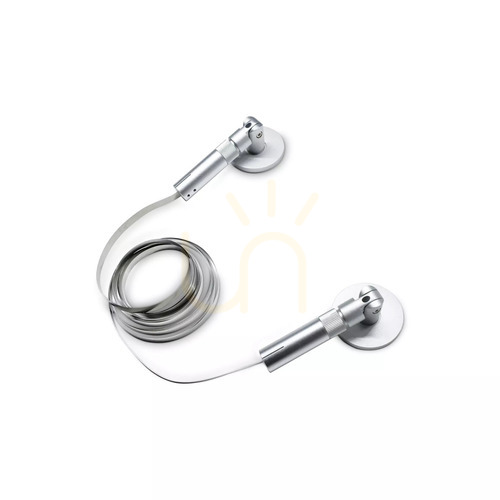
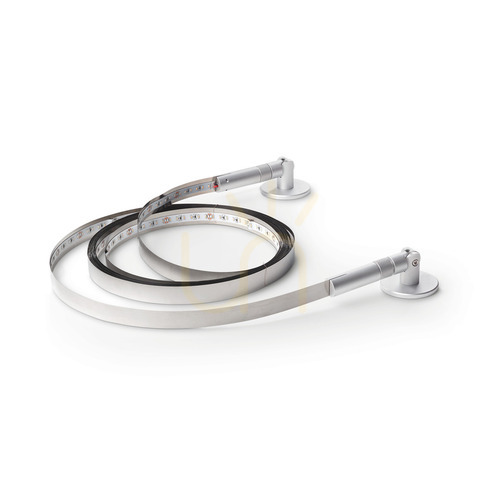
Tensioned tape systems. A thin, flexible steel band stretched from wall to wall that carries LED strips for indirect light, leaving the ceiling itself untouched.
-
Ready-made linear luminaires. Finished bars and long fittings with integrated LEDs, from metre-long office lights to runs of several metres.
-
Continuous-row systems. Mains-powered 230 V luminaires joined end to end for supermarkets, workshops and warehouses, often with asymmetric lenses that throw light onto shelving rather than the floor.
How to choose
Start with the job the line has to do. A strip of accent light under a shelf needs a few watts per metre; a single line lighting an open-plan kitchen needs far more. The table gives typical values to compare against.
| Use |
Typical output |
Colour temperature |
Usual system |
| Accent, shelves, niches |
300–600 lm per metre |
2700–3000 K |
Profile kit or 24 V modules |
| Kitchen island, dining table |
800–1500 lm per metre |
3000 K |
Suspended bar or modular system |
| Office desks, studios |
1000–2000 lm per metre |
4000 K |
Linear luminaire with low-glare diffuser |
| Shops, warehouses |
4000 lm per metre and more |
4000 K |
230 V continuous row |
Beyond output, check the colour rendering (CRI 80 is standard, CRI 90 shows food, wood and skin tones more faithfully), whether the system can be dimmed and by what method (mains dimmer, DALI or a wireless controller), and the finish. Black, white and silver anodised aluminium are the usual choices, and the end caps and suspension parts should match.
Planning and installation
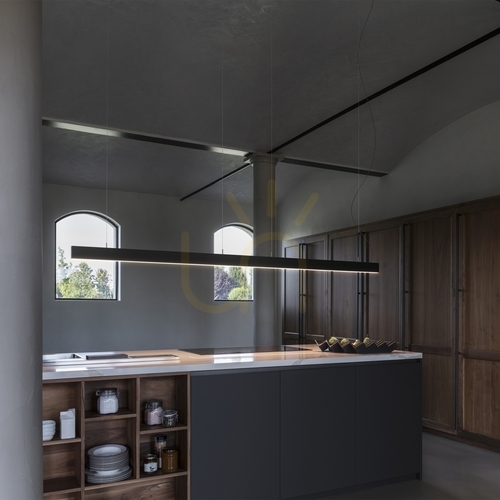
Low-voltage systems need a driver sized for the total wattage plus a margin of around 20%, and long runs may need power fed in at more than one point to keep the far end as bright as the start. Measure the exact length first: modules and kits come in fixed sizes, and a profile cut too short cannot be stretched. Suspended lines usually hang 70–80 cm above a dining or island worktop. Connection to the 230 V supply, including the driver, is work for a qualified electrician.
Care and common mistakes
Dust linear fittings with a dry, soft cloth and keep solvents away from opal diffusers, which they can cloud. The usual mistakes are mixing modules from different systems, which rarely connect, choosing a colour temperature that clashes with the other lights in the room, and placing a bright line directly in the field of view without a diffuser.
Frequently asked questions
What is linear lighting?
It is any light source shaped as a long, narrow line, from a single LED bar to a continuous run across a room. Because the light comes from a length rather than a point, it spreads evenly with fewer harsh shadows.
Is linear lighting good over a kitchen island?
Yes. One suspended line covers the whole worktop evenly, which is hard to achieve with a row of separate pendants. Choose a length about 60–80% of the island and warm or neutral white light.
Recessed, surface-mounted or suspended: which should I pick?
Recessed lines sit flush in plasterboard and look the cleanest but must be planned before the ceiling is finished. Surface-mounted profiles go straight onto an existing ceiling or wall. Suspended lines bring the light closer to a table or desk under a high ceiling.
Do 24 V systems need a separate driver?
Usually yes. Low-voltage modules and kits run from a constant-voltage power supply, sometimes sold separately, so check the product page and add one rated above the total wattage.
For individual parts, see LED profiles and LED power supplies.