Ring ceiling lights are pendants and ceiling fittings built around an open circle or oval, either a single hoop or several rings combined into one piece. Choose one by three things: the diameter against the table or room below it, the height of the lowest ring, and the side of the ring the light actually comes from. Get those right and a ring becomes the calm, graphic centre of a dining area, a living room or a tall stairwell.
The open centre is what makes the shape feel light. You see through it, so even a large ring takes up less visual space than a solid drum shade of the same width. The rest of this guide turns that shape into numbers you can measure at home before you buy.
One ring or a composition of several?
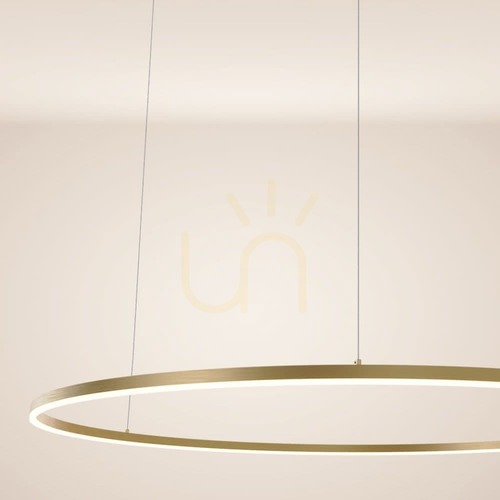
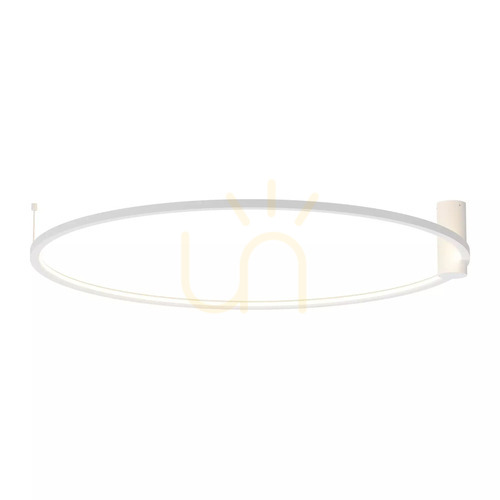
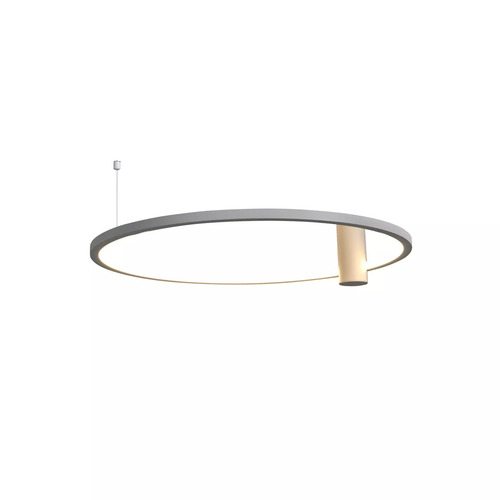
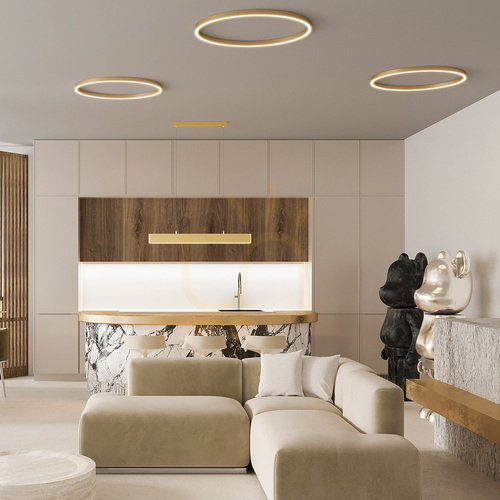
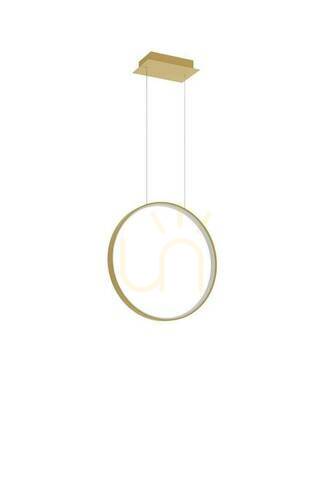
A single ring is the simplest choice and usually the easiest to place. Hung flat over a round table, it frames the seating area. Mounted close to the ceiling, it works as a clean, modern alternative to a classic flush fitting. Some single rings hang at a fixed tilt or vertically, which turns them into more of a sculpture than a task light.
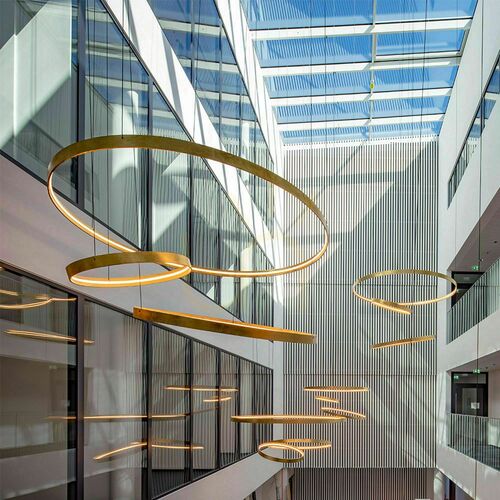
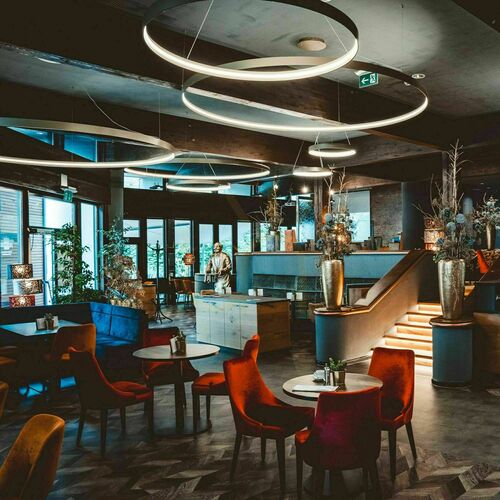
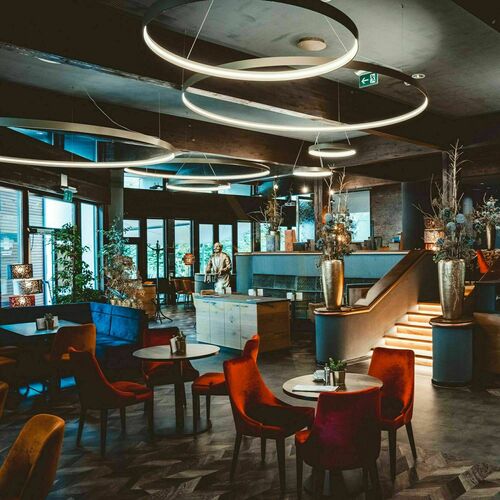
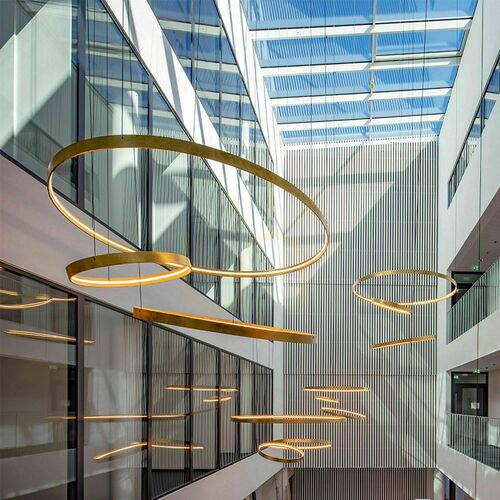
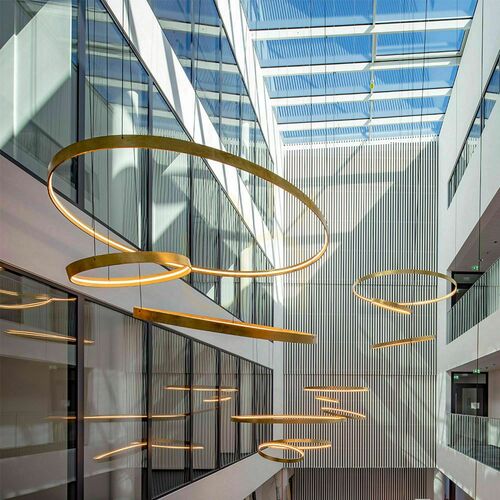
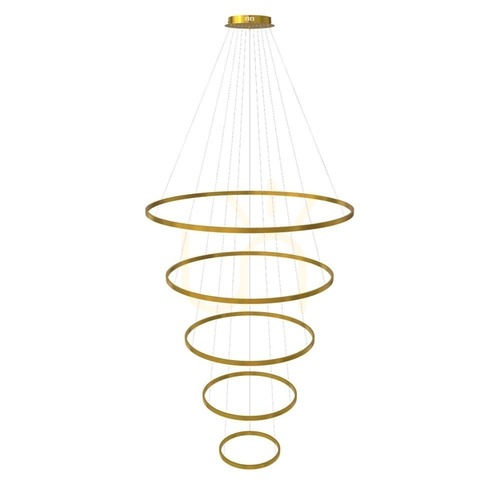
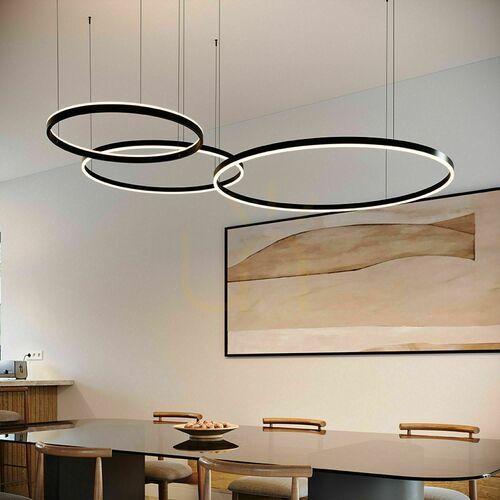
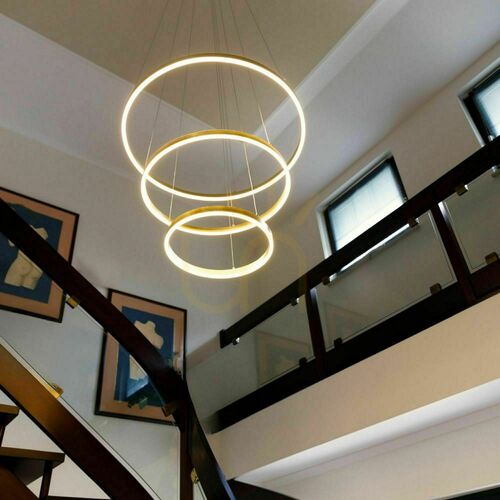
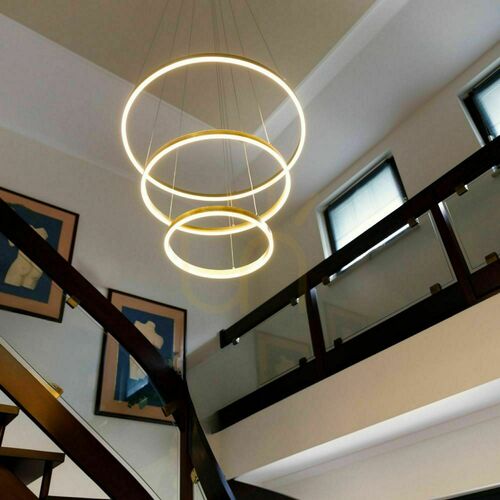
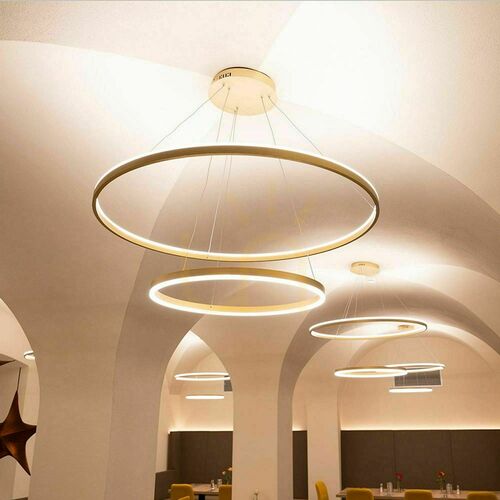
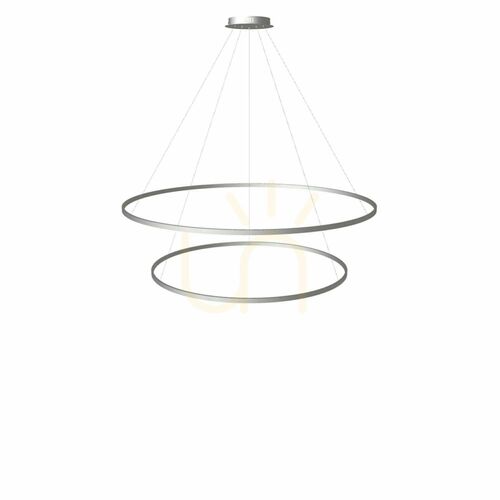
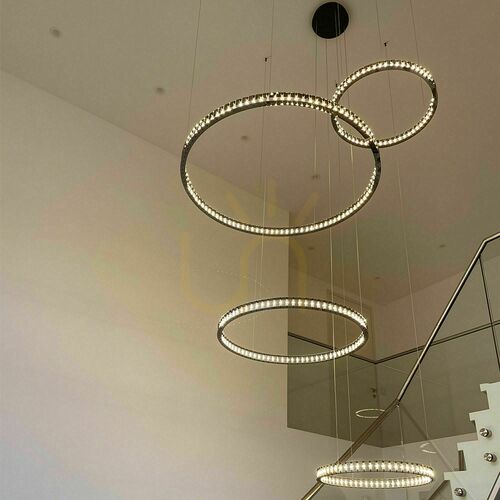
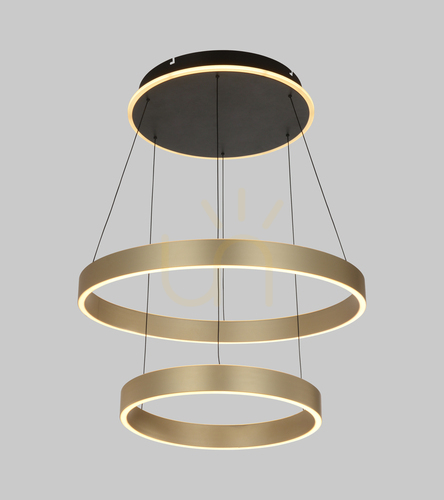
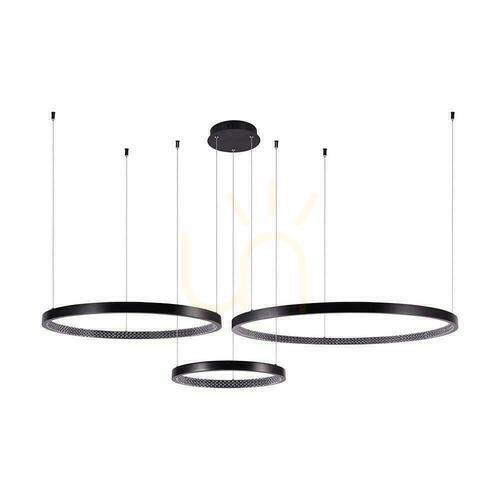
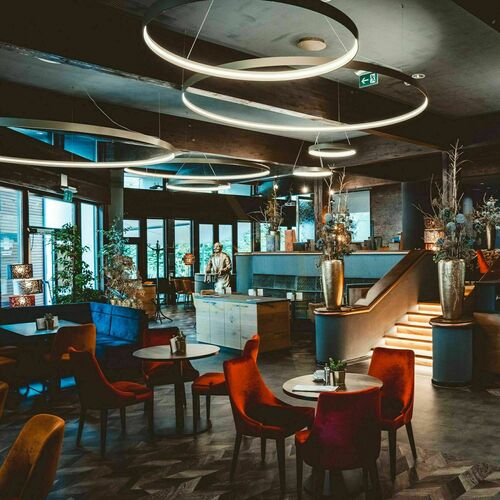
Two, three or more rings open up other effects. Concentric rings sit inside each other on one level or at slightly different heights. Offset rings spread out sideways and cover a longer surface. Cascading rings step down through a tall space, which is why they're so popular over stairs and in double-height hallways. Many compositions come with a fixed geometry; others let you set each ring's height on its own suspension wire. The instructions show which settings the design allows, so read them before you plan an unusual arrangement.
Measure the whole composition, not just the largest ring. Offset rings add width, several levels add depth, and the technical drawing gives you both. Check the plan view, the side view and the view from below. That's the quickest way to see whether the light stays neatly over the table or reaches into the walkway.
| Arrangement |
Works best |
Measure |
| Single ring |
Round or square tables, compact living rooms |
Diameter and total drop |
| Concentric rings |
Larger round tables, centre of an open room |
Outer diameter and the gap between levels |
| Offset rings |
Long tables, kitchen islands |
Full footprint seen from above |
| Cascading rings |
Stairwells, double-height halls |
Height from the top ring to the lowest one |
| Flush or semi-flush ring |
Ceilings under about 2.5 m, bedrooms, corridors |
Body depth including the canopy |
Choose the diameter around the furniture
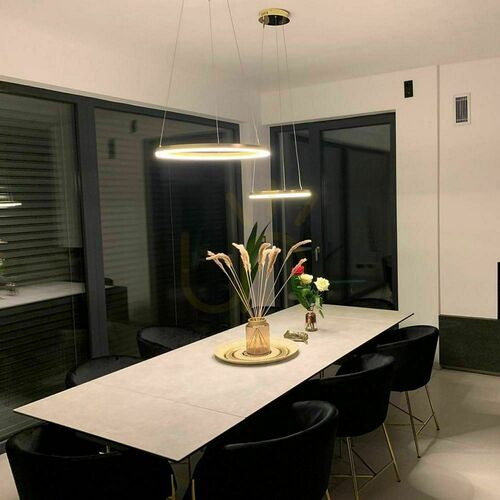
Over a table, a reliable starting point is a ring between half and two-thirds of the table's width. A 90 cm wide table pairs well with a ring of about 45–60 cm; a 120 cm round table with roughly 60–80 cm. Leave at least 15 cm between the outer edge of the ring and the edge of the tabletop on every side, so nobody stands up into it.
For a ring that lights the whole room rather than a table, try the classic rule of thumb: add the room's length and width in metres and multiply by about 8. The result is a sensible diameter in centimetres. A 4 × 5 m living room lands around 70–75 cm. Go a size up for a high ceiling, a size down for a low one.
Long tables and islands need a different approach. An oval ring or an offset composition follows the length better than one round hoop. Alternatively, hang two smaller rings in a row, spaced so each one sits over roughly half of the surface. Aim for the light to reach both ends of the table, not just the middle.
Still unsure? Cut a paper circle at the diameter you're considering and tape it to the ceiling, or lay it on the table. Look at it from the doorway and from the sofa. A thin profile reads lighter than a chunky one, so a 2 cm ring at 80 cm can feel smaller than a 5 cm ring at 60 cm.
Suspension height and the room below
Over a dining table, hang the lowest ring about 70–80 cm above the tabletop. That keeps the light out of seated eye line, lets people see each other across the table and still puts the surface in a pool of light. With a cascade or several levels, measure from the lowest ring, because that's the one people will bump into.
Over an island or worktop, 75–90 cm above the surface is common, since people stand rather than sit. Where nobody sits underneath, such as the middle of a living room or a hallway, keep the lowest point at least 2.1 m above the floor so taller guests can walk under it comfortably.
Under ceilings of about 2.4–2.5 m, a flush or semi-flush ring is usually the better fit. Check the body depth including the canopy; slim models stay within a few centimetres of the ceiling. If you prefer a pendant in a low room, choose one with an adjustable drop and look up its minimum suspension length on the product sheet.
In stairwells and double-height spaces, a cascade can hang a metre or more. Keep at least 2 m of clear headroom above the stair nosing, and think about how you'll reach the light for cleaning later. A ring you can lower on its wires, or one hung within reach of a landing, is far easier to live with.
Where does the light leave the ring?
The glowing surface can sit on the underside, the inside, the outside or the top of the profile, and many rings combine two of these. Each one lights the room differently, so check the light direction on the product sheet or in a photo of the fitting switched on.
-
Downlight from the underside puts light on the table and suits dining or worktops.
-
Uplight from the top washes the ceiling and gives soft, indirect light across the room. It works best with a pale ceiling.
-
Inner or outer glow from the sides makes the ring itself the feature and spreads light towards the walls.
-
Up and down combined gives you table light and ambient light from one fitting, which is handy in open-plan rooms.
A matt opal diffuser over the LEDs hides individual dots and keeps glare low when you look up at the ring. A clear or prismatic cover sparkles more and throws crisper light. Over a table, opal is the easier choice for the eyes.
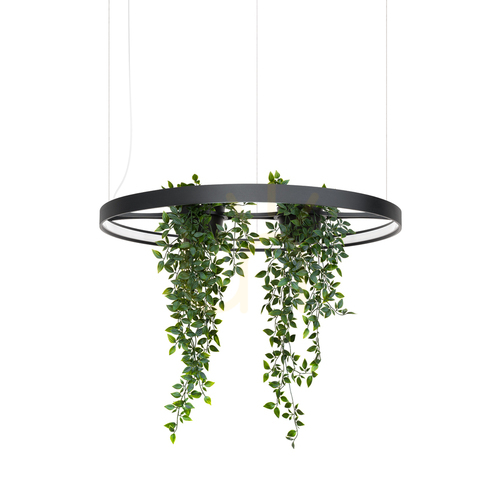
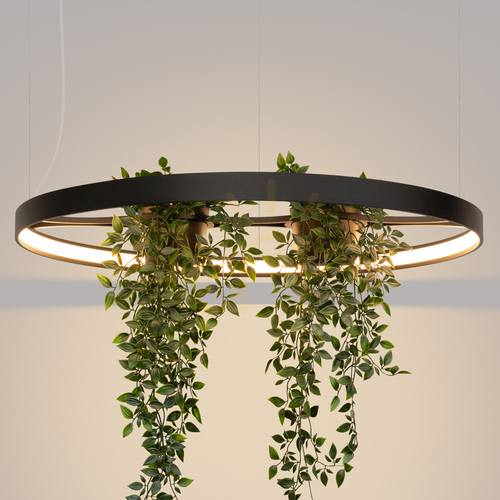
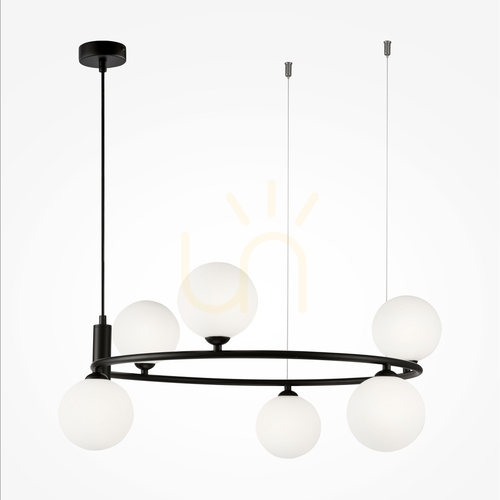
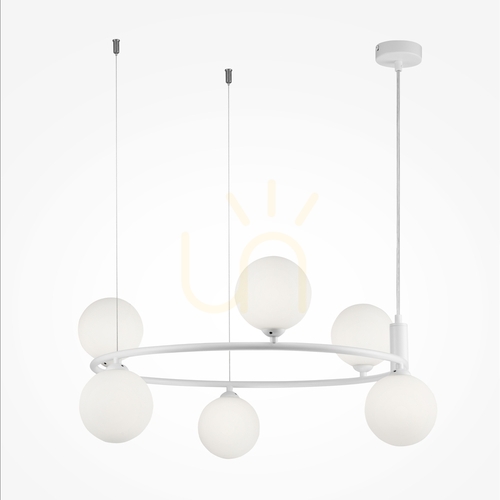
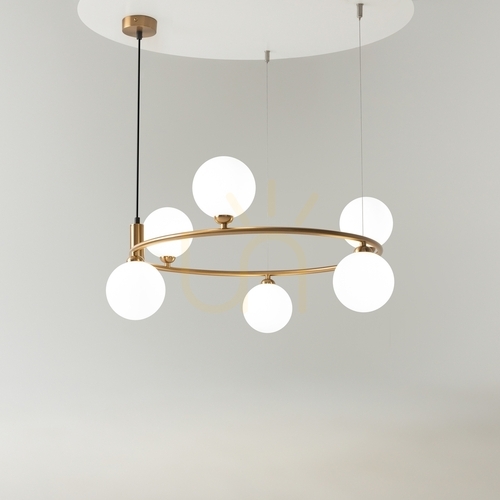
Some rings are a frame carrying separate shades or bulbs rather than a glowing profile. These give a more decorative, chandelier-like look. Check how visible the bulbs are from below and from the seats.
LED output, colour temperature and colour rendering
Most ring lights use an integrated LED strip running inside the profile. Compare lumens, which measure light output, rather than watts, which measure power use. As a rough guide, a dining pendant gives a comfortable table with 1500–3000 lm, and a ring meant as the main light in a 15–20 m² living room benefits from 2000–4000 lm, ideally dimmable. Make sure the figure you compare refers to the whole fitting rather than to one ring.
For dining and relaxing, warm white around 2700–3000 K feels homely and matches most other lamps in a house. Neutral white around 4000 K suits kitchens, offices and workspaces. Some rings offer adjustable white, often from about 2700 K to 6500 K, so one fitting can handle a bright working evening and a cosy dinner.
Colour rendering is listed as CRI or Ra. Choose CRI 90 or higher if you want food, artwork and fabrics to look natural; CRI 80 is the standard minimum and fine for corridors. Gold, black and white finishes are about the body only, so the light colour is always a separate line on the spec sheet.
Integrated LEDs are typically rated for 25,000–50,000 hours, which means many years of normal home use. If you'd like to be able to replace the module or driver one day, look for a spare-part or replaceable-module note in the documentation. Rings that hold separate bulbs need the right holder type (often E27, E14 or G9) and a bulb within the stated maximum wattage.
Dimming needs the specified control method
Ring lights are dimmed in several ways, and the product sheet tells you which one a model uses:
-
Wall dimmer on the mains, usually a trailing-edge LED dimmer. Check that its minimum load fits the fitting's wattage, otherwise you may see flicker at low levels.
-
Remote control supplied with the light, often with brightness and colour temperature buttons.
-
App or smart-home control via Bluetooth, Wi-Fi or Zigbee, handy for scenes and schedules.
-
DALI or 1–10 V in professionally planned installations.
Decide early whether you want to dim from the wall, a remote or your phone. With a multi-ring piece, look for "separately switchable" in the description if you'd like to light only one ring or switch between uplight and downlight. With separate bulbs, use dimmable LED bulbs together with a dimmer listed as compatible with them.
Materials, finish and the ceiling support
The ring itself is usually aluminium or steel, finished in powder coat or a metallic look such as brushed gold, brass or copper tone. The light zone is covered by an acrylic or polycarbonate diffuser, sometimes glass. Matt black and white are the most forgiving finishes for dust and fingerprints; polished metallics look stunning but show marks sooner. For cleaning, follow the care note for the stated material and coating.
Check the fitting's weight on the product sheet and choose a fixing to match. A large multi-ring composition is often heavier than it looks. Solid concrete or timber joists take standard fixings well. On plasterboard, use cavity anchors rated for the load or fix into a joist. Wide compositions may have more than one suspension point, so mark them all before drilling.
Any work on the ceiling connection should be done by a qualified electrician with the power isolated at the consumer unit. Adjust the suspension wires only in the way the instructions describe, and keep the arrangement level so the weight sits evenly on every wire.
For bathrooms or covered outdoor spaces, choose a ring with an IP rating for that location. In UK bathrooms, zone 2 needs at least IPX4, and many installers use IP44 as the standard. Indoor-only ring pendants belong in dry living spaces.
Questions about ring ceiling lights
Can a ring light suit a lower ceiling?
Yes. Under about 2.5 m, a flush or semi-flush ring keeps the full look without the drop. Check the body depth including the canopy, and if you want a pendant anyway, choose one with an adjustable drop and a short minimum suspension.
Which ring diameter should I choose for a table?
Aim for half to two-thirds of the table's width and keep at least 15 cm clear to the table edge. Around 45–60 cm suits a 90 cm table and 60–80 cm a 120 cm round table. For long tables, look at oval or offset designs.
How high should a ring pendant hang over a dining table?
About 70–80 cm between the tabletop and the lowest ring. That keeps light out of people's eyes while still lighting the plates. Over a kitchen island, 75–90 cm works well.
Do more rings mean more light?
More rings mostly add visual impact. Brightness comes from the total lumen output, so compare that figure for the whole fitting. For a main light in a living room, 2000–4000 lm with dimming is a comfortable range.
Can each ring be adjusted separately?
On many cascading and multi-level designs, yes: each ring hangs on its own wires and you set the heights during installation. Fixed compositions come pre-assembled. The instructions list the allowed range for each wire.
Which ring lights also light the ceiling?
Those with an uplight or a combined up-and-down light output. They give softer room light and work best under a white or pale ceiling. Look for the light direction on the product sheet or a photo of the ring switched on.
Can I use the wall dimmer I already have?
Often, if the light is marked as mains-dimmable and your dimmer is a trailing-edge LED type with a suitable minimum load. Rings controlled by remote or app usually work best with a simple on/off switch on the wall.
How should a larger ring arrangement be cleaned?
Switch off at the wall, let the LEDs cool and wipe the profile with a dry or slightly damp microfibre cloth. Hold the ring steady with one hand, and keep liquid away from the canopy and the driver.
What should I compare before choosing?
Overall size, drop, light direction, lumens, colour temperature and the control method. If another shape would suit your space better, browse our other pendant lights and compare them on the same points.