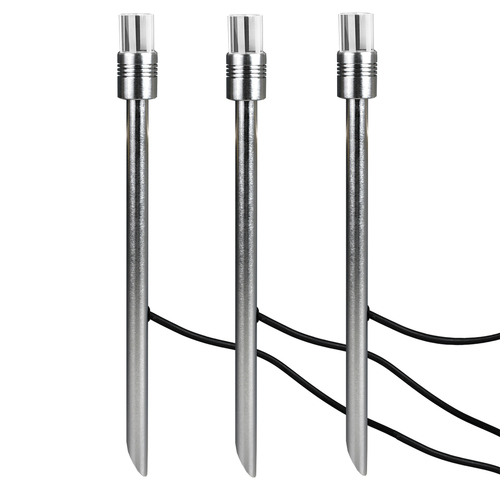
Low voltage garden lighting runs at 12 V or 24 V instead of 230 V mains: a transformer plugs into an outdoor socket and feeds a thin cable that you can lay through borders, along paths and round the patio yourself. Because the voltage on the cable is too low to give a dangerous shock, you can move a spotlight, add another fitting or change the layout next spring without calling anyone out.
That flexibility is why plug-in garden lights are so popular for lighting trees, shrubs, paths and steps. The trade-off is that the system has to be planned a little: the transformer, the cable and the fittings work as a set.
How a low voltage system fits together
-
Transformer (driver) – converts mains to 12 V or 24 V. It sits near the socket, often with a built-in timer, dusk sensor or remote.
-
Main cable – runs from the transformer through the garden. Fittings connect to it with waterproof plug-in or clamp connectors, so there is no stripping of wires in the rain.
-
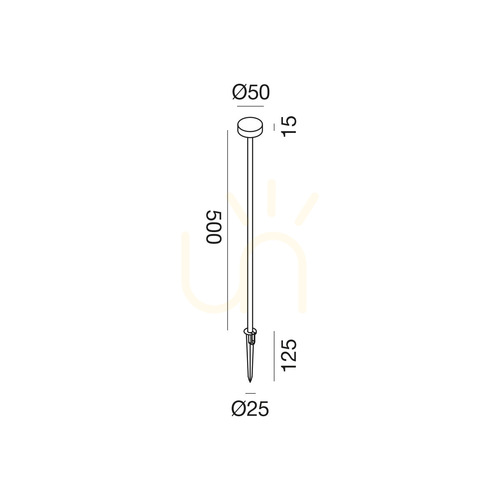
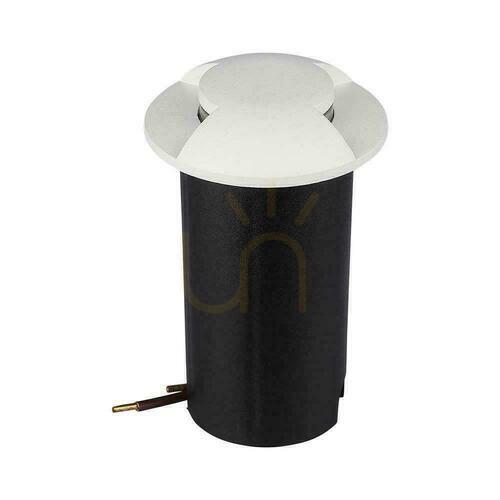
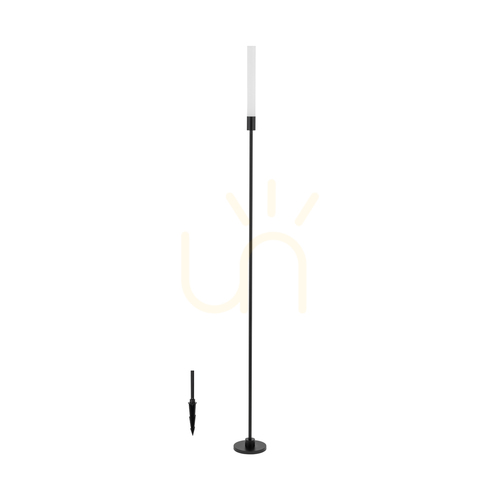
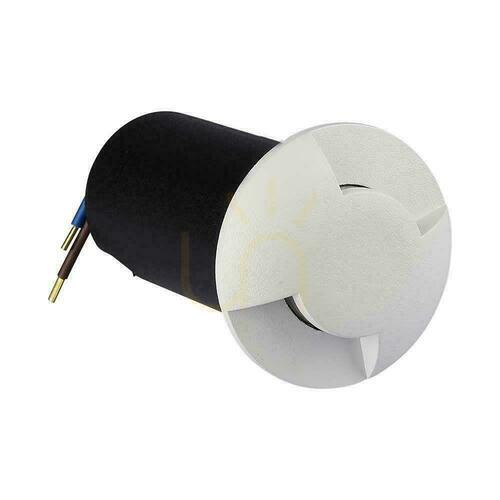
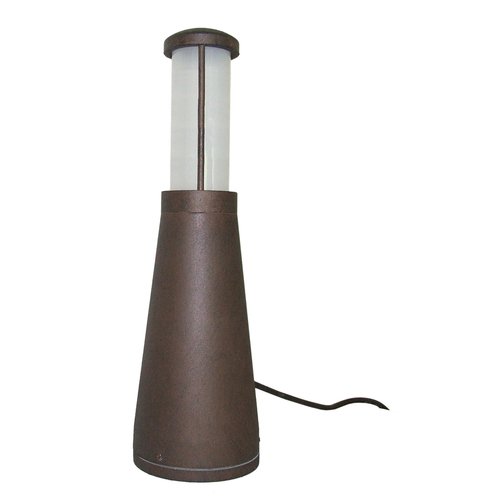
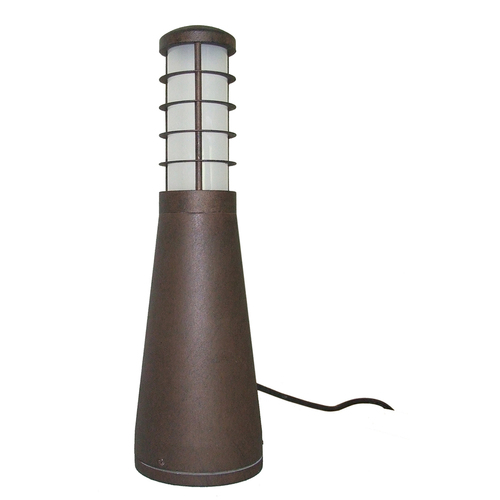
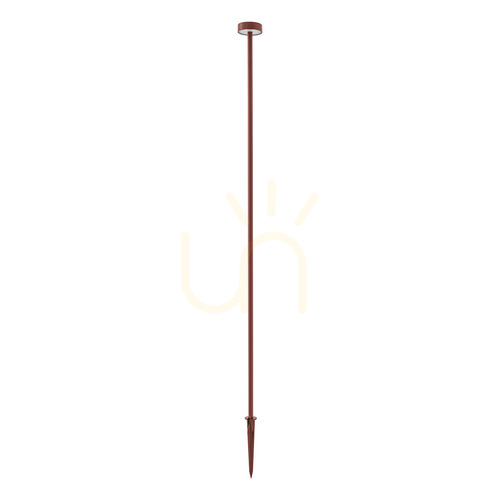
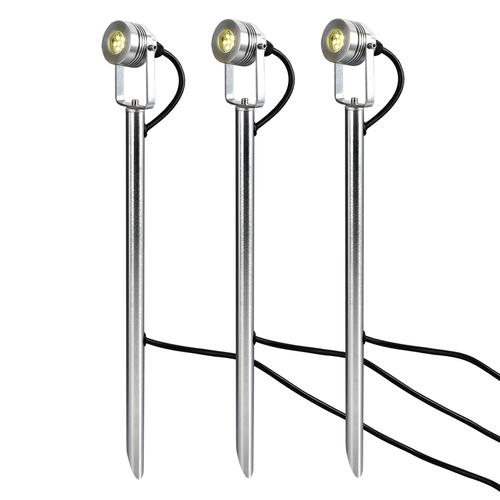
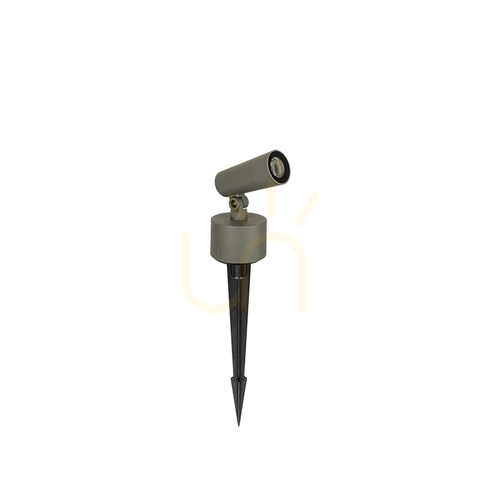
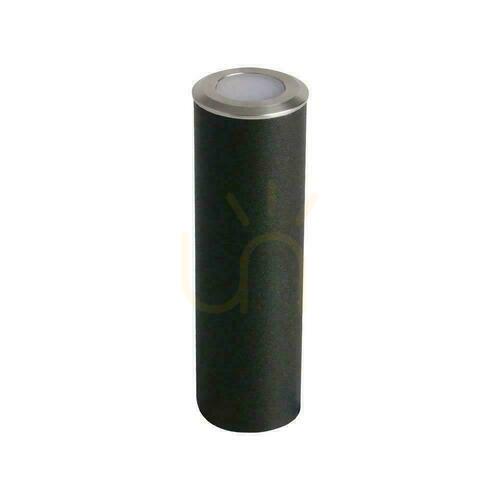
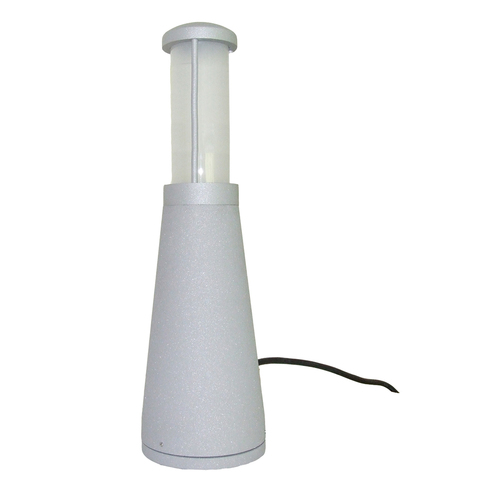
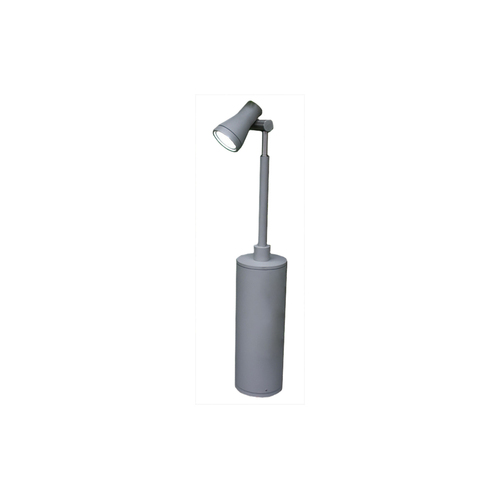
Fittings – spike spotlights for uplighting plants, short post lights for paths, deck and ground lights for steps and terraces, and wall lights for the house or a fence.
Complete kits put matching parts in one box, which is the easiest way to start. Separate fittings and accessories let you extend a system later.
How to choose
| What to check |
Typical values |
Why it matters |
| Voltage |
12 V or 24 V |
Fittings must match the transformer. 24 V copes better with longer cable runs. |
| Transformer rating |
total wattage of fittings plus 20–30 % |
Headroom keeps it cool and leaves space for extra lights. |
| Fitting wattage |
usually 1–5 W per LED fitting |
Low wattage means one transformer can run many lights. |
| Ingress protection |
IP44 under cover, IP65–IP68 in beds and lawns |
Ground-level fittings sit in wet soil and get splashed. |
| Colour temperature |
2700–3000 K for planting and seating |
Warm white flatters foliage, stone and timber. |
On a long run, thin cable loses voltage and the last lights look dimmer than the first. If the garden is large, split it into two runs or use a 24 V system.
Installation and placement
The transformer plugs into a weatherproof outdoor socket with RCD protection. If you do not have one, fitting it is a job for a qualified electrician; everything after the plug is low voltage. Lay the cable in a shallow trench, roughly 15 cm deep, or under bark and mulch in planting beds, and leave a little slack at each fitting so it can be moved. Keep the route away from places you dig often.
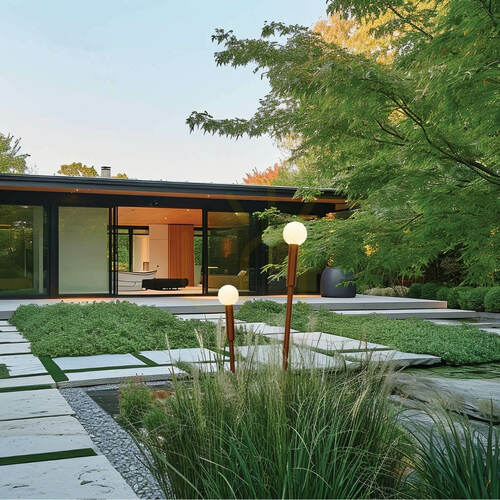
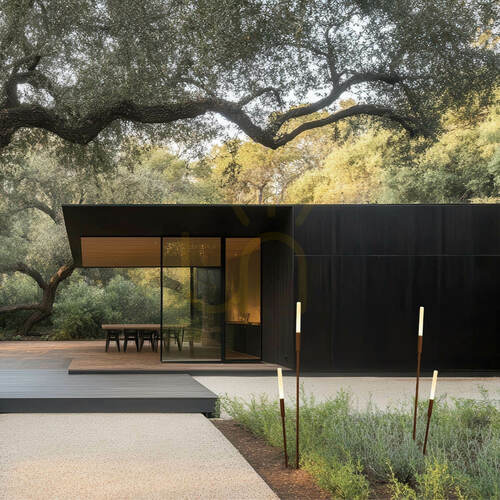
For uplighting, place a spike spot about 1 m in front of a tree or shrub and aim it upwards. Path lights look natural set a couple of metres apart, alternating sides, rather than in a straight landing-strip line.
Care
Wipe lenses and clear soil and leaves from ground fittings a few times a year, check that connectors are seated after digging or mowing, and keep the transformer off the ground and out of standing water.
Frequently asked questions
Do I need an electrician for low voltage garden lighting?
Not for the 12 V or 24 V side – most kits are designed for you to lay out and connect yourself. You only need an electrician if there is no suitable outdoor socket to plug the transformer into.
Is 12 V or 24 V better for a garden?
Both are safe. 12 V is the most common for small gardens and kits; 24 V suffers less voltage drop, so it suits longer cable runs and more fittings.
Is low voltage better than solar garden lighting?
Low voltage lights are usually brighter and work just as well on short winter days. Solar lights need no cable, but they rely on daylight to charge, so they fade when the days are short.
How far can the cable run?
It depends on the cable thickness and total load. Small kits often allow a few tens of metres; follow the maker's limit and split the run if the far lights look dim.
Start with low voltage garden lighting sets, or add individual low-voltage garden lamps to a system you already have.