Dimmer switches that suit the lighting you want to control
Dimmer switches let you adjust the brightness of compatible lighting instead of choosing between full output and darkness. A dining space can stay bright while the table is being set, then soften for the meal. A living room can have a lower background level without losing a separate reading light. The useful starting point is the lighting circuit, though: a rotary control for mains bulbs, a receiver for an LED strip and a DALI wall controller can perform quite different jobs.
Choose the dimming method before choosing the finish. The light source or driver must support the control you intend to use, and the dimmer must suit the load. A label saying “dimmable” is a reason to check the details, rather than a promise that every control will work. Good matching matters most at the bottom of the range, where flicker, an uneven fade or unreliable starting is easiest to notice.
Start with the lamp, bulb or LED driver
For replaceable mains bulbs, look for the manufacturer's dimming information and any compatibility guidance. The cap type is not enough. An E27 lamp and another E27 lamp may need different treatment because their internal electronics differ. The same applies to integrated LED fittings: the driver helps determine how the light can be dimmed, even when the LED module itself looks straightforward.
For LED strips, establish whether the system uses constant-voltage or constant-current equipment. A controller intended for a constant-voltage strip is not a general replacement for an LED driver. Check the operating voltage, output limits and channel arrangement. If the existing fitting already has its own remote or app, find out whether it expects a permanent supply and control through its own electronics.
| Lighting arrangement |
Information to look for |
What the dimmer needs to match |
| Dimmable mains LED bulbs |
Leading-edge or trailing-edge compatibility and LED load limits |
The bulbs' electronics, total load and permitted number of lamps. |
| Constant-voltage LED strip |
DC voltage, power consumption and channel requirements |
The power supply, strip type and current required at each output. |
| Fittings with DALI control gear |
The controller's role, supported functions and bus supply |
A complete control system, rather than only the visible wall plate. |
| Fittings with a 0–10 V or 1–10 V input |
The exact interface and switching requirements |
The specified control input and the required off function. |
| Smart lamps with their own controls |
Approved control method and behaviour after power interruption |
A method that preserves the supply and communication the lamp needs. |
Leading-edge and trailing-edge dimming
Phase-cut dimmers alter part of the mains waveform supplied to compatible lamps or drivers. Leading-edge and trailing-edge are different approaches, so the terms should not be treated as interchangeable. Some equipment accepts one method, some can work with more than one, and some must not have its mains supply dimmed at all. Follow the information for both the load and the dimmer.
A dimmer that worked well with incandescent lamps may behave differently after a change to LED. Its minimum load may be too high, or its control method may not suit the new lamps. An impressive incandescent rating does not establish its LED capacity. Look for the rating that applies to the actual load, together with any limits on the number of lamps.
Universal dimmers can offer useful adjustments or load detection, but their flexibility still has limits. A minimum-level setting can help establish a stable working range with a compatible lamp. It cannot make a non-dimmable lamp suitable for phase-cut control. Where a manufacturer provides a tested compatibility list, use it alongside the product instructions.
LED strip dimmers and PWM receivers
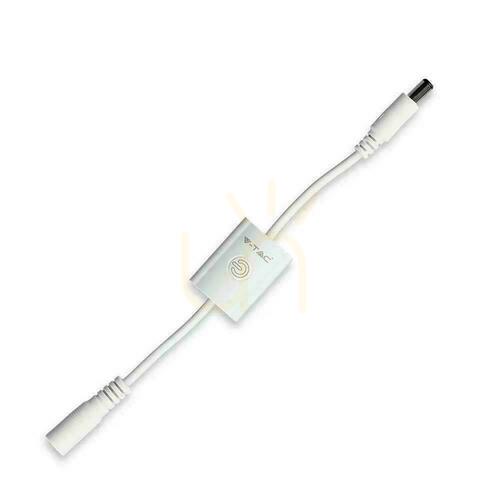
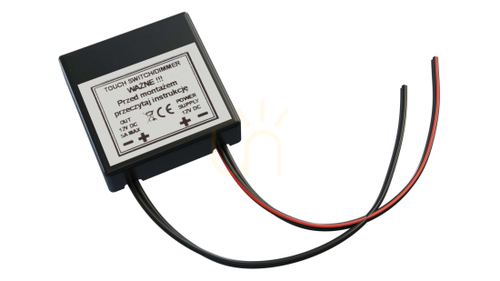
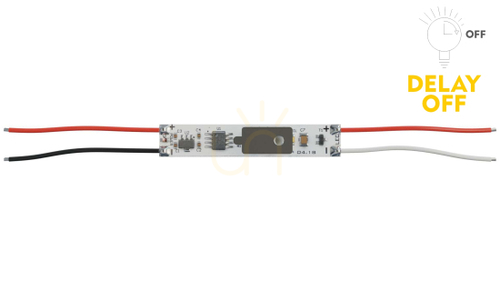
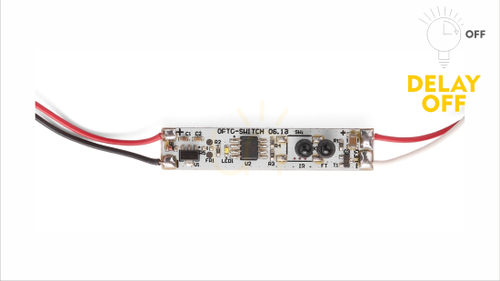
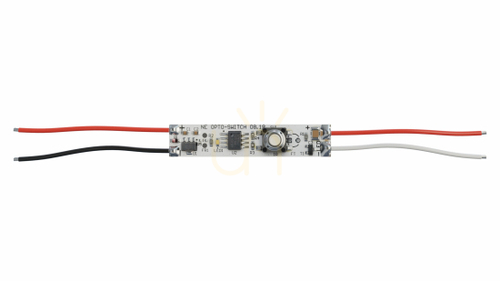
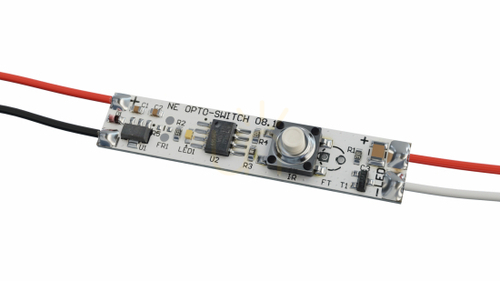
For common constant-voltage LED strips, dimming often takes place on the DC side of the system. PWM, or pulse-width modulation, changes the proportion of time for which the LEDs receive power. The controller, strip and power supply must be designed to work together. A small DC receiver should never be assumed to perform the same job as a mains wall dimmer.
Voltage and current belong together when the load is assessed. As a simple nominal example, a 48 W load at 24 V draws 2 A. The same wattage at 12 V requires more current. A headline wattage therefore needs to be read with the voltage it refers to, and multi-channel equipment needs its per-channel and total limits checked separately.
Channels are also different from zones. A channel controls a particular output, while a zone is a group of lighting you want to operate together. A single-colour strip needs a different arrangement from tunable-white or RGBW lighting. A brightness control does not automatically provide colour selection or a change in colour temperature.
With longer strips, plan the power distribution and cable runs as well as the control. A dimmer cannot correct voltage drop caused elsewhere in the installation. The equipment should support the intended full-output load, even if the strip will usually be kept at a gentle background level.
DALI controls: understand which part does what
DALI is a digital system for controlling lighting. A wall control may send commands, while compatible control gear changes the light output. The visible knob or push-button interface is not necessarily the part that supplies power to the luminaires. Establishing that role avoids buying a control panel when the installation also needs an actuator or driver.
The DALI bus needs a suitable bus power supply, which can be separate or integrated into another device. The controller's capabilities matter too. Controlling every fitting together, operating groups independently and recalling scenes are different functions. Check that the devices provide the functions you want instead of assuming the interface name covers them all.
Some modules accept DALI commands and dim their connected load by another method, such as phase-cut control. Both sides of that arrangement need checking: communication with the control system and compatibility with the lamps or drivers at the output. Sharing a DALI connection does not remove the load requirements.
Load ratings: more than adding up watts
Add the actual electrical consumption of the lamps on the controlled circuit. A brightness comparison with an older incandescent bulb is not the lamp's consumption. For example, eight lamps rated at 6 W give a nominal total of 48 W. That is a useful first figure, but LED drivers can also impose starting-current and lamp-count limits.
Check the minimum load as carefully as the maximum. A lightly loaded circuit can sit outside the dimmer's intended operating range. Typical symptoms of a mismatch include flickering, lamps starting only after the control is turned up, or the bottom end of the adjustment doing very little. These symptoms need a compatibility check rather than a random increase in the dimmer's power rating.
Installation conditions can affect capacity as well. Closely grouped controls, restricted heat dissipation and the enclosure may require allowances stated by the manufacturer. There is no single percentage of spare capacity that replaces those instructions. Select the device using its applicable LED rating and the conditions in which it will operate.
Rotary controls, push buttons and touch panels
A rotary dimmer offers an immediate, familiar way to set the light level. A push-button system may use a short press to switch and a longer press to adjust, where supported. Touch panels can provide direct levels, scene selection or control of more than one zone. Choose a layout that is easy for everyone in the household to understand.
Memory and starting level deserve separate attention. Returning to yesterday's low setting can be pleasant in a bedroom, whereas a workspace may need predictable bright light when switched on. Some controls can store a minimum or switch-on level; others behave differently. Also check what happens after a power interruption, particularly if the lighting will be part of an automated routine.
Multi-location control needs a compatible circuit design. A standard two-way arrangement does not mean two ordinary dimmers can simply replace the switches. Depending on the equipment, the installation may use a main dimmer with additional controls, momentary push buttons or a control bus. Ask the installer to assess the existing circuit before the control layout is finalised.
Fit, wiring requirements and space behind the plate
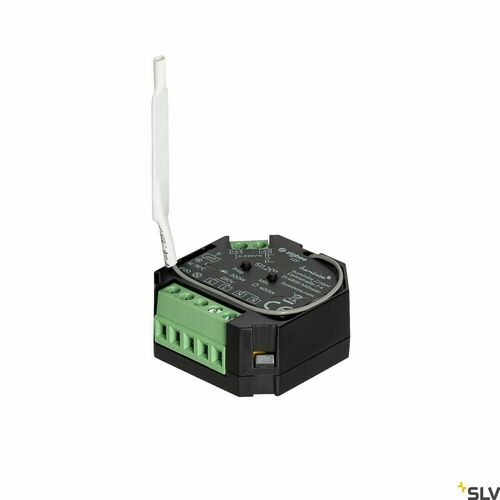
For a wall-mounted unit, consider the complete assembly: module depth, back box, wiring space, front plate and any required support components. A receiver intended for a cabinet needs different provision from a DIN-rail module in a distribution enclosure. Compact dimensions do not mean the device can be packed tightly into insulation or left without the clearances its instructions require.
Some products require a neutral conductor at the control position; others are intended for a different arrangement. Compatibility cannot be established from the appearance of the old switch plate. Have a suitably competent electrician assess the circuit and the intended equipment. The product documentation should guide installation, setup and any permitted adjustment.
For damp or exposed locations, assess the protection of the complete installation. A low-voltage control signal is not evidence that every part of the equipment is suitable near moisture. Enclosures, cable entries and the location of mains-powered components all need to suit the application.
Comfort at low brightness
A pleasant fade matters more than the longest numerical adjustment range. In a bedroom, the first useful level should be gentle without forcing the lamp to flash brightly before settling. In a living room, the transition should feel predictable as the control moves. A stated minimum percentage alone does not describe how every connected lamp will behave.
Dimming also does not automatically make the light warmer. Ordinary dimmable lamps may keep a broadly similar colour temperature, while products with a warm-dimming function deliberately change their appearance. Tunable-white lighting uses a different control capability again. Decide whether you want brightness adjustment, colour-temperature adjustment or both.
| What you notice |
What to check |
| Flicker at the bottom of the range |
Lamp compatibility, minimum load and the permitted minimum-level adjustment. |
| Lamps fail to start at a low setting |
The supported start level and the behaviour of the complete lamp-and-dimmer combination. |
| Noise during dimming |
Compatibility of the load, control method and driver; do not assume the wall control is the only cause. |
| The control becomes unusually hot |
Load, enclosure conditions and heat-dissipation requirements. |
| App control disappears when the wall switch is off |
Whether the smart equipment needs a permanent supply and a different control arrangement. |
Questions about dimmer switches
Can every LED bulb be dimmed?
No. The lamp must be designed for dimming, and its electronics must suit the control method. Check both the lamp and dimmer information. A familiar cap type or low wattage is not evidence of dimming compatibility.
Will my old dimmer work with new LED lamps?
It may, if the equipment is compatible and the load remains within the correct range. Older incandescent dimmers can have unsuitable minimum loads or control characteristics. Use the actual LED ratings and compatibility guidance rather than the largest wattage printed on the device.
What is the difference between leading-edge and trailing-edge dimmers?
They alter different parts of the mains waveform. The connected lamps or drivers must support the selected method. Neither term alone guarantees compatibility with every LED product, so check the requirements of the specific equipment.
Why do my lights flicker when dimmed?
Possible causes include a mismatched control method, an unsuitable load or an excessively low minimum setting. Other equipment or an installation fault can also contribute. Have the complete combination assessed before replacing parts or changing settings.
Does a DALI wall controller power the lights?
Not necessarily. It may provide commands while separate control gear powers and regulates the luminaires. Some products combine functions, so the documentation needs to identify what is included and how the bus is supplied.
Can I dim lights from more than one switch position?
Yes, with equipment and a circuit designed for that purpose. The arrangement may need additional push buttons or system controls. It should not be assumed that two independent wall dimmers can replace the switches in any existing two-way circuit.
Does dimming always change the colour of the light?
No. Warm dimming is a specific function of compatible lighting, while tunable-white systems offer separate colour-temperature control. A standard brightness dimmer does not add either function to a lamp.
Can one dimmer control several fittings?
It can when the fittings are compatible and their combined load, starting characteristics and quantity meet the device's limits. They will normally respond together on a common controlled output. Independent groups need suitable channels or a system designed for separate zones.
Match the dimmer to the lighting first, then choose the interface that makes daily use comfortable. For the other components needed around the circuit, browse electrical accessories.