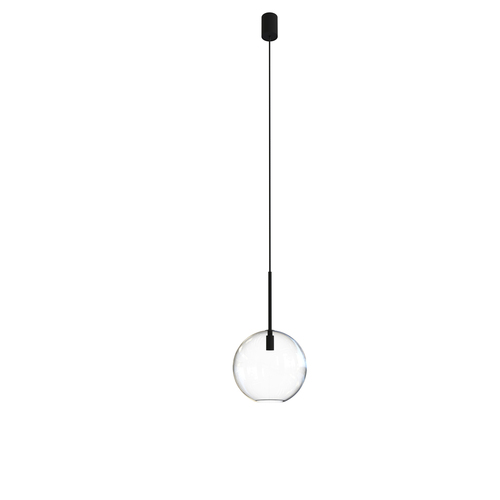
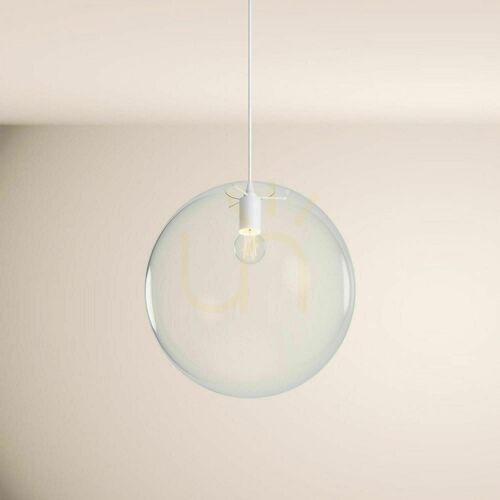
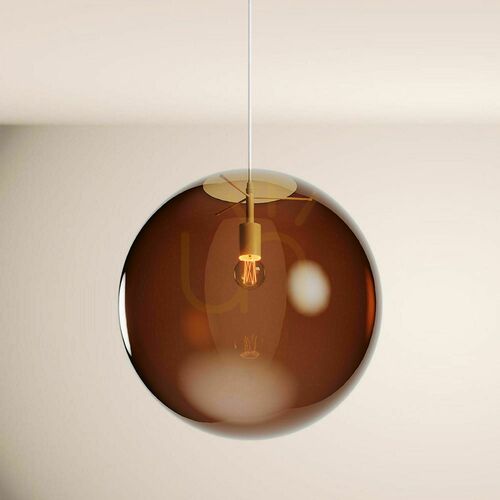
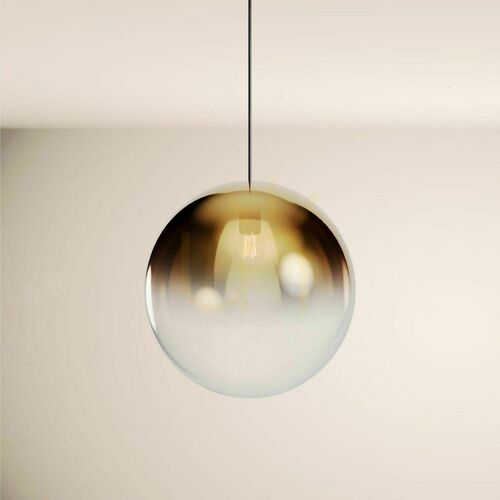
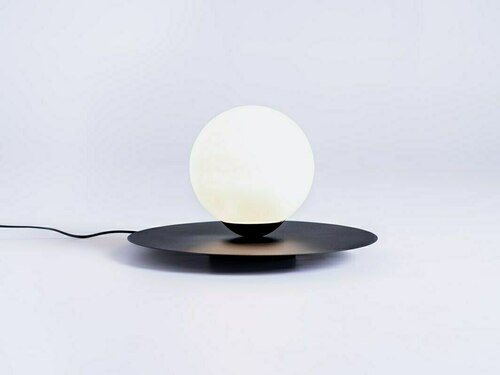
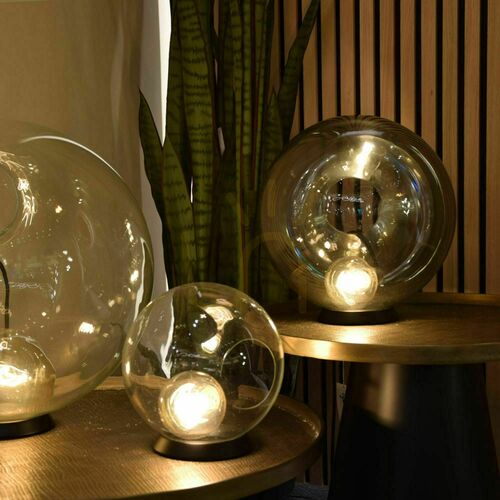
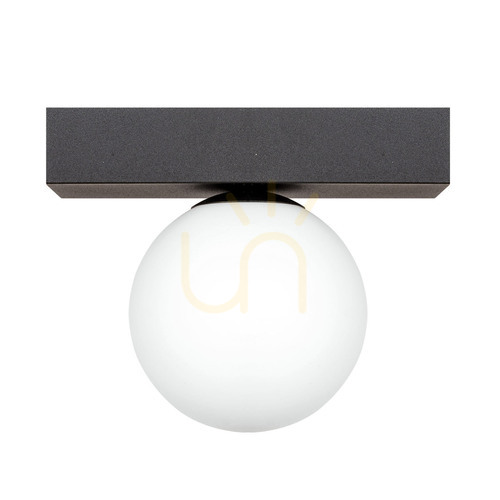
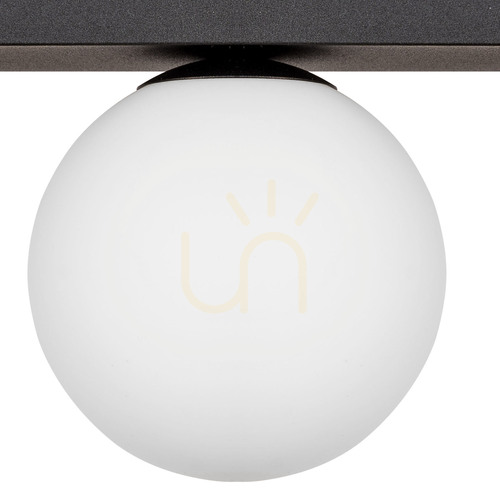
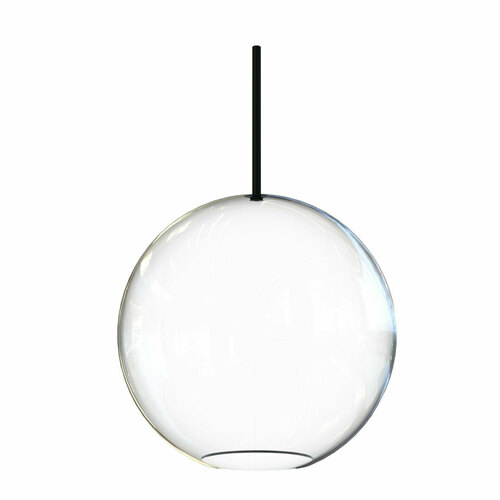
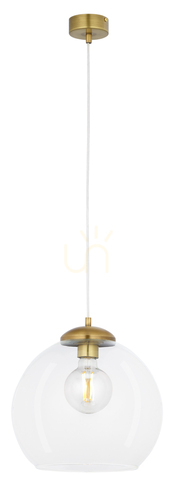
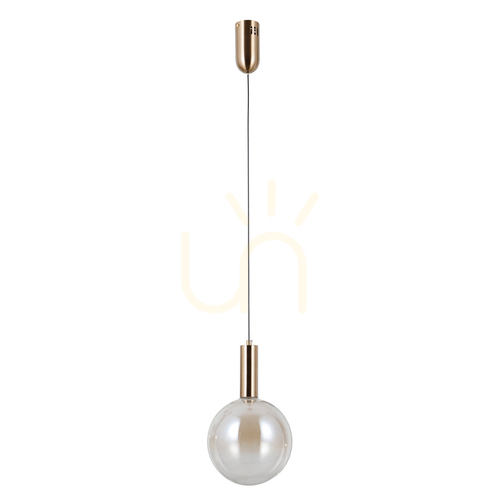
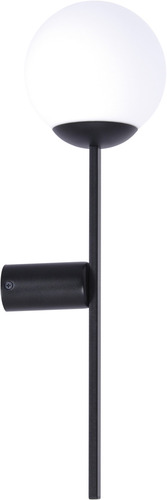
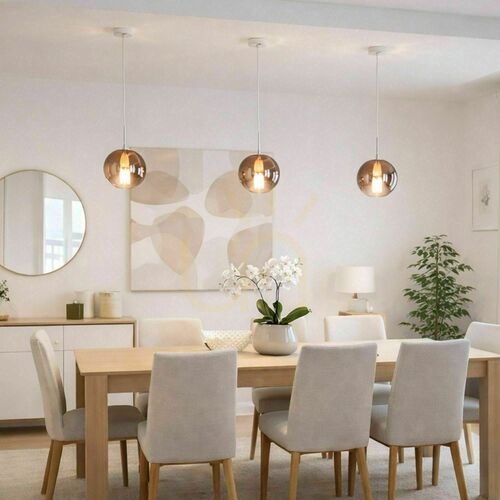
A glass globe light is a fitting whose character comes almost entirely from its glass: clear globes sparkle and show off the bulb, opal globes give a soft all-round glow, and smoked or amber glass turns the same shape into moody evening light. So the first decision isn't size or finish but which glass you want to live with, and the rest follows from there.
Glass earns its place over plastic or paper globes in a few ways. It doesn't yellow or warp near a warm bulb, it reflects light with real depth, and it still looks good switched off. The trade-offs are weight, fragility and fingerprints, and all three affect how and where you hang it.
Clear, opal, smoked or ribbed?
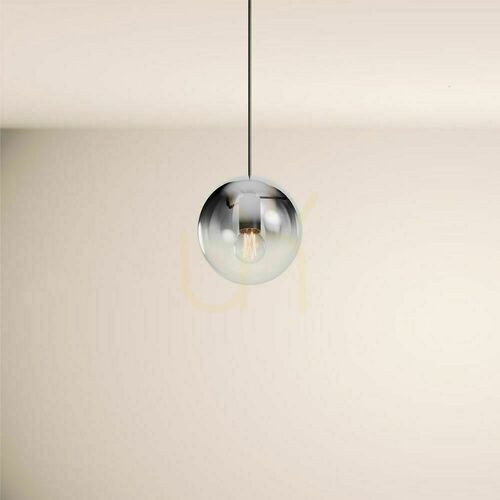
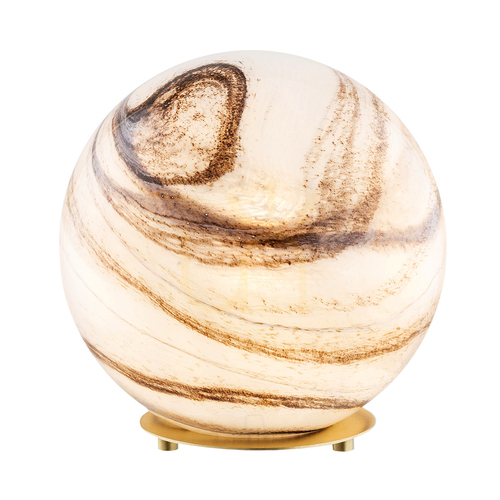
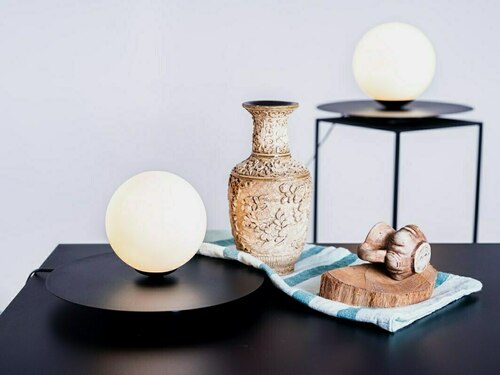
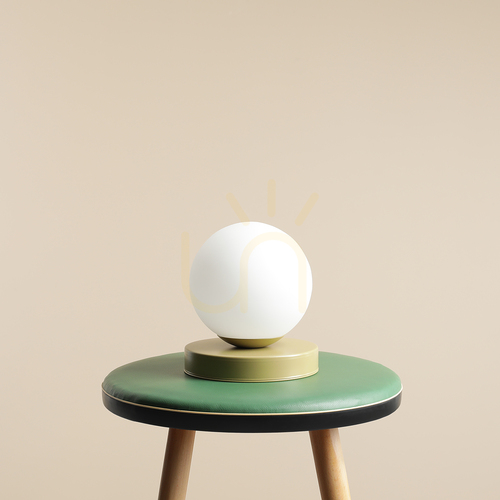
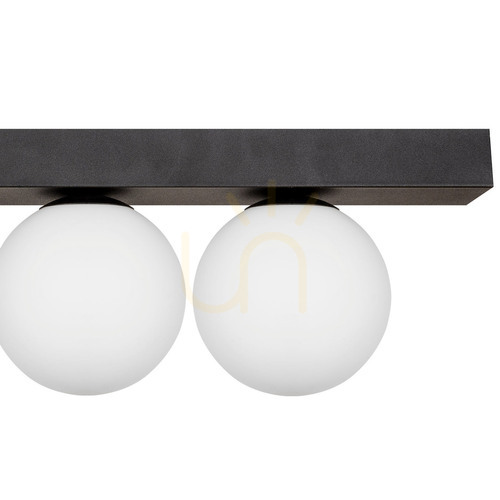
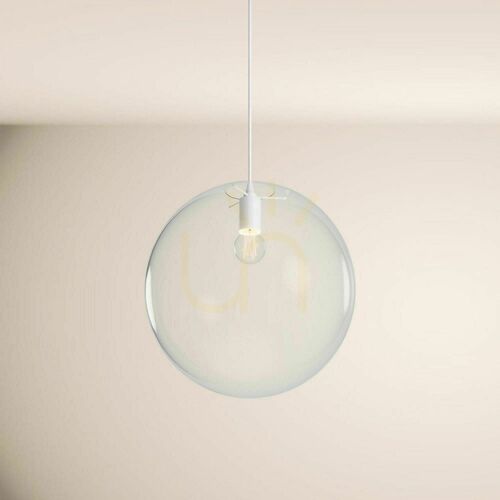
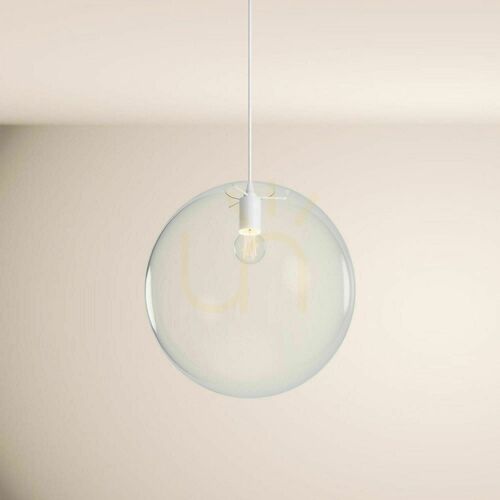
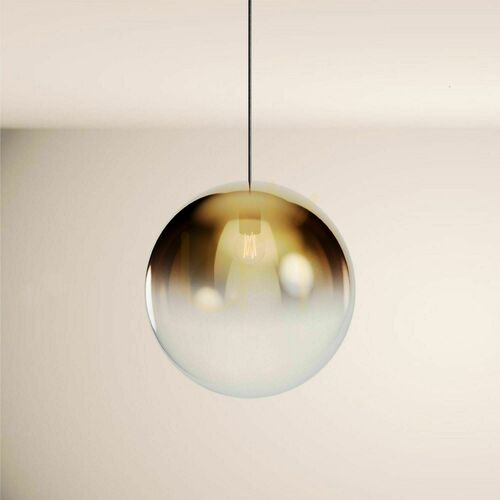
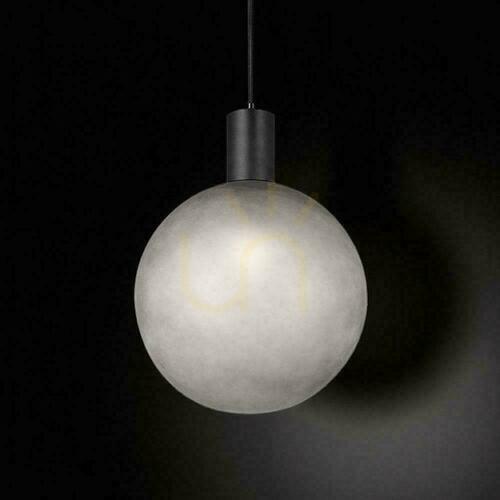
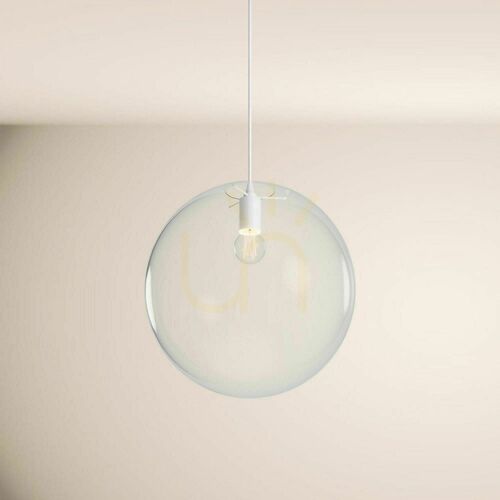
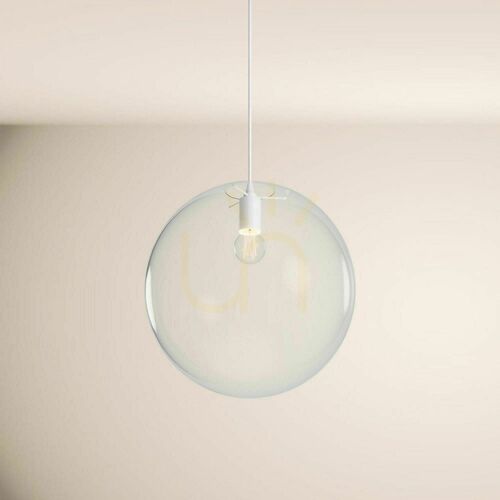
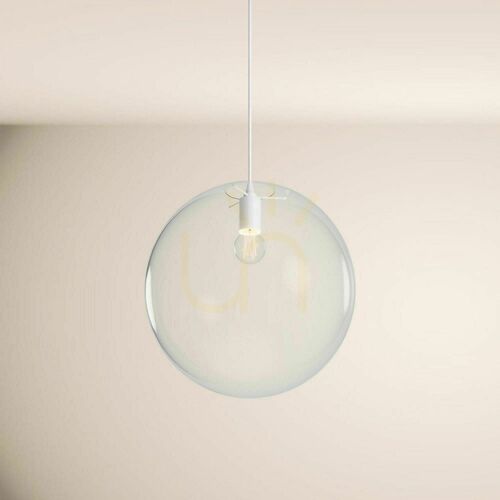
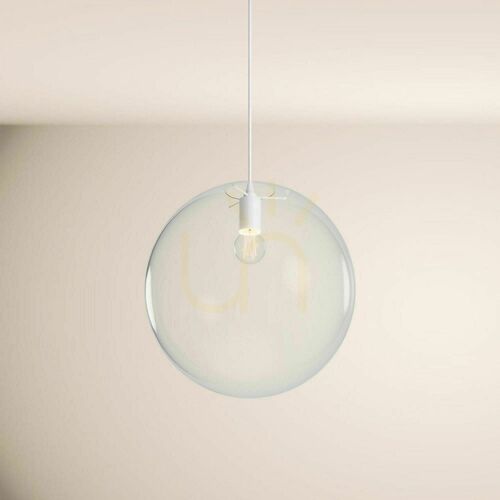
Clear glass is the one that sells the look in photos. Fitted with a decorative filament LED it throws crisp highlights and shadows round the room, but a bright, bare lamp inside it can glare, especially over a table. Opal glass – milky white, either mouth-blown or acid-etched – hides the lamp and spreads light evenly with very little loss, which is why it has been the go-to for hallways and landings for generations. Smoked, grey and amber glass hold back a fair share of the light: lovely as a feature, usually not enough on its own. Ribbed or fluted glass breaks the beam into soft lines and suits Art Deco and period interiors.
| Glass |
What it does to the room |
Bulb to fit |
Works well in |
| Clear |
Visible bulb, sharp sparkle and shadows |
Dimmable filament LED, 2200–2700 K |
Over a dining table or kitchen island, stairwells |
| Opal or frosted |
Soft, even, glare-free light |
Standard LED, E27, B22 or E14, 2700–3000 K, around 800–1000 lm |
Hallways, landings, bedrooms, main room light |
| Smoked or amber |
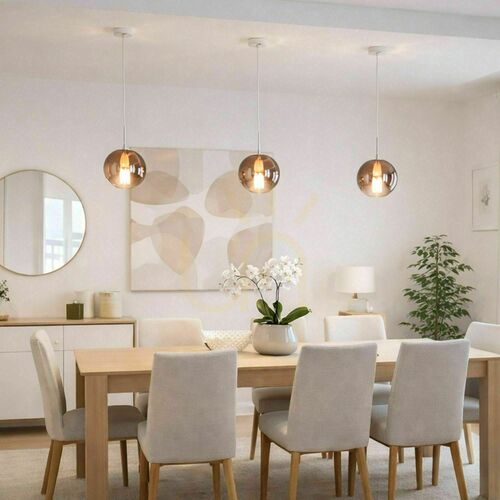
Warm, dim, low output |
A brighter lamp, or treat it as accent lighting |
Dining areas, snugs, reading corners |
| Ribbed or fluted |
Lines of light on walls and ceiling |
Clear LED of moderate brightness |
Period and Art Deco schemes, bathrooms, if the fitting is rated IP44 |
One globe or a cluster?
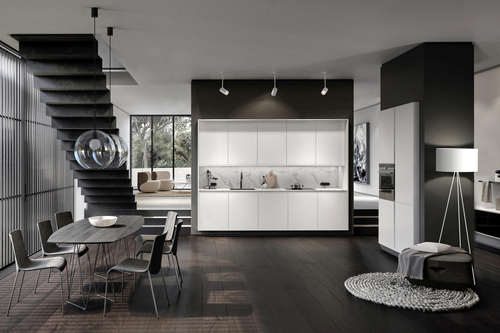
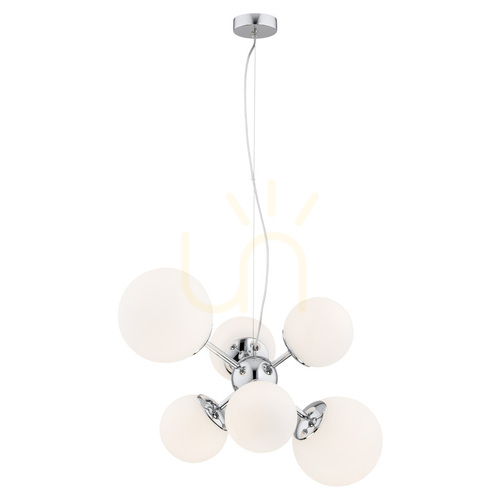
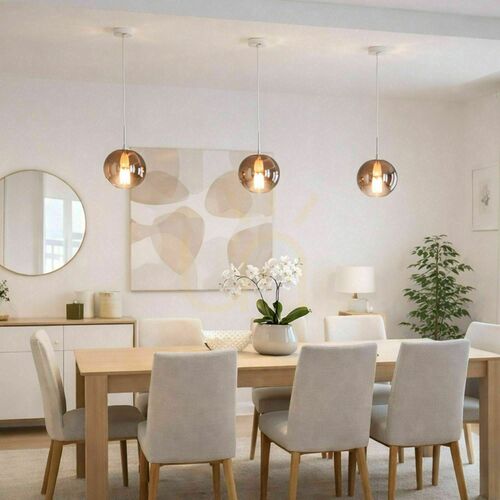
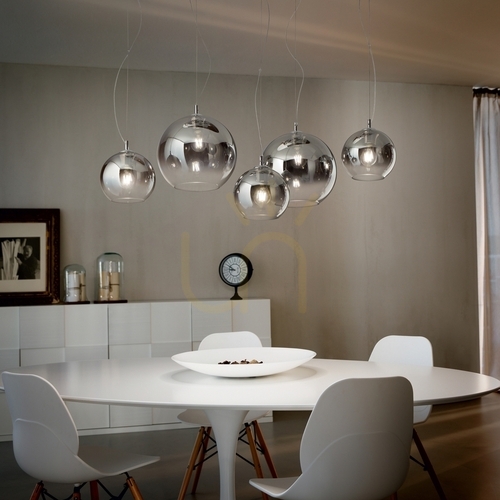
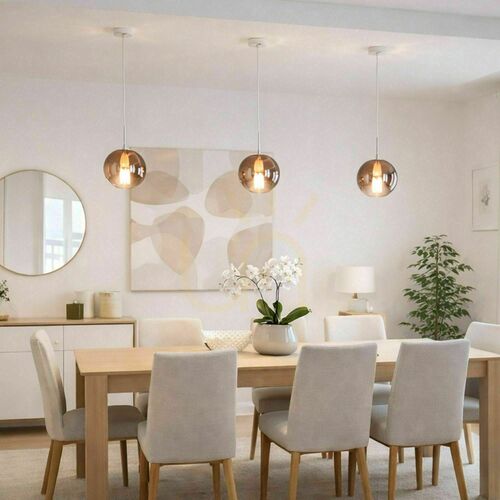
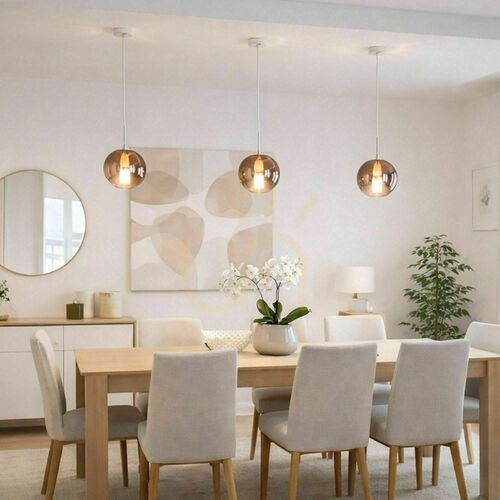
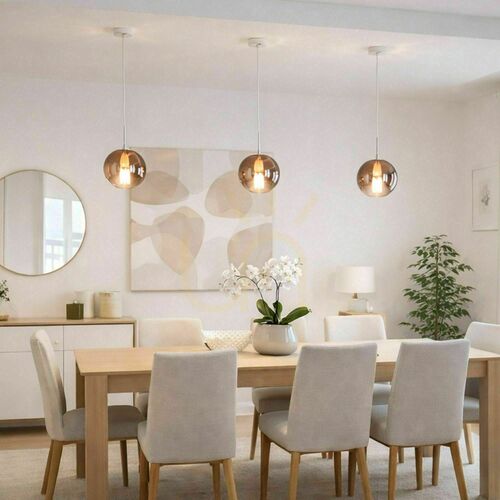
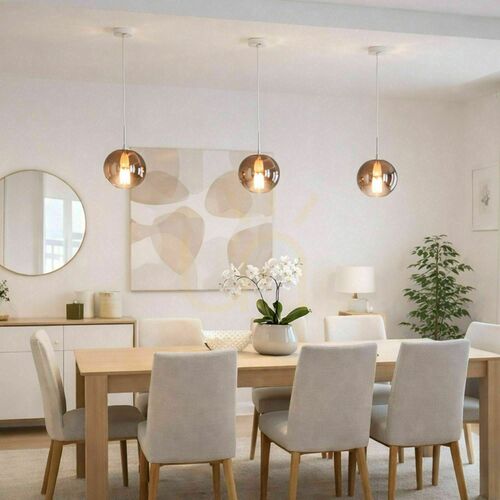
A single globe of 25–35 cm is the simplest answer over a round table for four to six. Over a long table or kitchen island, two or three smaller globes in a row light the full length more evenly. Multiple glass ball pendants – a cluster of 10–20 cm globes on one ceiling plate, often taking G9 or E14 bulbs – read as a chandelier and look striking in a stairwell or double-height hall. Large single globes of 40 cm and above need a tall room; in a typical British semi with ceilings around 2.4 m they can feel heavy unless they hang over a table, out of the walkway.
Modern schemes lean towards clear or smoked glass on slim black or brass suspensions. For a vintage feel, look for opal or ribbed globes with a traditional gallery or a fabric flex, and pair clear glass with a squirrel-cage filament bulb.
Fitting a glass globe safely
-
Weight. Hand-blown globes are heavier than they look, and a large one can weigh several kilograms. Check that the ceiling fixing and the rose are rated for it; never let the weight hang on the flex alone.
-
Holder. Most globes sit on a gallery by their neck and are held by three thumb screws or a threaded ring. Tighten gently – overtightening is a common way to crack the glass.
-
Heat. An enclosed globe close to the ceiling traps heat, so stay within the stated maximum wattage. LED lamps keep the glass far cooler than old incandescent or halogen bulbs.
-
Electrics. Have a qualified electrician make the connection. In England, work in bathrooms and new circuits falls under Part P of the Building Regulations, and bathroom fittings need a suitable IP rating for their zone.
Cleaning glass globes
Switch off and let the glass cool, then take the globe down and wash it in warm water with a drop of washing-up liquid. Dry with a microfibre cloth to avoid streaks and use a soft brush on ribbed glass. Enclosed globes collect dust and the odd insect, so tip them out now and then. Keep printed, gilded or mirrored glass out of the dishwasher and don't scrub it.
Frequently asked questions
Can I get a replacement glass globe lamp shade?
Usually yes. Measure the neck opening (the fitter) and the outer diameter, and note how the old globe was held – screws or a threaded ring. A replacement only works if both match.
Does a glass globe light need a B22 or E27 bulb?
It depends on the lampholder, not the glass. Bayonet B22 is still common in UK homes, while many continental fittings use screw E27 or the smaller E14. Cluster pendants often take G9 capsules. Check the label on the holder before buying lamps.
Is a single globe or a multiple glass ball pendant better?
A single globe puts the light at one point over the centre of the table and is quicker to clean. A multi-ball pendant spreads light more widely and makes more of a statement, but there's more glass to look after and more weight on the ceiling.
Will a clear glass pendant light dazzle?
It can, with a bright standard bulb. Choose a warm, dimmable filament LED or a crown-silvered lamp, or go for opal glass if the light hangs at eye level.
Can I use a glass globe light in a bathroom?
Yes, if the fitting itself carries the right IP rating for its zone – typically at least IP44 near the bath or shower. The glass alone doesn't make it splash-proof.
Do vintage glass globe pendants work in a modern home?
They do. A ribbed or opal globe on a simple suspension sits comfortably in a contemporary kitchen, and the shape has been around long enough that it dates slowly.
Thinking of changing just the shade? Read more about glass lampshades, or about globe lights in general.