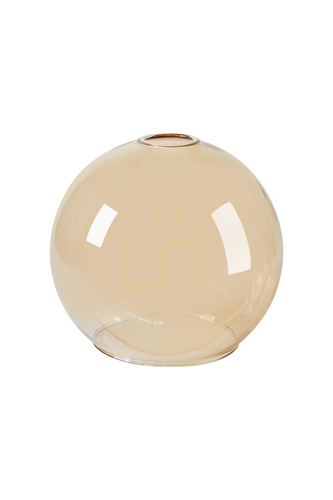
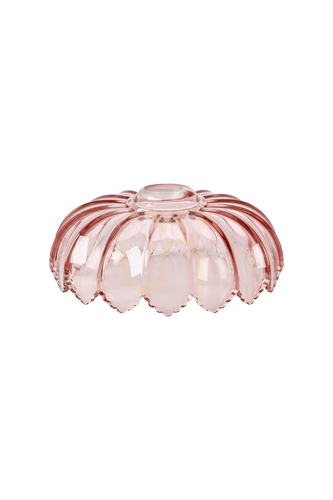
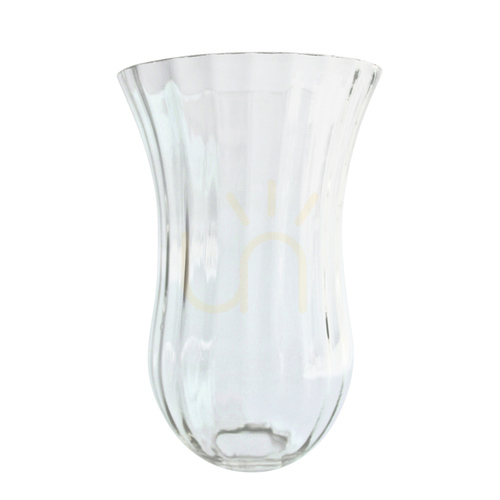
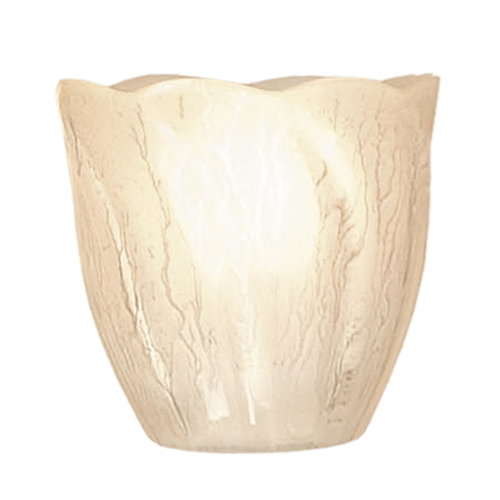
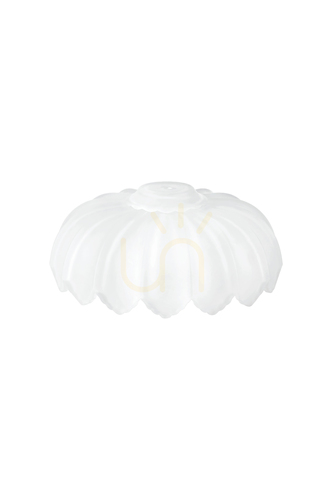
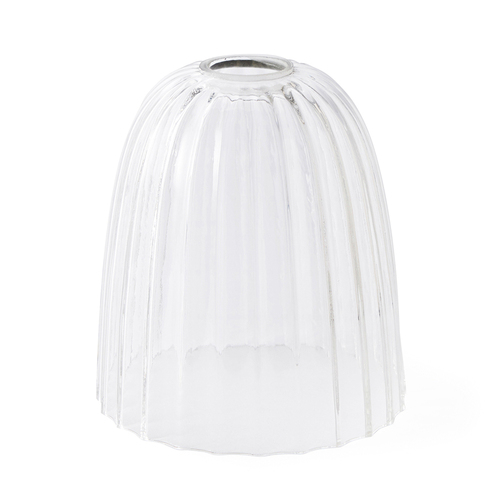
A glass ceiling light shade sits over an existing lampholder and turns a bare bulb into a finished light – clear, frosted, opal, smoked or tinted, depending on the mood you want. Choosing one comes down to two questions: will it physically fit your fitting, and what will that particular glass do to the light in the room?
Most glass shades are bought after a breakage or a redecoration. The good news is that the fitting itself rarely needs replacing. Get the hole size, the fixing method and the weight right, and a new piece of glass can make an old pendant look like a different light altogether.
Why choose glass over fabric or plastic
Fabric shades soften and warm the light but gather dust and fade. Plastic diffusers are light and almost unbreakable, yet heat and daylight can turn them yellow over the years. Glass doesn’t discolour, copes with the warmth of a bulb and washes clean in the sink. The trade-off is weight and fragility: a glass shade can weigh anything from a few hundred grams to around 2 kg, so the lampholder, flex and ceiling hook all have to carry it.
Shapes range from globes and domes to cones, bells, cylinders, tulips and flat flush-mount dishes. Small shades of about 8–15 cm across tend to go on multi-arm fittings and chandeliers; a single pendant over a dining table usually looks right at 20–35 cm.
How the glass changes the light
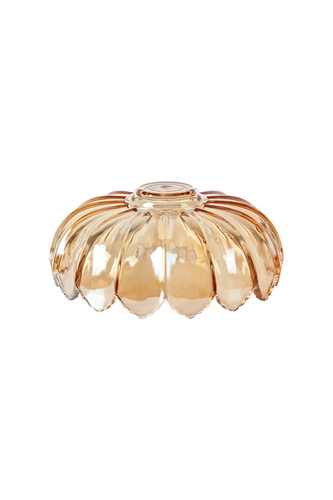
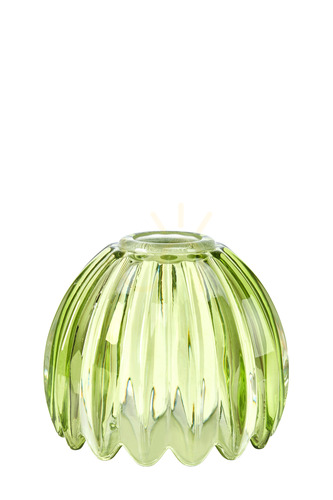
Clear glass lets through more than 90% of the light and puts the bulb on show, which is lovely with a decorative filament lamp and harsh with a standard one. Frosted or satin glass, sandblasted or acid-etched, blurs the filament while keeping most of the brightness. Opal glass hides the bulb completely and spreads light evenly, which is why it’s the safe choice for hallways, landings and anywhere you look up into the light. Smoked, amber and tinted glass give a warmer, dimmer glow, often losing a fifth to a third of the output. Ribbed and textured glass throws patterns on the walls – atmospheric, but not what you want over a kitchen worktop.
Measuring for a replacement shade
Lay the old shade on a table and measure it with a ruler or callipers, or measure the fitting if the glass is in pieces. A difference of 2–3 mm is usually fine; much more and the shade will rattle or won’t sit at all.
| How it fixes |
What to measure |
Typical size |
| Shade ring on a UK B22 bayonet lampholder |
hole in the top of the shade |
around 28–29 mm |
| Shade ring on an E27 screw lampholder |
hole in the top of the shade |
around 40–42 mm (fits B22 only with a reducer ring) |
| Shade ring on an E14 small screw lampholder |
hole in the shade |
around 28–30 mm |
| Gallery with three thumbscrews |
outside diameter of the neck (fitter) |
commonly 40–70 mm |
| Screw-in glass |
thread diameter |
common on older bulkheads and utility lights |
| Small G9 or G4 shades |
hole for the pin or retaining nut |
sometimes only 10–12 mm |
| Flush ceiling dish |
diameter and rim depth |
held by clips, screws or a twist-lock rim |
Most UK ceiling pendants use a B22 bayonet lampholder whose shade ring takes a hole of roughly 28–29 mm; a shade made for E27 (40–42 mm) needs a reducer ring to sit securely – check the hole rather than the bulb type. Take a photo of the fitting with a tape measure in shot before you order. Flush ceiling lights are a topic of their own, with different glass shapes and fixings – more on replacement shades for ceiling lights.
Bulbs, heat and safety
An enclosed glass globe holds heat. Stay within the maximum wattage marked on the fitting and pick LED lamps rated for enclosed fittings, which run cooler and last longer. Compare lumens rather than watts: behind smoked glass, step up from around 800 lm to 1000 lm or so. Warm white at 2700 K suits living rooms and bedrooms; 3000–4000 K works better in kitchens and home offices.
Swapping the glass is a two-minute job: switch off, let the bulb cool, unscrew the shade ring or loosen the thumbscrews, and tighten the new shade only hand-tight – glass cracks from overtightening far more often than from use. Anything involving the ceiling rose, flex or lampholder is electrical work under BS 7671 and is best left to a qualified electrician. In a bathroom, it’s the IP rating of the whole fitting that matters; a glass shade on an ordinary pendant doesn’t make it suitable for a bathroom zone.
Frequently asked questions
What do you call the glass on a light fixture?
Usually a glass shade, though you’ll also see diffuser, globe, dome or spare glass. On flush ceiling lights it’s often called a dish or bowl.
Can I buy a glass pendant shade only?
Yes. Many glass shades are sold on their own to fit a standard pendant set. As long as the hole matches your lampholder’s shade ring, it will hang like the original.
What is the lampshade rule?
A popular rule of thumb for ceiling lights: add the room’s length and width in feet, and the total in inches is a sensible shade diameter. A 12 × 14 ft room points to a shade of about 26 in, roughly 65 cm. For a pendant over a table, aim for about a third to half the table’s width.
Are small glass ceiling light shades interchangeable?
Only when the fixing matches. Small chandelier shades come with E14 holes, G9 holes and collar necks, and they look similar in photos – measure before you buy.
How do I clean a glass light shade?
Warm water, a drop of washing-up liquid and a microfibre cloth. Keep painted, gilded and frosted glass out of the dishwasher and away from cream cleaners, and dry the shade completely before refitting it.
Can a broken glass shade go in the bottle bank?
No – bottle banks take container glass only. Wrap the pieces and put them in general waste, or take them to your local recycling centre.
More on lampshades in every material: lampshades.