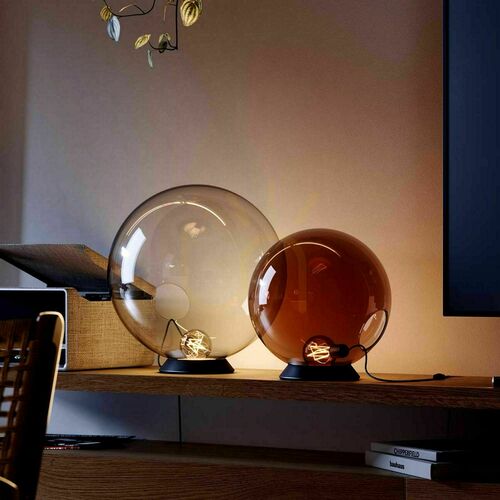
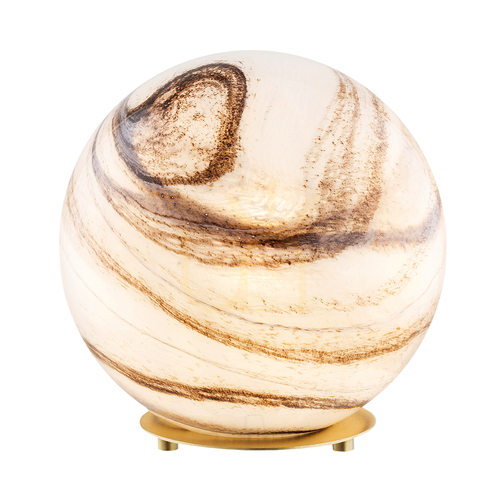
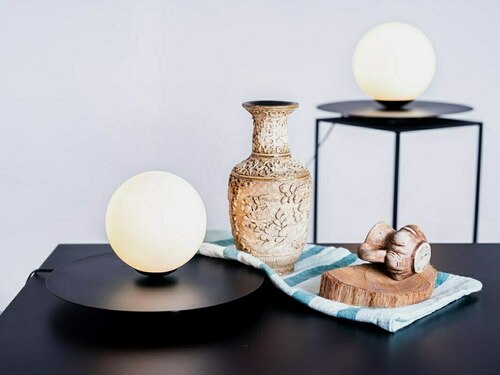
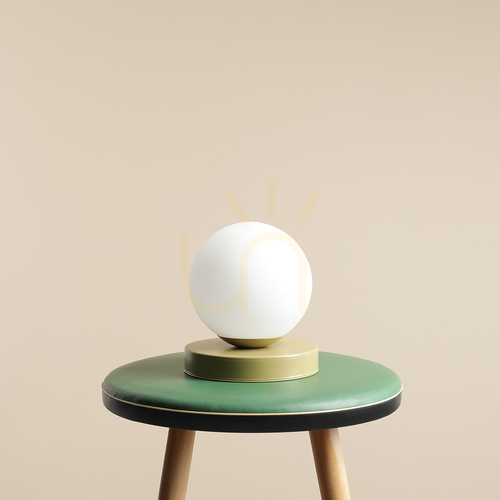
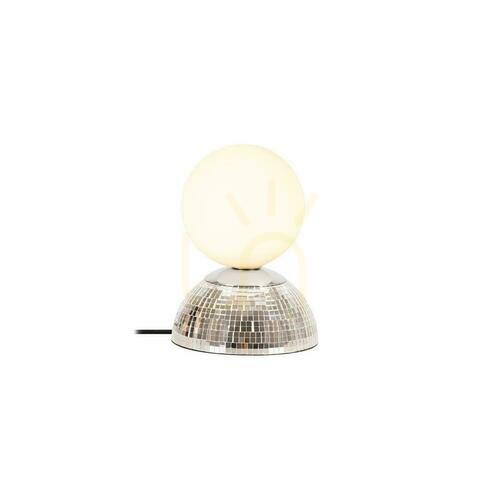
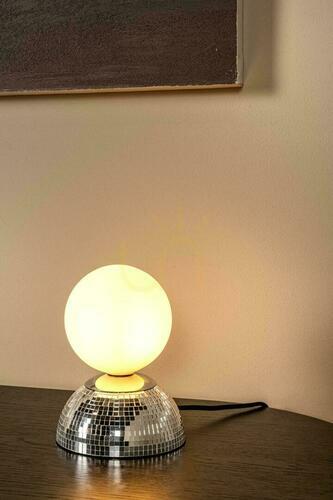
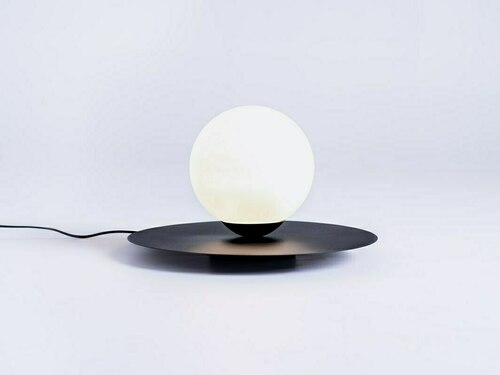
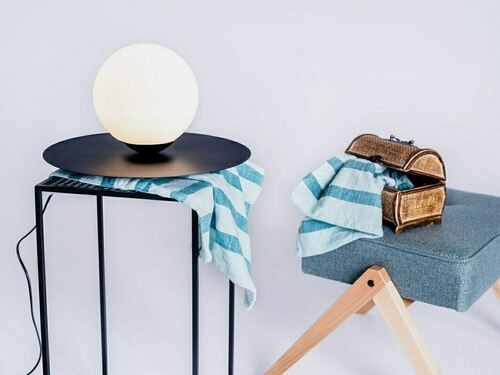
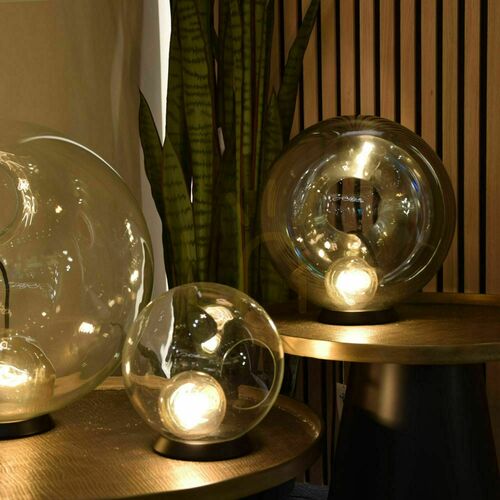
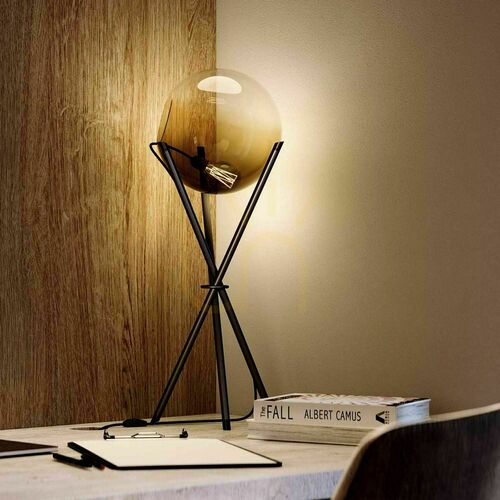
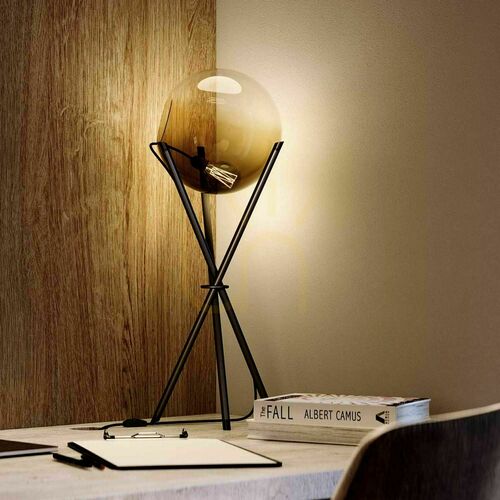
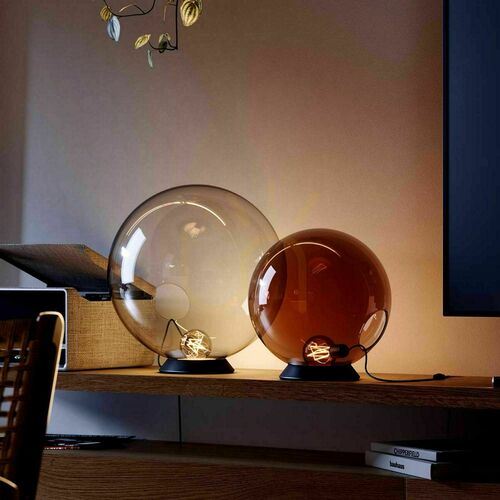
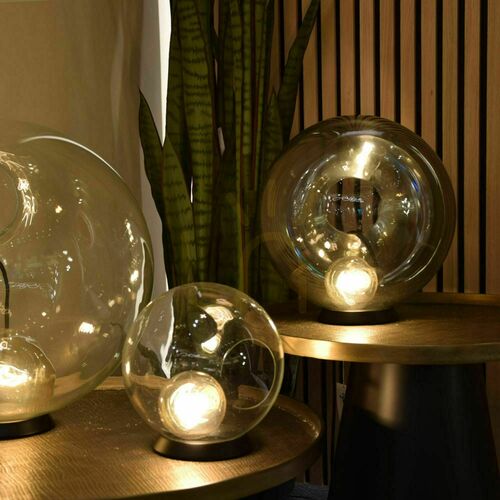
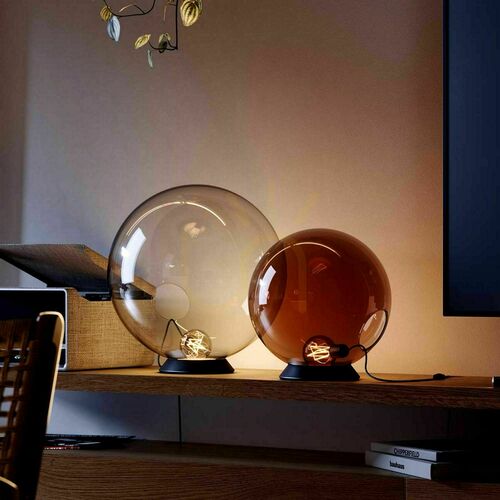
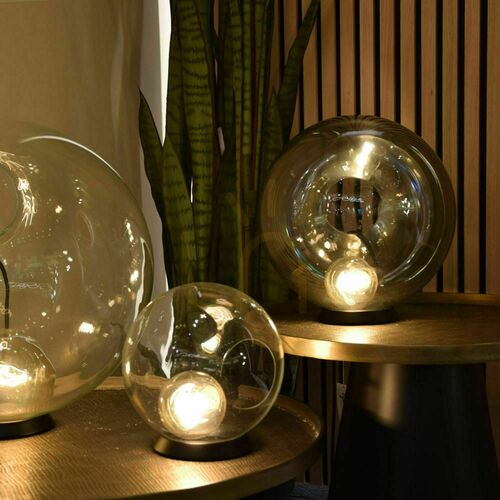
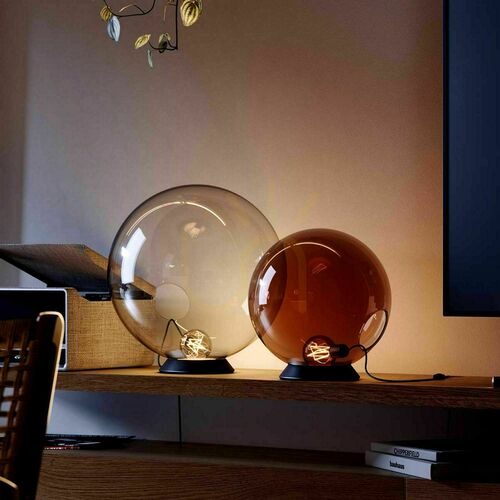
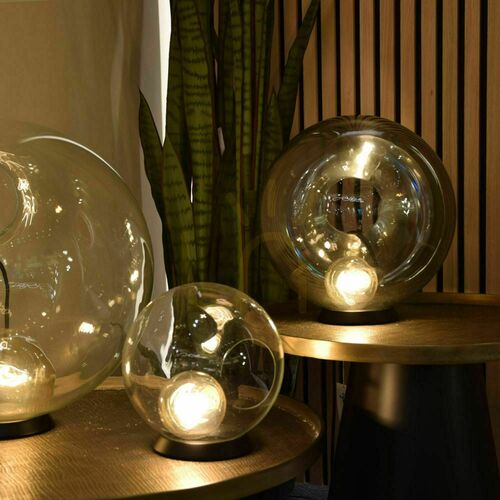
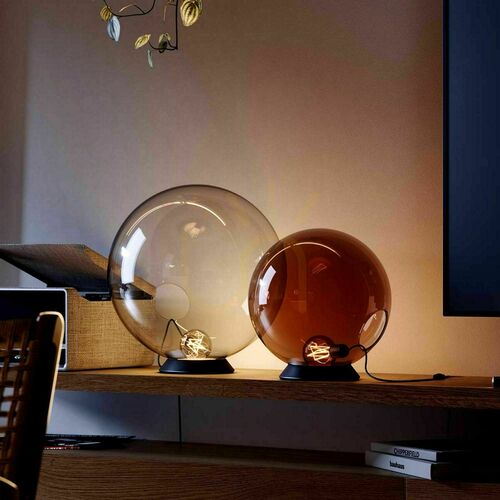
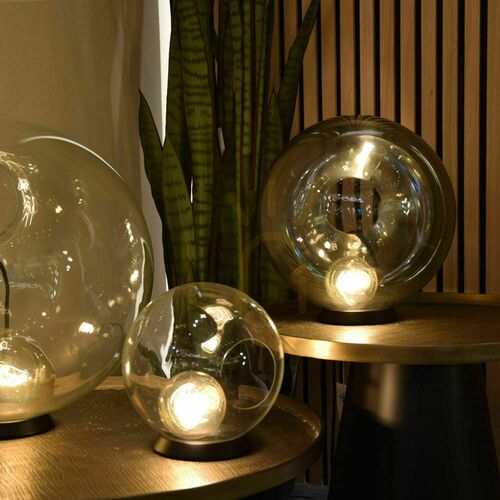
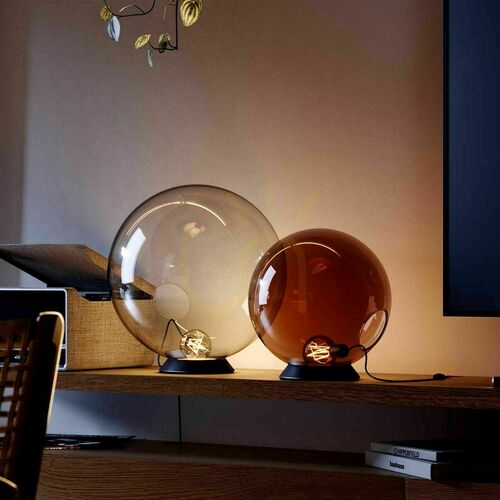
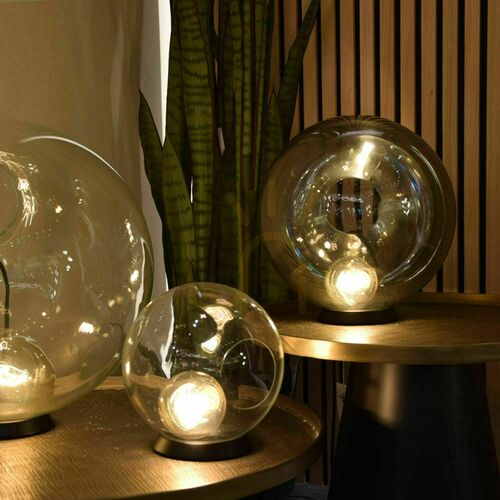
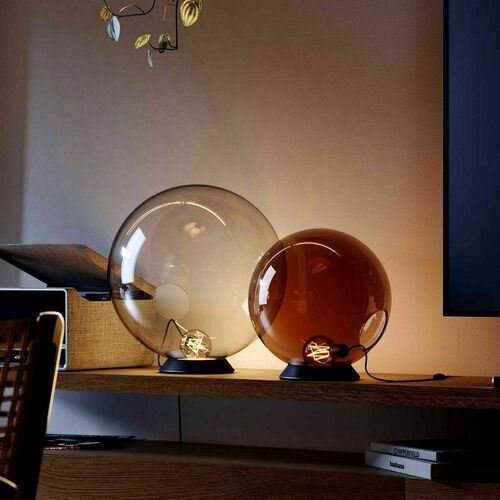
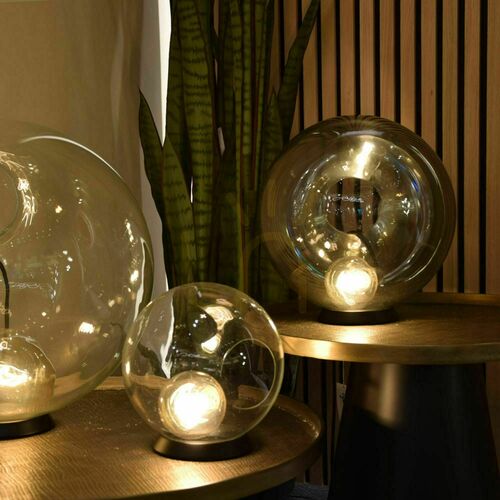
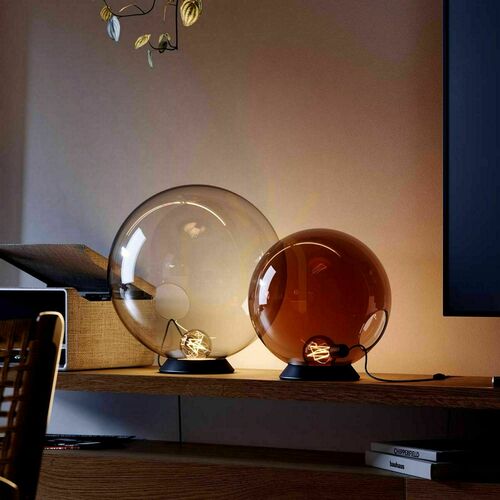
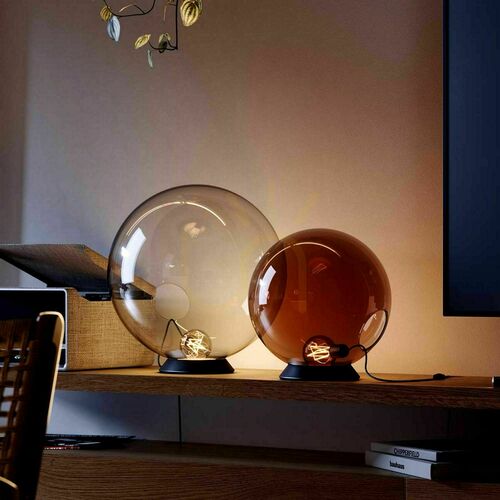
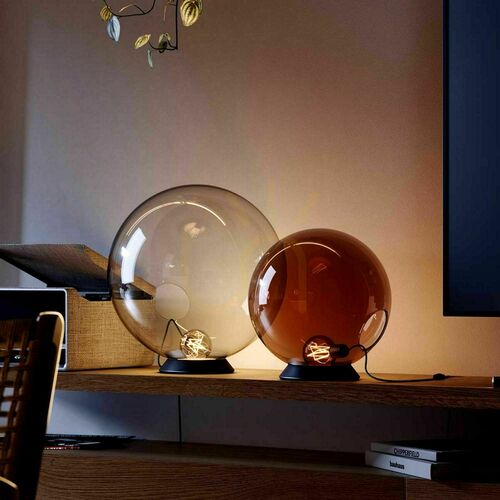
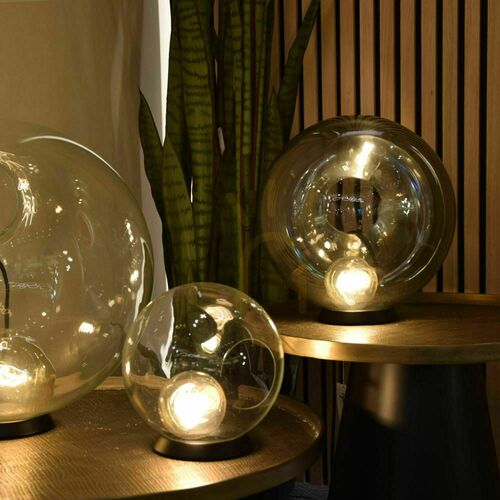
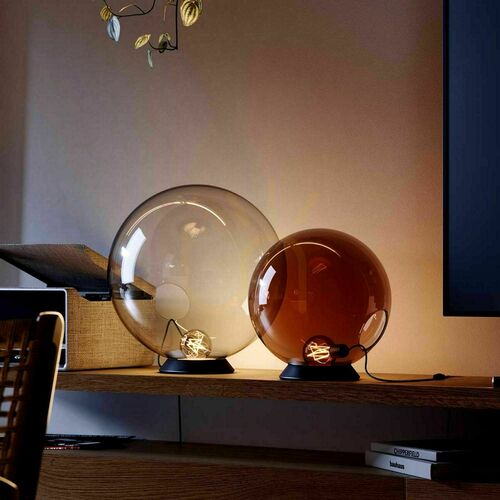
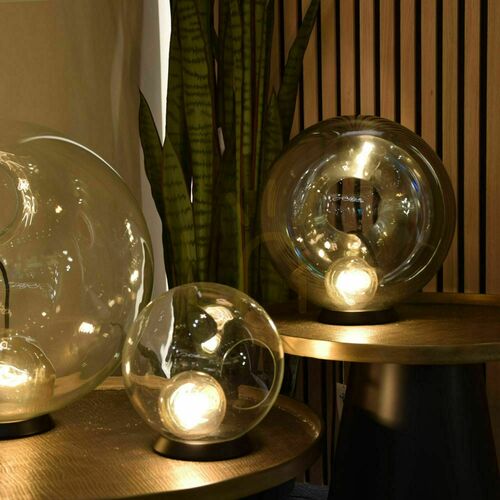
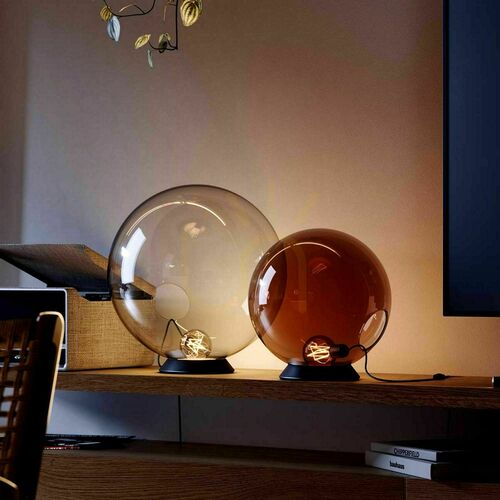
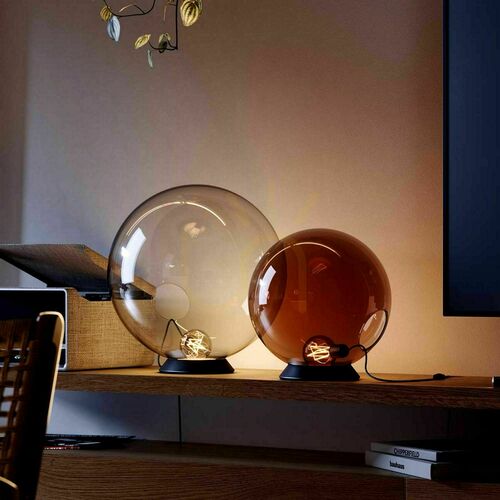
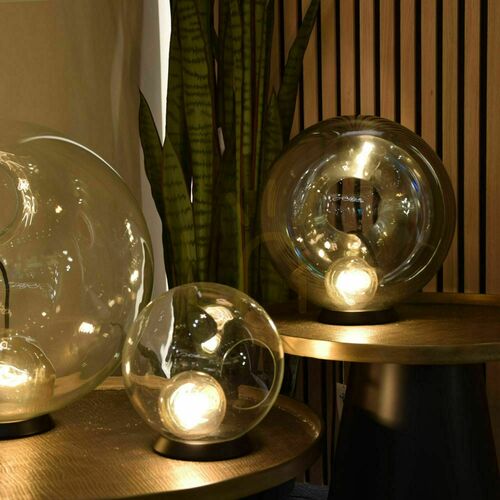
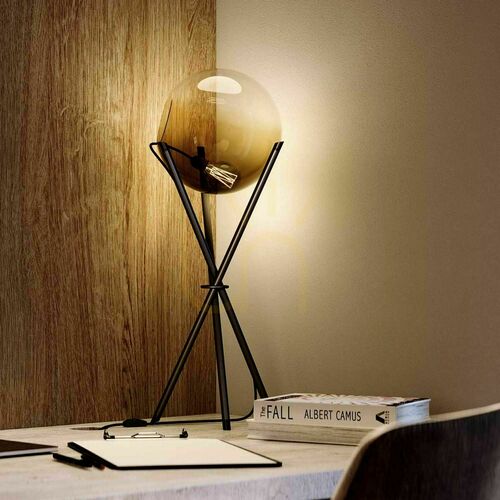
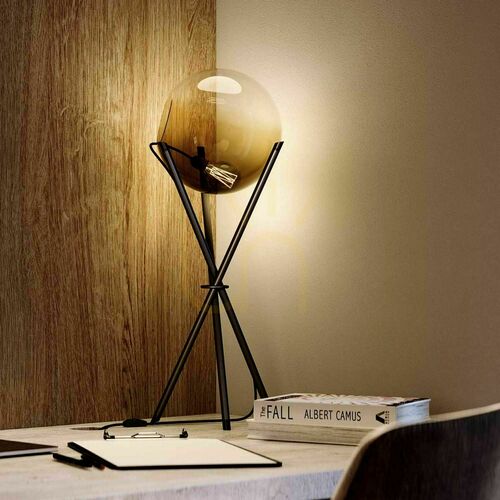
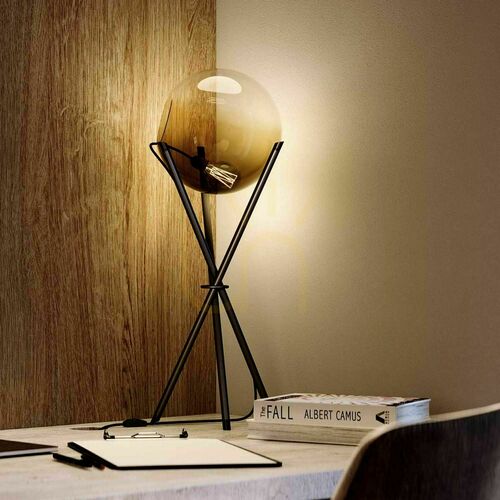
A globe table lamp is a lamp whose shade is a glass or acrylic sphere, resting on a low base or held up on a stem or frame. It throws soft light in every direction, so it works as mood and accent lighting on a sideboard, windowsill or side table rather than as a reading or desk light.
Compared with a globe pendant, the table version keeps the light low, roughly at eye level when you are seated. That is what makes a room feel cosy after dark: pools of warm light at furniture height while the ceiling stays dim. The trade-off is that the globe is always in view, so the glass, the size and the colour of the light matter more than they would on a fitting overhead.
Modern, vintage or something in between
Globe table lamps cover a surprising range of looks. The simplest is a ball with a flattened underside that sits straight on the surface, hiding the lampholder inside. Others perch a globe on a chunky base in marble, metal, ceramic, concrete or wood. Taller designs lift the sphere on a stem or wire frame, usually 35–70 cm high overall, and many of these borrow from seventies space-age or Art Deco styling. Antique and vintage pieces often pair frosted or opal glass with brass, while modern ones lean towards smoked glass and matt black or chrome.
Height and weight go together. Glass makes a lamp top-heavy, so the higher the globe sits, the wider and heavier the base should be.
Choosing the glass
-
Opal or frosted glass diffuses light evenly and hides the bulb, so there is no glare. Any standard LED bulb will do.
-
Clear glass puts the bulb on show. A decorative filament bulb or a crown-silvered bulb, which hides the bright point from view, looks far better than a plain pearl one.
-
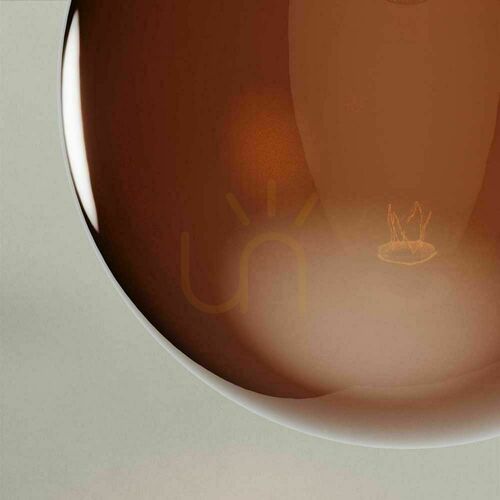
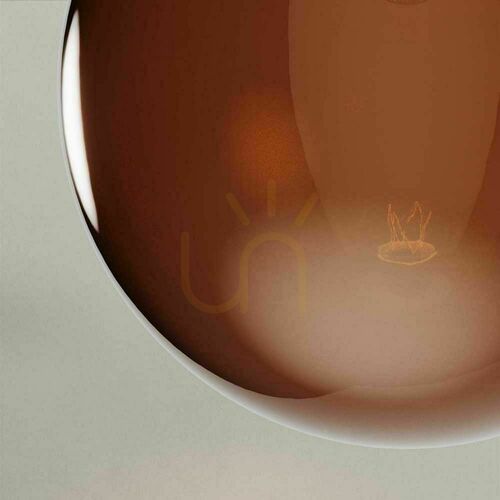
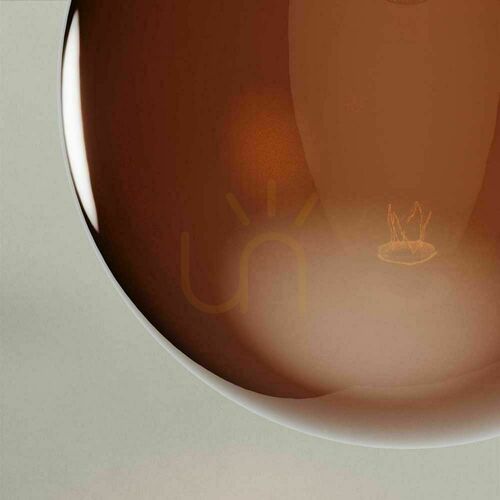
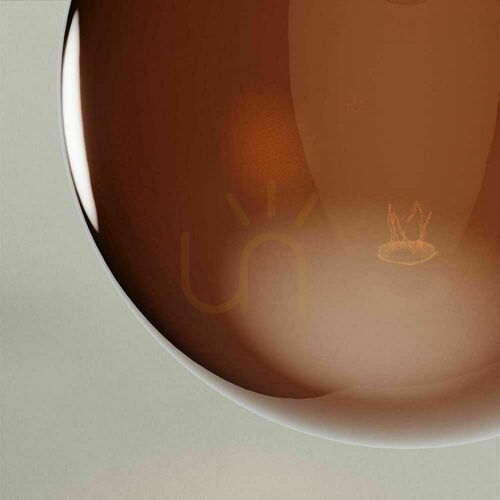
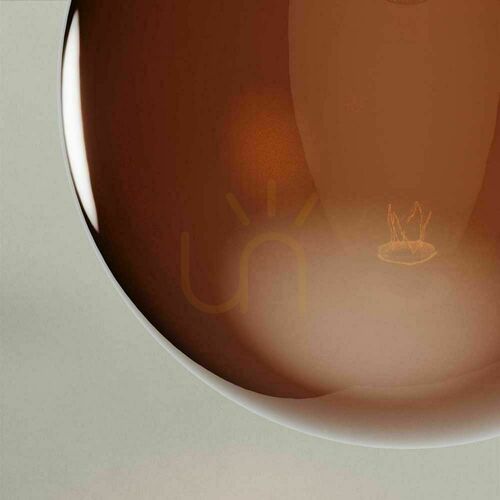
Smoked, amber and coloured glass soften and tint the light. Lovely when switched off as well as on, but much less light reaches the room.
-
Hand-blown glass may show tiny bubbles or streaks. That is a sign of how it was made, not a fault.
Size, bulb cap and light output at a glance
| Where it stands |
Globe diameter |
Usual cap |
Light output |
Colour temperature |
| Windowsill or shelf |
10–15 cm |
G9 or integrated LED |
150–300 lm |
2700 K |
| Bedside table |
15–20 cm |
E14 (SES) |
200–350 lm |
2200–2700 K |
| Sideboard or hall console |
20–30 cm |
E14 (SES) or E27 (ES) |
400–600 lm |
2700–3000 K |
| Side table next to a sofa |
25–35 cm |
E27 (ES) or B22 (BC) |
500–800 lm |
2700 K |
These figures assume opal glass; behind smoked or amber glass you can go brighter. Once a globe passes about 35–40 cm across, it starts to behave like a floor lamp and usually looks better on the floor beside a chair. The ‘max 40 W’ on the label refers to old incandescent bulbs; an LED of similar brightness draws only a few watts.
Plugs, switches and placement in a UK home
A lamp sold for the UK comes with a fused three-pin plug. Many globe lamps are double insulated (Class II), so they have no earth wire. Switching is usually an inline switch on the flex, with rotary switches, touch bases and inline dimmers as alternatives. Dimming only works with a dimmable bulb and a compatible dimmer; a three-step dimmable bulb is an easy workaround on an ordinary switch.
Measure the spot before you buy and check how far away the nearest socket is. Living rooms tend to need two or three low lamps rather than one bright one, so a globe on a sideboard and another on a side table often does more than a single big ceiling light. Route the flex so it cannot be caught by feet, pets or a hoover — a dropped glass globe rarely survives.
Common mistakes and care
- Cool white light at 4000 K or above looks clinical in the evening.
- A clear globe with a frosted bulb inside looks unfinished. Match the bulb to the glass.
- Unplug the lamp and let it cool before cleaning. Wash the glass in lukewarm water with a drop of washing-up liquid and dry it completely; just dust metal bases with a dry cloth.
- Dust and insects inside an opal globe show up as shadows, so check inside now and then.
Frequently asked questions
Is a glass globe table lamp good for a living room?
Yes, as one of several light sources. Go for 25–35 cm opal glass at 2700 K on a sideboard or side table, and keep a separate lamp for reading.
What is the difference between a vintage and a modern globe table lamp?
Vintage designs typically combine opal or frosted glass with brass or a mushroom silhouette. Modern ones favour smoked or clear glass, slimmer frames and integrated LEDs.
Does coloured glass change the light?
It does. Amber, pink or green glass tints the room and cuts brightness noticeably, so treat a coloured globe as decoration and pair it with a brighter lamp nearby.
Is a globe table lamp the same as a world globe lamp?
No. A world globe lamp is a lit-up map of the Earth, mostly for studies and children's rooms. A globe table lamp simply uses a sphere of glass as its shade.
Which bulb does a glass globe lamp take?
Check the lampholder: small globes usually take E14 (SES) or G9, larger ones E27 (ES) or bayonet B22 (BC). A 4–6 W LED at 2700 K suits opal glass; a filament bulb at 2200–2700 K suits clear.
Do glass globe lamps get hot?
With an LED bulb the glass stays barely warm. The hot globes people remember came from old incandescent and halogen bulbs.
Lighting next to the bed has its own rules, covered under globe bedside lamps. Pendant, wall and floor-standing spheres sit with the wider family of globe lights.