
Bedside Lamps and Nightstand Lighting – How to Choose Light for Your Bedroom
The bedside lamp is the most-used and least-thought-about light in the house – the last one you switch off and the first one you switch on. Too cool a color temperature keeps you from winding down, a cord switch has to be found by feel in the dark, and the phone you meant to charge ends up on the floor because there’s no room on the nightstand. Here’s how to choose a bedside lamp that actually makes your evenings and mornings easier, not just one that looks good in a photo.

Table of contents
- Which bedside lamp works best?
- Bedroom light color – the parameter that matters most
- Dimming and touch switches – convenience in the middle of the night
- A lamp with USB charging – two functions in one
- Boho-style bedside lamps
- Night lights for kids
- A wall sconce instead of a lamp – when it’s the better choice
- How to position a lamp on your nightstand
- Summary
Which bedside lamp works best?
A good bedside lamp does three things at once: gives enough light to read by or find something in the drawer, doesn’t blind you when you switch it on in the middle of the night, and turns on without groping around for a cord switch in the dark. In practice, these work best:
- Table lamps with a shade – the classic choice, soft diffused light, a huge range of styles.
- Touch lamps – a switch built into the base, often with several brightness levels instead of a single on/off.
- Lamps with USB charging – an extra function that gets rid of a separate charger and a tangle of cables on the nightstand.
Which one to pick mostly comes down to how much nightstand space you have, and whether you want the extra functions or just the look.
Bedroom light color – the parameter that matters most
Before comparing shade shapes, check the bulb’s color temperature – it’s what actually decides whether the lamp helps you wind down:
- 2700 K (warm white) – the optimal color for a bedroom. Supports drowsiness and doesn’t fight your natural circadian rhythm.
- 3000 K – still warm, but a touch livelier; good if you sometimes read longer in the evening under the same lamp.
- 4000 K and above (neutral/cool white) – avoid it in the bedroom. This tone is stimulating in a similar way to daylight, which makes it harder to fall asleep.
If the lamp has a fixed, non-replaceable LED bulb, check the color temperature on the product page before buying – you won’t be able to change it once it’s installed.
Dimming and touch switches – convenience in the middle of the night
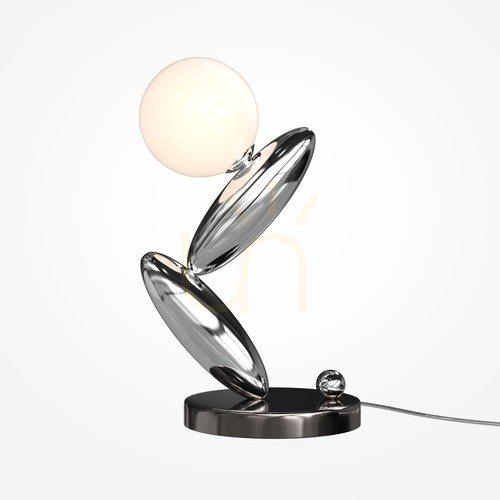
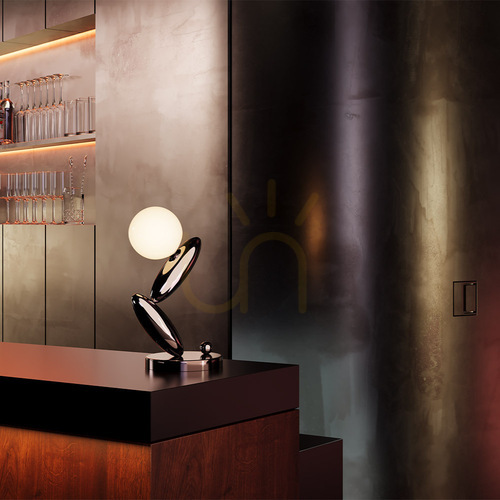
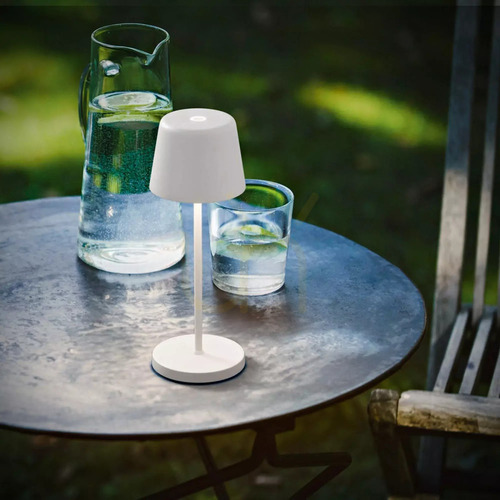
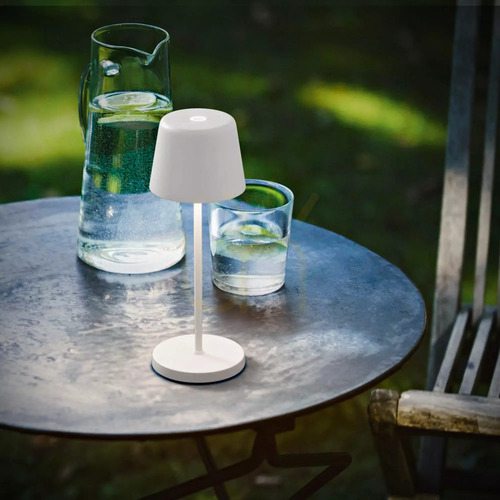
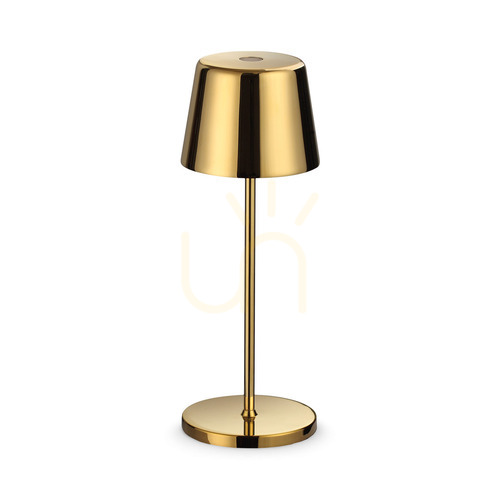
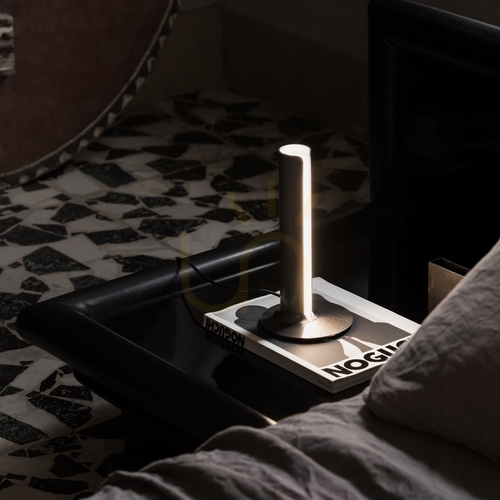
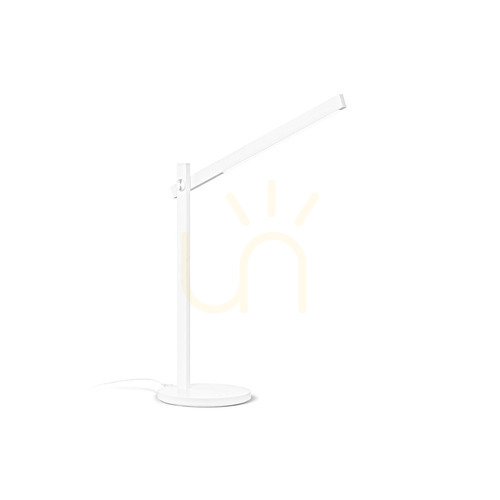
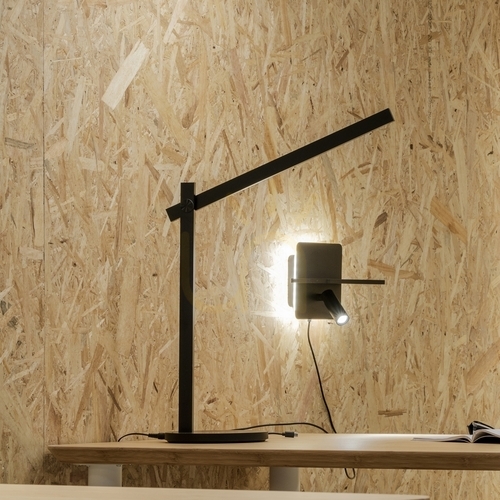
The most practical feature in a bedside lamp isn’t a visual effect – it’s how easy it is to switch on in the dark. A touch switch built into the base – often triggered by touching the base or the shade itself – works intuitively even half-asleep, and usually offers several brightness levels with a single gesture: a light touch for a night trip to the bathroom, a stronger setting for reading.





If your current lamp doesn’t have a dimmer and you don’t want to replace it, a simpler fix is a dimmable LED bulb in an E27 or E14 socket, controlled by an inline dimmer on the power cord – it works with most existing table lamps.
A lamp with USB charging – two functions in one
Charging your phone by the bed is standard practice now, and a separate charger plugged into a power strip means one more cable and one more socket on an already crowded nightstand. Lamps with a USB port built into the base solve this without extra wiring – the charger is part of the lamp, and the phone cable plugs straight into its base.


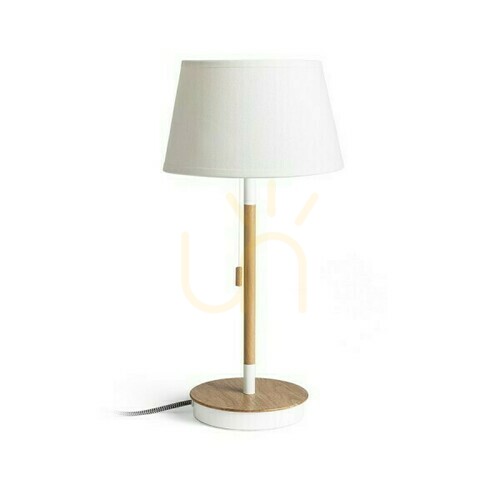
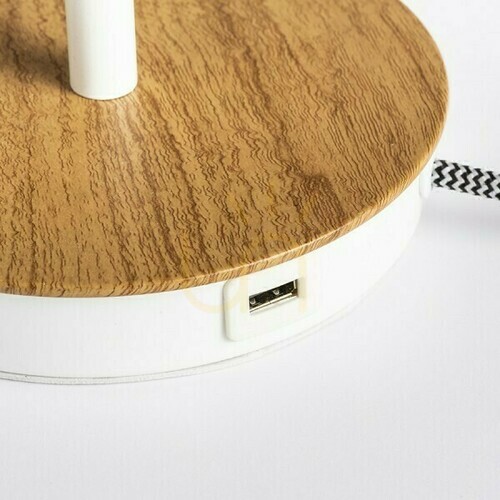


When choosing one, check the port’s output power (some older models charge slower than a standard wall charger) and whether the port works independently of whether the lamp itself is on or off – the latter is more convenient, since you won’t need to leave the light on all night just to charge your phone.
Boho-style bedside lamps
Lamps made from natural materials – rattan, pandan, woven cord – give off a warm, diffused glow filtering through the shade’s texture, which creates a moody effect on its own without needing a dimmer. It’s also one of the most-searched bedside lamp styles – the natural texture pairs well with linen bedding and wooden furniture.
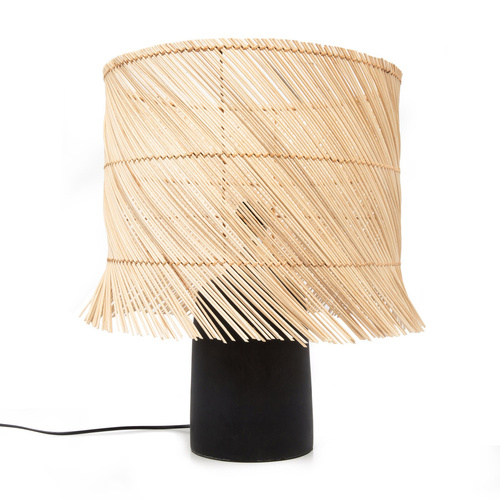
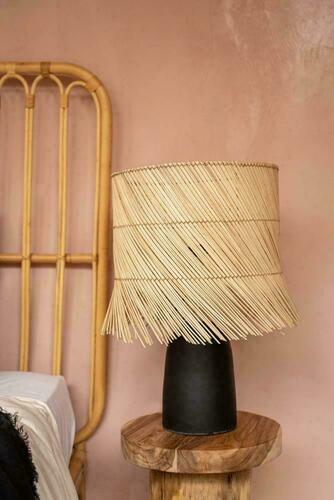

One thing worth keeping in mind: a woven shade lets more light escape sideways than a classic fabric shade, so this style works better as a mood light than as your only reading light.
Night lights for kids
In a kids’ room, a night light serves a different purpose than in an adults’ bedroom – it’s there to provide a sense of security, not just to light up a book. What works best here:
- A gentle, non-glaring color (again, roughly 2700–3000 K),
- A simple, drop-resistant switch – a big button is easier for small hands than a tiny dimmer dial,
- A motif the child likes – stars, animals, colors – so the lamp doubles as a fun object, not just a fixture.


A wall sconce instead of a lamp – when it’s the better choice
If the nightstand is narrow, or there isn’t one at all, a wall sconce mounted above the bed can be a better solution than a table lamp – it frees up the whole nightstand surface and can’t be knocked off in the middle of the night. The typical mounting height is 100–120 cm above the floor, measured to the bottom edge of the shade, so the light falls at head height for someone reading in bed rather than into their eyes. The downside is that it usually needs wiring inside the wall – worth planning for at the electrical stage if you’re designing the bedroom from scratch.
How to position a lamp on your nightstand
- Shade height – the bottom edge of the shade roughly at eye level for someone lying in bed, so the light doesn’t shine straight into their face.
- Distance from the edge of the bed – the lamp should be within arm’s reach without having to get up, but not so close that it’s easy to knock over.
- Direction of light – a shade open at the top and bottom gives more diffused light in the room; a shade closed on the sides directs light mainly downward, onto a book.
- Symmetry on both sides of the bed – two identical lamps on either side look cohesive, but they don’t need identical features – one side can have USB charging, the other doesn’t have to.
- Cord and switch within reach – whatever the switch type, check that you can reach it without turning on the overhead light.
Summary
A good bedside lamp comes down to a warm color temperature (2700–3000 K), a switch you can find by feel, and features that match your evening habits – dimming, USB charging, or simply a natural texture that sets the mood on its own. If the nightstand is too narrow for a lamp, a wall sconce above the bed does the job just as well. We’ve covered the rest of the bedroom’s lighting in a separate guide – here we focused on the light right next to the bed. Browse the full range in bedside lamps and table lamps.
Bartosz


Maybe you will be interested in products from these categories?
Bedside Lamps, Table Lamps
Tags & Blog Categories