
Children's Room Lighting – Ceiling Light, Wall Sconce, and Nightlight in One Design
A child's room is the most versatile room in the house: a play area, a bedroom, and eventually a place to do homework. Each of these roles requires different lighting—and a single ceiling chandelier won't do the job. We’ll show you how to combine a ceiling light, a wall sconce, and a nightlight into a single well-thought-out plan, what to look for when choosing lamps for young children, and when your child is ready for a real desk lamp.

Table of Contents
- Three roles of lighting in a child’s room
- Ceiling light for a child's room – general lighting
- Wall lamp for a child's room – storytime lighting
- Nightlight – guardian of peaceful sleep
- Desk lamp for a student
- Safety First
- What color and brightness of light for a child?
- Nightlight for a baby
- Summary
Three functions of lighting in a child’s room
A well-lit children’s room is based on three layers:
- General lighting – bright and even for playing on the floor and tidying up, usually a ceiling fixture.
- Evening light – warm and dimmed for reading bedtime stories and winding down before sleep. This role is played by a bedside sconce.
- Night light – a soft glow that ensures the child doesn’t wake up in complete darkness and the parent doesn’t trip over toys at night.
The younger the child, the more important the second and third layers are. The older the child, the more important the fourth layer becomes, which we discuss below: study lighting.
Ceiling light for a child’s room – general lighting
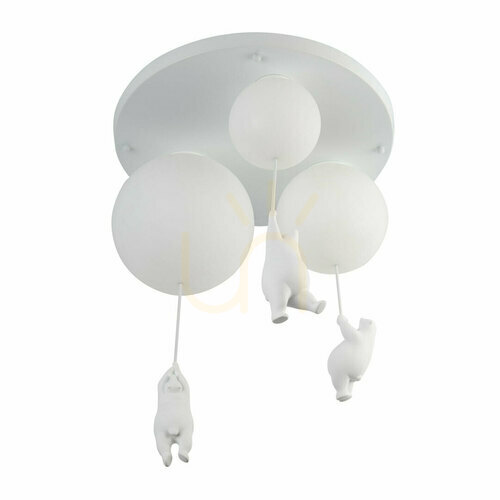
In a child’s room, a ceiling light beats a chandelier in almost every category: it has no hanging parts that might be tempting during pillow fights, it provides even light throughout the room, and it’s easy to keep clean. Manufacturers are competing to come up with the most creative designs—clouds, stars, moons, and colorful crayons make the frame part of the decor.
What should you look for?
- A plastic shade instead of glass —lighter and safer.
- A frosted diffuser – hides the light source and doesn’t hurt the eyes when playing on the floor, which is the perspective from which a child most often looks at the ceiling.
- Power: for a 10–12 m² room, aim for a total of approx. 2,000–2,500 lumens of general lighting.
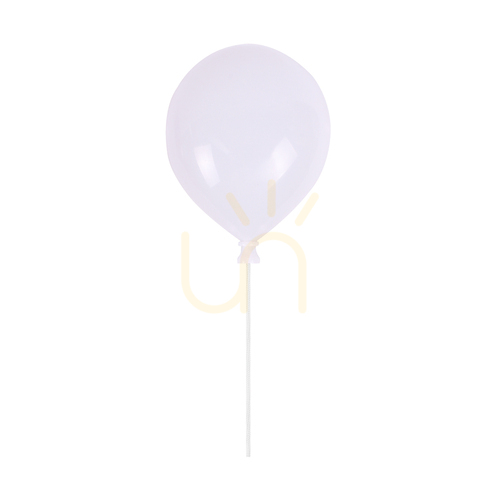


Wall lamp for a child’s room – light for a fairy tale
A wall sconce above the bed is the most convenient evening light: it doesn’t take up space on the nightstand, the child won’t knock it over, and when mounted out of reach of the youngest children (for infants) or within reach of an older child (when the child turns off the light themselves), it grows with the user. Models with a shelf can also hold your favorite book and stuffed animal.
Look for wall lamps with a built-in dimmer or two brightness levels —full power for reading, minimal light for falling asleep. You can find an overview of the models in the Childrens Wall Lights category.
Night light – guardian of peaceful sleep
A good night light shines dimly, warmly, and low —it’s meant to be a point of reference in the dark, not to illuminate the room. The most practical options today are battery-powered silicone nightlights shaped like animals: they’re soft, safe even in a crib, and feature a timer that turns the light off once the child falls asleep. A classic—a plug-in lamp with a twilight sensor—works great in the hallway, on the way to the bathroom.
Avoid lights with a cool, blue glow: blue light is the strongest inhibitor of melatonin and makes it harder to fall asleep—and that’s the last thing a parent needs at 9:30 p.m.


A desk lamp for a student
When a desk appears in the room, a fourth layer of light appears as well. When doing homework, general lighting isn't enough—you need a desk lamp for your child, positioned on the opposite side of their writing hand (for right-handed children: on the left), so that their hand doesn't cast a shadow on the notebook.
A good lamp for a student has:
- an adjustable arm or head —the light should be directed at the desk surface, not into the eyes,
- a neutral color temperature. 4000 K for studying (promotes concentration), preferably with the option to switch to a warmer tone in the evening,
- even, glare-free light distribution – a matte diffuser instead of a bare LED.
Children’s models—from dinosaurs to touch-sensitive LEDs with brightness control—can be found in the category Childrens Desk Lamps.


Safety first
Checklist before buying any lamp for a child's room:
- Stability or permanent installation – floor lamps can easily tip over. Anything that can be hung (ceiling lights, wall sconces) is safer.
- Low housing temperature – LED light sources heat up much less than incandescent and halogen bulbs (though they can get warm near the heat sink). Avoid traditional incandescent and halogen bulbs within children’s reach.
- Plastic instead of glass in the play area.
- Cords out of reach – it’s best to choose fixtures without dangling cords or to route them through cord channels.
- CE certification and a reputable brand – when it comes to children’s lamps, this is not the place to cut corners with random sources.
What color and brightness of light is best for a child?
A child’s circadian rhythm is more sensitive than an adult’s, so the color of light really matters:
- daytime / play: 3000–4000 K, bright (approx. 200 lm/m²),
- evening / bedtime story: 2700 K, dimmed,
- night: individual lumens in a warm, amber hue.
If you choose an LED ceiling light with adjustable color and brightness (CCT, remote control, or app), a single fixture will handle all daily modes—from morning hustle and bustle to evening calm.
Night light for a baby
A baby’s room has its own set of rules. You don’t need bright light for nighttime feedings and diaper changes—on the contrary, bright, cold light wakes up both the baby and the parent. The best nightlight for a baby:
- It gives off a very soft, warm glow — amber or red light is ideal, as it least disrupts melatonin production. Avoid white light, and especially blue light,
- it doesn’t shine directly into the baby’s eyes – position it outside the line of sight of a lying baby, directing the light toward the wall or floor,
- it has a timer or dimming feature – it turns off automatically once the baby falls asleep,
- is safe to touch – battery-powered silicone nightlights are soft, cool to the touch, and cordless (no cable in the crib).
A classic plug-in nightlight with a twilight sensor works great in the hallway, lighting the way to the child’s room instead of shining right next to the crib.
Summary
Well-thought-out lighting for a child’s room includes a ceiling light with a frosted shade for playtime, a dimmable wall sconce for evening rituals, a warm nightlight for bedtime—and, starting in first grade, a sturdy desk lamp with an adjustable arm. You can find all these categories—from clouds to dinosaurs—in the section Lamps for children.
Victoria


Maybe you will be interested in products from these categories?
Kids lights, Childrens Wall Lights, Childrens Chandeliers, Kids Pendant Lights, Childrens Ceiling Lights, Childrens Night Lights
Tags & Blog Categories