
Garage and workshop lights – bright, durable damp-proof fittings
A garage needs more than one powerful bulb in the middle of the ceiling. Around the car, shelves and workbench, even light without deep shadows, resistance to dust and moisture, and clear colour are essential. This guide explains when to choose an LED garage light or IP65 damp-proof fitting, how to estimate output and how to illuminate a workshop without glare.

Contents
- Divide the garage into zones
- Why use a damp-proof fitting?
- How much light is needed?
- 4000 K or cooler light?
- Positioning linear fittings
- Workbench lighting
- Motion sensing and controls
- IP, IK and working conditions
- Installation and safety
- Common mistakes
- Summary
Divide the garage into zones
Parking, storage and precision work need different light. General lighting should make entry and movement safe; the bench needs directional task light and shelves should be lit from the front. Mark the open bonnet, tailgate and garage door on the plan. Two rows beside a car are more useful than one fitting hidden above its roof.
Why use a damp-proof fitting?
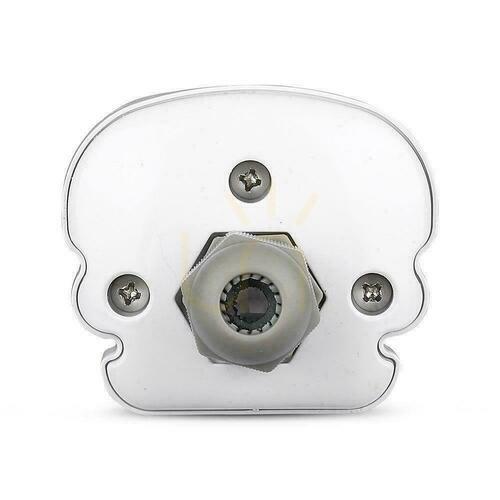
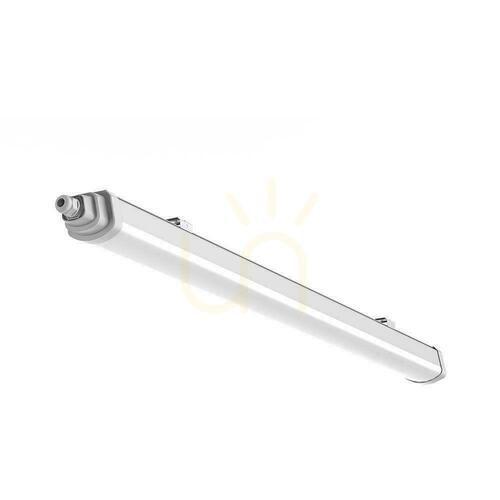
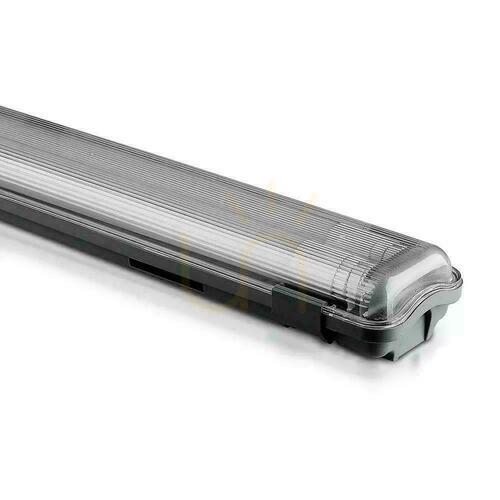
Dust, winter moisture and workshop particles settle in a garage. A sealed housing is easier to clean and protects its interior. IP65 denotes dust-tight construction and tested protection from water jets; it does not permit immersion or arbitrary pressure washing and cannot replace assessment of a pit, wash bay or chemical area.
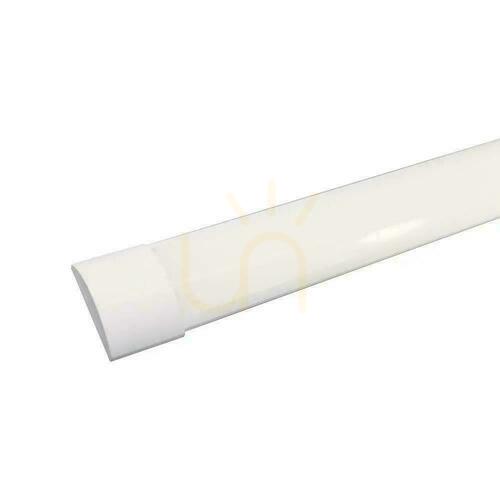
Linear diffusers spread light and reduce harsh shadows. In a low garage, also check the IK impact rating.
See Waterproof Batten Lights and Lamps for Garage.





How much light is needed?
Compare lumens and distribution, not watts alone. As a starting point, a private garage may use roughly 200–300 lx for general light, while detailed bench work often needs about 500 lx or more. Multiply area by target lux for lumens reaching the plane, then allow for diffuser loss, dirt, dark walls and obstructions. A professional workshop needs a proper photometric design.
4000 K or cooler light?
Neutral 4000 K is a dependable base: clear without a strongly blue cast. 5000–6500 K can suit precision work but may be tiring and does not guarantee better colour. Choose CRI 80 minimum, or 90+ for paint and colour work, plus low flicker and controlled glare.
Positioning linear fittings
In a single garage, place two rows along the car’s sides. A double garage often benefits from three rows. Position light in front of shelving and clear of door tracks. Overlapping beams avoid a dark central strip. When several LED drivers share a circuit, the electrician must also check inrush current.
Workbench lighting
Ceiling light is blocked when you lean over a tool. Add a line light above the bench front or an adjustable lamp opposite the dominant hand. It must illuminate the object, not eyes or reflective metal. A portable workshop lamp is useful under a bonnet; check stability, impact resistance, cable length or battery endurance. Accessories are in Workshop Accessories.
Motion sensing and controls
Motion at the entrance is convenient. At a bench, an ordinary PIR may switch off during quiet work, creating a hazard around tools. Use a longer delay, presence detection or manual override. Separate general and task circuits so a brief visit does not illuminate everything.
IP, IK and working conditions
IP covers dust and water; IK covers mechanical impact. A dry domestic garage may not require IP65 everywhere, but a closed fitting is easier to maintain. Check minimum operating temperature in an unheated building and whether the driver or light module is serviceable.
Installation and safety
Check door travel, vehicle height and service access before fixing. Preserve sealing at every cable gland. A qualified electrician must design and connect fixed 230 V circuits, overcurrent protection and RCD, accounting for driver inrush. Isolate power before cleaning and avoid solvents that attack polycarbonate.
Common mistakes
- one central fitting hidden by the car;
- choosing watts rather than lumens and distribution;
- selecting 6500 K without checking CRI and comfort;
- placing light behind shelves or the open door;
- no separate bench lamp;
- motion timeout too short;
- damaged IP seal at the cable entry;
- inaccessible drivers;
- too many LED drivers on one protective device.
Summary
A good LED garage system starts with two parallel rows, neutral 4000 K and a broad diffuser. Select suitable damp-proof fittings for dust and moisture, check IK at low height and illuminate the bench separately. Keep general and task controls separate, retain manual override and entrust fixed wiring to an electrician. The result supports safe parking, searching and accurate work without deep shadows.
Choose from Lamps for Garage and Waterproof Batten Lights.
Maciej Hudaszek


Maybe you will be interested in products from these categories?
Lamps for Garage, Waterproof Batten Lights, Workshop Accessories
Tags & Blog Categories