
Gold and brass lamps – warm metallic light in interiors
Gold and brass lighting brings warmth and a sense of quiet luxury to a room – but only when it is used as a deliberate accent rather than a theme. The trick is to tell real brass from a gold-coloured coating, to size the fixture to the furniture instead of the whole room, and to repeat the finish just enough that it looks intentional. This guide walks through choosing, placing and caring for gold and brass lamps so the effect reads as warm and considered, not like a showroom.

In short: pick one leading gold or brass fixture per room and let smaller details echo it two or three times. Warm light of 2700–3000 K with high colour rendering (CRI 90+) makes the metal glow; cold white light greys it out. Check whether you are buying solid brass or a brass-coloured finish – it changes both the price and the way you clean it.
Contents
- Gold, brass or copper – telling them apart
- How much is enough – the accent rule
- Pendants and chandeliers over a table
- Combining finishes and mixing metals
- Room by room
- Light colour and bulbs
- Care and patina
- Summary
Gold, brass or copper – telling them apart
“Gold” on a lamp is almost always a finish name, not solid gold. What you are usually choosing between is:
- Brass – an alloy of copper and zinc, ranging from bright yellow-gold to a deeper brown. Raw brass slowly darkens and develops a patina; it is the warmest, most classic of the three.
- Copper – pinker and more expressive, it darkens fastest of all and shifts towards brown and even green over years.
- A gold or brass coating – a thin galvanic or painted layer over steel or aluminium that imitates the look at a lower price.
Before you buy, work out whether the metal is solid or just a “metal colour”. Three clues: the product description (“solid/brushed brass” versus “brass finish”), the weight (solid brass is surprisingly heavy for its size) and a magnet – if it clings firmly there is steel underneath and the brass is only a coating. This matters because a coated finish must never be polished with paste, and it wears through where hands touch it. Also check whether the surface is lacquered (it stays bright and even, and dislikes acids and abrasives) or raw (it will patinate, and you can gently polish it back). When in doubt, treat the lamp as coated and lacquered – it is the safer assumption.
See Glamor lamps and Modern lamps.





How much is enough – the accent rule
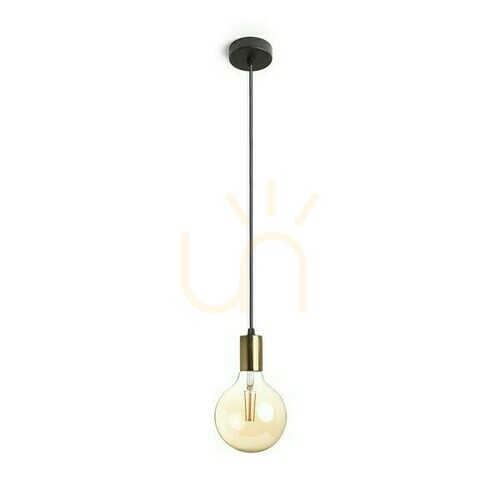
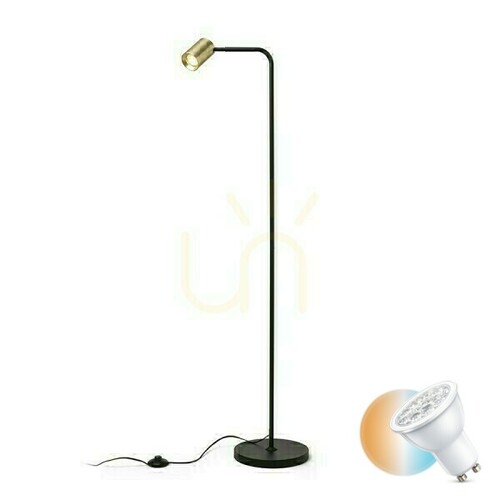
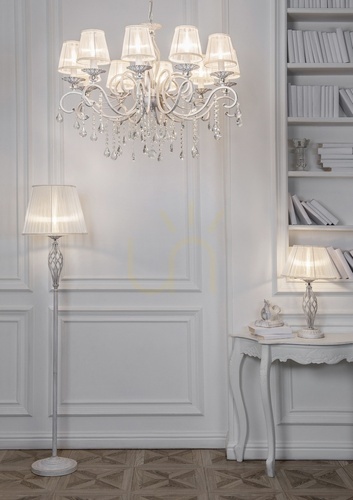
Gold and brass work best in small doses. Choose one leading element – a pendant, a chandelier or a pair of matching wall lights – and let it carry the room. Keep the other metal details smaller: a lamp base, a frame, a handful of accessories. A useful habit is the rule of three: repeat the finish two or three times around the room (say, a pendant, a picture frame and a candlestick) so the eye reads it as a deliberate palette rather than a single stray object.
Leave neutral space around anything reflective. Gold set against a calm wall, plaster or muted textile glows; gold packed next to more gold, mirror and glass turns busy and cheap-looking. If in doubt, take one gold item out of the scheme rather than adding another.
Pendants and chandeliers over a table
A hanging gold or brass fixture is most striking over a dining table or a kitchen island, where it has a clear job and a clear frame. Two numbers help:
- Width: aim for a fixture (or a group of them) roughly half to two-thirds the width of the table. Narrower looks lost; wider gets in the way of reaching across.
- Height: hang the bottom of the shade about 70–85 cm above the tabletop – low enough to feel intimate and light the surface, high enough to clear sightlines across the table. Raise it slightly under a high ceiling.
Relate the pendant to the table, not to the whole room, and sit down before you fix the height: check that the bright source is hidden or diffused from a seated eye line, that no one bumps their head serving, and that the bulb can still be reached for changing. For a cluster over a long table, an odd number of pendants usually looks more natural than an even one.
Combining finishes and mixing metals
Gold and brass take on a different character depending on what sits next to them:
- With black – a graphic, contemporary outline; the black grounds the warmth. Many current fixtures pair the two in one body.
- With wood – soft and inviting; warm-on-warm reads as natural and lived-in.
- With stone or marble – calm and a little formal; the metal becomes jewellery on a neutral base.
- With clear glass – light and airy; the glass lets the brass structure show without adding visual weight.
You can mix metals, but do it on purpose: pick one dominant finish and let a second act as an accent, rather than scattering three or four evenly. Warm-with-warm (brass and copper) is the easy combination; brass with chrome or nickel works only as a deliberate warm-cold contrast. As a rule of thumb, keep to two dominant metal finishes per view.
Room by room
- Living room – a brass pendant or floor lamp as the hero, echoed by a table lamp or a couple of accessories.
- Dining room and kitchen island – the natural home for a gold chandelier or a row of pendants; follow the width and height guidance above.
- Bedroom – a pair of brass wall lights beside the bed frees the nightstands and throws a warm, low glow for reading.
- Bathroom – keep metal fixtures to the zones your regulations allow, away from direct splashes; humidity accelerates patina, so prefer lacquered or stainless finishes here and check the fitting’s moisture rating.
- Hallway – a single brass wall light or a small pendant makes a warm first impression in a space that is often over-lit and flat.
Light colour and bulbs
Light colour makes or breaks a gold scheme. Warm white, 2700–3000 K, complements gold and brass and makes the metal look rich; neutral or cold light (4000 K and up) drains the warmth and can make the same lamp look grey and hard. For tasks over a worktop you may still want neutral light – just accept the trade-off.
Choose bulbs with high colour rendering, CRI 90+, so the finish, food and skin tones all look truthful under the lamp. If you want to dim, confirm that the bulb and the dimmer are compatible before you buy, and prefer bulbs that keep their warm tone as they dim.
Care and patina
First decide what you want: a bright, even finish (choose lacquered or coated brass and simply keep it clean) or a living patina (choose raw brass or copper and let it darken). You cannot really have both.
To clean, switch the power off and let the lamp cool. A dry microfibre cloth handles most dust; for fingerprints use a cloth barely dampened with water and a drop of washing-up liquid, then wipe dry. Never spray liquid onto the fitting. Keep acids (vinegar, lemon), chlorine, alcohol and abrasive pads away from lacquered, plated or gold-coloured surfaces – they cause damage that does not grow back. Metal polish and mild household acids belong only on raw brass and copper, and only if you actually want to strip the patina back to a shine.
Summary
Use gold and brass lamps as a deliberate focal point, not a wall-to-wall theme. Check whether you are buying solid metal or a coating, size a hanging fixture to the table beneath it, light it with warm 2700–3000 K and CRI 90+, and repeat the finish just two or three times so it reads as intentional. Handled this way, a little warm metal gives a room depth and quiet luxury – without turning it into a matching set.
Compare Glamor lamps and Modern lamps.
Maciej Hudaszek


Maybe you will be interested in products from these categories?
Glamour Lights, Modern lamps
Tags & Blog Categories