
Gold, copper and brass wall lights – warm metal as an accent
A gold, copper or brass wall light can warm a wall without an overdecorated effect. The key lies in proportion, finish quality and light colour. Brushed metal looks calmer than a mirror polish, and a warm coating does not always mean solid gold, copper or brass. Here is how to choose a brass light above a mirror, when a copper fitting works and how to combine warm metals with a modern interior.

Contents
- Material or just colour?
- Gold, copper and brass – the differences
- How not to overdo the metal
- A brass wall light above a mirror
- Warm metal in a bathroom
- Up-and-down light and shades
- Colour temperature and CRI
- Combining black, timber and stone
- Matt, brushed, patinated or polished?
- Installation and care
- Common mistakes
- Summary
Material or just colour?
The label “gold” can describe a solid brass arm, PVD-coated steel, powder lacquer or a plated finish, and each behaves differently. Solid brass may patinate over time, lacquer keeps a more stable colour, and a thin coating is sensitive to abrasive cleaning. Before buying, check the body material, the type of finish and the care instructions.
That matters more than the name of the shade itself. Two lamps both described as gold can have a completely different tone and sheen. If the wall light is meant to work with a tap or a handle, compare samples or photographs in similar light.
Browse Wall Lights and decorative Glamor lamps.
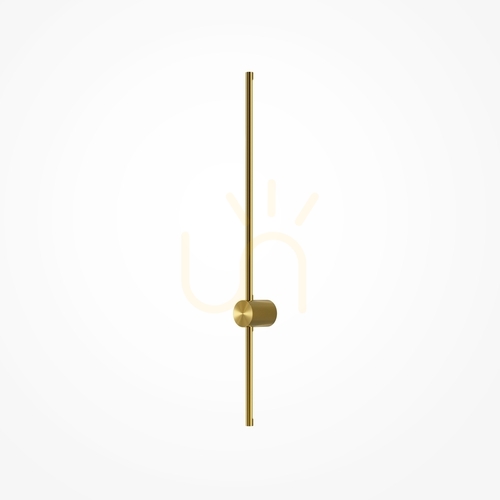


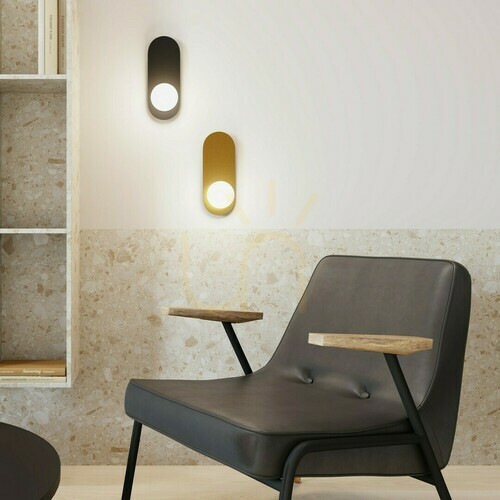

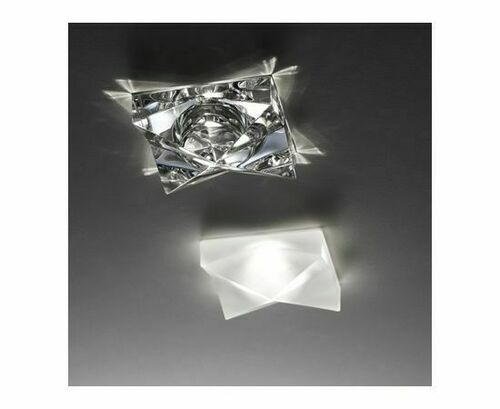


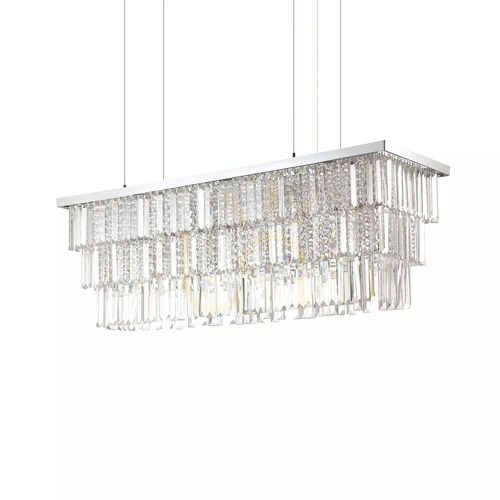


Gold, copper and brass – the differences
In lighting, gold is usually a colour name, from pale champagne to a deep antique tone. Brass runs from yellow-gold to brown and suits modern classic schemes; greenish tones appear only in certain kinds of patina. Copper is warmer, rust-pink or orange, and draws more attention; polished, it sparkles, while patinated it takes on a quieter depth.
Do not try to match every metal to a single exact tone. A conscious family works better: warm metals with a similar degree of sheen, or one clear accent on a neutral background.
How not to overdo the metal
Within one view, choose a leading element: a pair of wall lights, a chandelier or the taps. Keep the other metals smaller. If a gold wall light has a wide, shiny disc, it does not need many gold frames beside it. A slender arm, on the other hand, can be echoed in handles or table legs.
Warm metal looks best against a calm background. On beige and broken white it forms a gentle composition, on navy and green it gives an elegant contrast, and beside black it becomes graphic. Leave a gap between metallic points so each one stays legible.
A brass wall light above a mirror
A linear wall light spanning part of a broad mirror works well; beside a smaller mirror you can use two vertical fittings at the sides. Side light illuminates the face more evenly and reduces under-eye shadows better than a single point high above the head. The shade should diffuse the source so it is not reflected as a hard point.
Check the width, projection and cable position before ordering. The light must not clash with an opening mirror or cabinet. For make-up, CRI 90+ and evenness matter more than a gold finish.
Warm metal in a bathroom
Brushed copper and brass combine well with stone and timber, but a bathroom needs a fitting explicitly approved by the manufacturer. The correct IP rating depends on the exact zone, the exposure to water and local requirements. The metallic colour alone says nothing about moisture resistance.
Water and cosmetics can leave marks on a polished surface. Choose finishes described as resistant to bathroom conditions and wipe them with a soft cloth. A fixed 230 V circuit should be installed by an electrician.
Up-and-down light and shades
An up-and-down wall light casts patches on the wall and emphasises texture, but it is often decorative rather than general light. A narrow beam produces sharp graphics, a wide one a softer wash. On an uneven wall, grazing light reveals every ripple.
Opal glass shields the source and softens the face, clear glass shows the lamp, and a metal shield directs the beam. A gold shade interior can warm the reflected light, but it does not change the actual colour temperature of the source.
Colour temperature and CRI
Warm 2700–3000 K reinforces the cosiness of brass and copper. Neutral 3500–4000 K gives a more matter-of-fact effect, useful at a mirror and in a bathroom. If the metal is to look faithful by day and in the evening, choose CRI of at least 90.
Avoid mixing a very warm wall light with a cool ceiling light in the same field of view. Dimming preserves function at the mirror and an evening mood, but it requires a compatible lamp, driver and controller.
Combining black, timber and stone
Black gives warm metal an outline and tempers any impression of excess. Timber repeats its temperature, so the pairing feels soft and homely. White marble makes an elegant backdrop, travertine creates a calm tonality, and raw concrete sharpens the contrast between aged metal and a modern form.
If there is chrome in the room, there is no need to remove it. Let it remain a functional, smaller detail while brass leads the composition. Repeat the temperature and the matteness rather than the exact colour.
Matt, brushed, patinated or polished?
Matt and brushed surfaces scatter reflections, show fingerprints less and suit modern interiors. Polished gold is more jewellery-like, shows dust and reflections more strongly and, near a mirror, can create point reflections, so it needs calmer surroundings. Patina has a natural variation; do not treat every change of tone as a fault.
With several fittings, check the colour tolerance across the range. Hand-finished pieces may differ. That is an asset in a vintage scheme, but a problem if you expect perfect symmetry.
Installation and care
Before drilling, establish the junction-box position, the width of the base and the mass of the fitting. Match the fixing to the wall, and leave the permanent connection to an electrician. At a mirror, check the reflection of the cable, screws and source from the user’s usual position.
To clean, switch off the power and wait for the lamp to cool. Use dry or slightly damp microfibre. Acids, chlorine, alcohol and abrasive pastes can damage lacquer, patina or a plated coating; always follow the manufacturer’s instructions.
Common mistakes
- buying by the word “gold” without checking the material;
- combining many glossy accents of the same size;
- a wall light over a mirror that casts shadows or a sharp reflection;
- choosing a bathroom fitting without a confirmed IP rating and use;
- treating up-and-down light as the room’s only light;
- cool and warm sources side by side;
- expecting hand-patinated pieces to be identical;
- aggressive cleaning of the coating;
- no access to the lamp or driver.
Summary
A gold wall light looks best as a deliberate accent, not as part of a set in which every accessory shares the same colour. Brass is calm and timeless, copper more expressive, and a polish more decorative than brushing. At a mirror, first check the distribution, CRI and position; in the bathroom, the approval and IP rating for the specific zone. Material, serviceability and proper care decide whether warm metal keeps its good looks.
Compare Wall Lights and more decorative Glamor lamps.
Maciej Hudaszek


Maybe you will be interested in products from these categories?
Wall Lights
Tags & Blog Categories