
Black Metal Pendant Lights – Why Germany and Scandinavia Love Them
There is a piece of furniture-that-isn’t-furniture that has refused to leave the covers of German and Scandinavian interior magazines for years: the black metal pendant light. A simple drop with a black shade hangs over tables in Berlin tenement flats, over islands in Copenhagen kitchens and over benches in Stockholm living rooms – and everywhere it looks as if it had always been there. That is no accident, and no passing fad. A black metal pendant is to an interior what the little black dress is to a wardrobe: a base that goes with everything, pulls the composition together and never grows old. In this post we take the phenomenon apart – and help you choose a black pendant light for your own home.
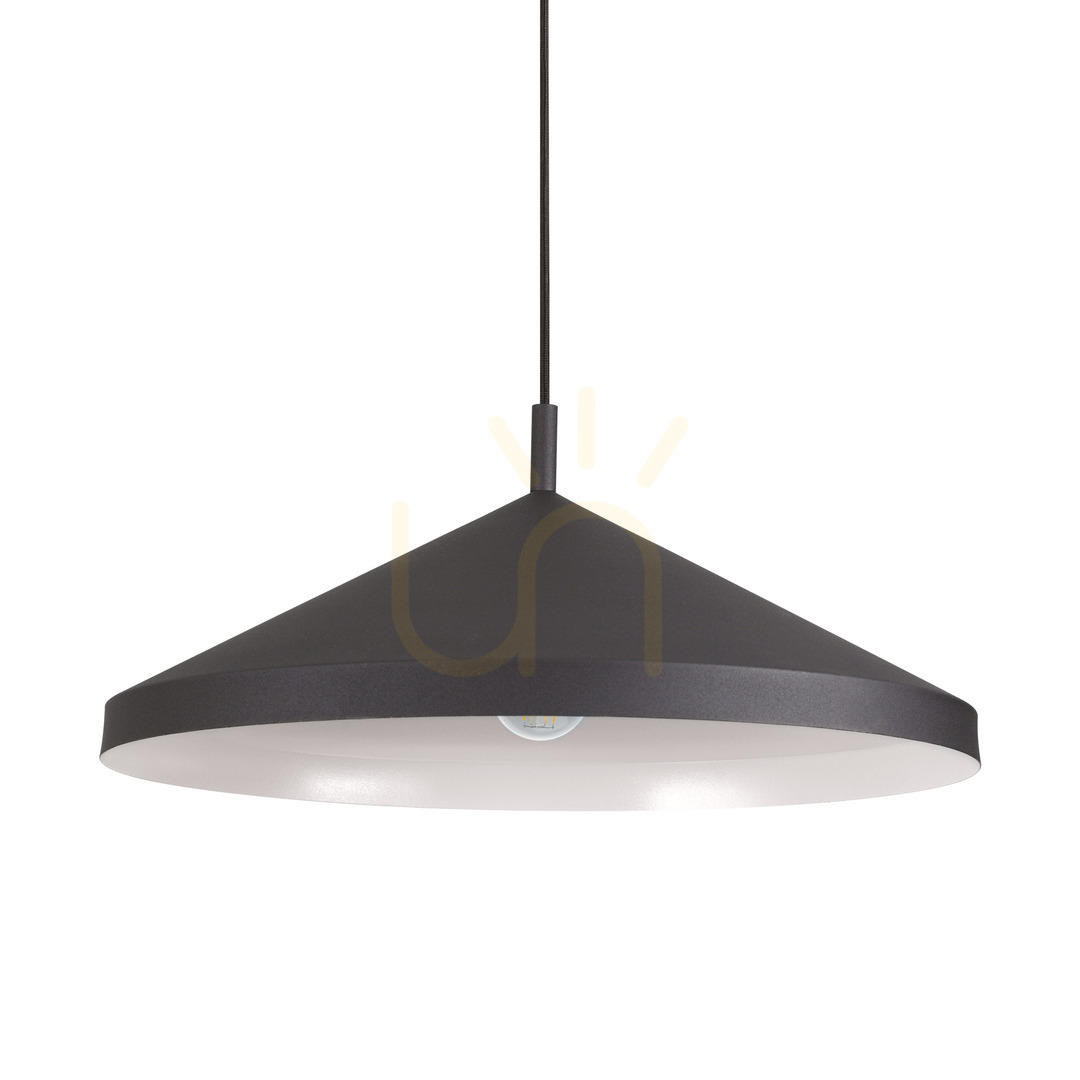
Table of contents
- Why Germany and Scandinavia fell for the black pendant
- A black metal pendant light: what it really gives an interior
- Sphere, cone, cylinder, line – the shapes of a black pendant
- Loft and industrial: the black pendant in the lead role
- Black + wood, brass, white: pairings that never fail
- A black pendant over the table and the island
- Beyond the dining room: stairs, bedroom, hallway
- The practical part: bulb, dimmer, installation
- Summary
Why Germany and Scandinavia fell for the black pendant
The popularity of the black pendant light in northern Europe has solid roots. The first is the shared heritage of modernism and industrial lighting: the plain enamelled shades of factory lamps from a century ago are close ancestors of today’s black pendants. The German school of design has valued form-follows-function since the Bauhaus era – and a black metal shade is its textbook example: nothing here is an ornament, everything serves a purpose.
The second reason is purely Scandinavian. In the bright, white-and-wood interiors of the north, black plays the role of punctuation – a black lamp above the table works like the full stop at the end of a well-written sentence. Short on daylight, Scandinavians paint their walls white and let in as much brightness as they can, but to stop such a space dissolving into a milky blur, it needs a few strong, graphite accents. A black pendant over the tabletop is the simplest of them.
The third reason will appeal to everyone, whatever their latitude: black is safe for years to come. A colourful lamp can wear out its welcome faster than the sofa you sit on opposite it. A black one will survive the next three living-room makeovers, a change of curtains, rug and wall colour – and suit every version equally well.
A black metal pendant light: what it really gives an interior
Black and metal are a duo that works on several levels at once:
- A graphic line. A black pendant draws itself against the wall like a line made with a fineliner – it gives the interior structure and an anchor for the eye. The brighter the background, the stronger the effect.
- Directional, intimate light. An opaque metal shade sends most of the beam downwards, onto the tabletop – the table becomes a bright stage while the rest of the room stays in soft half-shadow. It is exactly that “gathered around the table” effect we love good restaurants for.
- Matte black hides everyday life. Powder-coated matte black shows fingerprints and small scratches far less than chrome or glossy white. A black metal pendant light is an exceptionally family-proof choice.
- An honest material. A steel shade is rigid, durable and never yellows with age the way plastics do, and it weighs little, so lightweight models don’t usually need special suspension – though it is always worth checking the lamp’s weight and the fixing’s load rating in the product card.
It pays to know the difference between matte and gloss: matte black is more “Scandinavian”, soft and discreet; black with a gloss or satin finish is more evening-like and glamorous, catching reflections of light beautifully. Japandi and boho interiors pick matte; art déco and modern elegance pick satin.
Sphere, cone, cylinder, line – the shapes of a black pendant
German search statistics are unambiguous: right after the black pendant light itself, people look for its round variants. The shapes are worth knowing, because each works differently in space:
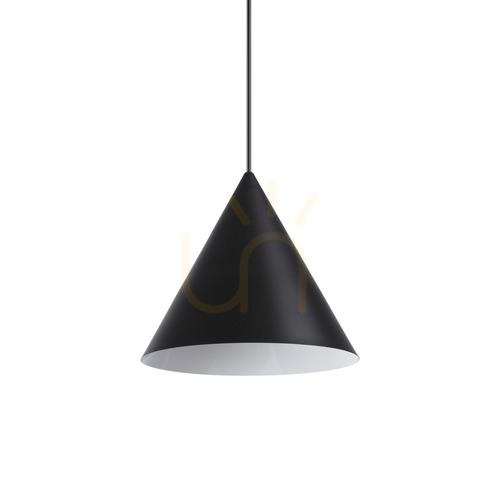
- Dome and cone – classics straight from the factory floor; they aim light strictly downwards, perfect over a table or worktop.
- Sphere and round shade – they soften the room’s geometry; a black sphere with opal glass gives soft diffused light and looks great in groups of two or three.
- Cylinder and tube – a discreet, focused beam; hung low over an island they create a rhythmic “guard of honour” of light.
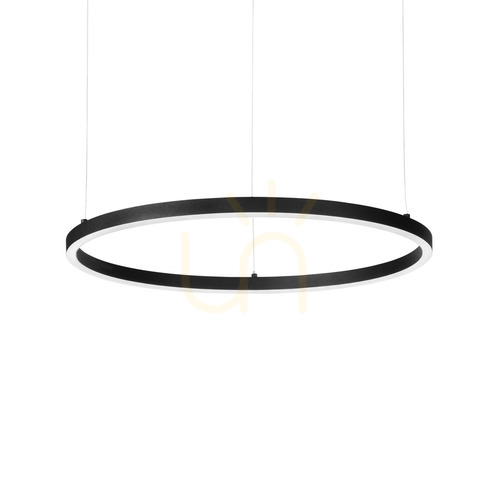
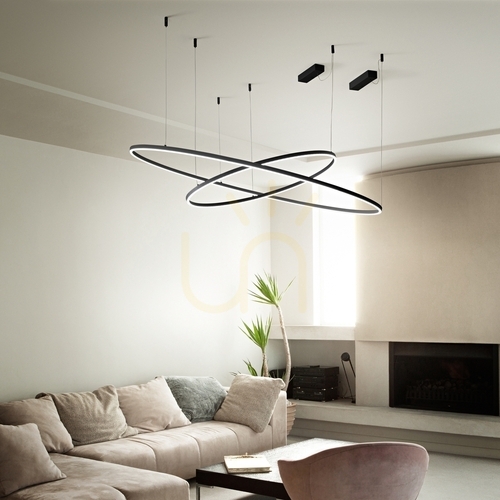
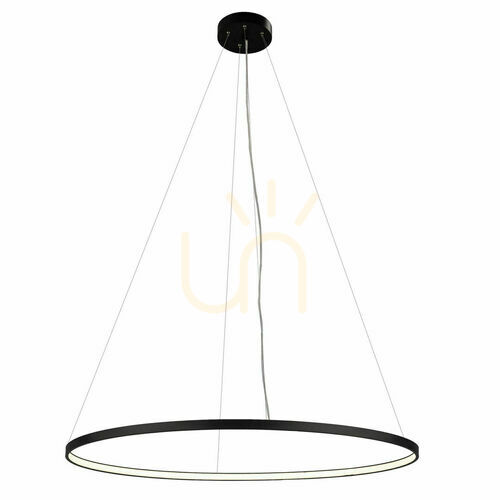
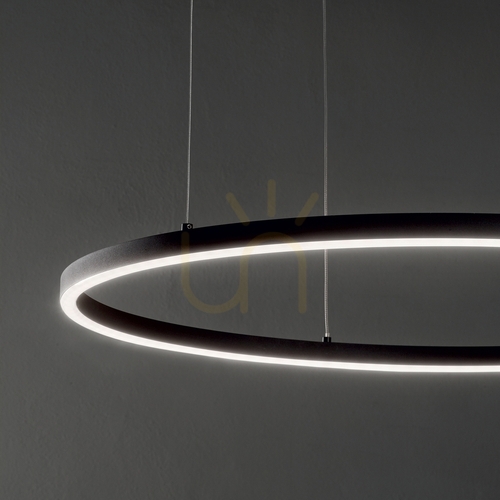
- Line / LED bar – one elongated profile instead of three shades; the minimalist answer to long tables and islands, often with integrated LED (look for the “dimmable” marking for versions you can dim).
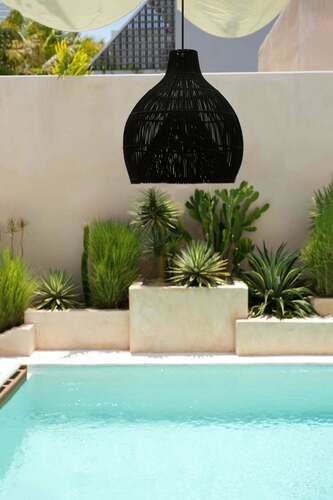
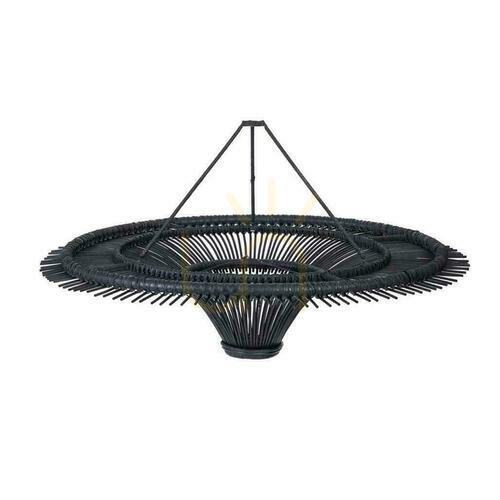
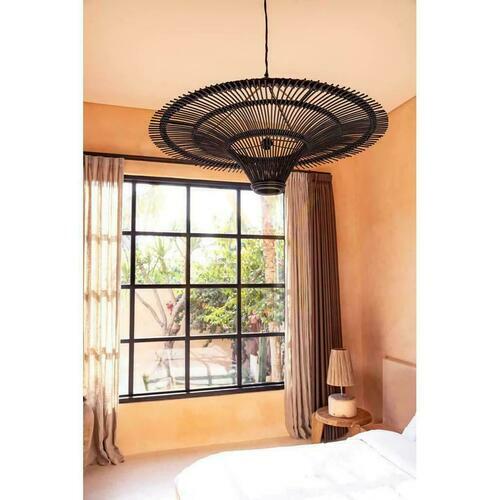
- Openwork and wire cages – black metal in its lightweight version; they cast a decorative pattern of shadows on the walls and don’t overwhelm small rooms.






Loft and industrial: the black pendant in the lead role
In industrial style, the black pendant light is no accessory – it is the star. Loft interiors follow a simple rule: raw backdrop, strong accents. Brick, concrete and steel-framed windows need lighting that doesn’t pretend to be anything it isn’t: metal, screws, a visible cord, bare decorative bulbs. A black pendant with a wide factory shade, or a cluster of bulbs on black cords hung over the table, are the two most reliable recipes.
A few tricks from interiors that do this style well:
- The cord is part of the lamp. In a loft the cable doesn’t have to vanish into a rigid stem – a long black fabric-braided cord, routed with intent, is a decoration in itself.
- Size matters. Industrial spaces usually have high ceilings – a 40–50 cm shade that would crush a dining nook in an apartment block looks exactly right in a loft.
- The bulb plays first violin. In openwork and wide shades the light source is on show – a golden LED filament in an ST64 envelope completes the effect better than any opal sphere. If the lamp hangs at eye level, choose filaments with lower brightness or amber glass so they don’t glare.
- Mix the eras. A black factory pendant over a table inherited from the sixties, or over a modern marble worktop – the contrast does the work.
You will find the full overview of lamps in this mood in the Industrial Lights category.


Black + wood, brass, white: pairings that never fail
A black metal pendant light is like a well-cut blazer – it looks best in company. Four duos that never let you down:
- Black + wood. The most Scandinavian pairing of all: a black shade above an oak table warms up the black and grounds the composition. The lighter the wood, the stronger the contrast plays.
- Black + brass and gold. An interior’s wink towards elegance: a gold shade interior, brass suspension details or a black-and-gold finish on the fitting make the light read as warmer and more amber.
- Black + white. Timeless graphics – black pendants against a white wall are the safest recipe for a modern dining room; it also works in reverse, when a black wall gets a lamp with a white shade interior.
- Black + rattan and linen. Boho in its grown-up version: a black frame disciplines the soft woven textures, so the interior stays cosy without turning saccharine.
A practical tip: the inside of the shade matters. A shade that is black outside and white or gold inside gives noticeably more reflected light on the tabletop – in a kitchen or over a table that is a real difference.


A black pendant over the table and the island
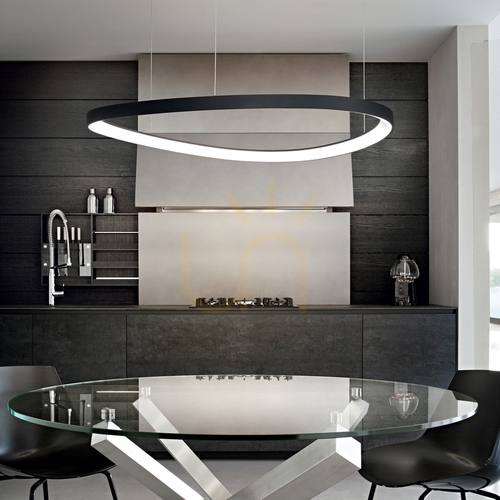
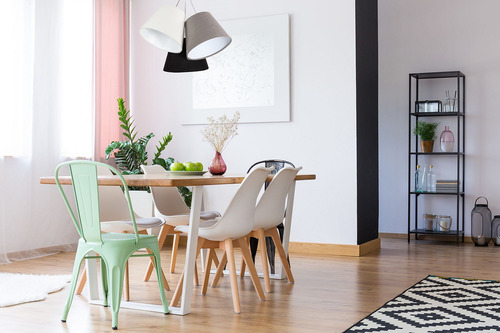
A black pendant over the table is the most common shopping scenario – rightly so, because this is where a black lamp works most spectacularly. The rules are simple: hang the shade so that its lower edge sits around 60–75 cm above the tabletop – low enough for the light to embrace the table without blinding anyone seated, high enough not to hide the face across from you. Over a long table or an island, two or three lamps in rhythm – or a single linear lamp – work beautifully; over a round table, one stronger accent.
Black has an extra trump card here: the strong contrast means even a modest lamp visually “anchors” the dining zone in an open-plan space. In a living room joined with the kitchen, a black pendant above the table is enough for the dining area to mark itself out, with no partition walls or rugs needed. A detailed guide to how many lamps and at what height over tables and islands is coming as a separate post – here we leave you the essence.


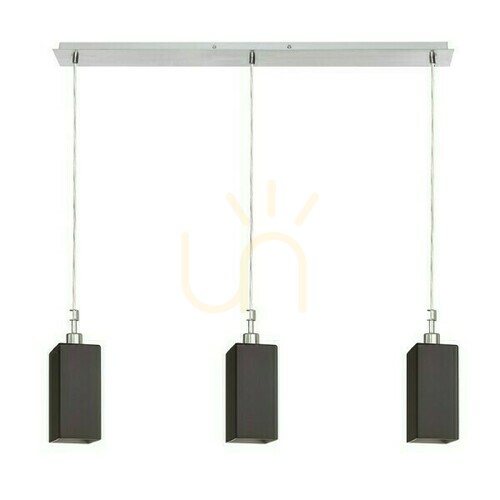

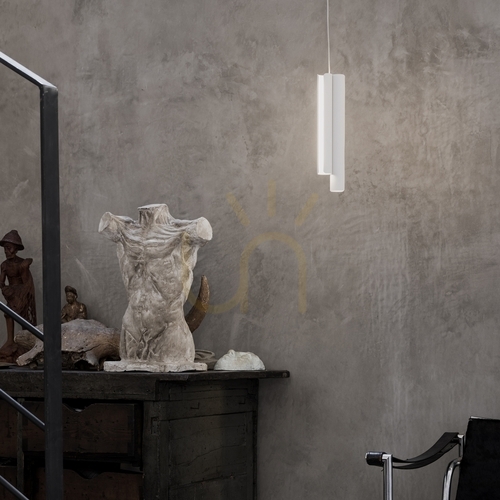
All the models – from single pendants to bars with three shades – are waiting in the Hanging Lamps category.
Beyond the dining room: stairs, bedroom, hallway
The black pendant has lately been venturing beyond the dining room – and it suits it very well:
- Over the stairs and in a tall hallway – a cascade of black spheres or tubes hung at different heights fills a vertical that no piece of furniture can claim. Black cords against a white stairwell look like a drawing. Just plan realistic access for changing bulbs – long-lived LED sources are the priority here.
- Beside the bed instead of a bedside lamp – a pendant dropped low on both sides of the bed frees up the bedside table and looks straight out of a hotel suite. A dimmable bulb is obligatory here.
- In the hallway – a single black sphere or a mini-pendant in a narrow corridor gives character to a space usually stuck with a sad ceiling light.
- Over the desk – a black cone lowered over the worktop gives focused light for work and rounds off the home office stylistically.
In every one of these roles a single rule applies: the lower the lamp hangs, the more intimate (and decorative) the light becomes. High under the ceiling, a black pendant illuminates; low over a surface, it builds a mood.
The practical part: bulb, dimmer, installation
To finish, a few things worth checking before you buy:
- Socket and bulb. The most common fitting in black pendants is the classic E27 – an advantage: the full choice of LED bulbs, from opal to decorative filaments. You will also come across GU10, G9 and integrated-LED fixtures – there, check the light parameters in the product card. For openwork and wide shades pick bulbs that are pleasant to look at; for closed ones – any bulb at 2700–3000 K.
- Dimmer. A lamp over the table works from breakfast to candlelit dinner – a dimmable bulb plus an LED-compatible dimmer turn one pendant into three different lamps. For integrated-LED models, go straight for the “dimmable” version.
- Height adjustment. Check that the cord can be shortened (most have 100–150 cm of slack). Over a table the lamp should hang low – a pendant with a short, non-adjustable cord is often wasted potential.
- Canopy and installation. A black metal ceiling canopy completes the whole – a white one can spoil the effect. Leave the wiring to an electrician: a metal fixture may require an earth wire, and a suspended ceiling may need fixing into the structural ceiling above it. Before buying, check the lamp’s weight and your ceiling type.
- Cleaning. Matte black only needs an occasional wipe with a dry microfibre cloth; avoid abrasives – a matte powder coating doesn’t take kindly to scrubbing.
Summary
The black metal pendant light has earned the status it enjoys in Germany and Scandinavia: it is the safest bold accent you can add to an interior. It works in a loft and in an apartment block, over an oak table and a marble island, paired with wood, brass, white and rattan. When choosing yours, decide in order: the shape (dome, sphere, cylinder or line), the finish (matte or satin, the colour inside the shade), the size relative to your tabletop and the height adjustment – and a 2700–3000 K bulb with a dimmer will take care of the rest. Start browsing in the Hanging Lamps category, and you will find the factory moods in the Industrial Lights section.
Marek Więcław


Maybe you will be interested in products from these categories?
Pendant Lights, Industrial Lights
Tags & Blog Categories