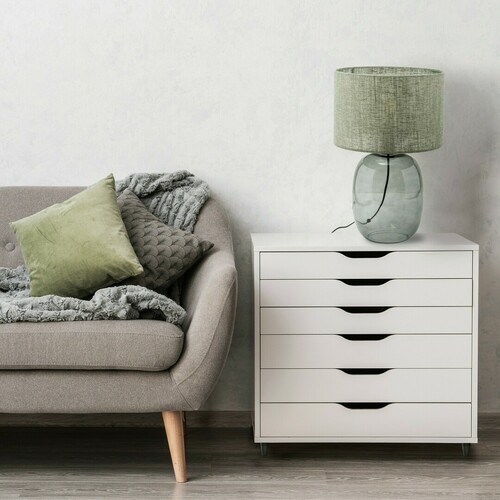
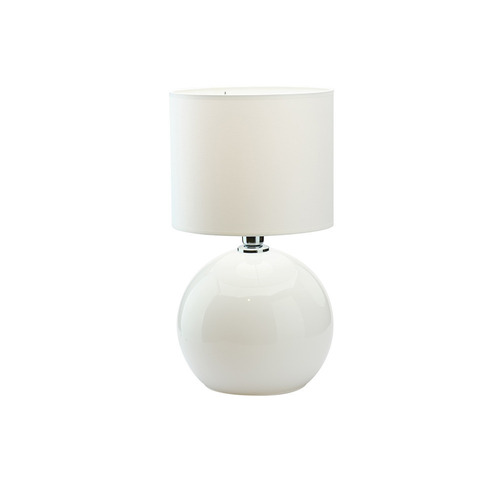
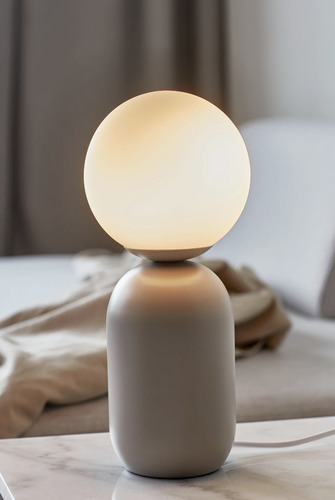
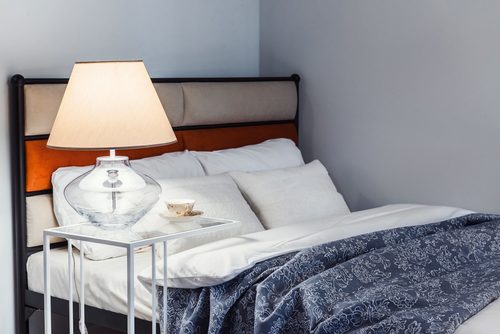
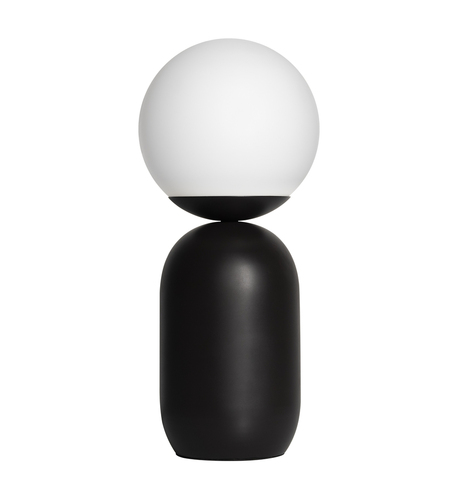
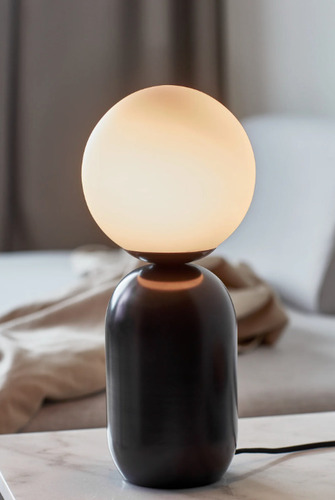
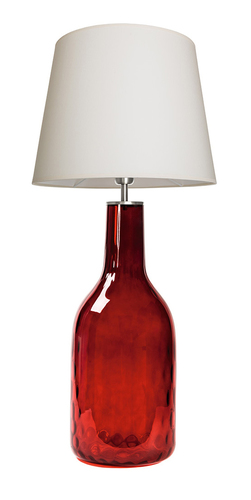
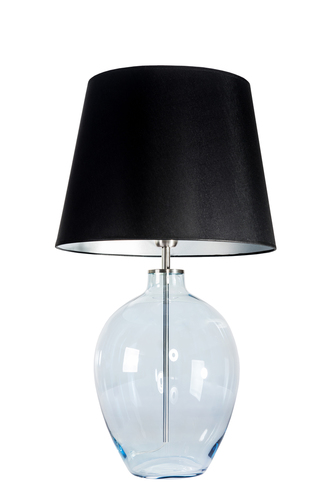
A glass table lamp on your bedside table gives you light that the glass itself shapes: opal glass spreads a soft, glare-free glow, while clear glass shows off the bulb and throws crisper shadows. Next to the bed that choice matters more than anywhere else in the house, because you look at the lamp from arm's length and often lying down.
Glass turns up in bedside lamps in three ways. It can be the shade that the light passes through, the base sitting under a fabric shade, or the whole body of the lamp, as in the popular mushroom shapes. Where the glass sits decides whether it changes the light or mainly the look.
Are glass lamps good for a bedroom?
They are, with one condition: the glass has to suit what you do in bed. Opal or frosted glass hides the bulb and gives an even light that works for reading and for winding down. Clear glass looks smart and keeps a small bedside table feeling uncluttered during the day, but a bright bare bulb in your line of sight is tiring after dark. Smoked, amber and coloured glass create mood rather than reading light.
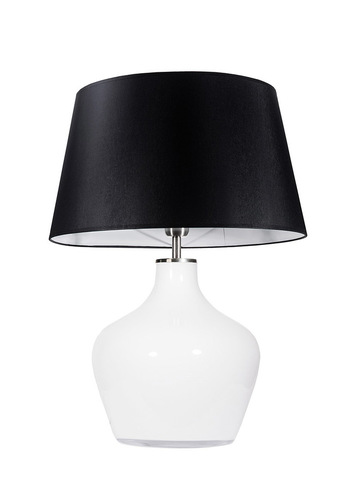
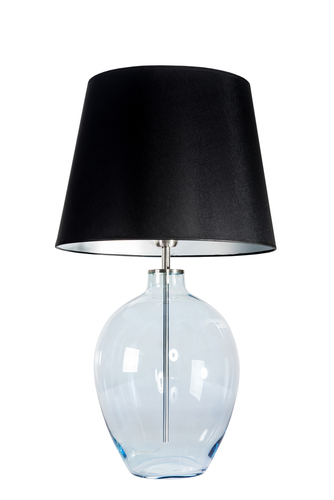
A glass base under a linen or cotton shade is the easy middle ground. The shade does the lighting, the base brings the character, and a heavy glass base stands firmly when you reach for your phone in the dark. That weight cuts both ways, though: glass rarely survives a fall, so keep the lamp a few centimetres back from the edge.
Glass finishes and how they light a room
| Glass |
Light it gives |
Best bulb |
| Opal or opaline |
soft, even, bulb hidden |
standard LED, warm white around 2700 K |
| Frosted |
diffused, a little brighter than opal |
standard LED |
| Clear |
sparkling, sharper shadows, bulb on show |
decorative filament or globe LED, ideally dimmable |
| Smoked or amber |
dimmed and warmed |
a slightly brighter LED to make up for the tint |
| Ribbed or fluted |
breaks the light into lines, partly hides the bulb |
frosted or filament LED |
| Hand-blown |
depends on the colour; tiny bubbles are normal |
to suit the tint |
Bulbs and fittings
Most glass bedside lamps take an ES (E27) or SES (E14) screw bulb, compact designs often use a small G9 capsule, and some have a built-in LED module that is never replaced. Bayonet BC fittings are common in UK lighting too, so check the cap before you buy spare bulbs. For a bedroom, warm white around 2700 K feels comfortable; 400–800 lm is usually plenty for reading in bed, and far less is needed for falling asleep, which is why a dimmable bulb or a lamp with a touch dimmer earns its keep. LED keeps the glass barely warm, whereas halogen and old incandescent bulbs make it hot. Always stay within the maximum wattage printed on the lamp.
Height, headboard and placement
The bottom of the shade should sit roughly at eye level when you are sitting up against the headboard. With a bedside table close to mattress height, that usually means a lamp of 35–55 cm. The shade should not overhang the table, as a glass shade that sticks out is easy to knock with an elbow. For a double bed, a matching pair either side keeps the room calm and gives both sleepers the same light.
Cleaning and care
- Switch off, unplug and let the bulb and glass cool down first.
- Dust with a soft microfibre cloth. Put glass cleaner on the cloth rather than spraying the lamp, so no moisture runs into the lampholder.
- Wash a removable glass shade in lukewarm water with a mild washing-up liquid and let it dry completely before refitting. Skip the dishwasher and abrasive pads, especially on painted or decorated glass.
- Never rinse hot glass under cold water; a sudden temperature change can crack it.
- Clear glass shows every fingerprint, so if you move the lamp often, opal or ribbed glass is less fuss.
Frequently asked questions
Should a bedside lamp be taller or shorter than the headboard?
Roughly level with the top of the headboard, or a little below it, usually looks balanced. What matters more is that the shade sits around eye level when you read sitting up.
What are the fancy glass lamps called?
Names usually describe the shape or technique: mushroom lamps, opaline globes, fluted or ribbed glass, hand-blown glass and Tiffany-style lamps made of coloured glass pieces set in metal.
What is the best night lamp for a bedroom?
One with warm, diffused, dimmable light at face height. In glass, an opal or frosted shade with a 2700 K LED is the safest choice.
Are coloured glass table lamps any good for reading?
They are better as mood lighting. Coloured and smoked glass absorbs a fair share of the light, so a reader needs a brighter bulb or a separate reading light.
Does a glass lamp get hot?
With an LED bulb the glass stays barely warm. Halogen and incandescent bulbs heat it noticeably, so LED is the sensible pick next to a pillow.
Is a glass bedside lamp safe in a child's room?
Keep it out of reach of small children, on a higher chest of drawers. For a toddler's bedside, a lamp made of plastic or fabric is less risky.
For other materials and shapes by the bed, see bedside lamps. If you would rather keep your current lamp and simply swap its fabric shade for glass, read up on glass lampshades.