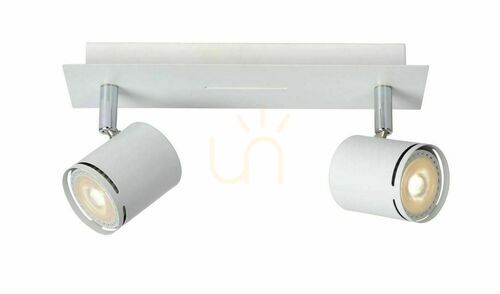
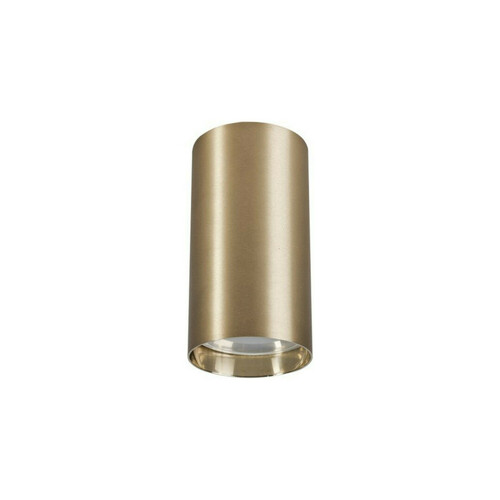
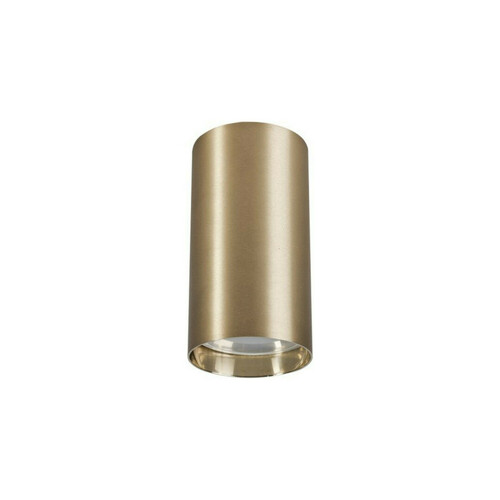
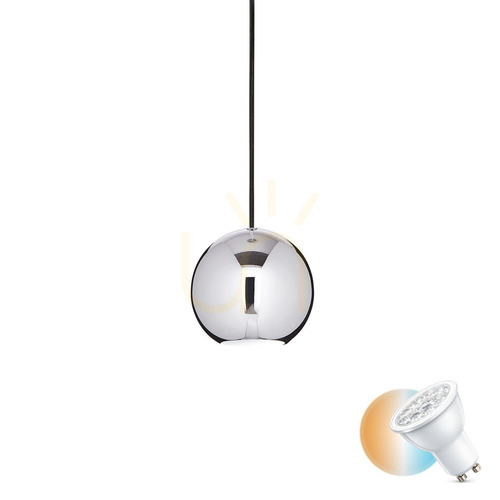
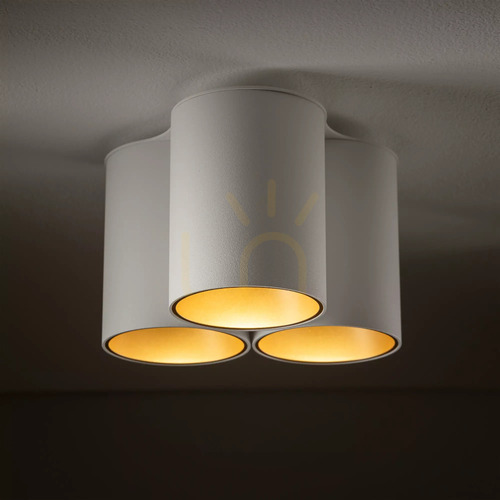
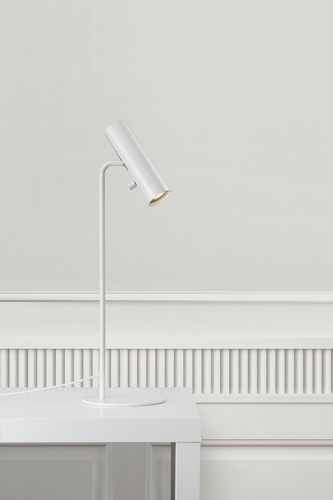
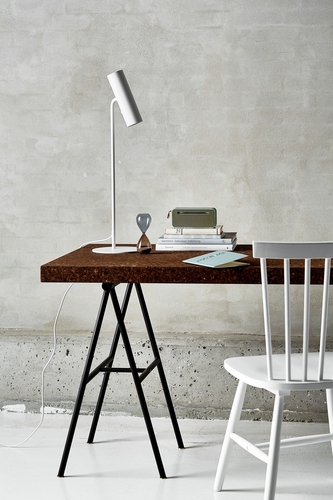
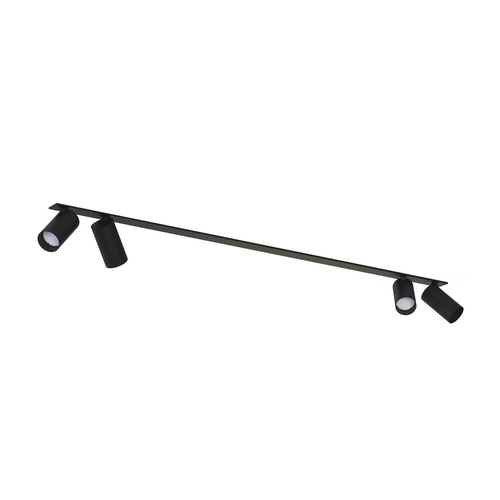
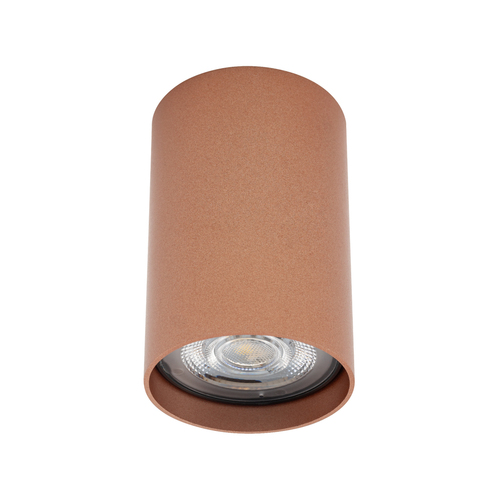
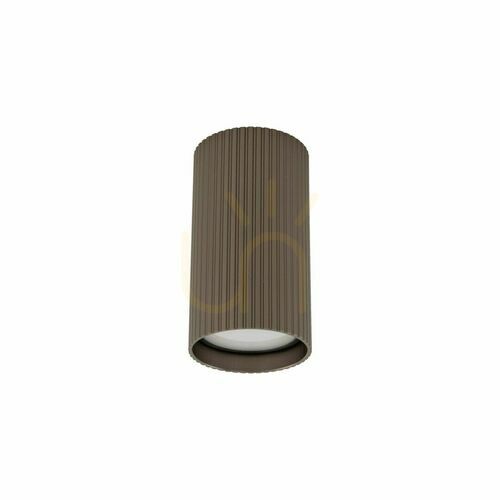
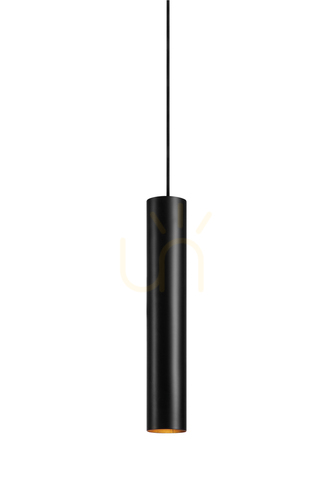
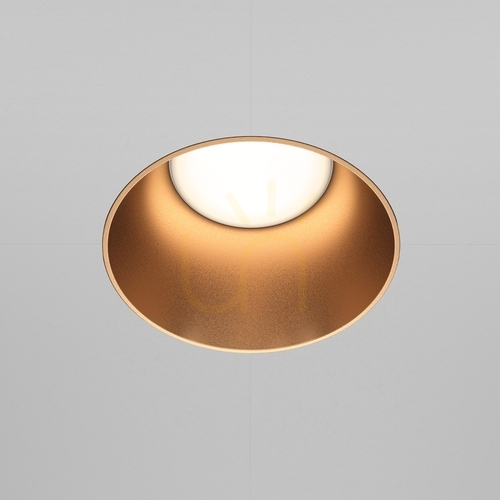
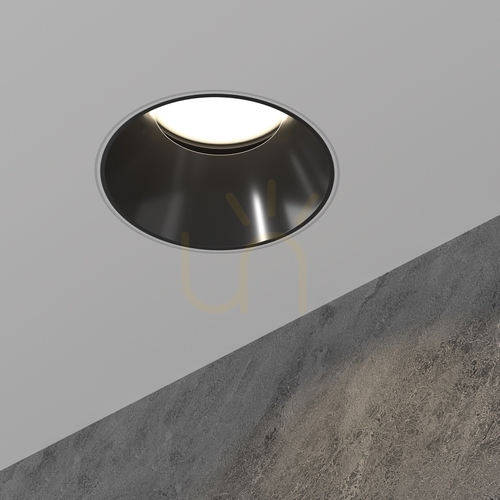
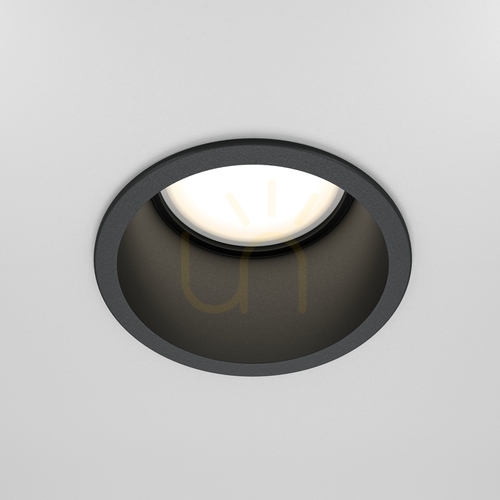
A GU10 spotlight is a light fitting built around a replaceable twist-and-lock lamp with two stubby pins. The lamp runs straight off 230 V mains with no transformer, and it throws a directed beam, which is why GU10 is the standard holder in recessed downlights, ceiling spotlight bars, surface-mounted cylinders and track heads.
Choosing a GU10 fitting means you choose the housing once and the light as often as you like. Warmer for the bedroom, a tighter beam over a painting, a dimmable or smart lamp later on – it is all a bulb swap.
What GU10 actually means
G stands for a pin base, U for the shape of the pins with their thickened ends, and 10 for the 10 mm gap between them. You push the lamp in and turn it a quarter clockwise until it locks. A standard GU10 lamp is about 50 mm across and 50–55 mm long; some higher-output LED versions are longer, up to around 75 mm, which matters in a shallow downlight.
Older ceilings in the UK are full of MR16 bulbs on the GU5.3 base. They look similar but have thin, straight pins and run at 12 V from a transformer. The two are not interchangeable, so take one lamp out and check before you replace anything.
Types of GU10 fitting
-
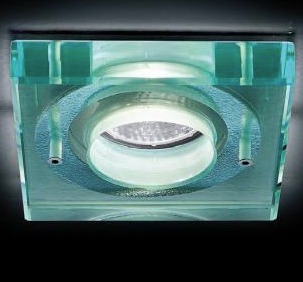
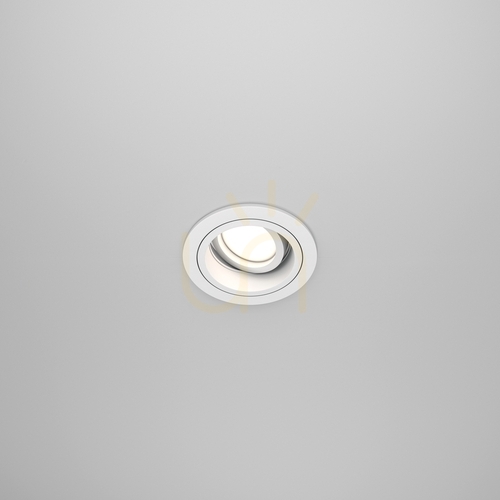
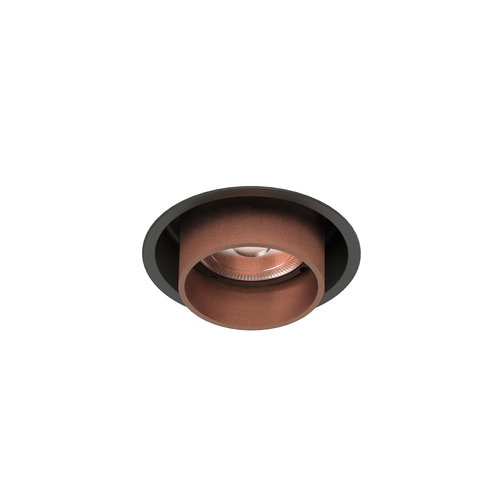
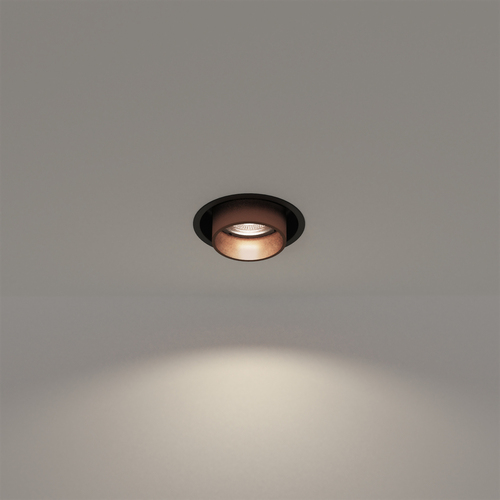
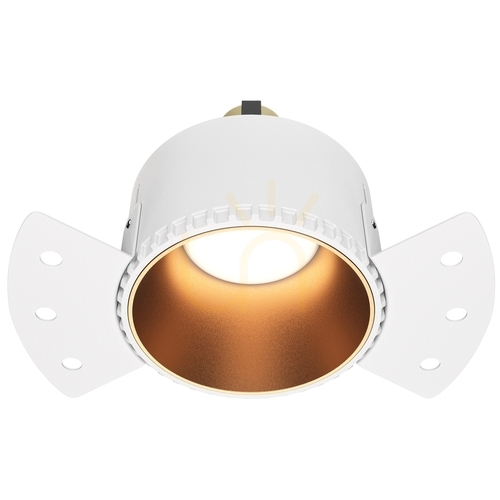
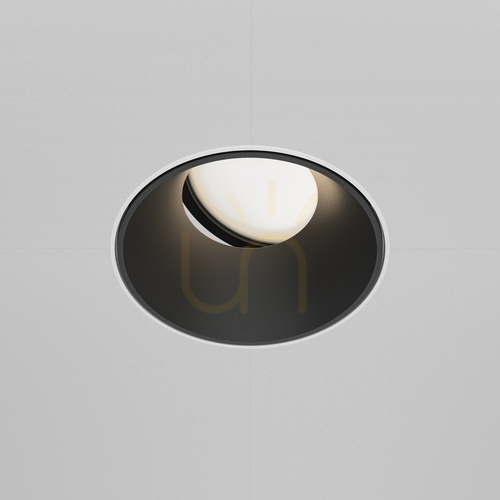
Recessed downlights for plasterboard ceilings – fixed or tilting, often with a tilt of around 30° to aim the beam at a wall or worktop.
-
Fire-rated downlights for ceilings with a room above, where cutting holes would otherwise weaken the ceiling's fire resistance.
-
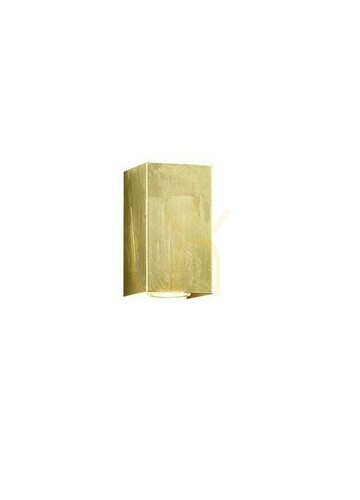
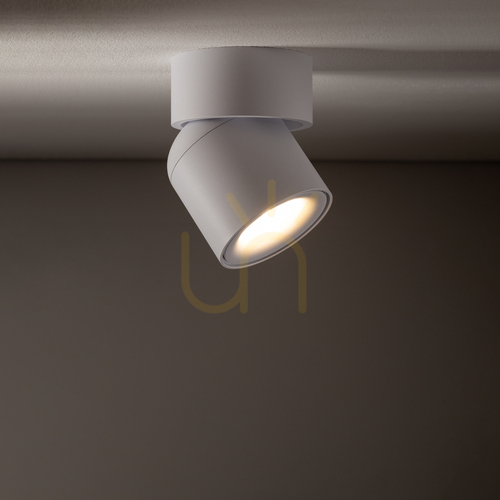
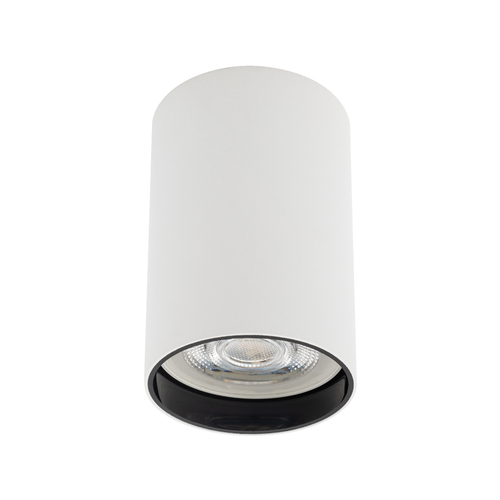
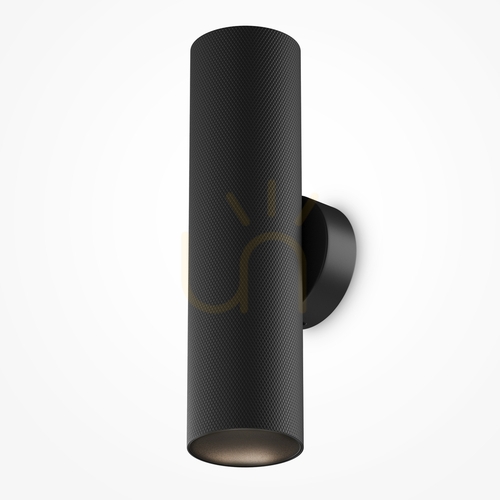
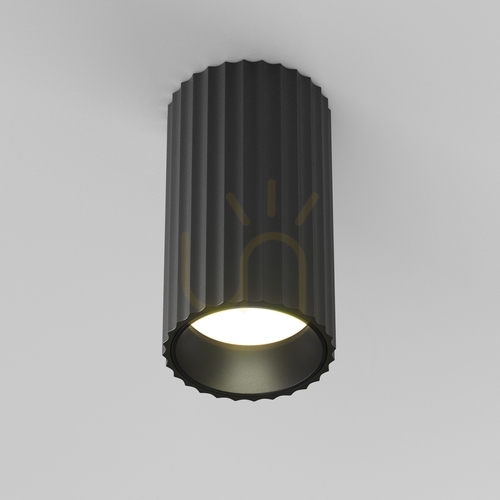
Surface-mounted spots – cylinders and cubes for solid ceilings with no void.
-
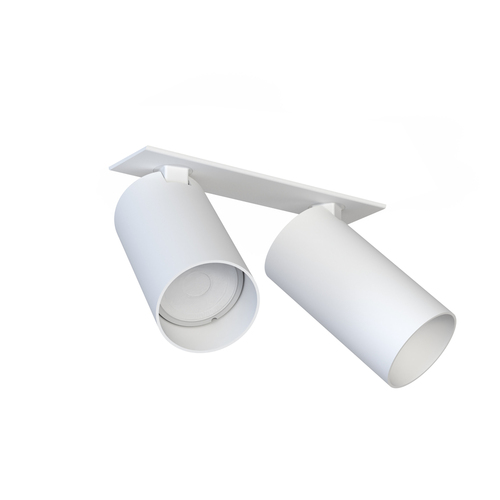
Spotlight bars and plates with two to six adjustable heads.
-
Track lighting, where heads slide along the rail when the furniture moves.
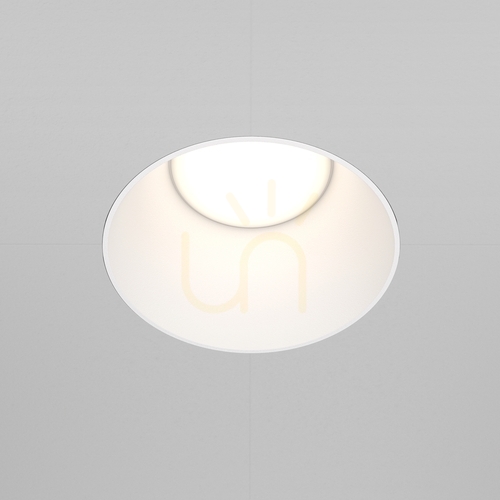
Most housings are aluminium or die-cast metal, which helps carry heat away from the lamp. Plaster trimless versions can be painted with the ceiling so only the light shows.
Choosing lamps and fittings
| Feature |
Typical values |
What it means at home |
| Brightness |
230–630 lm from 2.5–7 W |
about 350 lm replaces a 50 W halogen |
| Beam angle |
narrow below 24°, medium 25–40°, wide 60–90° |
at 2.4 m a 60° beam lights a circle roughly 2.8 m wide |
| Colour temperature |
2700 K, 3000 K, 4000 K |
warm white for living rooms, cool white for utility rooms |
| Colour rendering |
CRI 80 or CRI 90+ |
CRI 90+ by mirrors, in kitchens and over artwork |
| Cut-out |
usually 68–83 mm |
check before reusing old holes |
| Recess depth |
about 40–130 mm |
shallow voids need low-profile housings |
| IP rating |
IP20, IP44, IP65 |
IP44 or IP65 for bathroom zones |
For general lighting, plan on roughly 100–150 lm per square metre in living spaces and noticeably more in kitchens and bathrooms. A 12 m² bedroom therefore needs about 1200–1800 lm if downlights do all the work.
Planning a ceiling of downlights
In a typical 2.4 m ceiling, downlights usually sit 1–1.2 m apart, with the outer row about half that distance from the walls. In a kitchen, bring the row forward to 30–60 cm from the wall units so you are not working in your own shadow. On a sloping loft ceiling, tilting fittings let you point the beam straight down.
Before cutting any holes, check what is above the plasterboard: joists, pipes and insulation. Unless a fitting is rated for contact with insulation, keep it clear so heat can escape. Fixed wiring, and anything in a bathroom, is a job for a qualified electrician working to BS 7671.
GU10 spotlights in the bathroom
Bathrooms are split into zones around the bath and shower. Directly above them, fittings need a high rating such as IP65; in the zone around them IP44 is the usual minimum. Outside the zones an ordinary IP20 downlight can be used. Your electrician will confirm the exact zones in your room.
Mistakes to avoid
- Dimming a non-dimmable LED. Expect flicker and buzzing; you need lamps marked dimmable and an LED-rated trailing-edge dimmer.
- Mixing lamps from different ranges in one ceiling – one maker's 3000 K can look warmer than another's.
- Changing a hot lamp. Switch off, let it cool, push in and turn anticlockwise; a small suction cup helps with tight trims.
GU10 spotlight questions
What is a GU10 bulb used for?
Directional light: downlights, kitchen worktops, display shelves, artwork and bathroom mirrors. Its beam is focused, unlike the all-round glow of a standard bulb.
Can you still buy GU10 bulbs?
Yes. Mains halogen versions have largely been withdrawn under energy rules, but LED GU10s fit the same holders and are easy to find in every colour temperature.
Which GU10 LED has the highest lumens?
Brighter GU10s reach about 1000 lm at around 10 W. They are longer and run warmer, so make sure the fitting has the depth and ventilation for them.
Are LED GU10s energy-saving?
Very. A 5 W LED gives roughly the light of a 50 W halogen, so a ceiling of eight downlights drops from 400 W to about 40 W.
What is a GU10 spotlight holder?
The lampholder inside the fitting, often a small ceramic connector on flying leads. It can be replaced if the contacts are damaged by old halogen heat.
Do I need fire-rated GU10 downlights?
Where there is a habitable room above the ceiling, fire-rated downlights are generally the safe choice. Ask your electrician if you are unsure.
For more ideas room by room, browse indoor lights. Lighting with lamps under shades instead? Read about lamps with E27 bulbs.