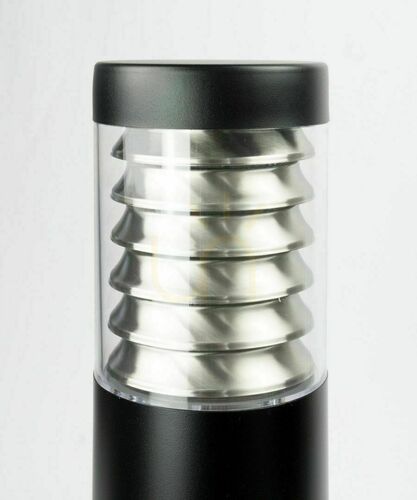
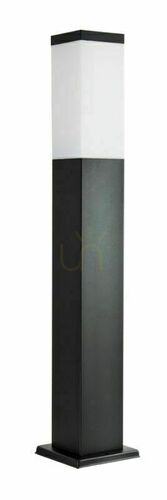
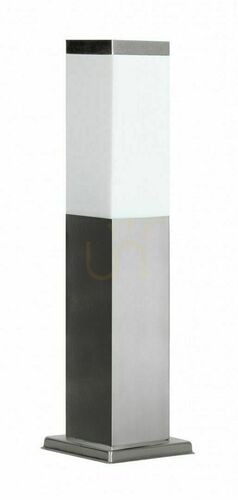
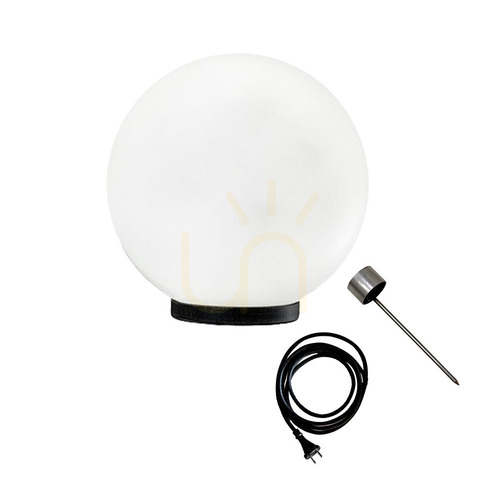
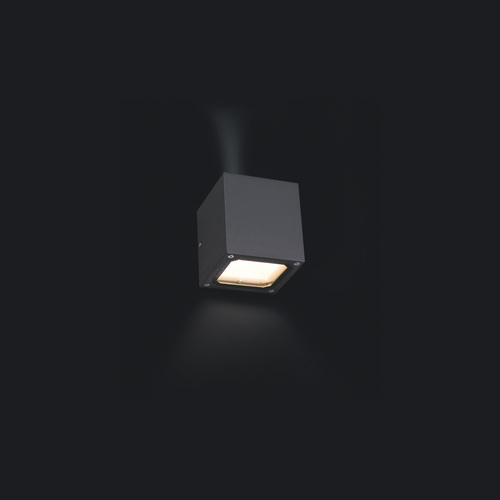
IP44 outdoor lights are sealed against splashing water from any direction and against solid objects of 1 mm or more. In a garden that makes them a good fit for sheltered spots – a porch, the wall under the eaves, a carport or a covered patio – while anything set into the ground, standing beside a pond or facing the full force of a wet westerly wind is better served by a higher rating.
What IP44 actually tests for
The rating comes from BS EN 60529. The first digit covers solids: a 4 means a 1 mm wire probe cannot reach anything live – protection against small objects, not a barrier to insects. The second digit covers water: for a 4, the fitting is sprayed from every angle for several minutes and no harmful amount of water may reach the live parts. It is not a hose-jet test, and it says nothing about sitting in a puddle.
You will also see IPX4. The water protection is identical, but the X means dust was never tested. On a lantern by the front door that hardly matters; on a spike light pushed into a flower bed it can.
Is IP44 enough for British weather?
Under cover, yes. British advice is more cautious than much of the Continent: many UK electricians treat IP44 as a sheltered-location rating and fit IP65 on any exposed wall, path or driveway. The reasoning is sound. A west- or south-west-facing wall can take hours of wind-driven rain, and gaskets that are perfect when new lose some of their grip after a few winters of frost and UV.
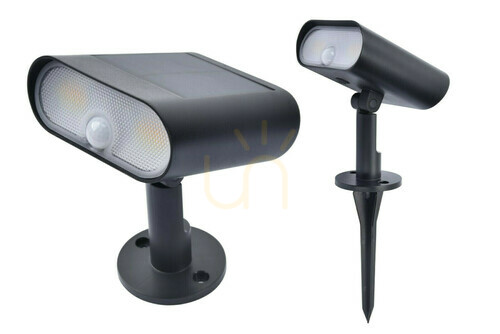
Where IP44 earns its place is on wall lanterns and porch lights, pendants hanging under an entrance canopy, illuminated house numbers, festoon and fairy lights strung under a pergola, and lights for gazebos and garden rooms. Some bollards and spike lights carry IP44 too, though IP54 or IP65 is more common, because they sit lower and catch more.
Choosing a rating by location
| Where it goes |
Rating to look for |
Why |
| Front-door lantern or porch light under a canopy |
IP44 |
splashes and damp air, little direct rain |
| Gable end or side wall facing west or south-west |
IP65 |
hours of driving rain off the Atlantic |
| Bulkhead in a side return or passage by the bins |
IP65, ideally impact-rated |
open sky above, knocks from bins and bikes |
| Shed, garage or summerhouse, under the eaves |
IP44 (IP54 for a dusty workshop) |
condensation in unheated buildings |
| Seafront or estuary garden |
IP65 in 316 stainless steel or polycarbonate |
salt carried inland on the wind |
| Fence posts, sleepers and borders |
IP54–IP65 |
sprinklers, soil splash, strimmer stones |
| Decking and patio in-ground lights |
IP67 |
water standing in the boards or joints |
If the table feels like overkill, look up before you buy. A porch roof, a canopy or eaves deep enough to keep the glass dry in an ordinary shower – IP44 will do. Nothing overhead, or a wall that takes the prevailing wind – go to IP65. Then look down: anything below knee height catches water coming back up off paving and soil as well as falling on it, and anything flush with the ground or under water needs IP67 or IP68.
Fitting and wiring
Mains garden lighting should be installed by a registered electrician. Outdoor circuits need 30 mA RCD protection under BS 7671, and in England and Wales a new circuit is notifiable building work under Part P. Feed the cable in from below with a small drip loop, tighten the gland fully and check the gasket sits evenly in its groove. Drilling an extra hole in the housing undoes the rating at a stroke.
Many IP44 lanterns keep water out by design rather than by being sealed tight: an open base or small drain holes let rain and condensation escape. That only works the right way up, so check whether the instructions allow the lantern to be mounted upwards, downwards or both.
For plug-in festoon lights, the transformer is often IP44 as well. Keep connectors off wet ground. Low-voltage 12 V or 24 V systems run from a safety transformer are easier to reposition in a small garden, though they need the right IP rating just as much.
Care and common mistakes
-
Go round before the autumn gales. Check the gasket, the cable gland and the fixing screws, starting with the lights on the weather side, where rubber hardens first.
-
Rinse off the salt. Near the sea, wipe fittings with a cloth and fresh water every few weeks – never a pressure washer. Grade 304 stainless tends to show brown tea-staining quickly on the coast; 316 holds up far better.
-
Evict the spiders. IP44 does not keep insects out, least of all from lanterns with an open base. Take the diffuser off once a year and clean it; the light gets noticeably brighter.
-
Mind the strimmer. Low lights in borders take stones and knocks. Leave a margin of gravel or edging round them, and favour polycarbonate diffusers over glass where they sit in the line of fire.
-
Keep plugs out of the weather. For festoon lights on the garden circuit, use an outdoor socket whose cover closes over the plug while it is in use, or a weatherproof connector box.
Frequently asked questions
What is IP44 water resistant against?
Splashing water from any direction, including ordinary rain hitting the fitting at an angle. It is not protected against water jets or immersion.
Is IP44 suitable for outdoor use?
Yes, it is the usual minimum for outdoor lights. In the UK it is best kept to sheltered or partly sheltered positions such as porches, canopies and covered patios.
IP44 or IP65 – which do I need?
IP65 is fully dust-tight and withstands water jets, such as a garden hose. Under a porch you gain little from it; on an exposed wall, path or driveway it is the safer choice.
What are double insulated lights?
Class II fittings, marked with a square inside a square. They have reinforced insulation and need no earth connection. That is about electric shock protection and is separate from the IP rating, which covers dust and water.
Can LED lights go outside?
Yes, provided the fitting itself is rated for its position. An LED lamp in an indoor fitting is still an indoor light.
What IP rating do path and in-ground lights need?
Path bollards and spike lights are best at IP54–IP65; anything set into the ground or decking needs IP67.
For spots with no shelter at all, compare IP65 outdoor lights. For wall, path and flood lighting more broadly, see outdoor lights.