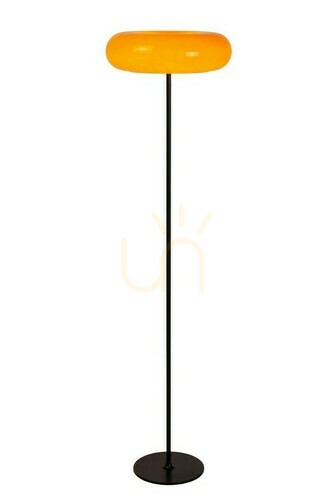
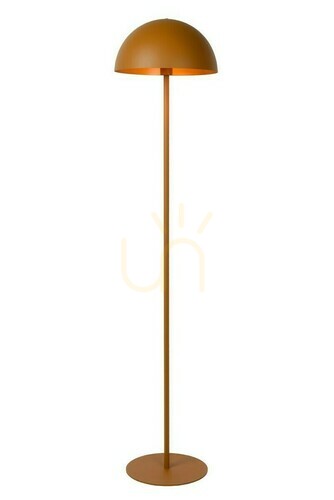
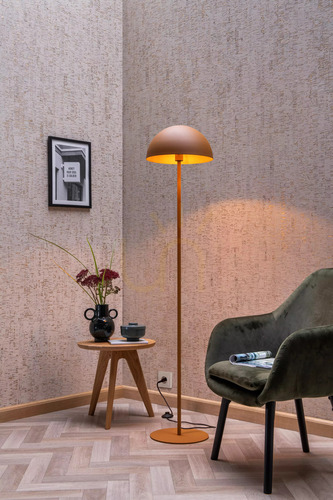
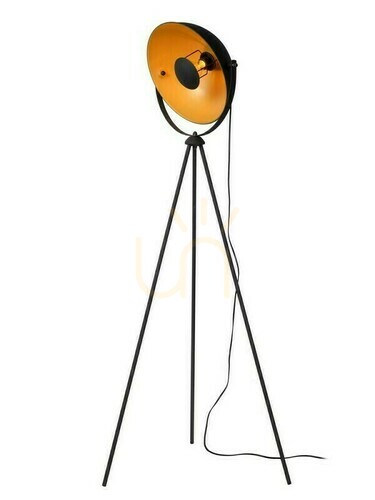
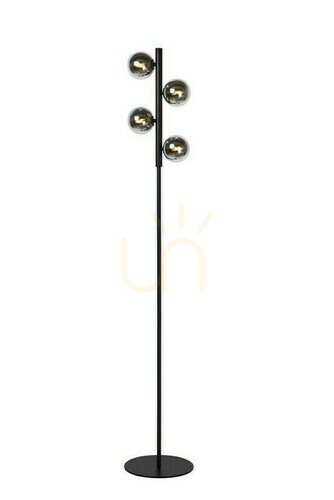
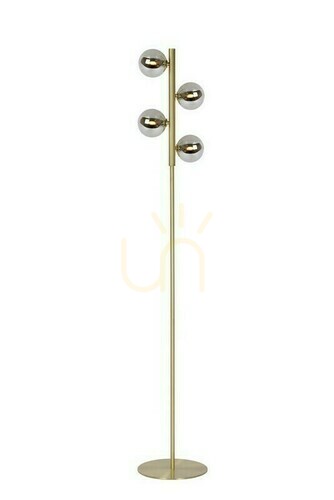
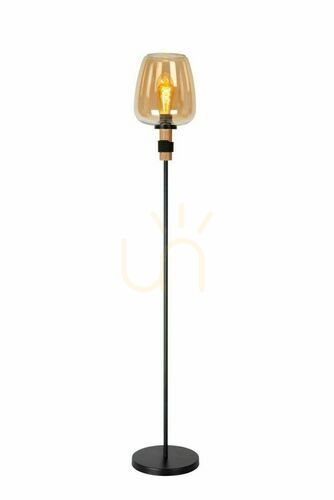
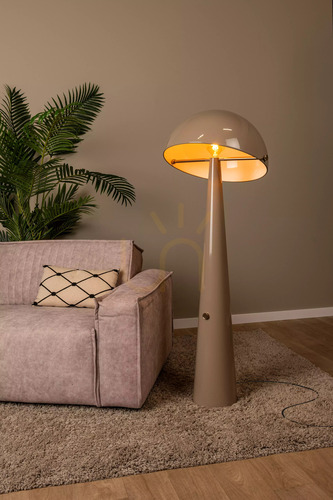
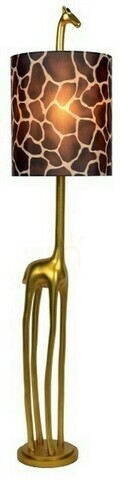
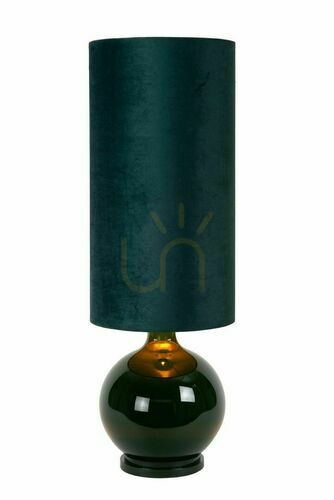
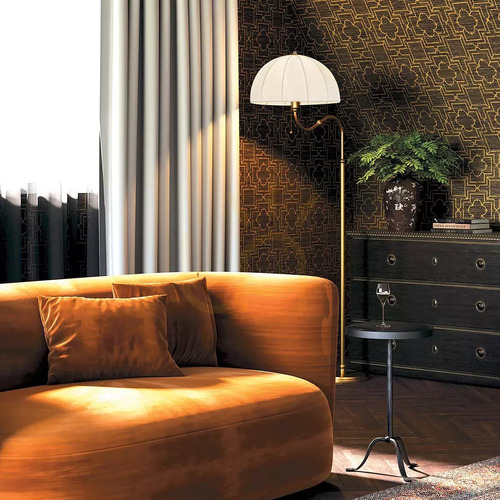
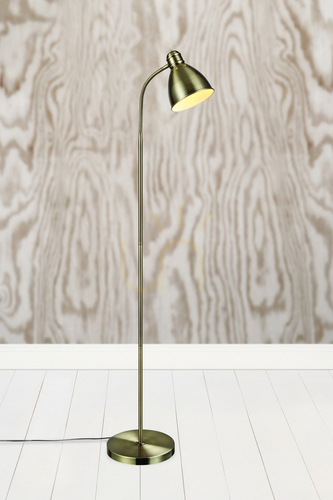
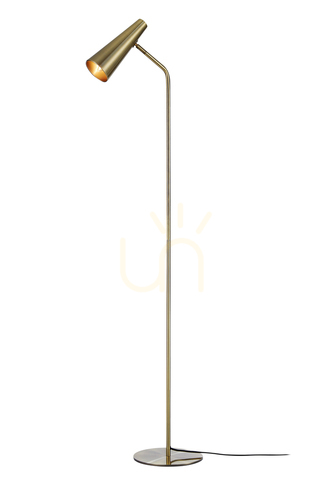
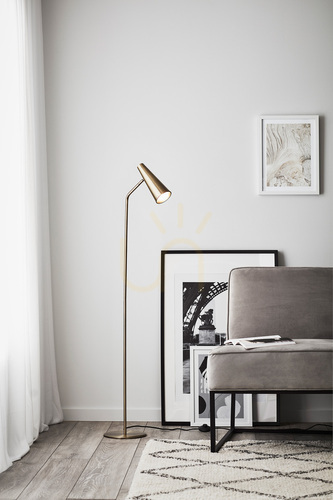
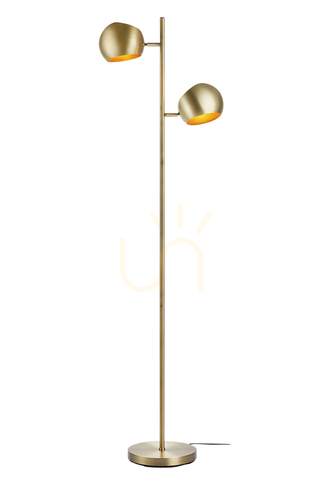
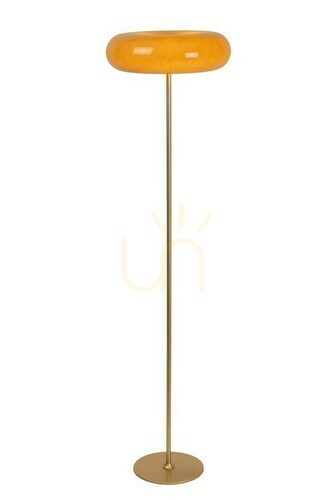
A retro floor lamp is a newly made standard lamp drawn in the language of the fifties, sixties and seventies: splayed tripod legs, a sweeping arc over the sofa, an opal glass globe, a mushroom shade, chrome or glossy enamel in orange, mustard or teal. On a floor lamp the style also decides where the light goes, because each of those shapes comes with its own kind of shade.
That is the difference from a genuine period piece. The look is borrowed; the wiring, lampholder and plug are current, so the lamp takes a modern LED bulb and goes straight into a UK socket.
What did mid-century and seventies lamps look like?
Mid-century designs of the fifties are light and graphic: thin, angled legs, several arms with small cone shades, brass, teak and painted metal. The sixties brought the big arc lamp on a heavy marble base, spring-balanced reading arms and a lot of white and chrome. By the seventies everything went round and bold – globes in opal or smoked glass, mushroom lamps, acrylic and coloured plastic, highly reflective finishes.
A modern retro lamp usually picks one of those moments rather than mixing them, which makes it easier to match to the rest of the room.
Choosing one for your living room
Start with the job the lamp has to do, then pick the decade that suits it. These are typical figures for UK homes, where ceilings are often around 2.4 m.
| Job |
Shape that works |
Typical height |
Bulb |
| Reading in an armchair |
spring or jointed arm, tripod with a fabric shade |
130–165 cm |
E27, E14 or B22, warm white 2700 K, roughly 400–800 lm |
| Lighting a coffee table |
arc lamp |
180–200 cm, reach 150–200 cm |
E27, 2700 K |
| Background light for the room |
two- or three-arm lamp, uplighter |
150–180 cm |
several bulbs, ideally dimmable |
| Mood light in a corner |
opal globe, mushroom |
120–160 cm |
amber filament LED around 2200 K, or G9 capsule |
For reading, the bottom edge of the shade should sit roughly at the shoulder of someone seated – about 100–110 cm off the floor beside a standard armchair. An arc lamp's shade usually hangs 140–170 cm off the floor, above the eye line of anyone on the sofa.
Signs of a well-made retro lamp
- A heavy base. Arcs and long arms need marble, stone or cast metal underneath, or they tip.
- Joints that hold their position. A spring or friction arm should stay where you put it without drooping.
- A fitted BS 1363 plug and a proper switch – an in-line foot switch is the easiest to reach behind a chair.
- Glass that is evenly opal, without bright hot spots, if you want soft light.
- Clear information on the lampholder and maximum wattage, so you know whether it takes E27, E14 or bayonet B22.
Brass, chrome or colour?
The finish sets the decade more than the shape does. Brass and teak point to the fifties and early sixties and warm up a room with a lot of grey or white. Polished chrome and white lacquer feel like the late sixties and suit a cooler, minimal space. Saturated colour – orange, mustard, bottle green, brown – is pure seventies and works best as the one loud thing in the room. Unlacquered brass will darken over time; lacquered brass stays bright, so check which you are getting if you prefer one look.
Where it looks right
A tripod belongs in the corner next to an armchair; its legs need a circle of roughly 50–70 cm. An arc lamp suits a sofa floating in the room, with the base off to one side. In a bedroom, a mushroom or globe gives soft light without glare. And a single orange or brass retro lamp next to a contemporary sofa makes a stronger point than a room furnished entirely in period pieces.
Pitfalls and care
Coloured shades tint the light: orange or brown gives a warm, low glow that is lovely in the evening and poor for reading. Dimmers only work with bulbs marked dimmable. Clean chrome and lacquer with a soft damp cloth and no abrasive cream; keep alcohol and solvents away from acrylic, which crazes. Take a glass shade off only when it is cold and the lamp is unplugged, and wash it in lukewarm water. Fabric shades need nothing more than a soft brush or a lint roller.
Frequently asked questions
What lamps were popular in the seventies?
Globe lamps in opal glass, mushroom table and floor lamps, arc lamps, smoked glass and brightly coloured plastic, often finished in shiny chrome.
How can I tell a genuine old lamp from a retro one?
Originals show wear, old flex and often an unearthed or rewired plug. A retro lamp is new from the factory. If you buy an original, have it checked by a qualified electrician before use.
Is a retro floor lamp the same as a vintage one?
Not quite. Vintage means a piece from the period, or one made to look aged. Retro is new and simply borrows the shape.
Do retro lamps take bayonet or screw bulbs?
Both exist. E27 screw is the most common on retro designs; some UK lamps use B22 bayonet, and small shades often use E14.
Does an orange retro lamp work in a modern room?
Yes, as a single accent. Keep the rest calm – grey, white or natural wood – and the colour reads as a deliberate choice.
What makes a modern retro floor lamp look fresh rather than dated?
Clean proportions, one strong colour or metal and an LED bulb with good colour rendering. Pair it with current furniture instead of a full period room.
Which bulb gives the most authentic look?
A filament LED around 2200 K gives the amber glow people associate with the era. Use 2700 K warm white where you need to read.
More on floor lamps in general: floor lamps. If patina and an older feel appeal more, see vintage floor lamps.