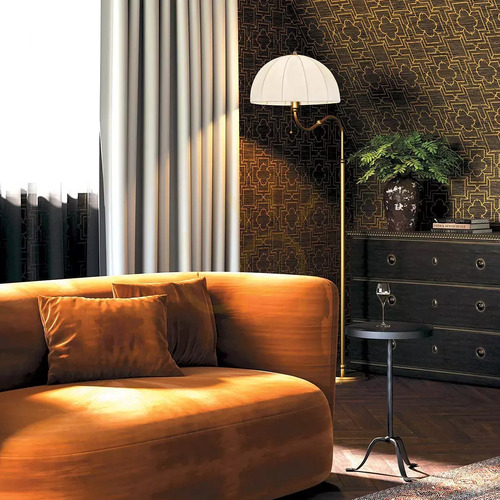
A vintage floor lamp is the grown-up cousin of the old British standard lamp: a weighted base, a slim stem in aged brass or dark metal, and a fabric or glass shade, often with a filament bulb glowing inside. On a floor lamp, though, the style is not just decoration – it decides how high the light sits, what it passes through and whether you can still read in the armchair next to it.
Unlike a table lamp, it stands on its own in the room and is seen all day, switched on or not, so the base, the proportions and the tone of the metal deserve as much thought as the light itself.
Vintage or retro: what the word means on a standing lamp
Strictly speaking, vintage means made decades ago, while retro means new but borrowing an older look. In lighting the two get used interchangeably, so it helps to know the leanings. Vintage tends towards materials that show their age – antique brass, worn copper, blackened steel, turned wood, a marble foot, muted fabric. Retro usually plays with the bolder shapes and colours of the fifties to the seventies: globes, cones, orange and teal. If that is more your thing, have a look at retro floor lamps.
A handful of shapes come up again and again:
-
The classic standard lamp – slim column, weighted base, a drum or pleated shade that throws light both up and down.
-
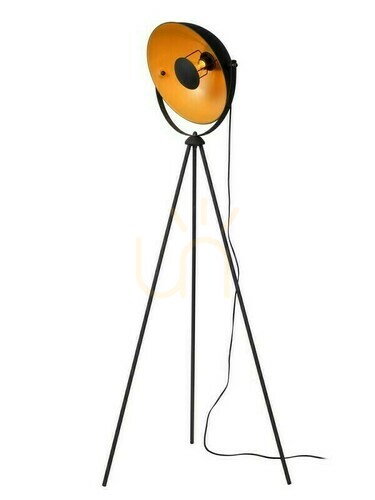
The tripod – three splayed legs in wood or metal, steady and easy to tuck into a corner.
-
The task lamp – an articulated or counterbalanced arm with a metal shade, a nod to the workshop lights of the thirties.
-
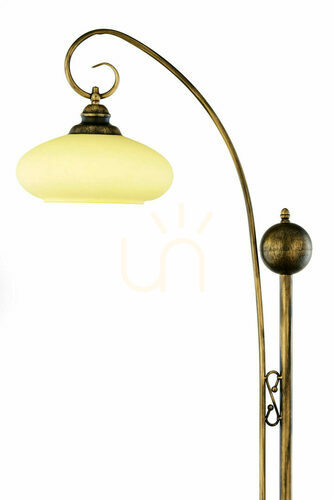
The arc lamp – a tall curve reaching over a coffee table, a sixties idea borrowed from street lighting.
-
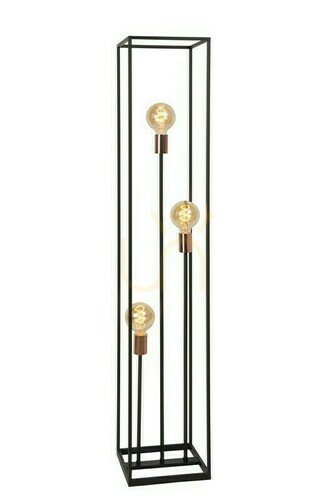
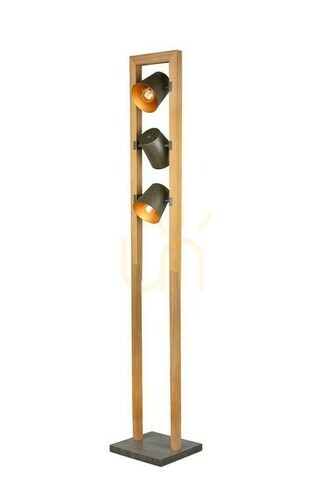
The multi-arm lamp – two or three swivelling heads on one stem, typical of fifties design.
Choosing one: the numbers worth checking
| What to check |
Typical range |
Why it matters |
| Overall height (shaded lamp) |
usually 140–170 cm |
beside a reading chair, the bottom of the shade should sit around seated eye level |
| Arc lamp |
about 180–210 cm tall, roughly 1 m reach |
needs clear space to one side and a heavy base |
| Shade diameter |
around 30–50 cm |
a wider shade lights more of the room |
| Bulb fitting |
E27 screw or B22 bayonet, E14 on small shades |
B22 is common in the UK, so check before buying spare bulbs |
| Colour temperature |
1800–2200 K amber filament, 2700 K for reading |
mood lighting and reading light pull in different directions |
| Brightness at the chair |
roughly 400–800 lm |
amber decorative bulbs often give only 200–400 lm |
| Plug and safety |
UK three-pin plug, lamps usually fused at 3 A |
metal lamps should be earthed (Class I) or double insulated (Class II) |
The shade shapes the light more than the style does. An open fabric shade lights the ceiling and floor and softens everything in between. A metal dome sends a pool of light downwards. Opal glass glows evenly, while clear or amber glass shows off the filament but does nothing to stop glare.
Where it works best
The obvious spot is behind and slightly to one side of an armchair, so light falls over your shoulder onto the page rather than into your eyes. A tripod or a big fabric shade fills an empty corner and lifts the whole room without the ceiling light on, which is half the charm of a standard lamp in a British sitting room. An arc lamp earns its space over a coffee table in the middle of the room where there is no ceiling point to hang a pendant.
Brass looks at home with dark wood, leather, velvet and a vintage mirror above the mantelpiece. Black steel suits exposed brick and reclaimed timber. In a cottage-style room, a wooden base and linen shade feel more natural than polished metal.
Common mistakes and care
-
A light base under a tall arc or adjustable arm is asking for trouble with children or pets around.
-
Too dim to read by: amber filament looks lovely but rarely gives enough light. A clear or frosted filament bulb at 2700 K keeps the look and adds brightness.
- With LED bulbs, a dimmer only works if the bulb is marked dimmable – check the box.
-
Unlacquered brass darkens and patinates over time. A soft, dry cloth keeps it bright; avoid abrasives and ammonia, and never polish lacquered brass.
-
Fabric shades clean up with a soft brush or lint roller. Glass shades should only be washed once the lamp is off and cool.
Vintage floor lamp FAQs
What makes a floor lamp look fifties rather than seventies?
Fifties lamps are slender: thin brass stems, several swivelling arms, small cone shades. Seventies designs are chunkier and bolder – arcs, globes, chrome and strong colours such as orange and brown.
Is a wooden vintage floor lamp a good idea?
Yes, especially as a tripod. Wood warms up a room with lots of metal and glass, and three splayed legs give a very stable stance.
Which vintage floor lamp suits a living room?
For general light, a standard lamp with a large open shade at around 150–170 cm. For reading by the sofa, an adjustable arm or a task head. For a lamp over the coffee table, an arc.
Can I use an old standard lamp from a car boot sale?
Not without checking it. Perished flex, a missing earth on a metal lamp or a loose lampholder are common faults on old lamps. Have it rewired and tested by a qualified electrician before you plug it in.
Do vintage floor lamps take normal bulbs?
Most take a standard E27 screw or B22 bayonet bulb, so LED filament bulbs in globe, pear or tube shapes are easy to find.
What is a floor lamp stand?
It usually means the base and stem sold without a shade, so you can pair it with a shade of your choice – a handy way to get a vintage look with a fabric you like.
For more on floor lamp types, heights and shades in general, see floor lamps; for bulbs that show off a glowing filament, see vintage light bulbs.