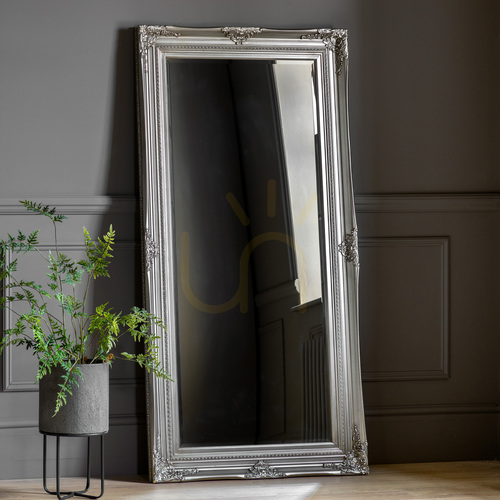
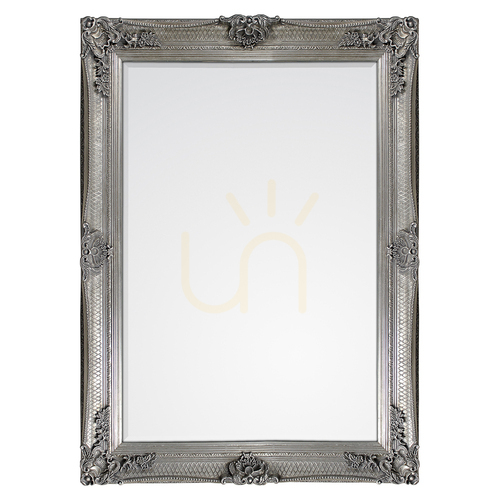
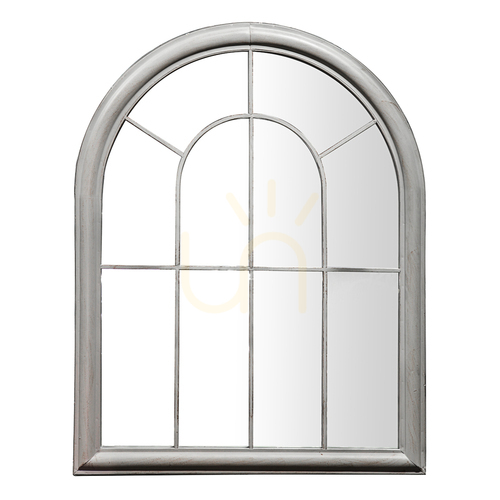
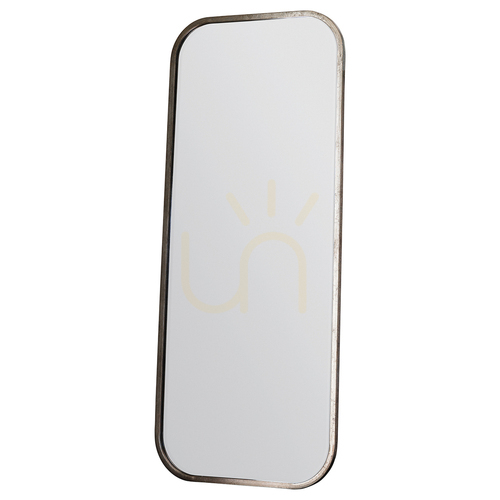
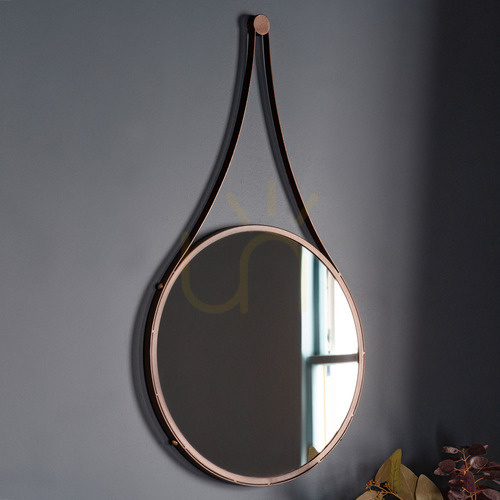
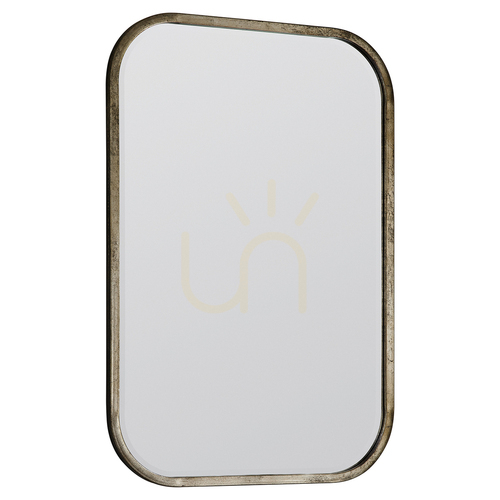
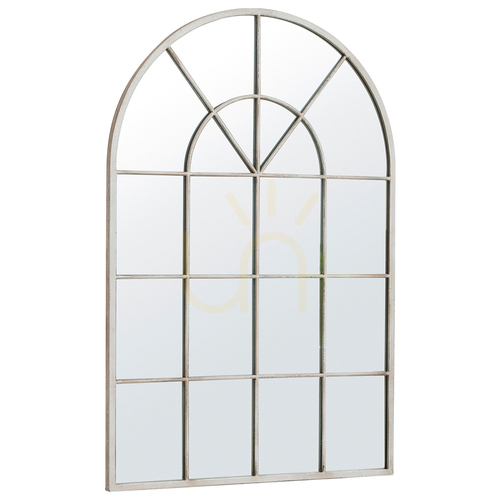
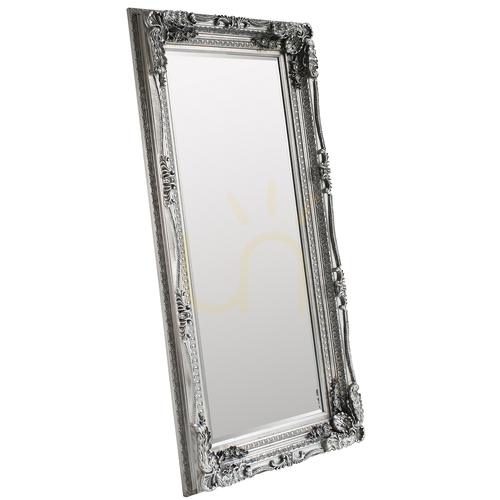
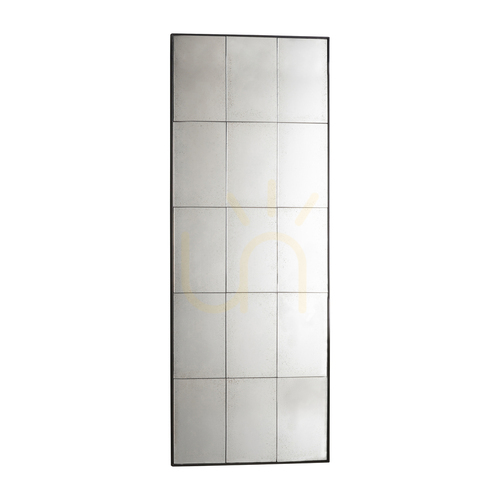
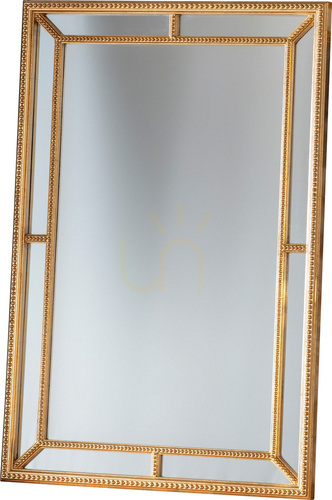
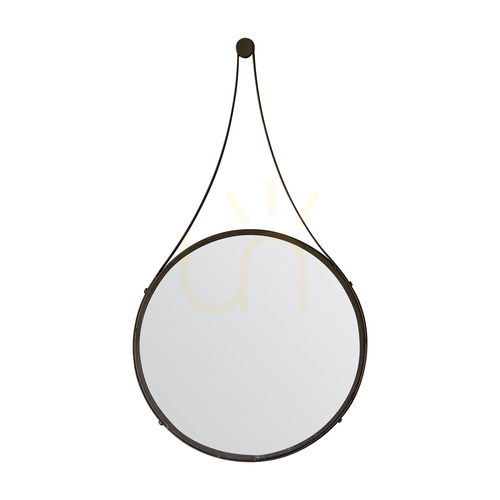
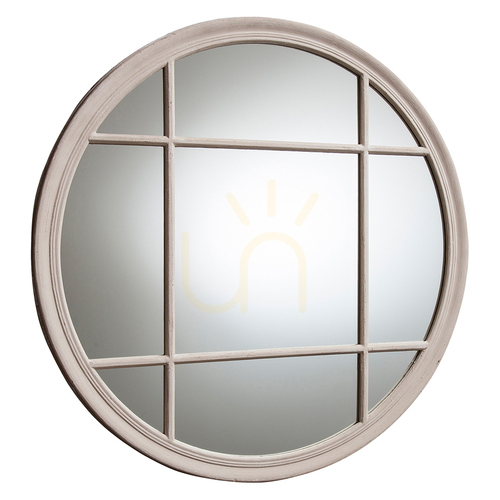
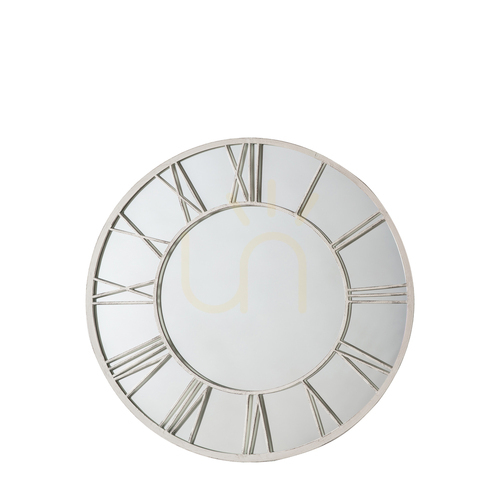
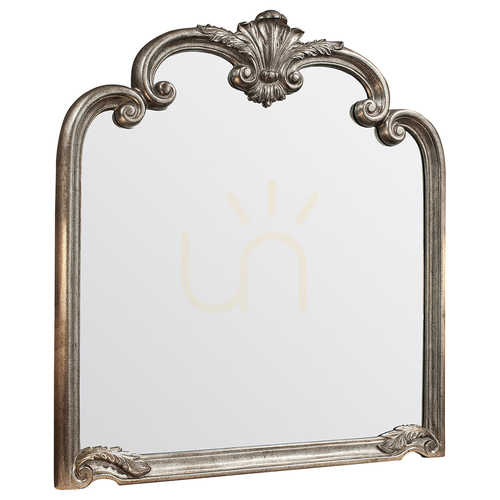
A vintage mirror borrows its look from an earlier era – a carved giltwood frame, a slim Art Deco outline, a distressed painted surround – and often pairs it with antiqued glass whose silvering is speckled and smoky at the edges. Some have both features, some only one: a crisp new plate can sit in a period-style frame, and a frameless sheet of antiqued glass can carry the whole effect on its own.
The difference matters in daily use. A clear plate gives you a sharp reflection; heavily antiqued glass gives a soft, hazy one that is lovely on a chimney breast and frustrating for shaving.
The shapes you will come across
Dealers and decorators still use the old names, and knowing them makes searching much easier.
-
Overmantel mirror – wide, often arched or with a carved crest, made to sit above a fireplace.
-
Pier mirror – tall and narrow, originally hung on the wall between two windows.
-
Cheval mirror – a full-length glass that tilts in a floor-standing frame.
-
Convex mirror – a round, domed glass that shows the whole room in miniature, traditionally in a gilt frame.
-
Dressing table mirror – small, sometimes on a stand with a drawer, sometimes in three hinged panels.
-
Sunburst mirror – a round glass ringed by metal or wooden rays.
Antiqued glass versus a genuine antique
Old mirrors were backed with a tin and mercury amalgam and later with silver. Over decades the backing breaks down, leaving cloudy patches and dark spots, mostly near the edges – what dealers call foxing. Modern antiqued glass recreates that on purpose: the silver layer is attacked with chemicals or acids in a controlled way, sometimes with metal leaf added for a gold or bronze cast. No two sheets come out identical, and even two mirrors from one batch will differ in pattern and tone.
A real antique tends to give itself away from the back: a timber backboard rather than card, hand-cut screws, and glass that is slightly grey and sometimes uneven. A reproduction is lighter, flatter and usually far easier to hang safely.
Choosing the right one for the room
| Where it goes |
Typical size or rule of thumb |
What to look for |
| Above the fireplace |
no wider than the mantelpiece, centre at about 150–160 cm |
overmantel shape, gilt or painted frame |
| Over a console or chest of drawers |
about two-thirds of the furniture width, bottom edge 15–25 cm above the top |
arched or oval glass, light antiquing |
| Hallway |
at least 120 cm tall to see an outfit |
pier mirror or a cheval on the floor |
| Dressing table |
roughly 40–70 cm wide |
clear or lightly antiqued glass |
| Gallery wall |
5–8 cm gaps between pieces |
mixed frames in one finish family |
Weight is easy to underestimate. Mirror glass weighs about 10 kg per square metre at 4 mm and about 15 kg at 6 mm, before you add a frame – and a carved or cast one can easily double that.
Hanging it securely
Always use two fixing points or a French cleat, a pair of interlocking bevelled battens that spread the load along the wall. On plasterboard or a stud partition, either screw into the timber studs or use cavity fixings rated for the weight. Solid brick and block take ordinary wall plugs and screws. A large frameless sheet of antiqued glass is usually bonded with a dedicated mirror adhesive: standard acetic silicone can eat into the silver backing over time.
Think about light at the same time. Hung at right angles to a window, the glass spreads daylight deep into the room. Warm 2700 K bulbs in wall lights either side flatter the patina – exposed filament lamps especially – while a spotlight aimed straight at the glass simply bounces glare back.
Bathrooms and everyday care
Steam is the main threat to any silver backing, antiqued or not. In a humid bathroom, edges can darken further than the maker intended. Choose a piece sold as suitable for bathrooms, keep it out of the shower's spray zone, run the extractor fan and wipe the bottom edge dry.
For cleaning, a soft microfibre cloth barely damp with water does most of the work. Spray any cleaner onto the cloth rather than the glass, so liquid cannot creep under the frame. Dust gilt and carved frames with a soft brush; water and gilding do not mix.
Vintage mirror FAQs
What are vintage mirrors called?
Usually by shape and purpose: overmantel, pier, cheval, convex or girandole, dressing table and sunburst mirrors. Glass made to look old is sold as antique or antiqued mirror glass.
Is it worth resilvering an antique mirror?
Specialist glaziers can strip and resilver old glass or fit a new plate into the original frame. On a valuable piece, collectors generally prefer the original foxed plate, as replacing it can reduce its value; on an ordinary old mirror, a new plate makes it practical again.
Can antique mirror glass be cut to size?
Yes. It is cut like any mirror glass, including circles, ovals and arches. Expect the pattern on a large panel to differ from a small sample.
Does antique mirror glass work in a kitchen?
It makes a striking splashback or cabinet door, as the haze hides smears better than clear glass. Keep it away from the hob, where heat and grease are hardest on the backing.
How do I choose a vintage mirror for a dressing table?
Pick clear or lightly antiqued glass so you can still see detail, and place lights either side at face height rather than above.
Can I hang a full-length vintage mirror?
Yes, on two fixings or a cleat. A cheval stand is the easier option for rented homes or plasterboard walls.
For a softer glow alongside the glass, read about vintage light bulbs, or step back to mirrors in general.