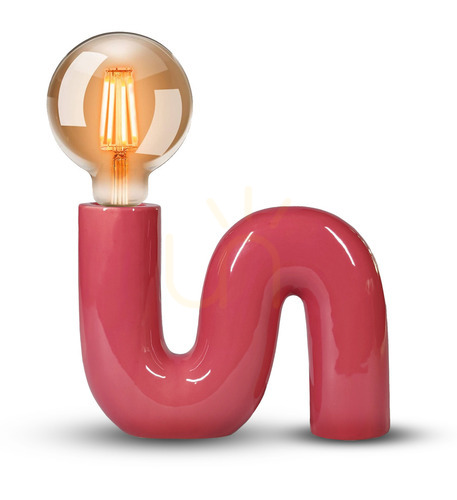
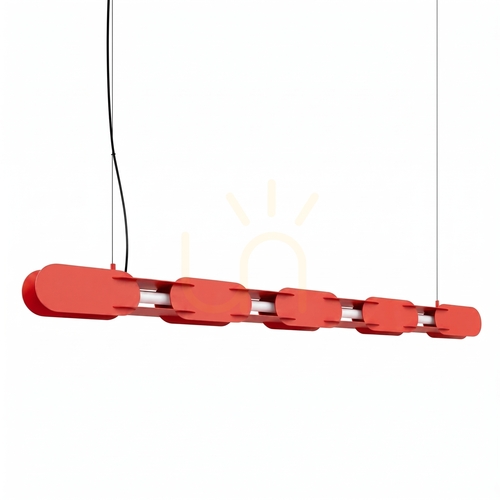
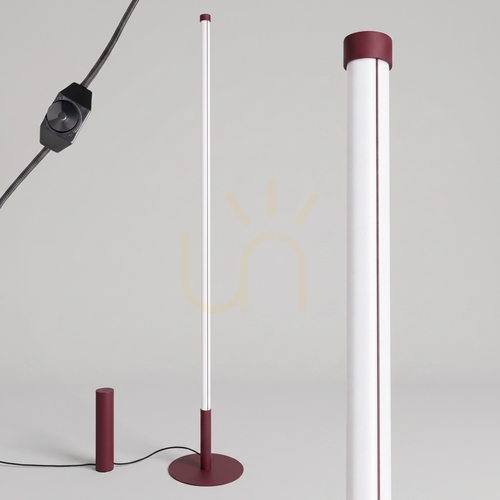
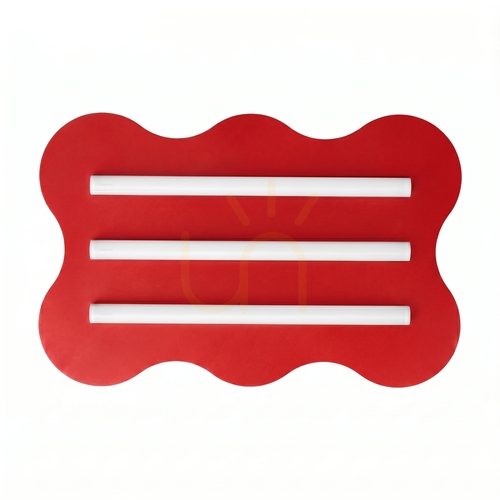
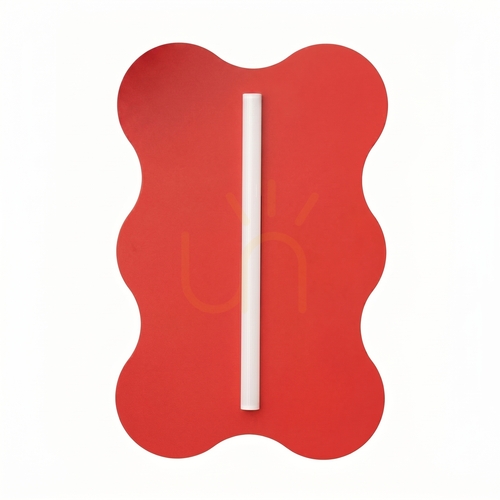
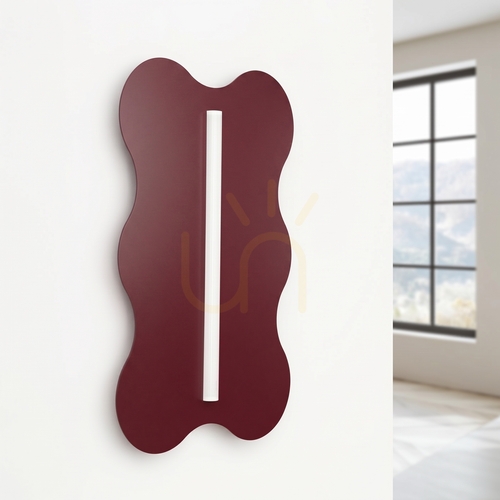
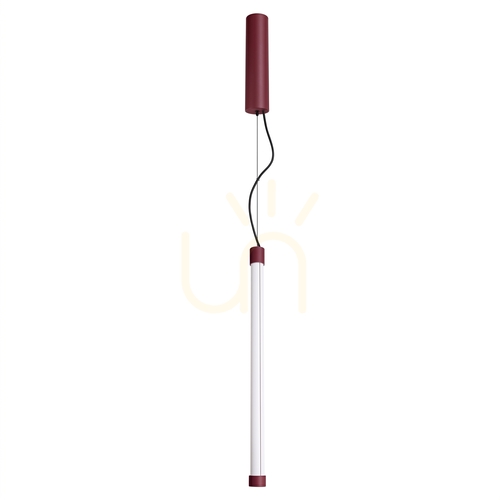
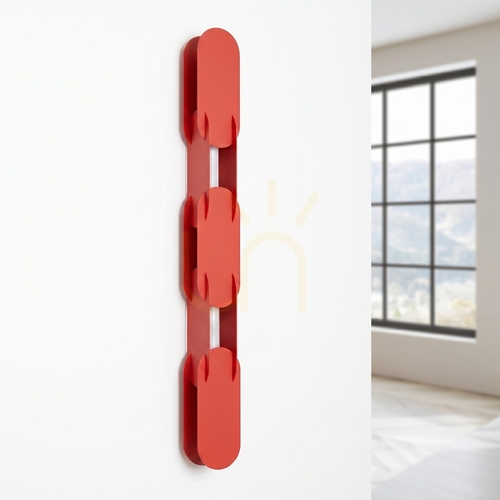
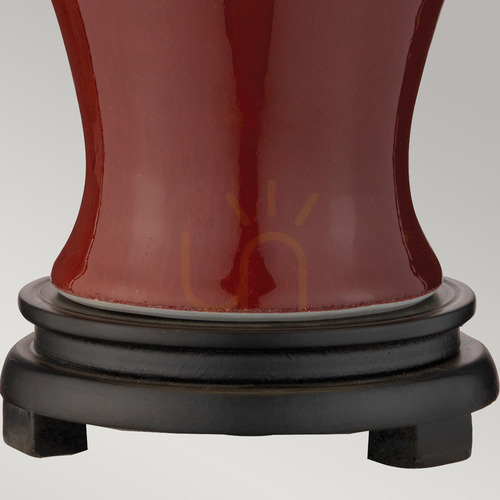
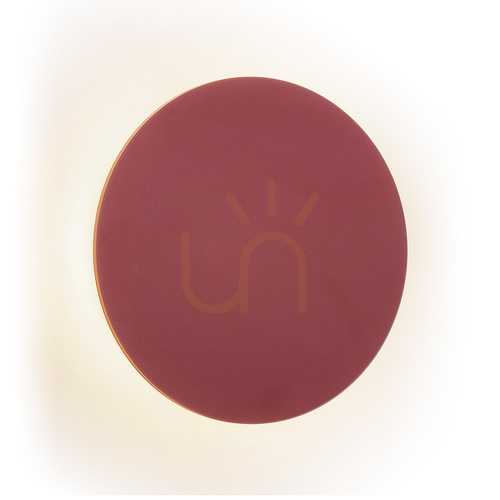
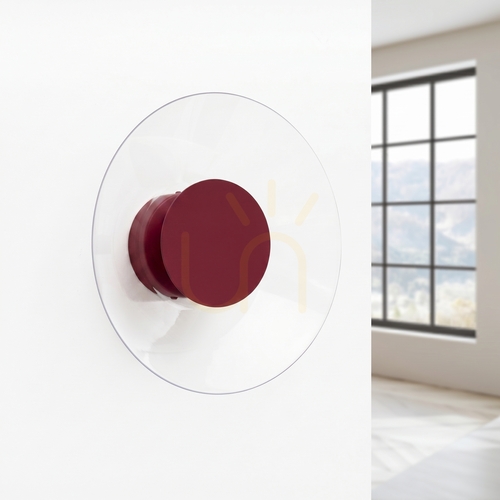
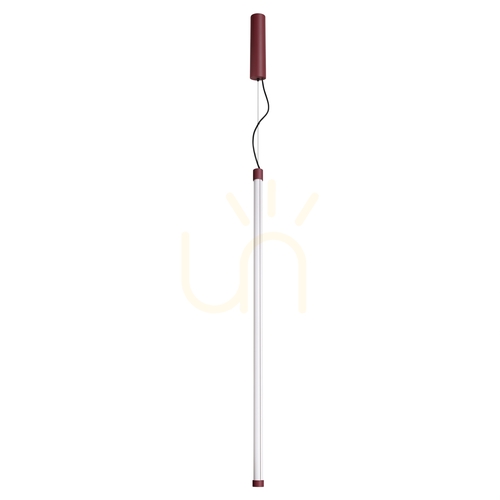
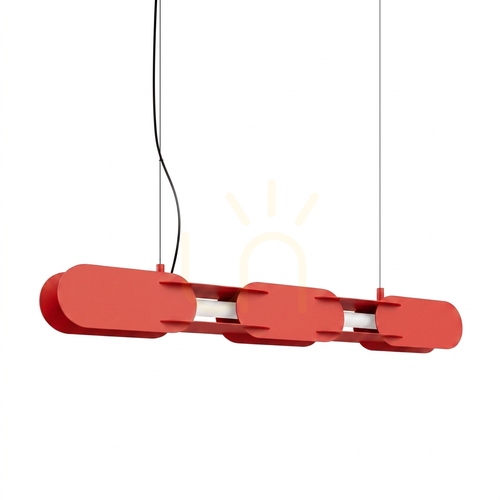
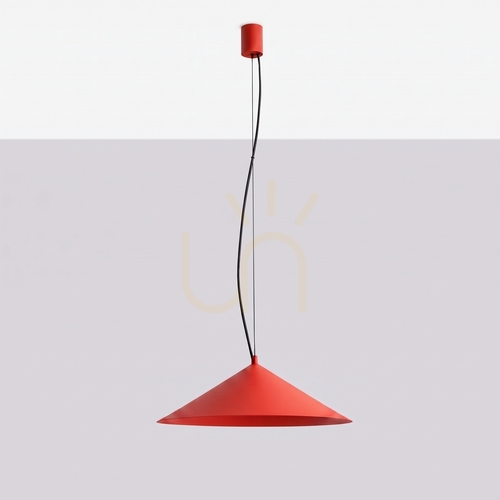
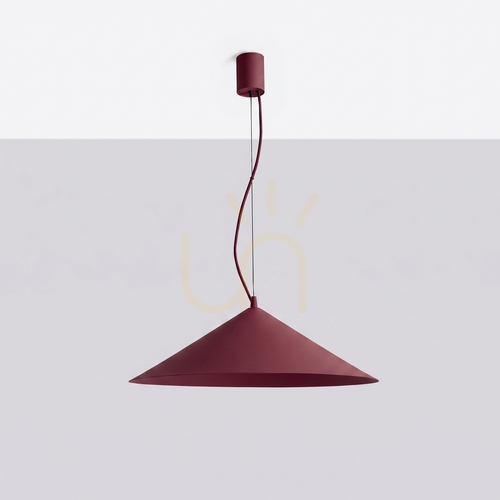
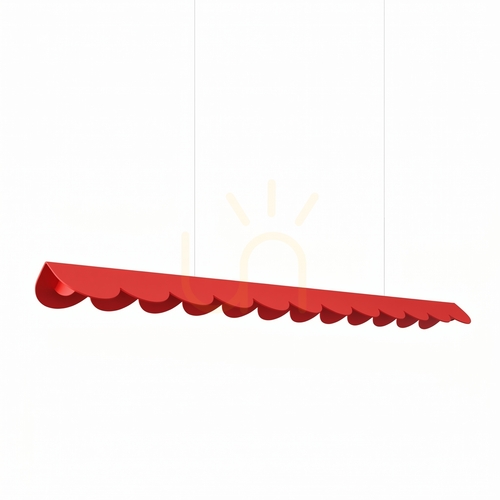
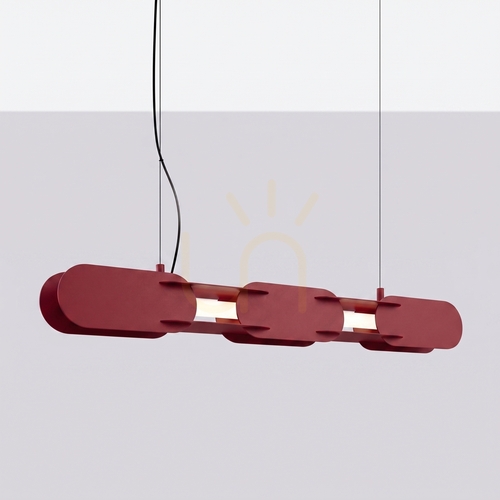
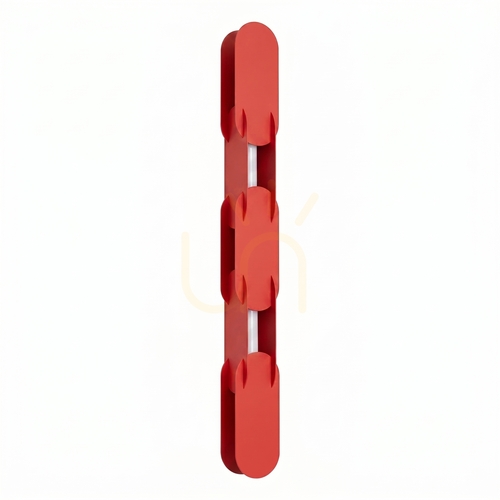
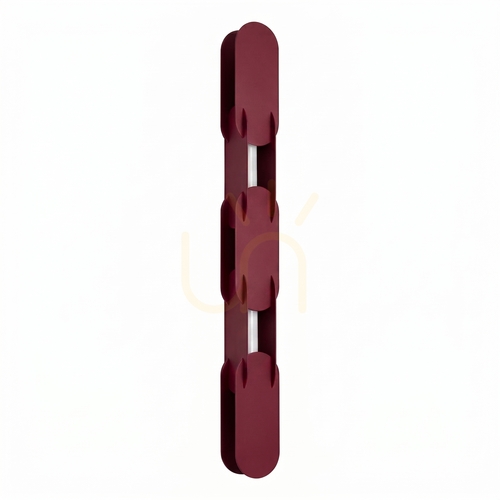
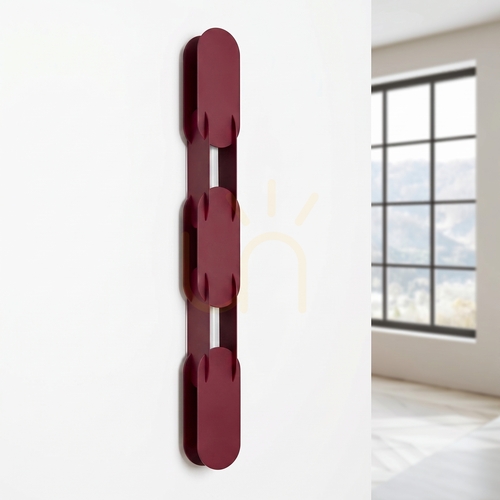
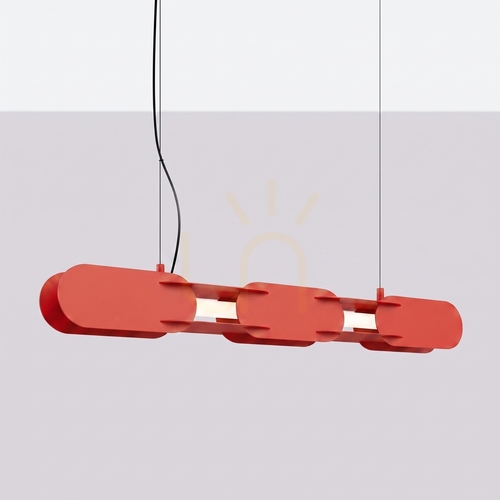
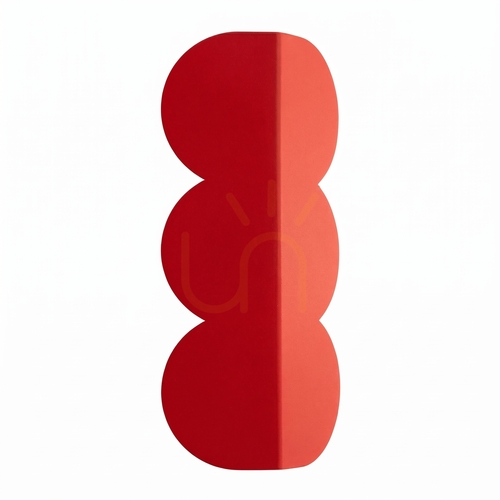
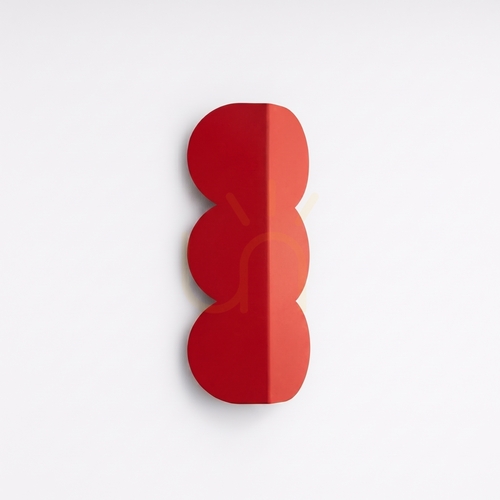
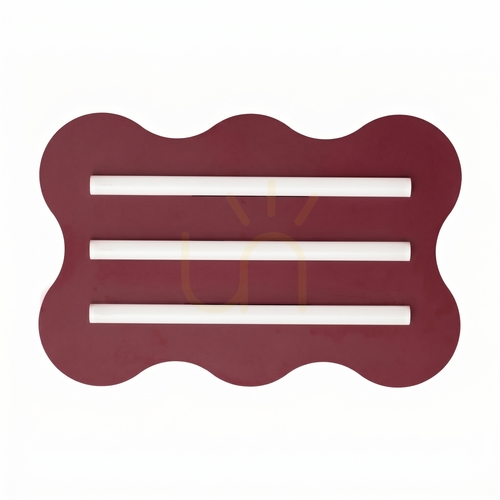
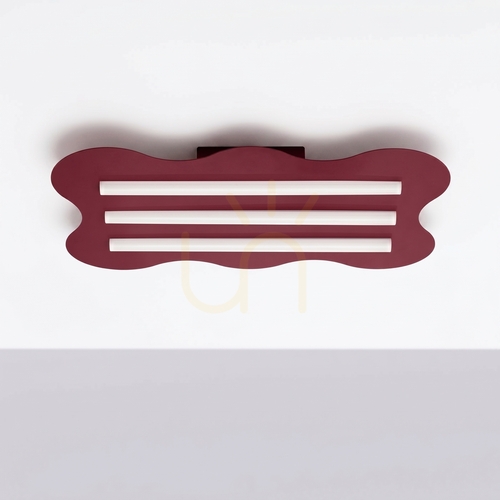
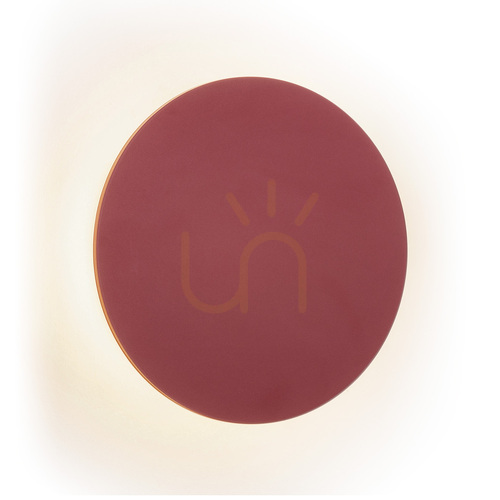
A red lamp gives a room a focal point faster than a feature wall: one shade in pillar-box red, oxblood or terracotta and the eye knows exactly where to land. What sets red apart from other colours in lighting is that the lamp is also a light source, so the finish you choose changes the light in the room as well as the look of the fitting.
What a red lamp actually does to a room
Think of a red lamp as a colour accent that happens to glow. Switched off, it works like any bold object – a red vase, a red armchair. Switched on, two very different things can happen. With an opaque shade in painted or powder-coated metal, the red stays on the outside and the pool of light underneath is plain warm white, which is why red metal pendants work so well over a dining table or kitchen island. With a translucent shade – coloured glass, fabric or acrylic – the light passes through the colour, the room takes on a rosy, low glow and the lamp gives noticeably less useful light. That is lovely for an evening corner and frustrating for reading.
A red lamp for the home is not the same thing as a red light therapy panel or an infrared heat lamp. Those are devices built around specific wavelengths, power and exposure times; a decorative lamp in red is simply a lamp in a strong colour.
Choosing by room
| Room |
Shade of red that works |
Finish and shade |
Bulb |
| Living room |
cherry, oxblood, terracotta |
table or floor lamp, fabric or ceramic base |
warm white 2700 K, dimmable |
| Dining room |
bright or deep red |
opaque metal pendant, matt finish |
2700–3000 K, high CRI |
| Kitchen |
signal or tomato red |
metal pendants over the island, wipeable |
3000 K, CRI 90 or above |
| Bedroom |
burgundy, wine |
bedside lamp with a lined shade |
2700 K or lower, dim |
| Children's room |
bright red |
wall light or sturdy table lamp |
LED, runs cool |
| Study |
red base only |
white or opaque shade, light inside |
3000–4000 K |
A useful rule from interior design is 60-30-10: a main colour, a secondary one and an accent. A red lamp is the ten per cent. One per room is plenty; echo it once in a cushion or a print and stop there.
Bulbs, fittings and the British details
Warm white at 2700–3000 K makes red look rich and deep. Cool white from 4000 K upwards flattens it, and terracotta can turn muddy. Colour rendering matters more for red than for almost any other colour: look for CRI 90 or higher, and if the packaging lists an R9 value – the score for saturated red – the higher, the better. A cheap, low-CRI LED will make a cherry lamp look brown.
Check the lampholder before you buy bulbs. Many lamps sold in the UK take a B22 bayonet cap, while fittings designed for continental Europe usually take E27 or E14 screw caps; a shade-only purchase also needs the right ring size for the lampholder. Plug-in lamps come with a fused BS 1363 plug, and a Class II symbol (two nested squares) means the lamp is double insulated. Pendants and wall lights wired into the mains have to comply with BS 7671, so leave that part to a qualified electrician.
Styles that suit red
-
Mid-century and retro – enamelled metal domes, glossy ceramic bases, translucent plastic from the sixties and seventies.
-
Traditional and Victorian – pleated or empire shades in deep red, brass bases, Tiffany glass with red panels.
-
Industrial – factory-style pendants in red against black, steel and brick.
-
Bohemian and Mediterranean – terracotta and rust paired with rattan, linen and pale wood.
Pitfalls and care
Red is notoriously hard for screens to reproduce, so read the colour name as well as the photo, and order matching pendants together because dye lots can differ. Gloss throws red reflections onto a white ceiling and shows fingerprints; matt is calmer overhead. Red dyes fade in strong sunlight, fabric fastest, so keep a red shade out of a south-facing window. Stick to the maximum wattage on the label – an LED bulb barely warms a fabric shade, an old incandescent can scorch it. Wipe painted metal with a dry or barely damp microfibre cloth, wash glass in warm soapy water once it has cooled, and use a lint roller on fabric.
Frequently asked questions
What is a red lamp for?
In a home, mainly for colour and mood: a red lamp adds a focal point and a warm glow. Dim red light also preserves night vision, which is why it has long been used in darkrooms and on boats at night.
Can a red light bulb block blue light?
A red bulb emits very little blue light, so it does not add any, but it cannot cancel blue light from other sources such as screens. For a calmer evening, dim warm or red light is gentler than bright cool white.
What type of light bulb is best for a nightstand lamp?
A dimmable warm white LED at around 2700 K and modest output. In a red bedside lamp, high colour rendering keeps the shade looking deep rather than dull.
Does a red table lamp work in a living room?
Yes, especially against neutral walls. Place it where you want the eye to go – beside the sofa or on a sideboard – and let the ceiling light stay neutral.
Vintage or modern red table lamp?
Vintage pieces lean on gloss glazes, enamel and pleated shades; modern ones use matt finishes and clean shapes. Both work if the red is repeated nowhere else in large doses.
Is a red lamp the same as red light therapy?
No. Therapy devices are built for set wavelengths and exposure times. A decorative red lamp gives ordinary visible light.
More ways to light your home
For every other type of fitting, from pendants to floor lamps, start with indoor lighting. If the red is meant for the bedside table, see red bedside lamps.