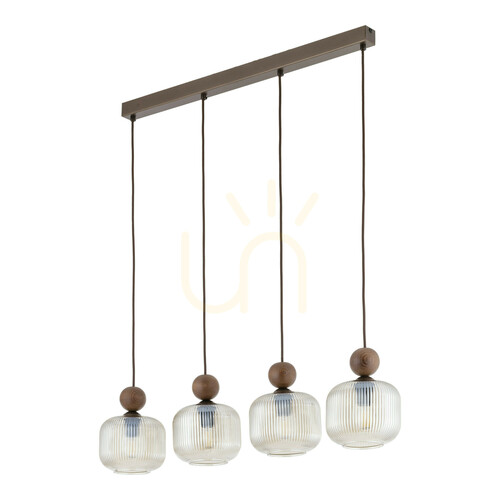
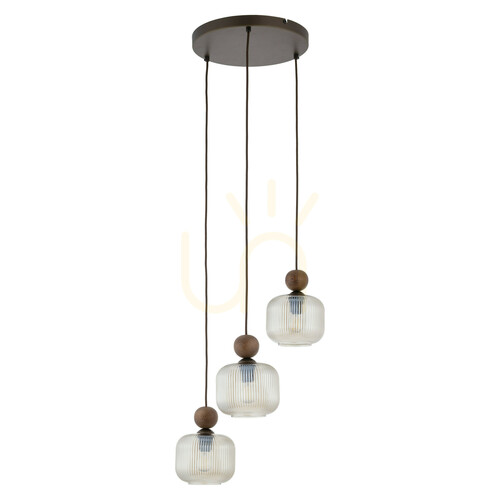
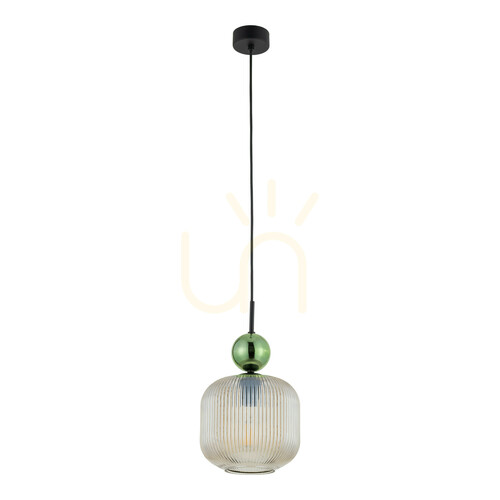
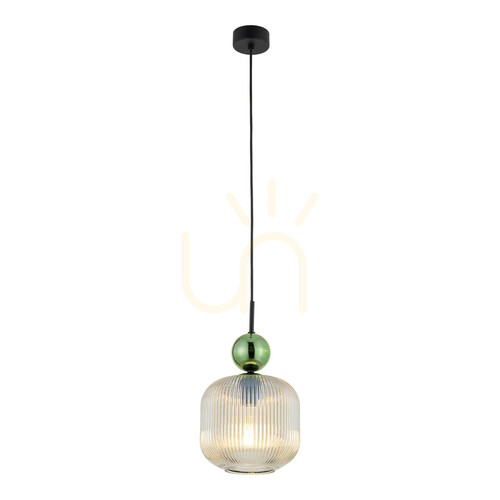
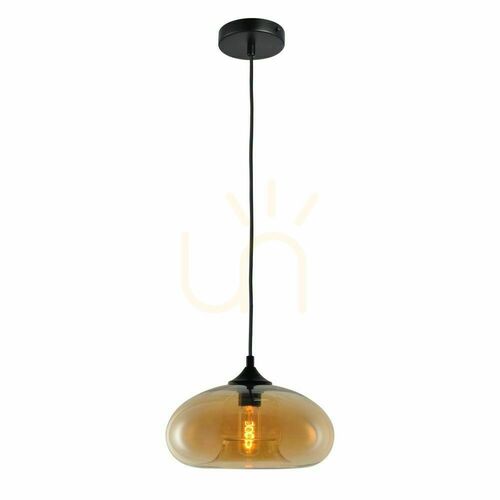
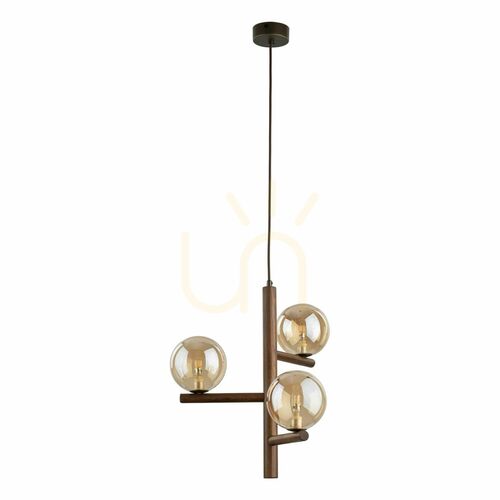
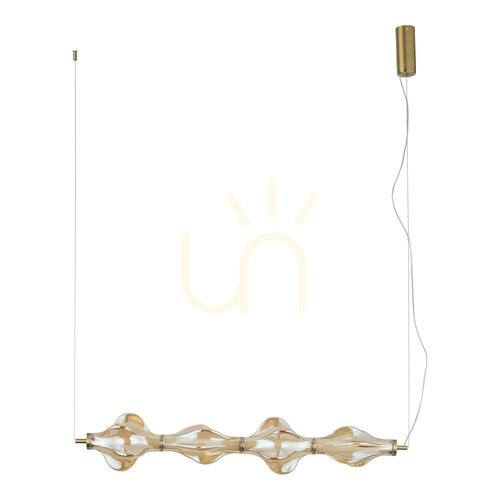
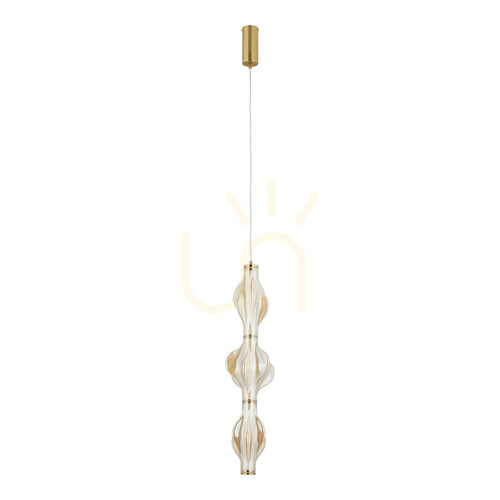
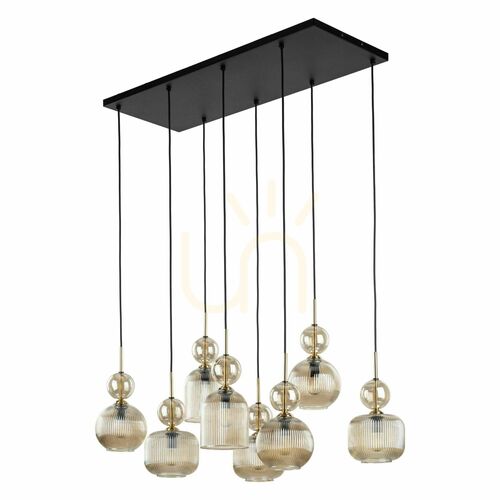
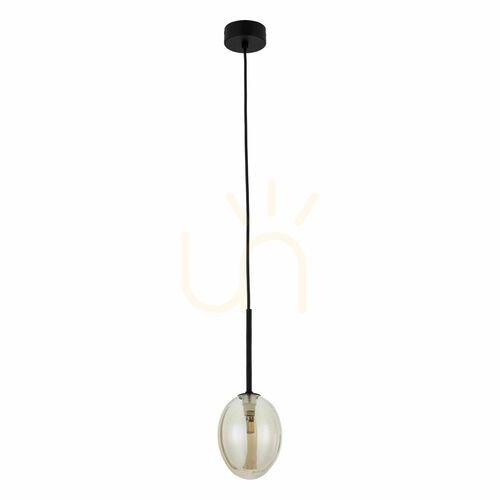
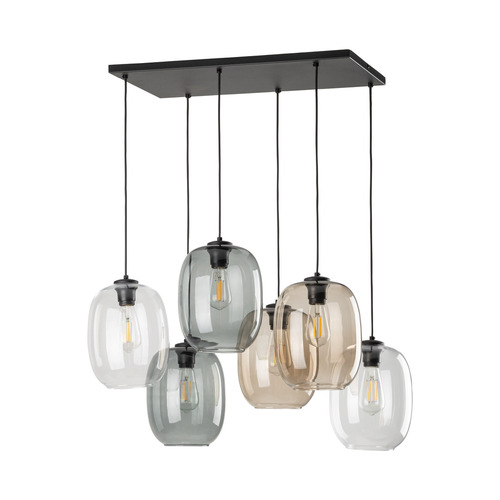
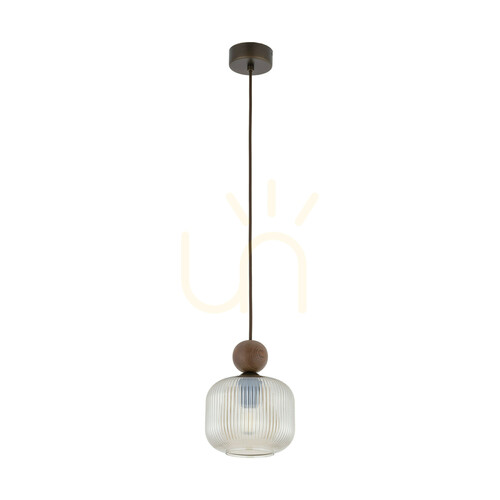
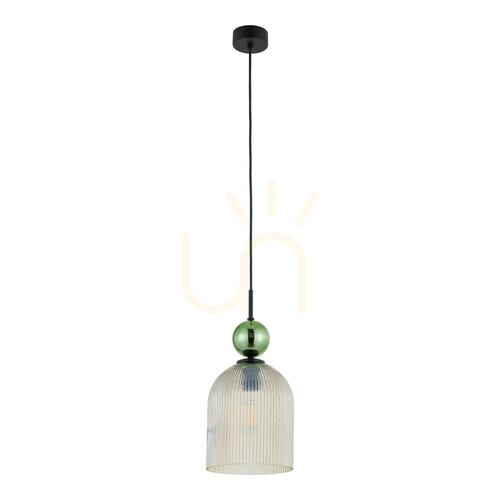
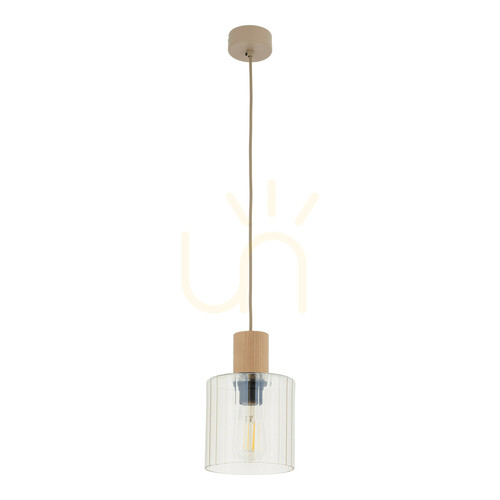
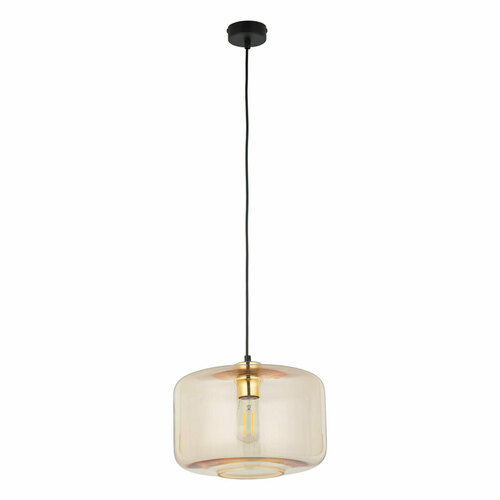
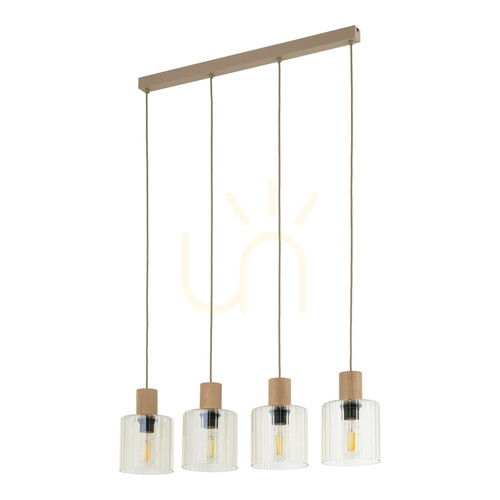
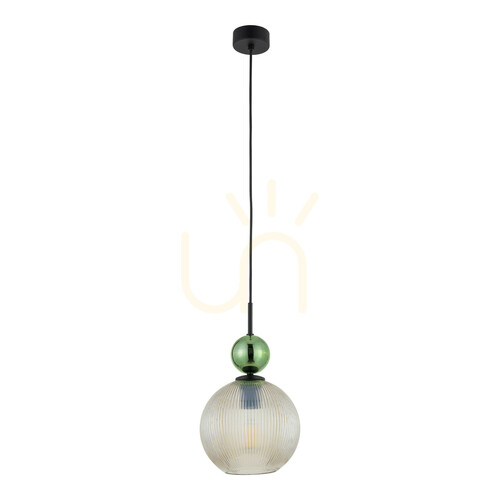
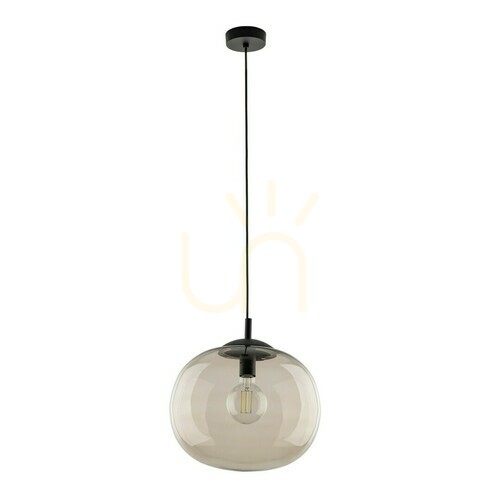
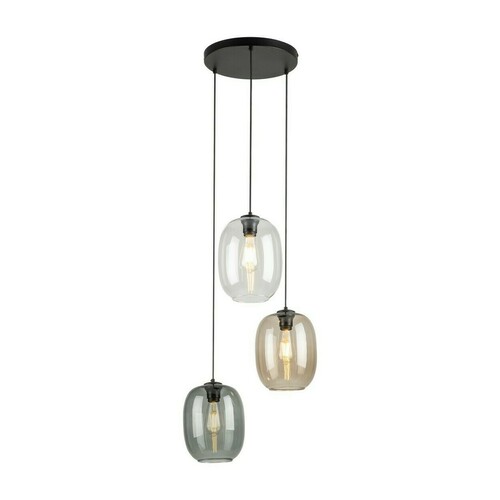
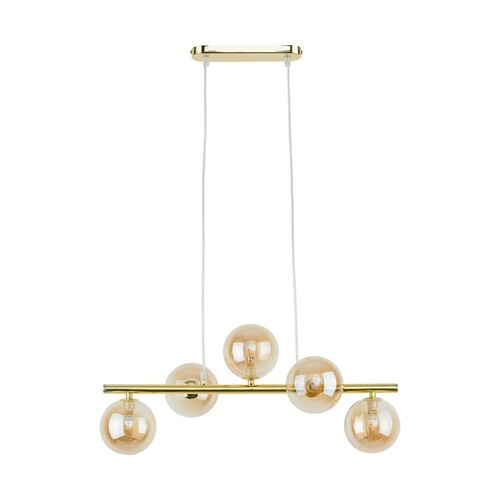
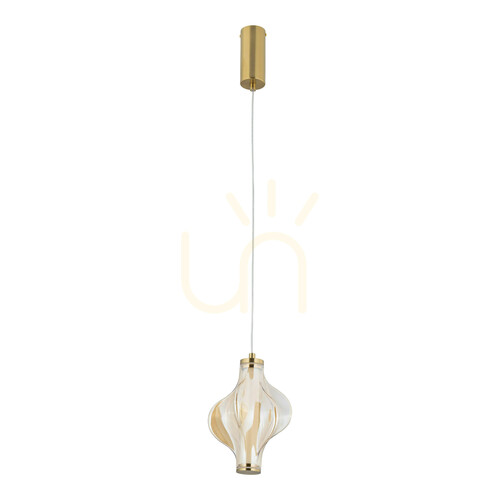
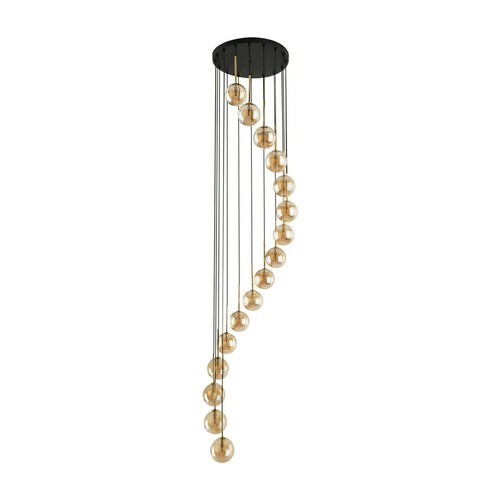
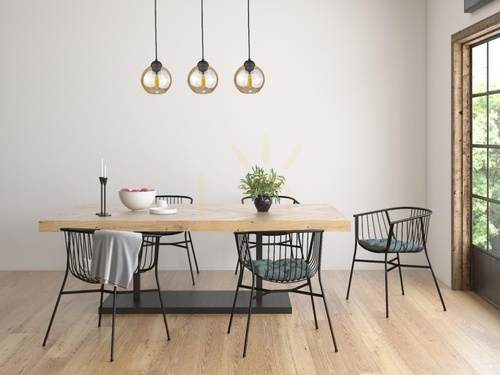
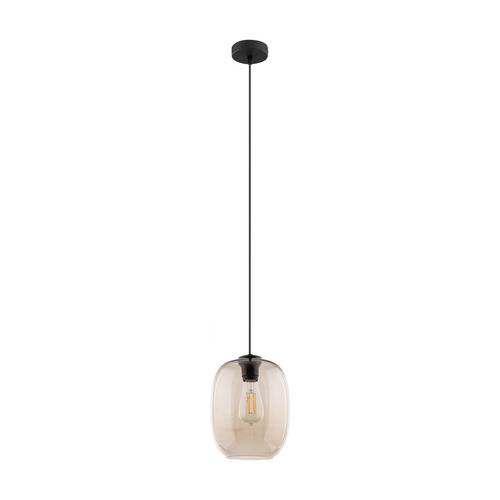
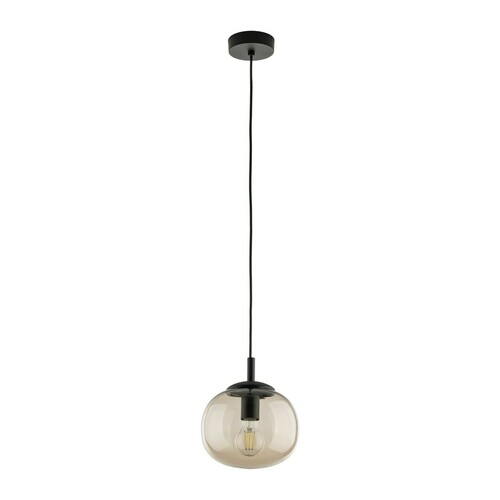
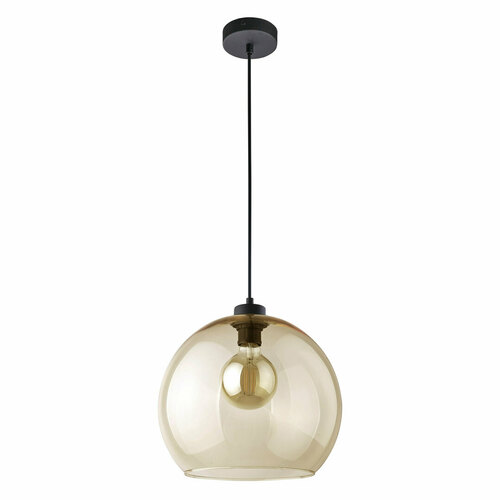
An amber pendant light is a ceiling light that hangs on a flex, cord or chain with a shade of honey- to cognac-tinted glass, most often over a dining table, a kitchen island or in a cluster above a stairwell. Choosing amber over clear or opal glass gives you warmer, softer and slightly dimmer light, so the shade's shape, the drop and the bulb matter more than they would with plain glass.
Here amber is first of all a colour – usually of tinted glass rather than fossilised resin. Shades set with real amber pieces are a craft product of their own and should only ever take cool-running LED bulbs.
Vintage, period or modern: what the glass is doing
Amber glass suits several looks, and each uses it differently. Mid-century and seventies designs favour smooth domes and globes in deep caramel. Victorian and Edwardian-inspired fittings pair pressed or ribbed amber glass with antique brass, which sits naturally in a period terrace with high ceilings and picture rails. Modern pieces keep the form plain – a clean cylinder, a fluted bell, a lightly tinted sphere – and let black metal or brushed brass do the rest.
Whatever the style, the shape decides where the light ends up. An open-bottomed dome or bell sends the bulb's own light straight down, untinted, so the table is lit normally and only the shade itself glows amber. A closed globe filters every ray: the whole room turns golden but also noticeably darker. For a table that doubles as a desk, go for an open shade or a pale honey globe. Deep cognac glass is mood lighting – lovely over a bar or in a dining room that already has spotlights or wall lights for general light.
Sizing and hanging in a UK home
Many new-build houses and flats have ceilings of about 2.4 m, while Victorian and Edwardian rooms are often 2.7–3 m or more. That difference changes how long the drop can be and how large a shade looks right. The figures below are typical starting points, not rules.
| Where |
Typical shade or layout |
Bottom of shade |
Bulb per shade |
| Round table for four |
one shade 30–45 cm, or a small cluster |
70–85 cm above the table |
800–1,000 lm, 2700 K |
| Rectangular table 160–200 cm |
two or three shades 20–30 cm, 60–80 cm apart |
70–85 cm above the table |
600–800 lm, 2700 K |
| Kitchen island |
two or three shades in a row |
75–90 cm above the worktop |
800–1,000 lm, plus task lighting |
| Hallway or landing |
single shade or cascade |
at least about 2 m above the floor |
400–800 lm, 2200–2700 K |
| Low ceiling around 2.4 m |
short drop or a semi-flush amber fitting |
clear of head height where people walk |
as above |
Over a dining table, the fitting usually looks balanced at between half and two thirds of the table's width, ending roughly 30 cm in from each edge. Most amber pendants come with an adjustable drop of up to about 150–200 cm; the spare flex is coiled into the ceiling rose or cut to length when fitting.
Bulbs, lampholders and glare
Many amber glass shades take an E27 screw bulb, while lots of UK pendant sets are B22 bayonet, so check the lampholder before buying bulbs or an easy-fit shade. Smaller shades and multi-light clusters often use E14 or G9, and some fittings have a built-in LED module at around 3000 K.
Seated at the table, you look up into the shade. A bare bulb in an open dome can glare, so choose a frosted or crown-silvered bulb, or one short enough to sit inside the rim. Through a clear globe the bulb is part of the look: filament globes, teardrops and squirrel-cage shapes come alive behind amber. Keep to 2200–2700 K; cool white at 4000 K turns amber glass a muddy brown. Bulbs sold as ‘amber’ run at roughly 1800–2200 K and suit accent lighting rather than a dining table. For dimming, pair a dimmable LED bulb with an LED-compatible (usually trailing-edge) dimmer.
Fitting and care
A single glass shade typically weighs 1–2 kg; a five-globe cluster can weigh several times that, too much for a hook in plasterboard alone, so fix into a joist or use a rated cavity fixing. Heavy shades also need a pendant set designed for their weight rather than an easy-fit adaptor on a standard flex. Have a qualified electrician connect the fitting to BS 7671; in some older homes the lighting circuit has no earth, which matters for metal Class I fittings.
Clean only when the glass is cold: a microfibre cloth, warm water with a drop of washing-up liquid, then dry it off. A soft brush clears dust from fluted or ribbed glass. Shades above a hob gather a greasy film faster than those over a table. Hand-blown glass has small bubbles and slight differences in tone between shades – expected, not a fault.
Amber pendant questions
What is the difference between vintage and modern amber pendant lights?
Mostly the form and the metalwork. Vintage designs use domes, ribbed or pressed glass and antique brass; modern ones use plain cylinders and spheres with black or brushed metal. The warm glow is the same.
How large should an amber glass pendant be?
Over a table, roughly half to two thirds of the table's width. Extra-large shades of 40 cm or more suit high period ceilings or open-plan rooms; under a 2.4 m ceiling, two smaller shades usually look better than one big one.
What is a white and amber pendant light?
A fitting that combines amber glass with white – an opal inner shade, a white glass layer or white metalwork. The white diffuses the light more evenly and keeps it brighter than amber alone.
Is an amber ceiling light better than a pendant for a low ceiling?
Often, yes. A flush or semi-flush amber fitting keeps head height clear in hallways and rooms around 2.4 m, while a pendant works best over a table where nobody walks underneath.
Can you hang an amber pendant from a sloping ceiling?
Yes, with a ceiling rose or canopy made for sloping ceilings, so the flex hangs vertically. Check this before buying, as a standard rose holds the shade at an angle.
Do antique amber glass shades fit modern lampholders?
Sometimes. Old shades were made for various gallery and ring sizes, so measure the neck opening and check it matches the lampholder and shade ring before fitting.
For amber glass beyond the ceiling – table lamps, wall lights and how the colour behaves in each – read more about amber glass lamps. More on pendant shades in clear glass, opal and metal: pendant lights.