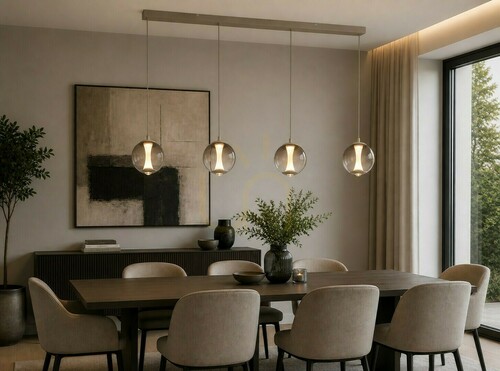
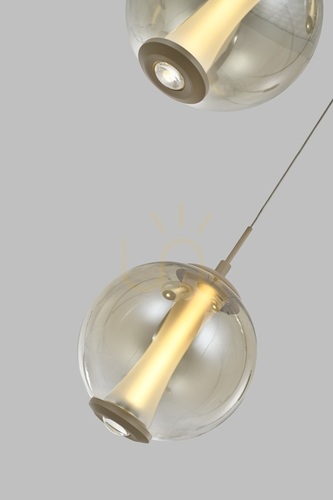
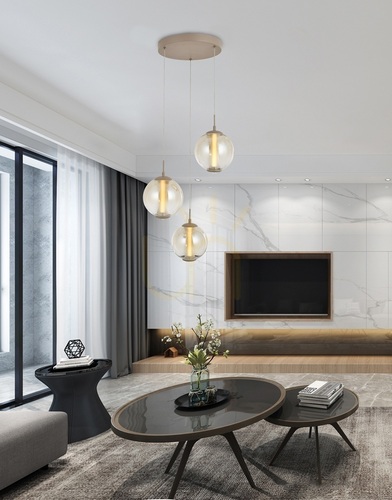
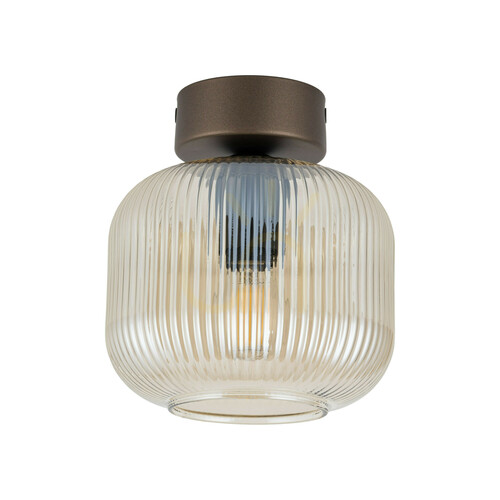
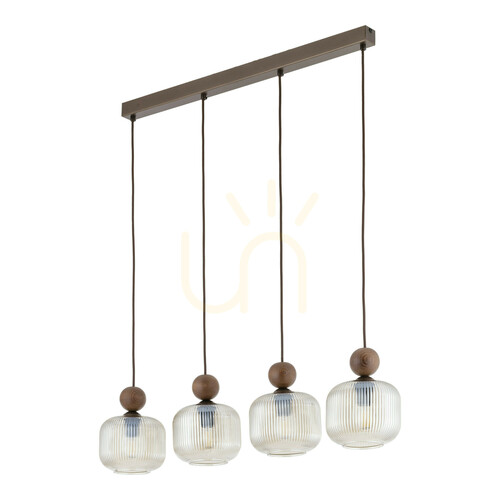
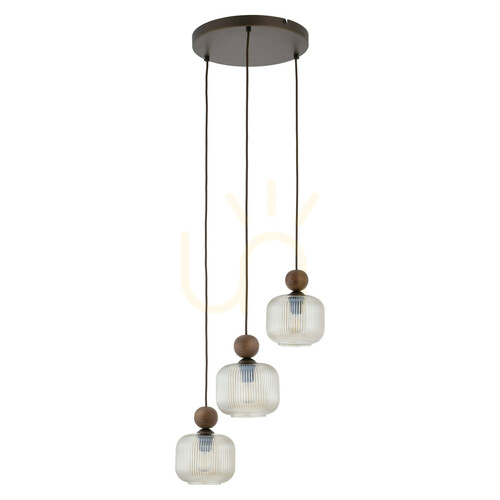
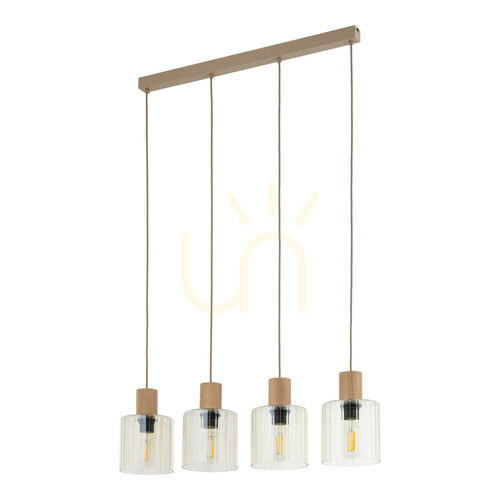
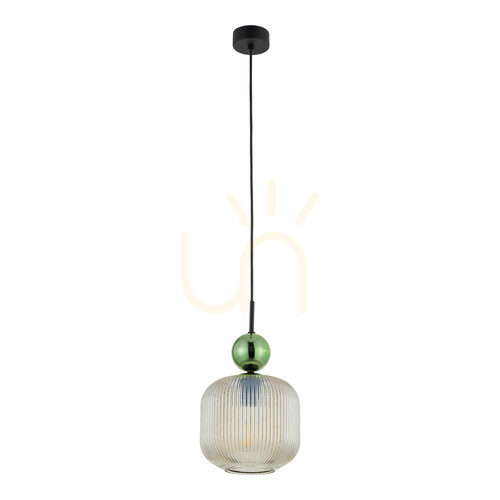
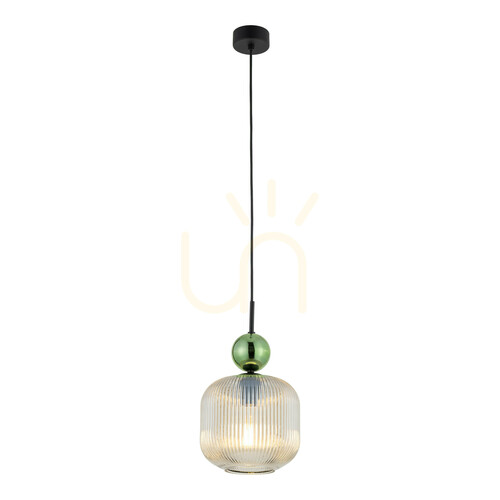
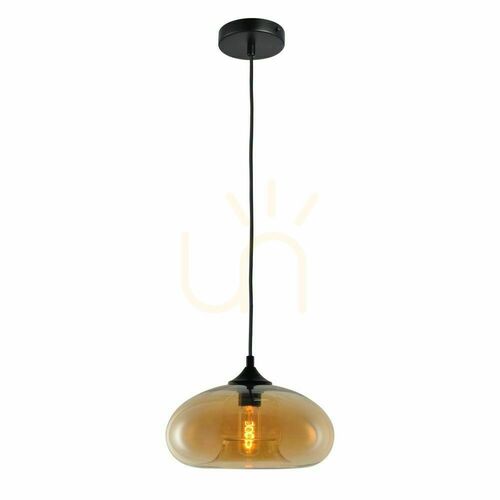
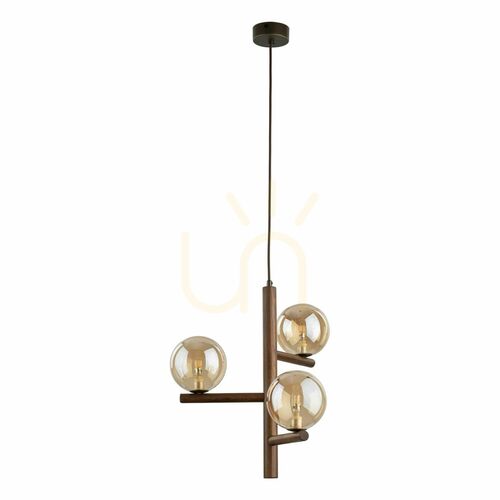
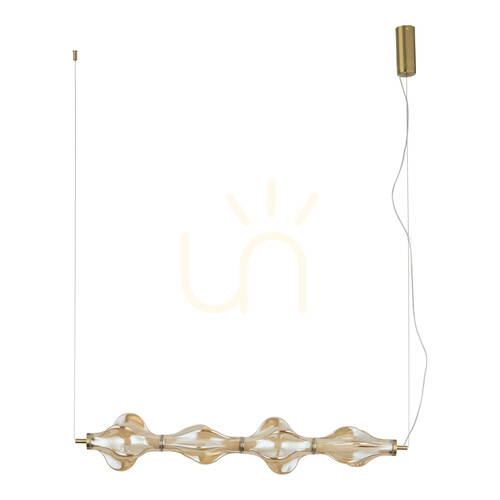
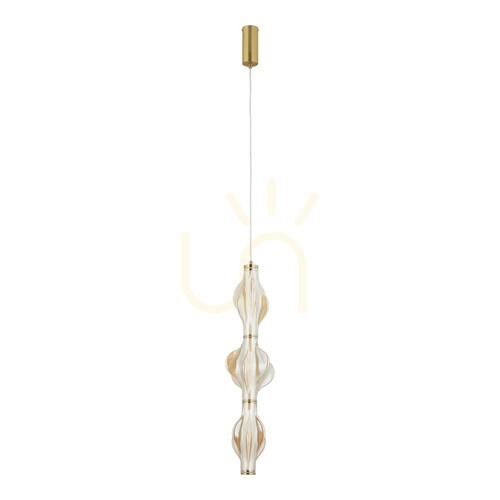
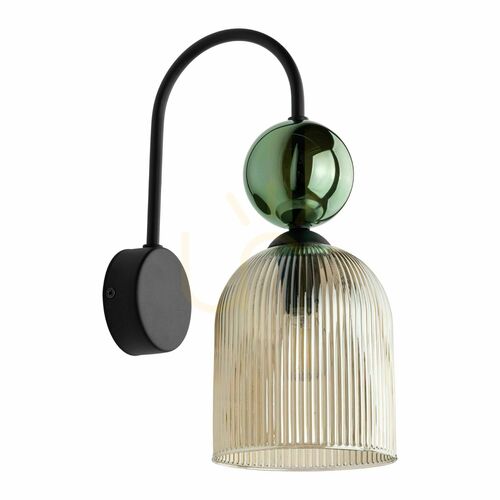
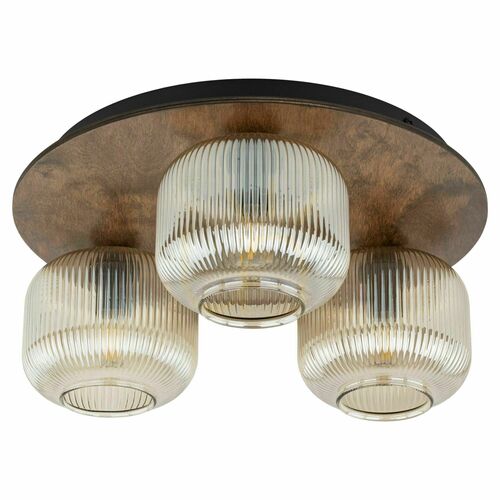
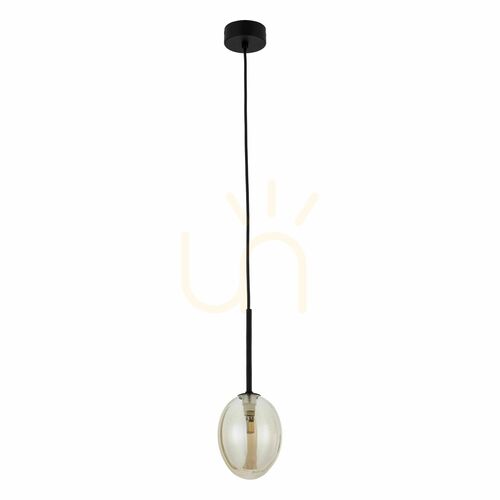
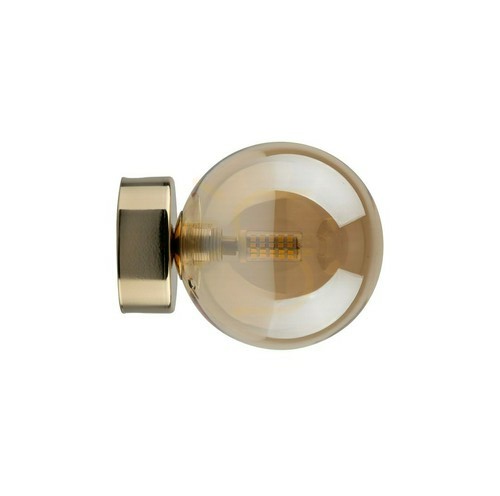
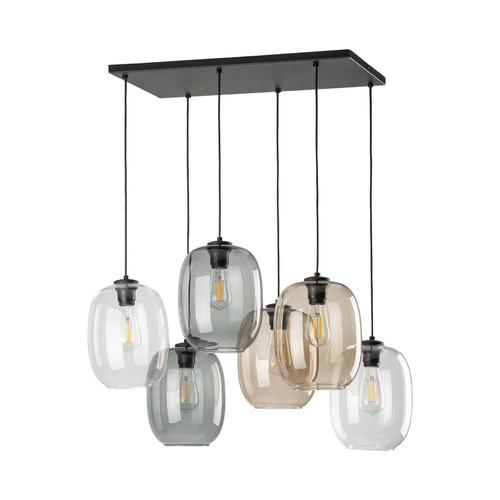
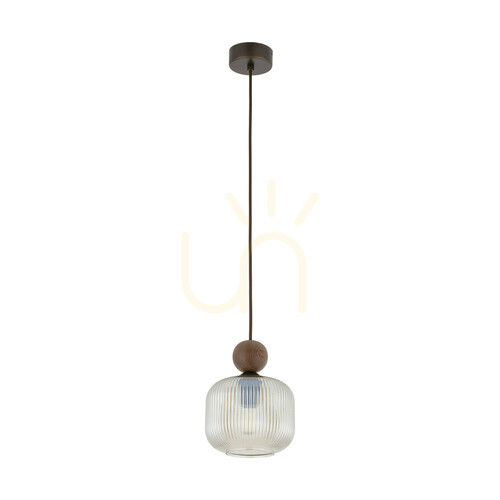
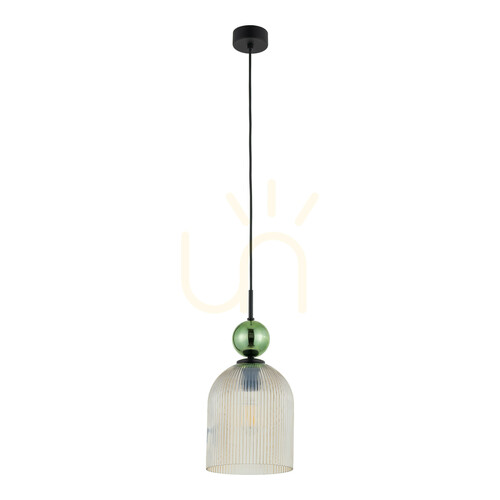
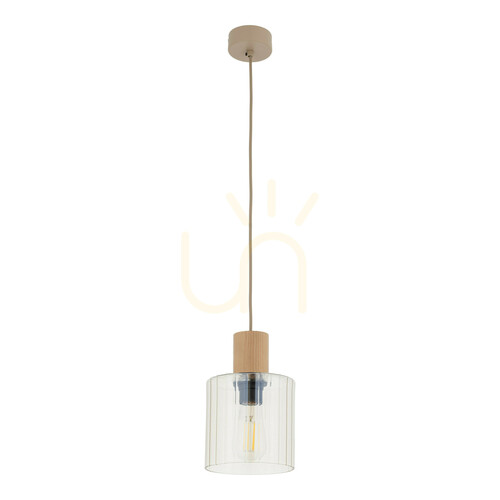
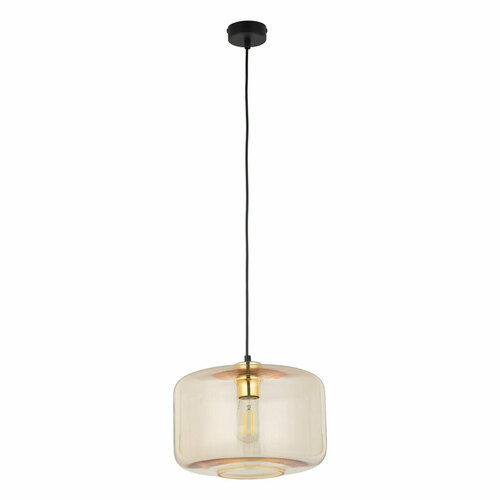
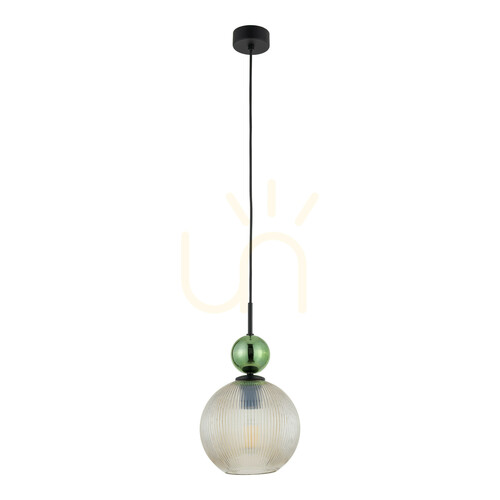
An amber glass lamp uses glass tinted honey, caramel or deep cognac, either as the shade the light shines through or as the base under a fabric shade. Where the light passes through the glass, it comes out noticeably warmer and softer – closer to candlelight or a low evening sun than to an ordinary warm-white bulb. The look runs from ribbed seventies table lamps and Art Deco wall lights to clusters of small globes, and the tint also turns up in acrylic, resin and the odd fabric shade.
What amber glass actually does to light
The colour is part of the glass itself, created in the melt rather than painted on, so it won't scratch off or fade in a sunny window. Amber glass absorbs ultraviolet and much of the blue end of the spectrum, which is exactly why pharmacy bottles and beer bottles are brown. Put a bulb behind it and the same filtering makes the light golden.
The trade-off is brightness. A pale honey shade lets plenty through and can light a small bedroom or hallway on its own. Dark amber glows beautifully but throws little light into the room, so treat it as mood lighting. Thick hand-blown glass absorbs more than thin pressed glass, while ribbed and textured finishes scatter the light and hide the bulb.
Shade or base: two very different lamps
Many amber glass table lamps are really a glass base with a linen, jute or pleated shade on top. Here the glass is decoration: it catches daylight and the light from the shade, but the bulb sits above it, so you get a normal, fairly bright table lamp. An amber glass shade works the other way round – the shade itself glows and the room stays dimmer. Decide which effect you want before you buy, because it changes the whole room.
| Question |
Typical choice in a UK home |
| Lamp holder |
E27 (ES), E14 (SES), B22 bayonet or G9 capsule; some have integrated LED |
| Colour temperature |
2200–2700 K; 4000 K looks flat and greyish through amber |
| Brightness per shade |
roughly 400–800 lm behind pale glass; more, or extra lights, behind dark glass |
| Pendant over a table |
bottom of the shade about 60–75 cm above the top; standard ceilings are around 2.4 m |
| Table lamp |
a 3-pin plug, with an inline, base or touch switch |
| Bathroom |
only a fitting rated for its zone, commonly IP44 |
Clear amber shows the bulb, so it is worth choosing one you like the look of: filament globes, pears and candle shapes suit it far better than a frosted standard bulb. Bulbs sold as “amber” have tinted glass of their own and sit around 1800–2200 K. Inside an amber shade they give a very dim, candle-like glow – lovely in a bedroom, not enough over a kitchen worktop.
Where amber glass works best
-
Living room – a table lamp on a sideboard or a floor lamp beside the sofa, layered with ceiling or wall light.
-
Dining room – a row of smaller shades or a cluster of globes gives a warm pool of light over the table.
-
Bedroom – wall lights or bedside lamps in darker amber with a dimmable warm bulb.
-
Hall and landing – a semi-flush ceiling light in paler glass warms up a narrow, often dark space.
Amber sits happily with black metal, brass, copper, walnut and velvet, and it softens a white Scandinavian scheme as a single warm accent. If you use several amber pieces in one room, keep the tone consistent: differences that are invisible in daylight jump out once the lamps are lit.
Care and safety
Switch off and let the glass cool, then wipe it with a microfibre cloth and warm water with a drop of washing-up liquid. A soft brush gets dust out of ribbed glass. Hand-blown shades shouldn't go in the dishwasher. Check the maximum wattage marked on the fitting; an LED of the same brightness draws only a fraction of it. Wiring a ceiling or wall light into the mains is a job for a qualified electrician working to BS 7671.
Amber glass lamp FAQs
What is an amber lamp?
Usually a light with a shade or base in amber-tinted glass. The term is also used for bulbs with amber glass and for amber LEDs, which give very warm yellow-orange light.
What is amber glass good for?
It blocks UV and much blue light, which is why it protects medicines and beer. In lighting it makes any warm bulb look golden and cosy, and it reads as a strong decorative colour even when the lamp is off.
Why are glass lamps so expensive?
Hand-blown glass is made piece by piece and has to cool slowly to avoid stress in the material. Small bubbles and slight tone variation between shades are signs of that process, not faults.
Is vintage amber glass valuable?
Some is, depending on maker, age, condition and rarity. Old amber lamps from the sixties and seventies are popular, but the original flex and lamp holder should be checked, and replaced if needed, before the lamp goes back into use.
Is an amber glass lamp enough for a living room?
Rarely on its own. Pair it with a ceiling light, spotlights or a reading lamp and let the amber do the evening atmosphere.
Can I buy just an amber glass lamp shade?
Replacement glass shades exist, but check the fitter size and how the shade attaches – a gallery ring, a threaded ring or a screw collar – before ordering one for an existing lamp.
If the light is meant to hang over a table, read on about choosing amber glass pendant lights. More on choosing lights in other colours and finishes: indoor lighting.