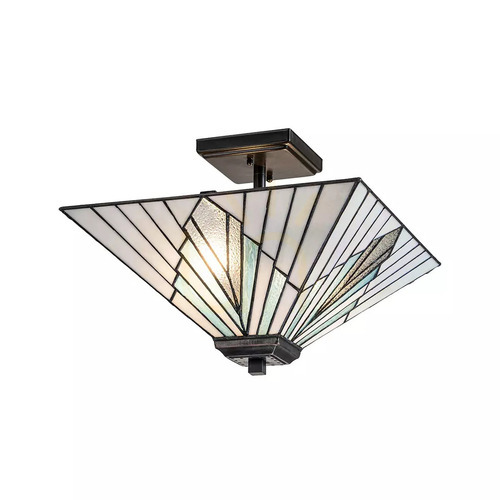
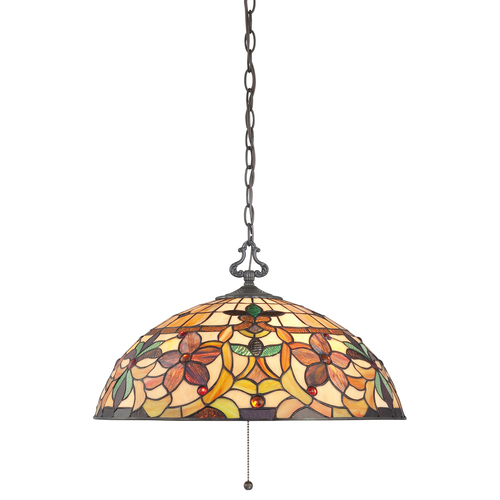
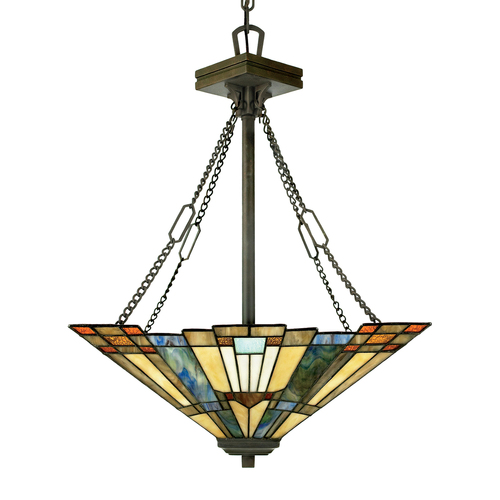
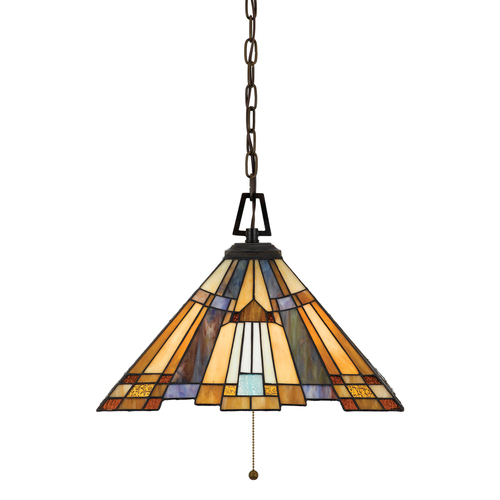
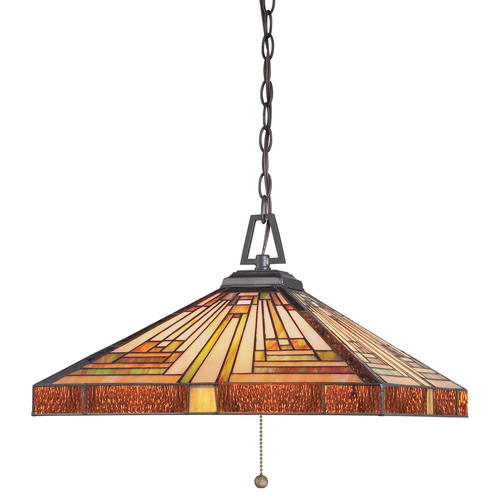
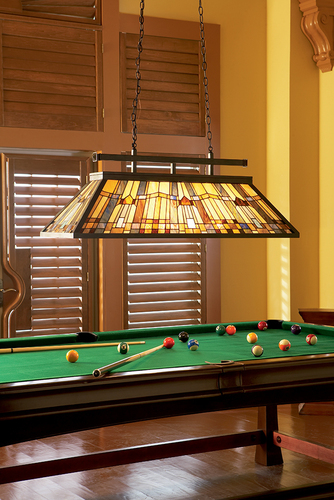
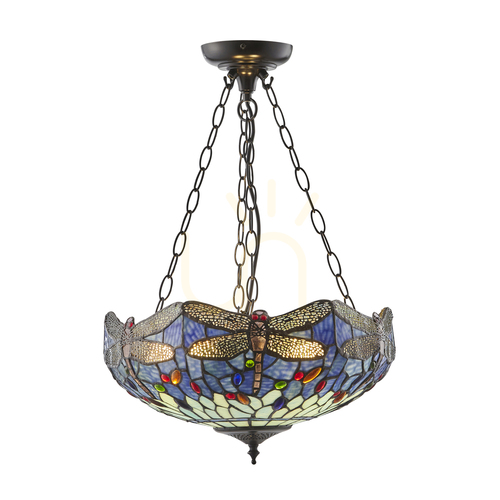
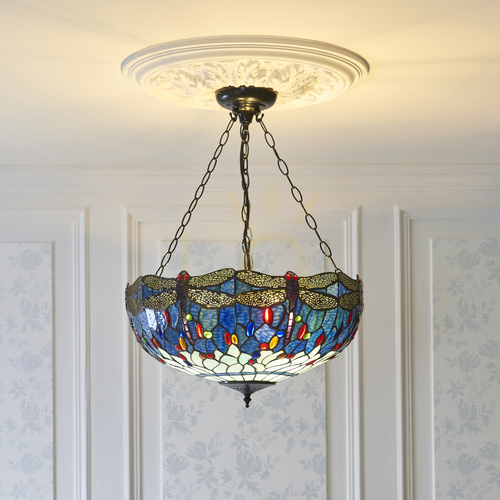
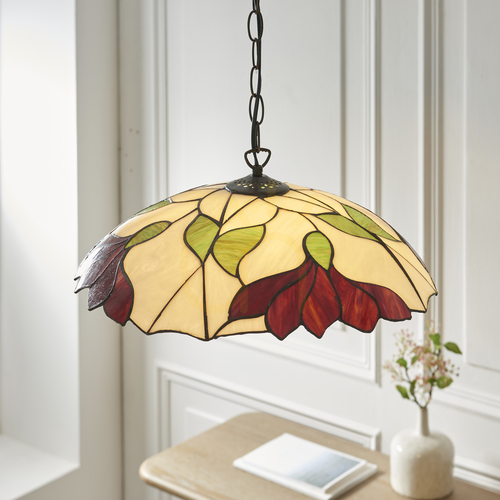
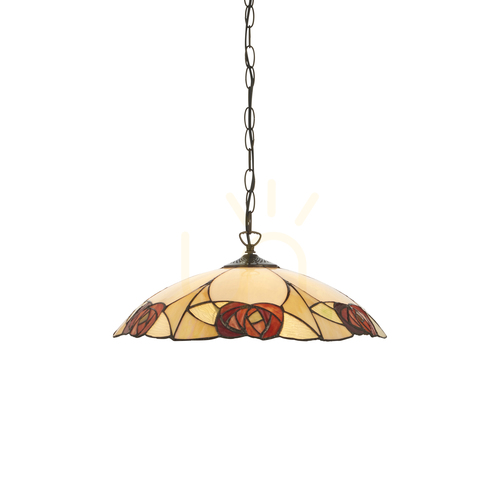
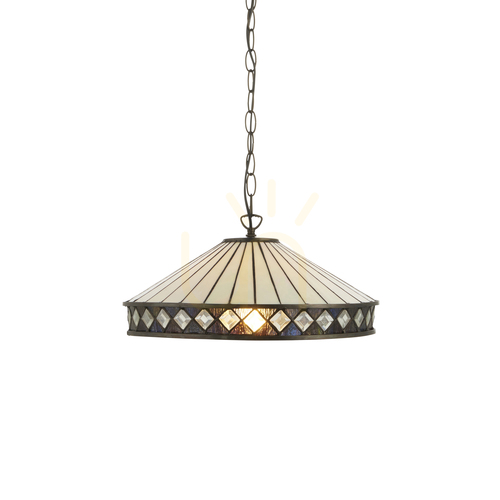
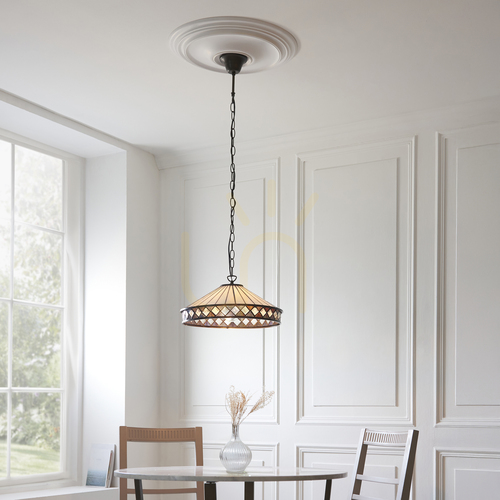
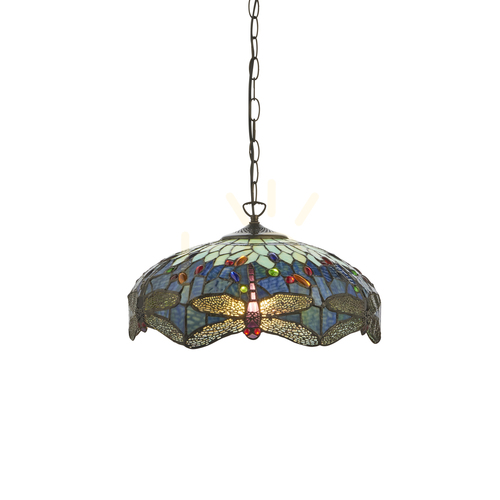
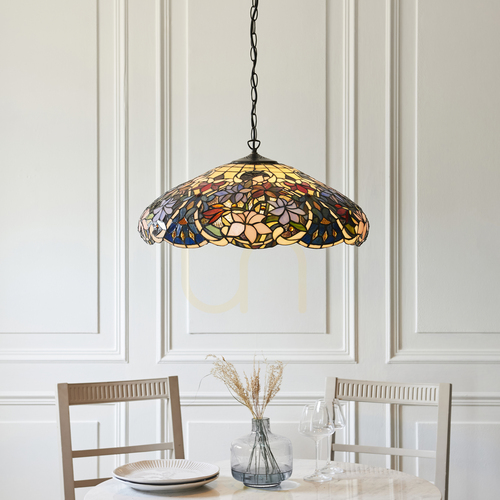
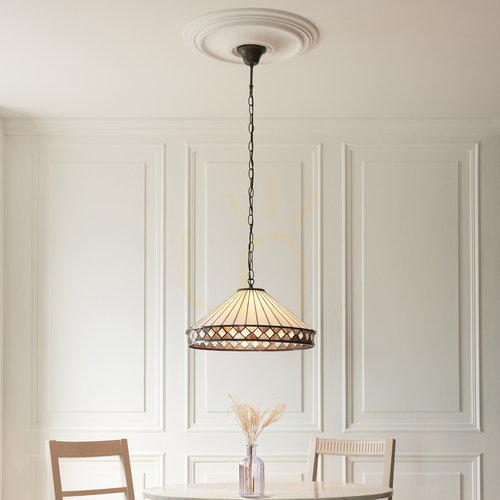
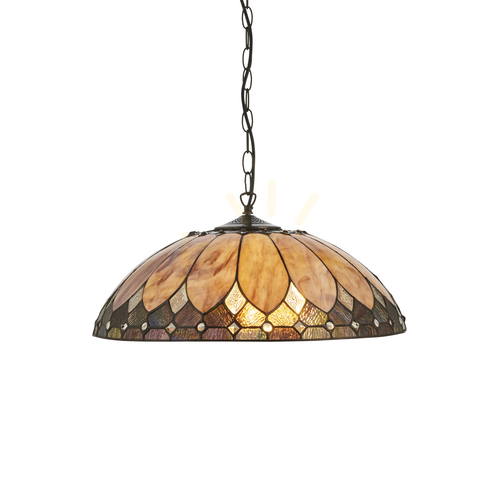
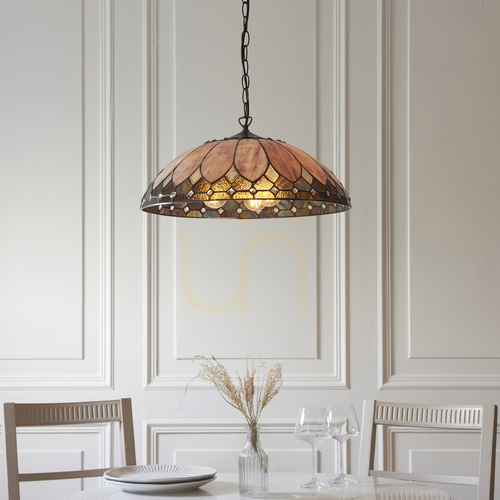
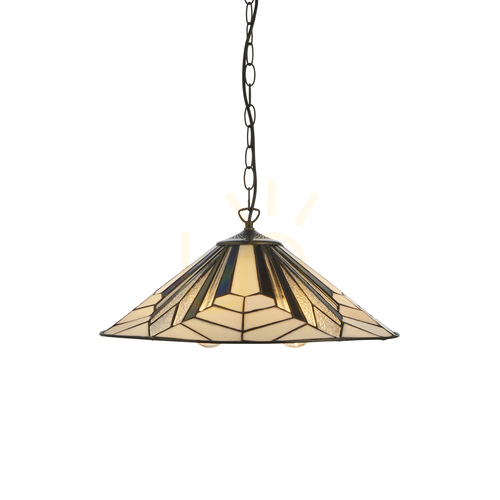
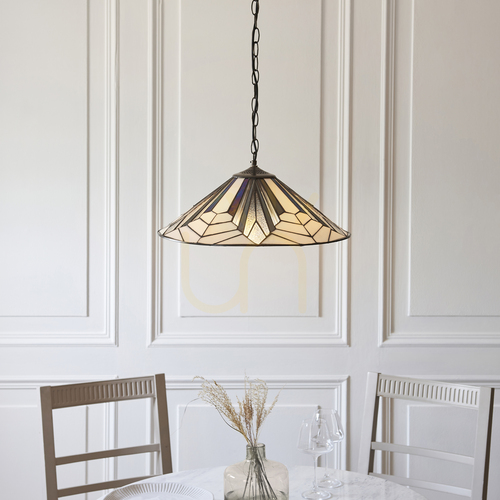
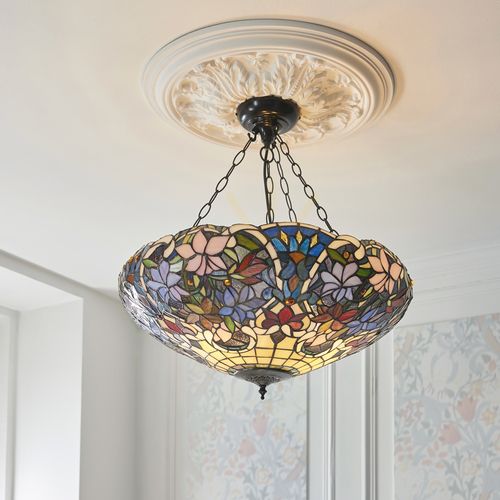
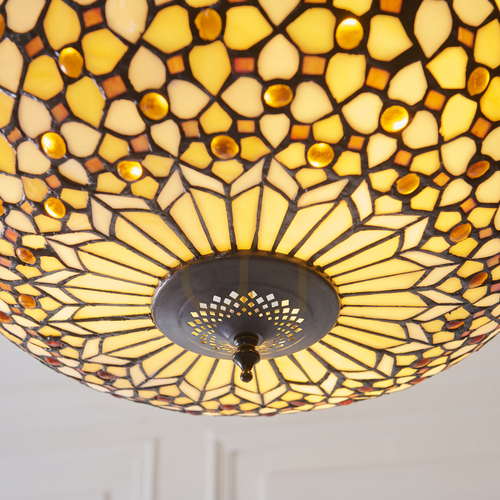
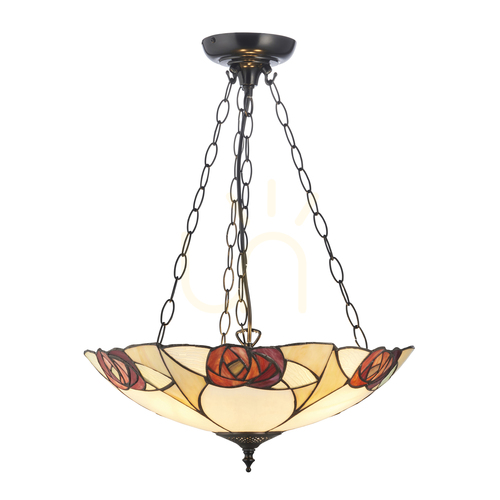
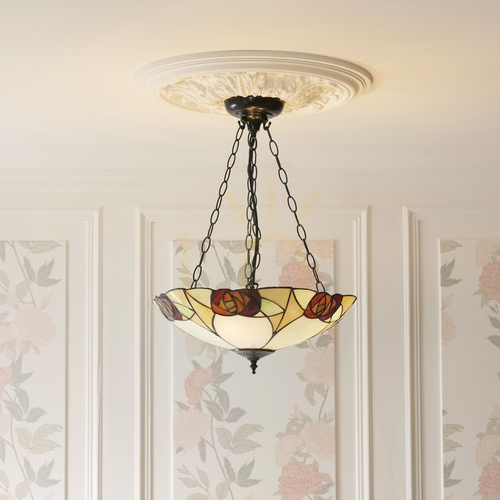
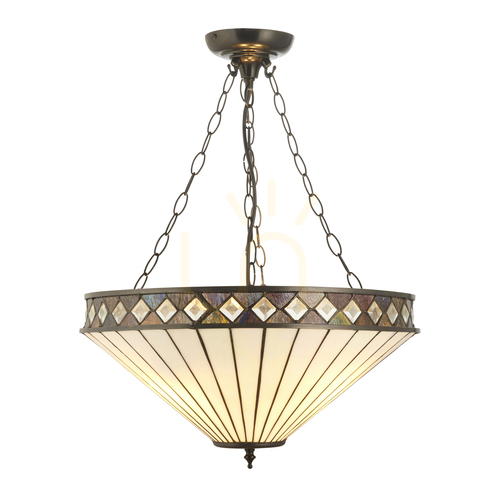
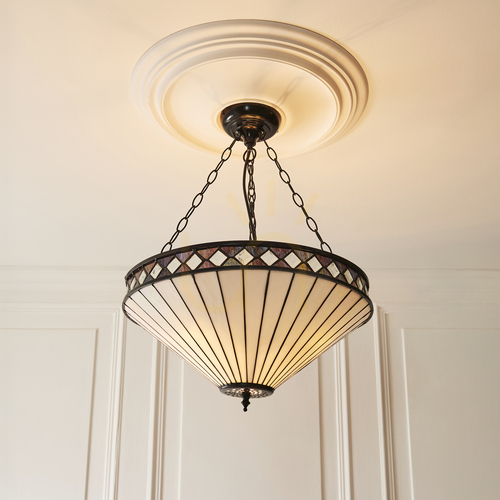
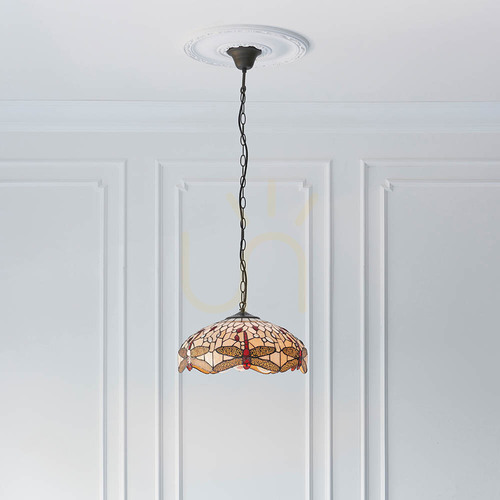
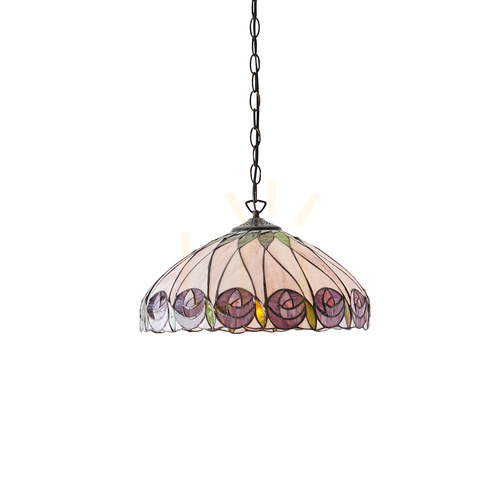
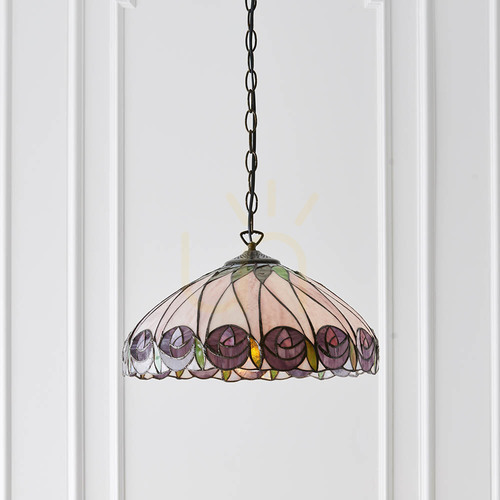
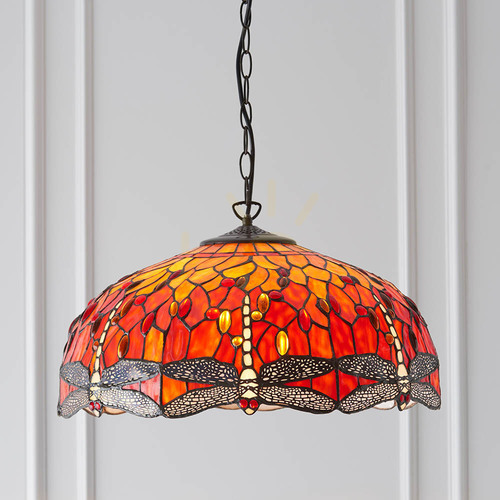
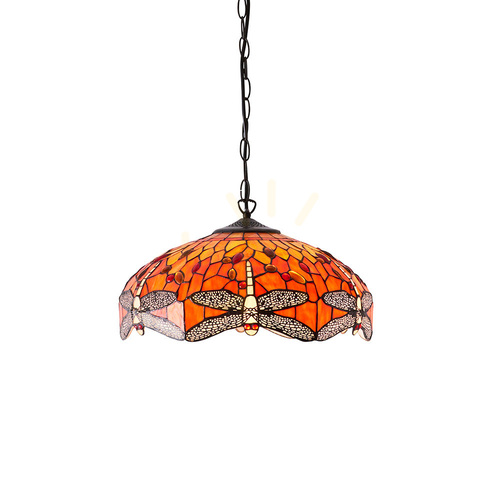
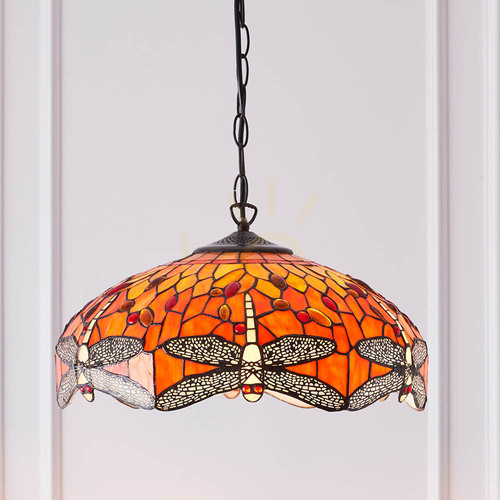
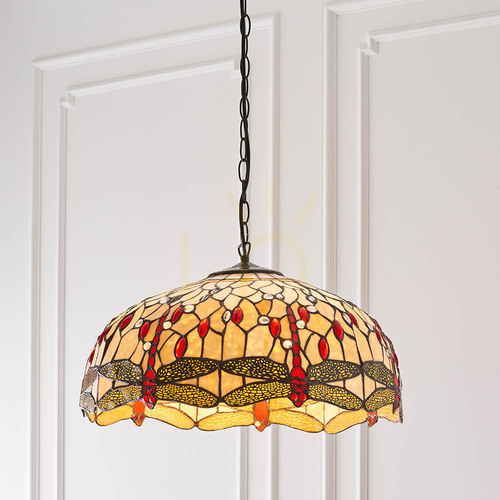
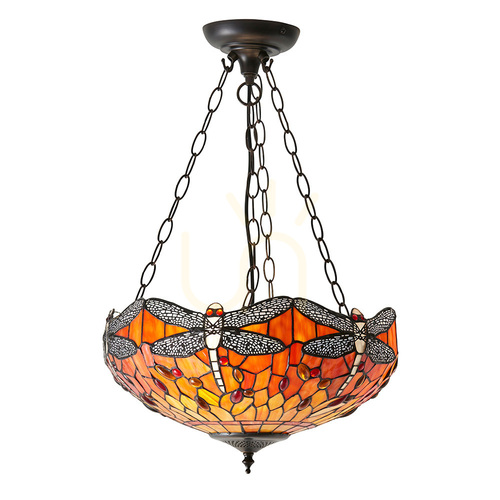
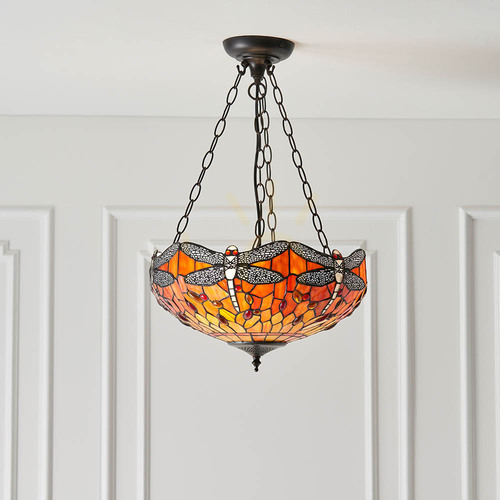
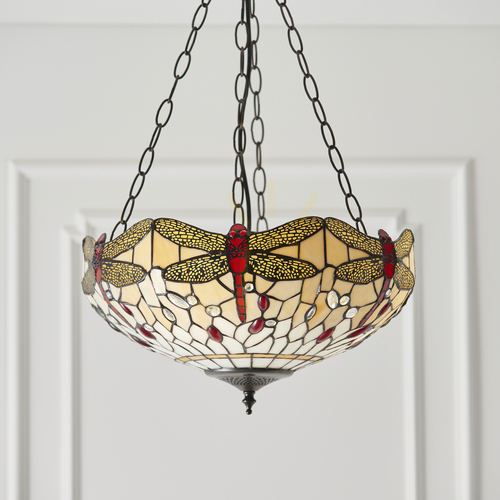
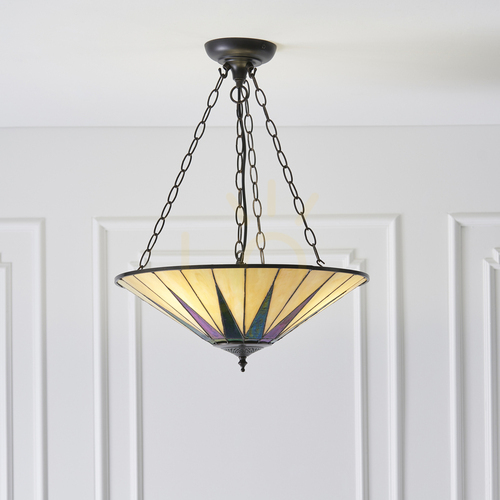
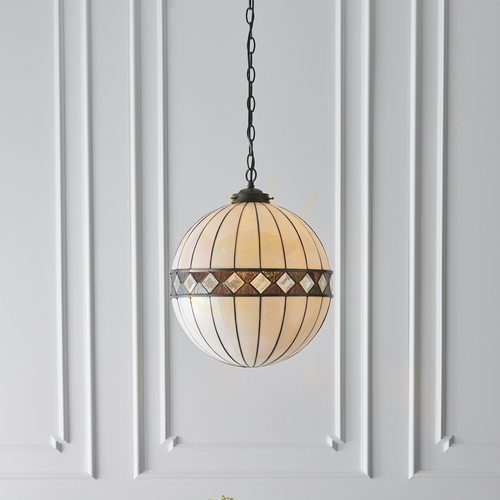
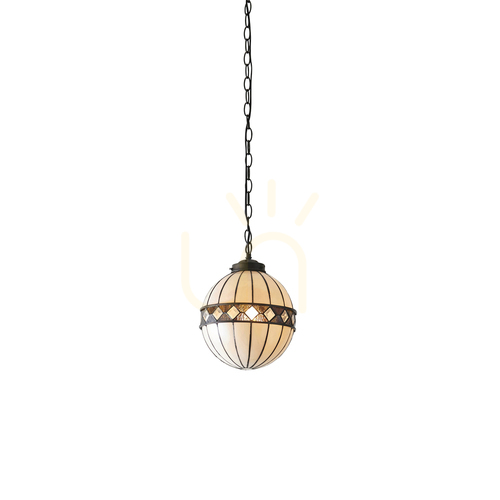
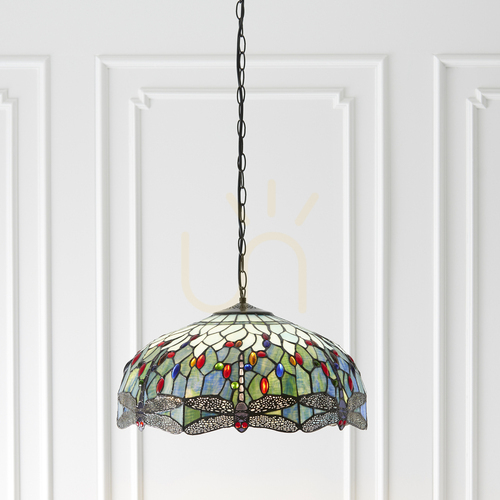
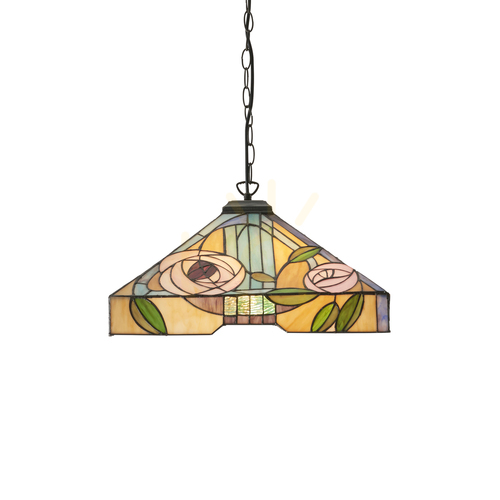
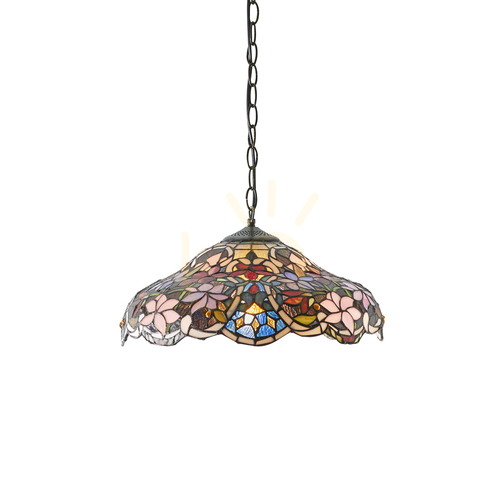
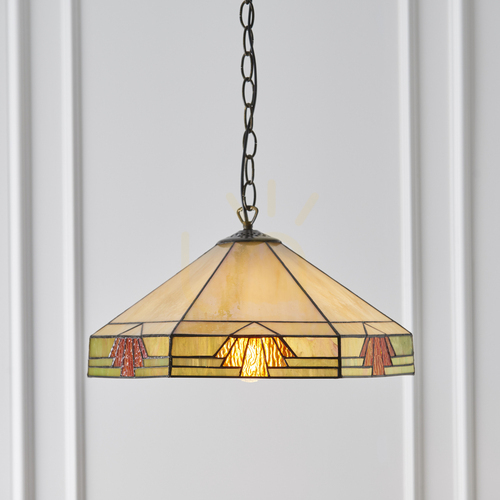
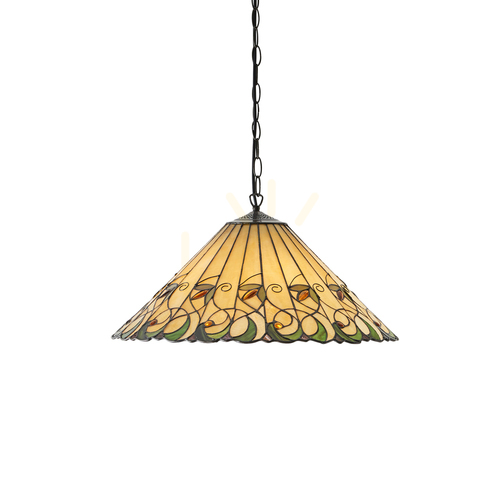
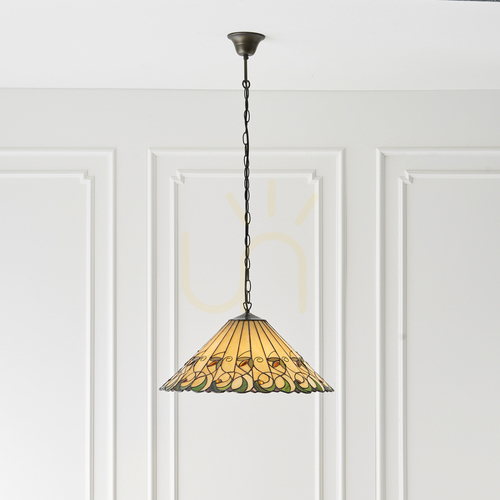
A stained glass pendant light in the Tiffany style hangs a shade of hand-cut coloured glass from a chain or rod, usually over a dining table, a kitchen island or a stairwell. Compared with an ordinary pendant, it trades bright, even light for a warm, jewel-toned glow, and the shade still works as a piece of decoration when it is switched off.
The style takes its name from Louis Comfort Tiffany, whose New York studio made leaded-glass lamps famous at the end of the 19th century. Today “Tiffany” describes a method and a look rooted in Art Nouveau and Art Deco rather than a particular maker.
Pendant, flush or semi-flush?
Many British homes, new builds especially, have ceilings of around 2.4 m. A deep dome on a long chain can crowd a room that low, so the first decision is how far the glass should drop.
-
Pendant on a chain or rod – brings the shade down over a table or island, where its colour is seen at eye level. Best where nobody walks underneath.
-
Semi-flush – a short drop that keeps the shade close to the ceiling; a good compromise for living rooms and bedrooms with standard ceilings.
-
Flush fitting – sits against the ceiling, so it suits hallways and landings where head height matters.
-
Inverted bowl (uplighter) – the shade faces upwards on three chains and washes light across the ceiling, giving softer general light.
Victorian and Edwardian houses with ceilings of 2.7–3 m or more are where a large pendant really comes into its own.
Sizing and hanging height
| What to decide |
Typical guide |
| Shade diameter over a dining table |
roughly half to two thirds of the table width, so 40–55 cm for a 90 cm table |
| Bottom of shade above the table |
65–80 cm |
| Tables longer than 180 cm |
two or three smaller shades of 25–35 cm |
| Walkways and stairs |
at least about 2 m clear headroom |
| Lamp cap |
mostly ES (E27) or SES (E14), occasionally G9; check before assuming B22 |
| Colour temperature |
2700–3000 K warm white, ideally CRI 90 or above |
Choosing the bulb
Coloured glass holds back a good share of the light, so pick a brighter LED than you would put under an opal shade, and plan separate task lighting over a kitchen worktop. Warm white makes amber, ruby and green glass glow, while cool white flattens the colours and makes real glass look like plastic. LEDs run far cooler than old incandescent bulbs, which is kinder to solder seams and patina. Behind clear glass, a frosted bulb avoids a harsh bright spot. Never exceed the maximum wattage marked on the fitting.
How the shade is made
Each piece of glass is cut to a pattern, ground at the edges and wrapped in thin copper foil. The pieces are soldered together on both sides and the seams are given a copper, bronze or black patina. Foil is much finer than the lead came used in church windows, which is what lets makers build curved domes from very small pieces. Opalescent glass is milky and streaked and hides the bulb; clear cathedral glass is livelier but lets you see the light source.
Weight and fitting
Glass, solder and chain add up, and a large shade can weigh several kilograms. A standard plastic ceiling rose is not meant to carry that: the fitting needs a hook or bracket fixed into a joist or a timber batten. Wiring should be done by a qualified electrician and comply with BS 7671. “Easy-fit” shades that clip onto an existing lampholder are best kept small and light for the same reason.
Cleaning
Switch off and let the shade cool. Dust the seams with a soft brush or a dry microfibre cloth. For kitchen grease, use a barely damp cloth with a drop of washing-up liquid and dry straight away. Avoid ammonia, vinegar and abrasive cleaners, which attack the patina, and never spray glass cleaner directly onto the shade. A cracked piece can usually be replaced by a stained glass workshop without rebuilding the whole lamp.
Frequently asked questions
Are Tiffany chandeliers outdated?
The style returns with every wave of vintage, cottage and maximalist interiors. In a plain modern room a single stained glass pendant reads as a deliberate contrast, provided the rest of the lighting stays quiet.
How can you tell if a light fixture is a genuine Tiffany?
Original studio pieces are signed on the shade rim or base; today they sit in museum collections or change hands at auction. A well-made Tiffany-style shade shows slightly raised, hand-run solder lines, glass with natural streaks and real weight; printed acrylic feels light and warm to the touch.
Why doesn’t Tiffany make lamps anymore?
Louis Comfort Tiffany’s studio closed in the first half of the 20th century, as tastes moved away from Art Nouveau. The jewellery firm founded by his father is a separate business. Every lamp made since in this manner is “Tiffany style”.
Can I get a modern stained glass pendant light?
Yes. Geometric panel shades, simple cones and globes in two or three colours use the same copper-foil technique but sit comfortably in contemporary kitchens.
Is a Tiffany pendant bright enough for a living room?
As the only light, usually not. Treat it as the centrepiece and add lamps or wall lights for reading.
Can I replace a Tiffany ceiling light shade on its own?
Often, if the lampholder size and the fixing ring match. Check the cap type and the shade’s weight before swapping it onto a lightweight pendant set.
More on other shapes and materials to hang over a table: pendant lights. The same glasswork beside an armchair: Tiffany floor lamps.