
Dark Sky - why does the dark sky matter in a world full of lights?
Today’s world shines more brightly than ever before. Almost every part of the night sky is flooded with artificial light after dark. On the one hand, it gives us a sense of security and comfort, on the other - it brings with it consequences that until recently few people thought about. This is where the idea of Dark Sky comes in - protecting the dark sky and taking a responsible approach to lighting.
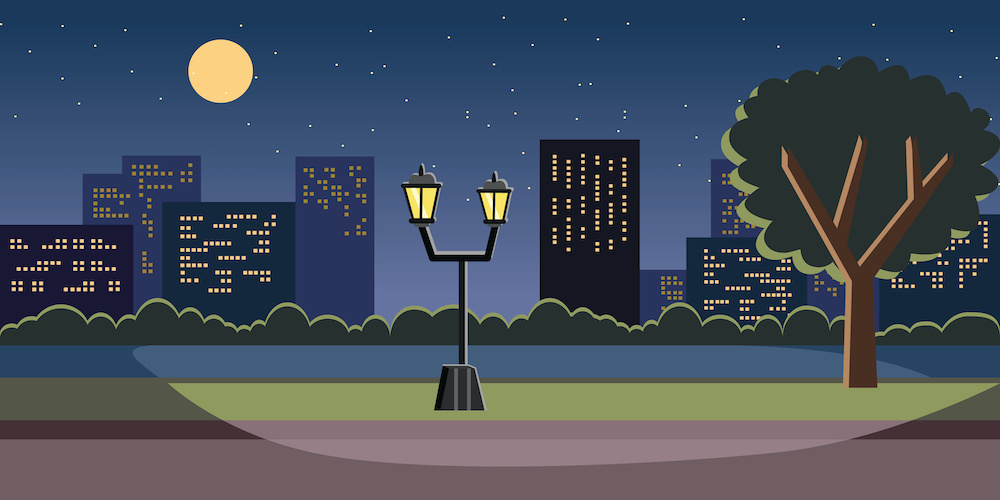
The Dark Sky movement draws attention to problem of excessive and poorly designed outdoor lighting. The point is not to turn off the light, but to use it where it is really needed, in the amount that is necessary - and in such a way that it does not harm people, animals and the environment. It’s a very practical approach: better lighting means more comfort, lower bills, less energy consumption and a real improvement in safety - instead of the illusion created by blinding streetlights.
What is light pollution?
Light pollution is any type of artificial lighting that is applied unnecessarily, in the wrong place or in the wrong way. Despite appearances, this is not just a single overly powerful lamp, but a global phenomenon. On satellite maps, more and more areas of the world shine after dark like a spilt patch of white and orange. For many people, the sight of the Milky Way has become an exotic, accessible only in the darkest corners of the planet.
We can divide light pollution into several main types:
- Light sent into the sky - the classic “light domes” above cities, visible from a great distance. This is light that does not illuminate the streets or sidewalks, but escapes into space.
- Glare - a situation when the light is so strong or misdirected that it glares into the eyes and hinders vision. It is this phenomenon that lighting solutions with low UGR, including luminaires with UGR=0, are designed to reduce glare.
- Light intrusion - light “falling in” where it should not, for example, through windows into apartments or into the depths of the garden, disrupting sleep and rest.
- Light oversaturation (over-illumination) - using far too much lighting for real needs, for example, intensely illuminated parking lots or empty halls throughout the night.
Each of these elements separately seems a small thing. Together, however, they create a serious environmental, health and economic problem.
How does excess light affect our health?
You may be surprised to learn that too much light after dark has a similar effect on the body as. constantly looking at a phone screen. Our diurnal (circadian) rhythm adapts to the day-night cycle. When darkness falls, the body’s levels of melatonin, a hormone responsible for, among other things. for falling asleep, regeneration and the proper functioning of many systems.
However, if we are surrounded by strong, cold light all the time after dark:
- we find it harder to fall asleep,
- sleep is shallower and less regenerative,
- in the morning we feel tired, irritable, “like after a sleepless night”,
- in the long run, problems with concentration, mood and general immunity begin to appear.
Added to this is glare - especially dangerous on the roads and in public spaces. Overly bright, “bare” light sources blind drivers and pedestrians instead of improving safety. That’s why luminaire parameters are so important, including UGR (Unified Glare Rating) - the lower it is, the lower the risk of glare. In practice, luminaires with UGR=0, offered among others. by Lunares, allow to illuminate the space without the effect of “tears in the eyes” and squinted vision.
Dark skies and astronomy - why do stars disappear?
Until a few decades ago, in many places on Earth it was possible to see at night not only individual stars, but entire structures of the Milky Way. Today, in the center of a large city, it is common to see only the brightest objects - sometimes a dozen or so stars in the entire sky. For professional astronomers, artificial light pollution is a huge problem, because it hinders observations, increases the light background and forces them to build observatories in remote, hard-to-reach locations.
However, dark skies are not only important for scientists. It’s also part of our cultural heritage - from ancient myths and legends, to navigating sailors, to simple human curiosity. Being able to look at the night sky full of stars is an experience that teaches humility and gives a sense of contact with something greater than our daily affairs. The loss of this view is a loss that cannot be easily converted into money - and yet it happens every day, without a second thought.
The Dark Sky movement is fighting to ensure that we don’t have to choose between safety on the streets and the view of the stars. By promoting better lighting standards, changing regulations and educating, activists are showing that it is possible to design lighting systems that effectively illuminate the earth, not the sky.
How does light affect animals and ecosystems?
Light pollution is also a real problem for wildlife. Many species-from insects to birds to mammals-have adapted their lifestyles to the natural cycle of day and night. Excessive artificial light brings chaos to this arrangement.
Here are some examples:
- Insects - attracted by the light, die en masse at the lamps, disrupting local ecosystems and food chains.
- Migratory birds - become disoriented near heavily lit objects, bump into buildings, lose energy, and change migration routes.
- Bats and nocturnal mammals - avoid heavily lit areas, losing access to feeding sites and migration corridors.
- Plants - permanently illuminated, they can disrupt their rhythm of growth and flowering.
On the scale of a single street or neighborhood, this is difficult to notice. On a regional or national scale, however, the effect is noticeable in the statistics - a decline in the number of pollinating insects, disruption of migrations and a change in the behavior of many species.
Reasonably designed lighting - directed downward, shielded, of appropriate color and power - can significantly reduce these negative effects. In this context, luminaires with precisely controlled light output and UGR=0, offered by Lunares, are of particular importance. Such lamps illuminate exactly what needs to be illuminated - roads, elevations, usable space - and not the sky or treetops, where light is unnecessary and harmful.
The economics of dark skies - how much does bad lighting cost?
Light pollution is not only an environmental and health topic. It’s also money thrown into the sky - and literally so. Every luminous flux directed above the horizon line is energy that someone has paid for, which serves no useful function. Added to this is the excessive power of luminaires, shining all night where there is no movement, no occupancy sensors or automatic dimming.
The consequences are simple:
- higher electricity bills for cities, companies and housing communities,
- higher infrastructure maintenance costs (more frequent replacement of light sources, maintenance),
- unnecessary strain on power grids, especially during peak consumption hours.
The use of energy-efficient LED luminaires, well-designed optics, and solutions that reduce glare and losses - such as products with UGR=0 - can realistically reduce energy consumption, without sacrificing comfort and safety. This is an investment that, in a well-planned lighting system, can pay off surprisingly quickly.
What does responsible lighting look like in practice?
The idea of Dark Sky is not to turn off the lights and plunge cities into darkness. The idea is to shine smarter, not harder. Responsible lighting can be summarized in a few simple rules:
-
Light only where you need to Light usable surfaces - road, sidewalk, building entrances - not the sky, neighbors’ walls or treetops. Luminaires should have directional optics, minimizing the spread of light beyond the zone that needs illumination.
-
Shine as much as needed Too bright lighting does not increase safety - on the contrary, it can create strong contrasts and shadows in which it is easy to hide. A better result comes from even, well-calculated light intensity that complies with standards, rather than over-lighting a space.
-
Light only when needed Motion sensors, schedules and dimming systems let you reduce lighting during low‑traffic hours. For example, street lighting can be dimmed by 30–50% overnight. E.g. In the middle of the night, street lighting can be automatically dimmed by 30-50%, without losing the comfort and orientation of users.
-
Choose the right light color Light with a high blue content (cold, “office” colors) after dark disrupts the diurnal rhythm most severely. Warmer colors are increasingly being recommended in outdoor and residential spaces (e.g. 2700-3000 K), more friendly to humans and animals.
-
Avoid glare Even a well-chosen light output and color are not enough if the fixture glaring in the eyes. That’s why solutions with controlled UGR are so important. Luminaires with UGR=0 provide even, comfortable illumination without the “discomforting glare” effect.
UGR=0
UGR (Unified Glare Rating) is a parameter that describes the level of glare. The higher the value, the greater the risk of visual discomfort - watery eyes, fatigue, the need to squint eyelids. For spaces where we stay for long periods of time, UGR values should be as low as possible.
Lighting solutions with UGR=0 eliminate glare to practically zero under typical usage conditions. What does this mean in practice?
- Comfort for users - the light is even, soft, not glaring even when looking at the luminaire for a long time.
- Better visibility and safety - the lack of glare makes it easier to see details, people, obstacles on the road or sidewalk.
- Consistency with the idea of Dark Sky - well-designed optics allow you to direct the light exactly where it is needed, limiting the flux escaping upwards and to the side.
Lunares, as a distributor of lighting with specially refined light distribution and UGR=0, is part of the philosophy of conscious, responsible lighting. This is a practical example of the fact that you can at the same time:
- take care of users’ comfort,
- reduce light pollution,
- reduce energy consumption,
- maintain a high level of aesthetics and functionality of the space.
What can you do as a light user?
It may seem that the impact of a single person on light pollution is negligible. In practice, however, every decision - about the choice of lamp, the type of light source or the method of mounting - matters. Here are some steps you can take:
- Choose luminaires with directional optics - limiting upward light emission.
- Pay attention to UGR and optical performance - solutions with a UGR of 0 are an investment in comfort and quality.
- Match light output and color to the function of the room - not every place needs to be “bright as a stadium.”
- Use dimmers and motion sensors - light doesn’t have to shine at full power all night, especially outdoors.
- Educate and talk - bring to the attention of building managers, communities, companies when you see obviously over-lit spaces or glaring fixtures.
The future belongs to smart light
Light in itself is not the problem - the problem is its excess and poor use. The Dark Sky movement reminds us that night is also part of the natural rhythm of life on Earth. Dark skies, visible stars, peaceful sleep, and an environment unpolluted by light - these are values worth caring about as much as clean air or water.
Modern lighting systems, energy-saving LED sources, precision optics, solutions with UGR=0 mean that we don’t have to choose between comfort and concern for the environment. We can have bright, safe streets and spaces, and at the same time a dark sky with visible stars.
It’s up to our daily choices - as residents, planners, entrepreneurs and local government officials - to determine whether future generations will know the Milky Way only from textbooks or see it with their own eyes.
ULOR - how to measure the “escape” of light upwards
In the context of Dark Sky luminaires, in addition to parameters such as color temperature and UGR, the ULOR (Upward Light Output Ratio) indicator is becoming increasingly common. This is the parameter that determines what percentage of the luminaire’s total luminous flux is emitted above the horizon, that is, upwards - above a plane 90° from the vertical. The lower the ULOR, the less light hits the sky, thus less light pollution and better dark sky protection.
In practice, this means that two seemingly similar luminaires can behave quite differently in space: a model with a high ULOR will emit some of the flux into the clouds and create a glow over the city, while a luminaire with a ULOR close to zero precisely directs light onto the sidewalk, road or building facade.
ULOR requirements for Dark Sky luminaires
Night sky organizations (such as the International Dark-Sky Association) and technical standards explicitly define how low the ULOR should be for a luminaire to be considered dark sky friendly:
- ULOR = 0% - the standard for full cutoff luminaires, used among others, in national parks, reserves and certified Dark Sky zones. Such a luminaire does not emit any light above 90° from the vertical, that is, nothing “escapes” directly into the sky.
- ULOR ≤ 0.5% or maximum of about 50 lm of uplight - a requirement for many commercial, DarkSky Approved luminaires with flux above 1,000 lm. For smaller luminaires, a few-something lumens of upward directed light are usually allowed, but these are still very low values.
- ULOR < 1% - Dark Sky Approved (IDA)
- s general recommendation for outdoor lighting in cities and municipalities that want to realistically reduce the glow of light over buildings and care for more natural night conditions.
In the design of modern outdoor lighting systems, it is worth considering ULOR as a key parameter of luminaire quality, right next to power, luminous efficacy or UGR. The ULOR requirement of close to 0% forces the use of well-shielded, precisely profiled luminaires that shine where the light is actually needed - onto the roadway, sidewalk, plaza or facade - instead of into the sky.
For investors and local governments, this means not only real protection for dark skies, but also greater energy efficiency: every lumen that doesn’t fly off into space works for the safety of space users. Combined with luminaires with UGR=0 and a warm light color (≤3000 K), this allows to build lighting that is at the same time comfortable for people, nature-friendly and in line with the Dark Sky concept.



Przemysław Doliński


Maybe you will be interested in products from these categories?
Outdoor Lights, Bollard Lights, Garden Lanterns
Tags & Blog Categories