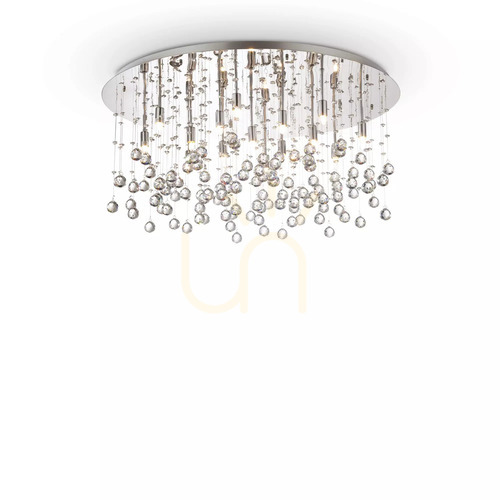
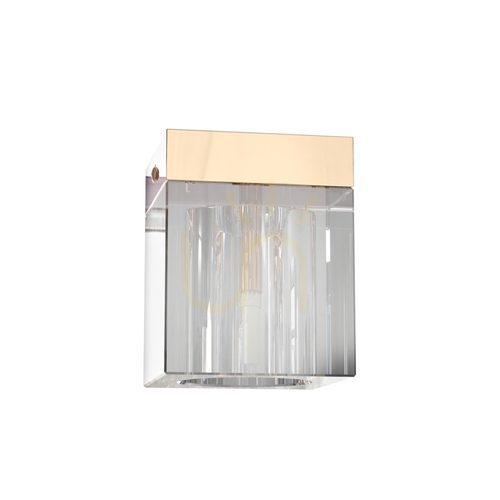
Crystal on a flush ceiling light has to do without the one thing a chandelier relies on: a drop. There are no long arms, no cascade, nothing swinging in the air. The crystal is packed into a shallow band or a flat pan a few centimetres from the plaster, and the sparkle has to be engineered rather than hung. Done well it is the only way to get that look into a room with a 2.3 m ceiling. Done badly it is a bright disc with beads glued round the edge.
Sparkle without a drop
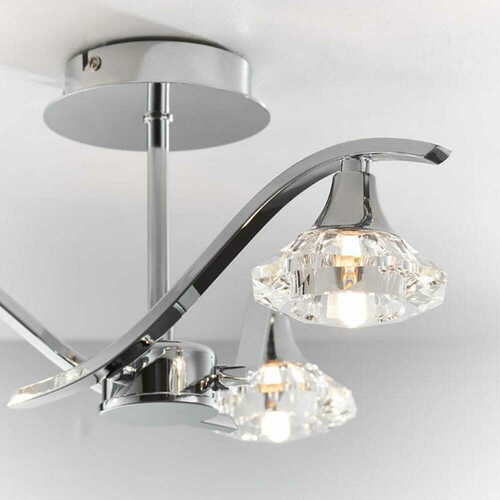
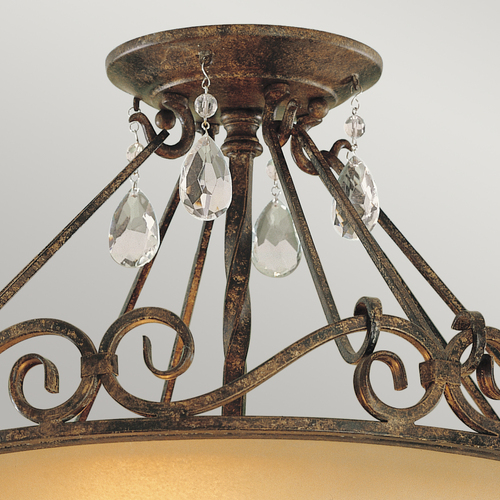
Sparkle comes from a small, bright source refracting through cut facets. On a chandelier, distance and movement do the work. On a flush fitting there is neither, so two things have to be right. The source must be a point — a G9 or small candle lamp, not a flat opal LED panel behind the crystal, which produces even light and no sparkle at all. And the crystal must be genuinely cut, with facets at different angles, so that as you move across the room different pieces catch. Moulded acrylic in the same shape will glitter faintly and never do more.
The three flush crystal shapes
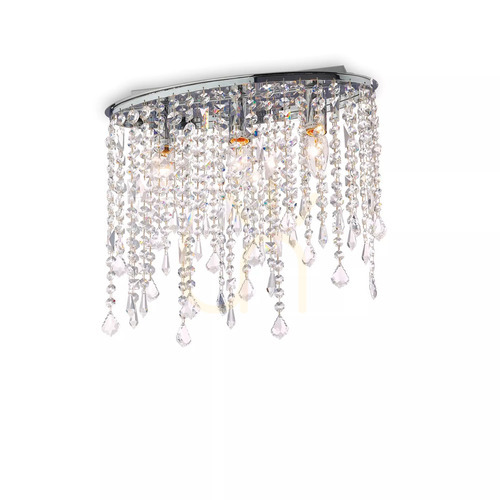
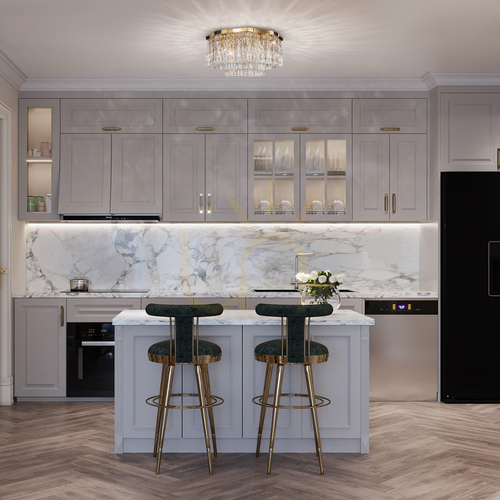
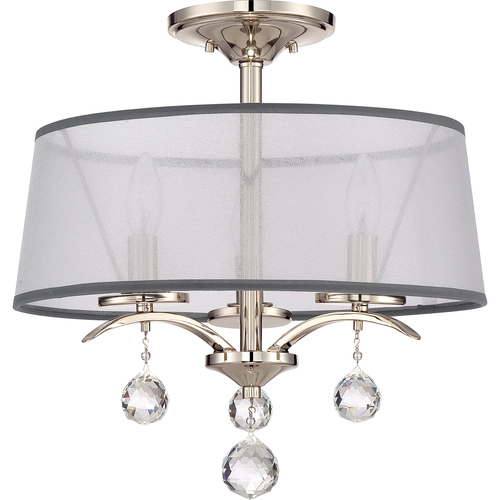
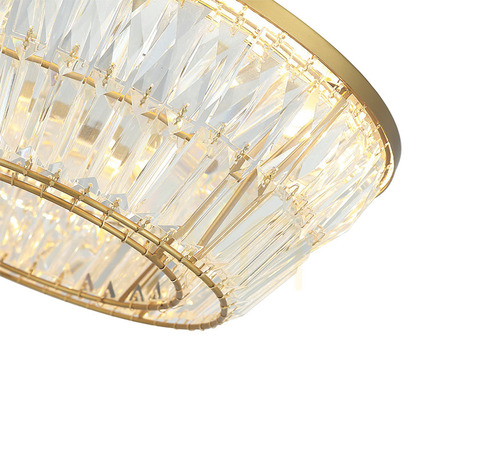
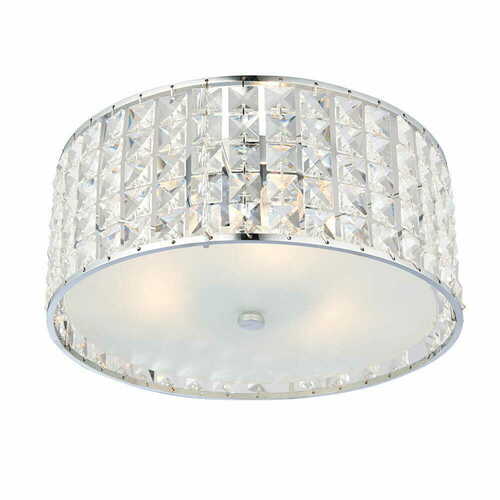
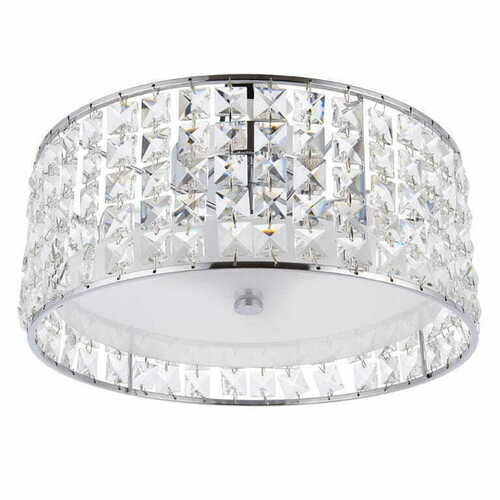
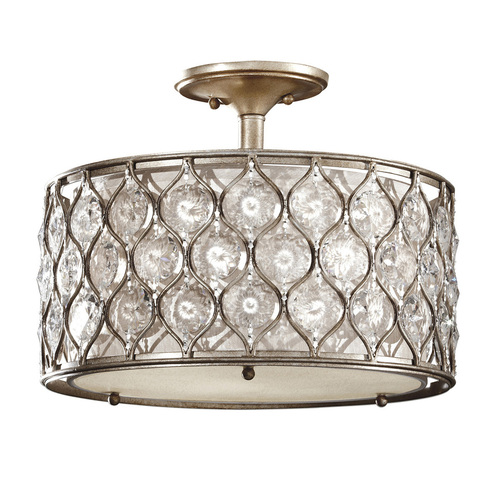
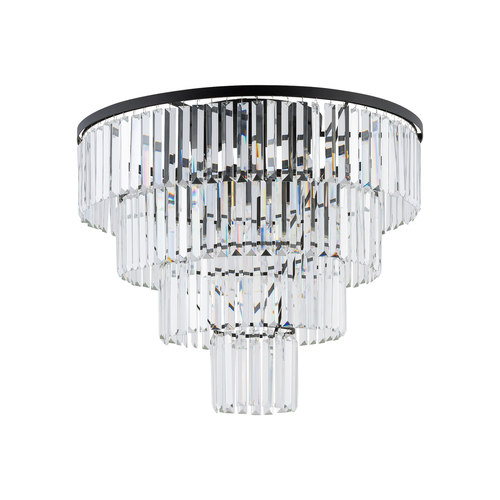
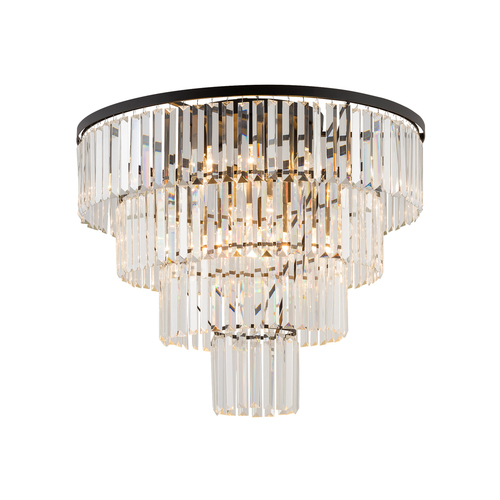
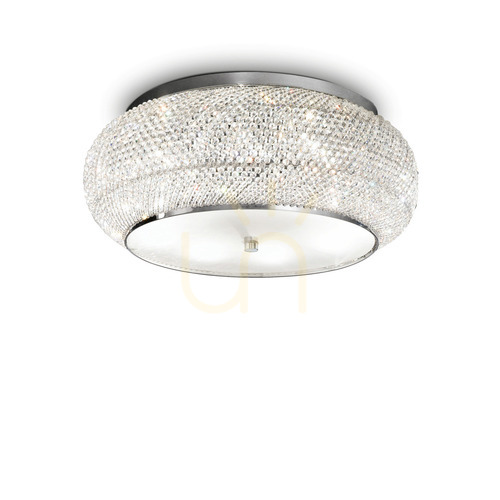
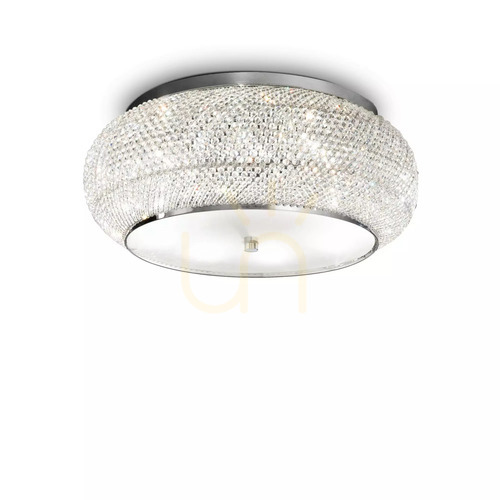
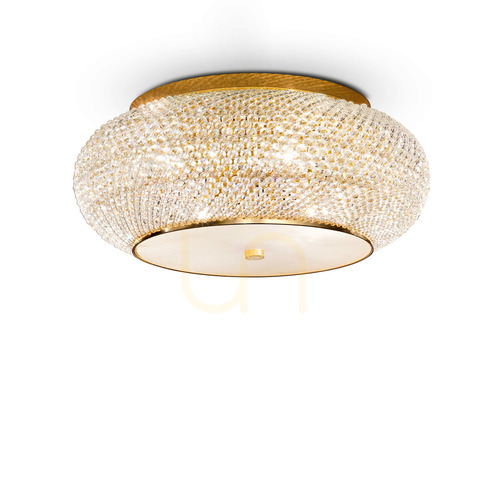
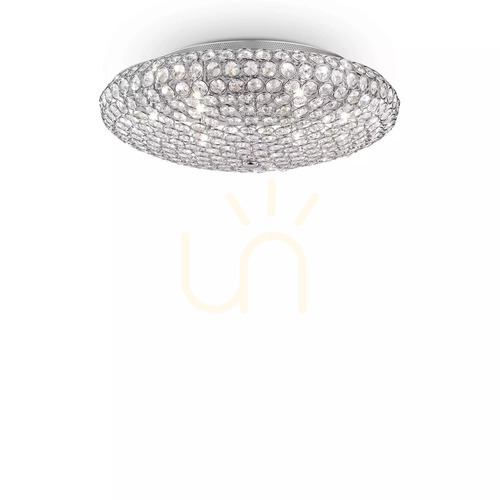
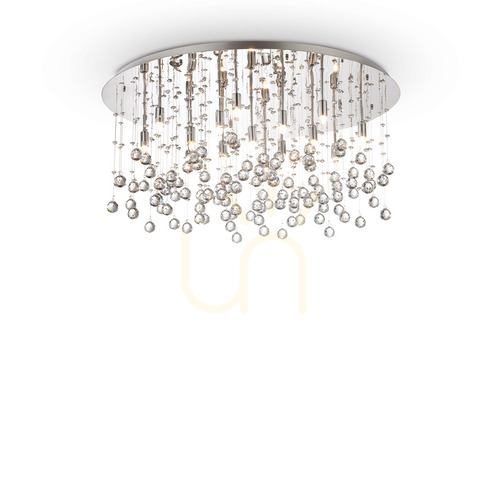
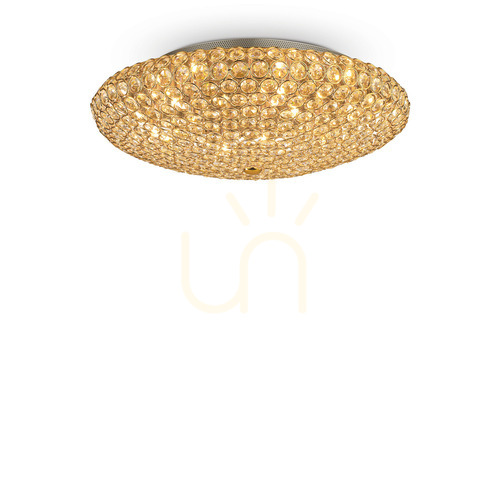
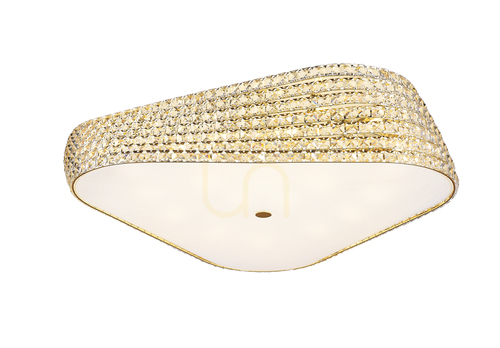
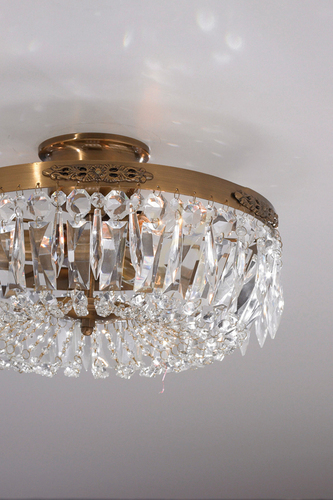
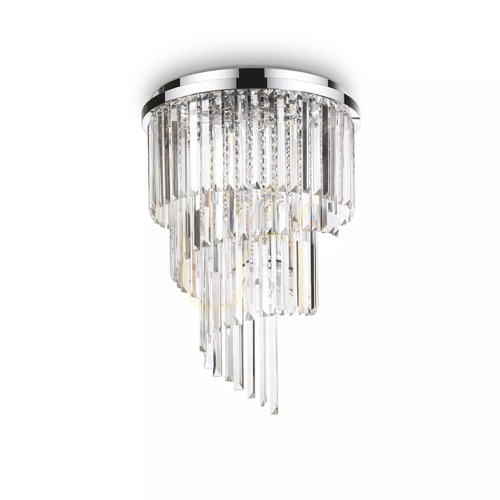
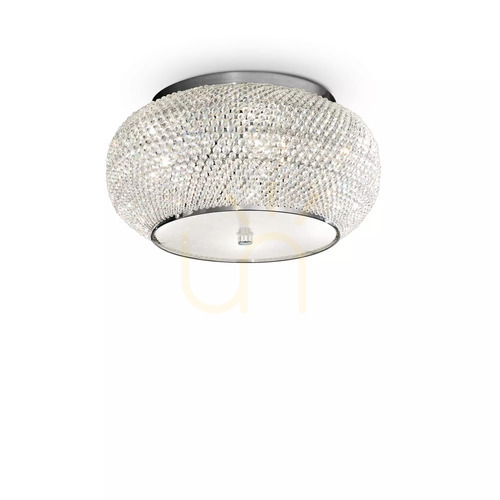
Almost everything in this format is a variation on three ideas. A drum has a metal or fabric band with crystal strands threaded down its face, keeping depth low while giving the light something vertical to pass through. A pan or plate lays crystals flat in concentric rings on a shallow dish, which reads as a solid disc of light from directly underneath and comes alive when you look at it from across the room. A tiered or waterfall model stacks two or three short layers into 15-25 cm, which is semi-flush rather than flush and needs a little more ceiling.
What sits behind the crystal
Count the lamps. Crystal absorbs and scatters a great deal, so a fitting with three G9 lamps at 400 lm each delivers far less than 1,200 lm into the room. Assume you lose a third. If it is the only light in the room, size it accordingly or accept that it is a decorative layer with a floor lamp doing the real work. Warm light suits crystal — 2700 K makes the refracted colour look like candlelight, while 4000 K makes the same fitting look like glass in a shop window.
Dust settles differently on a flat fitting
A chandelier sheds dust; a flat crystal pan collects it, and dulled crystal stops sparkling long before it looks visibly dirty. On a flush fitting the crystals are usually hooked to a frame that comes down as one assembly, so you can wash the whole tray rather than picking off individual drops. Isolate the circuit, let everything cool, photograph the arrangement before you unhook anything, wash in warm water with a drop of detergent, and dry each piece — water marks scatter light the same way dust does.
Frequently asked
Why does my crystal ceiling light not sparkle?
Almost always the light source. A frosted or opal lamp behind cut crystal gives you even light and no facets firing.
Is lead crystal worth it over K9 glass?
K9 optical glass is consistent, clear and cheaper; leaded crystal refracts a little more warmly. Cut quality matters more than which of the two it is.
Will a crystal fitting work on a 2.3 m ceiling?
A flush drum or pan, yes. A tiered model at 20 cm plus will feel close over a walkway, so keep those to rooms with furniture underneath.
How heavy are they?
A 40 cm crystal flush fitting runs 4-7 kg. On plasterboard, fix into a joist or a batten rather than the board itself.
For deeper formats with room to hang, see the wider range of ceiling lights.