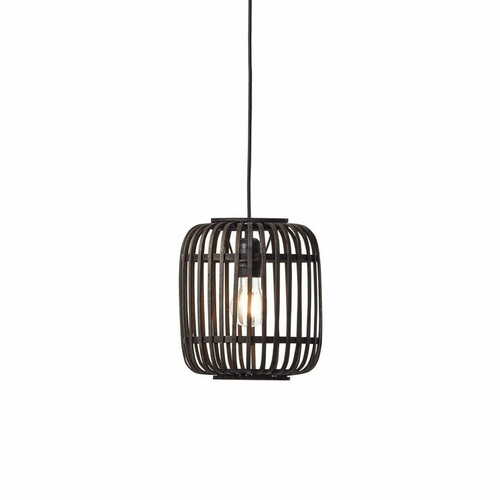
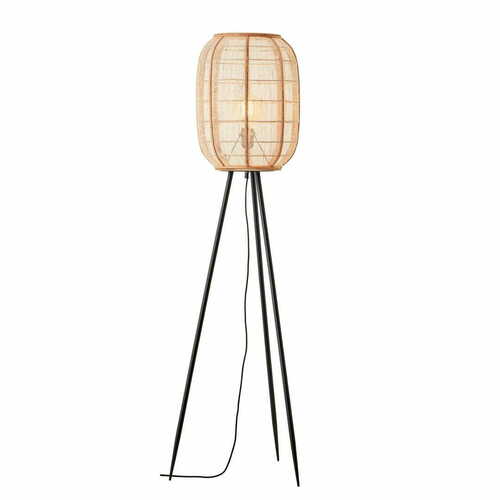
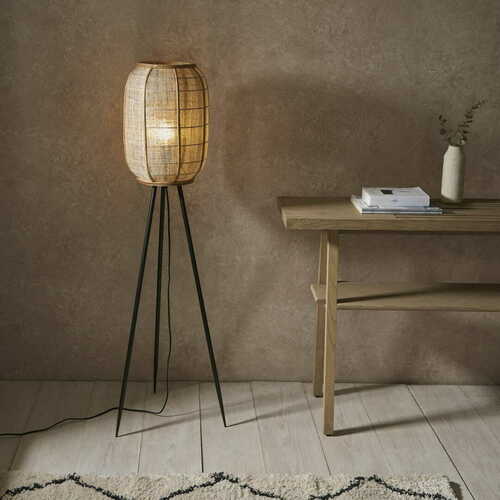
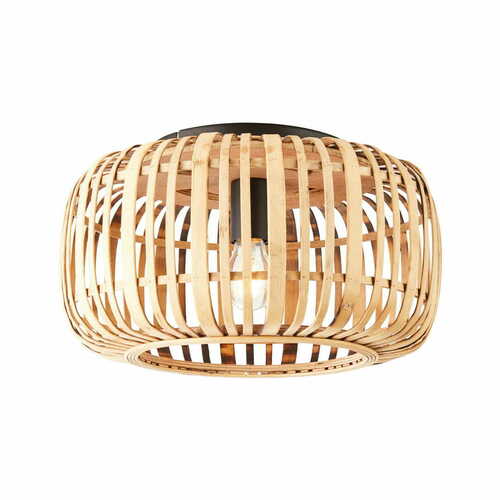
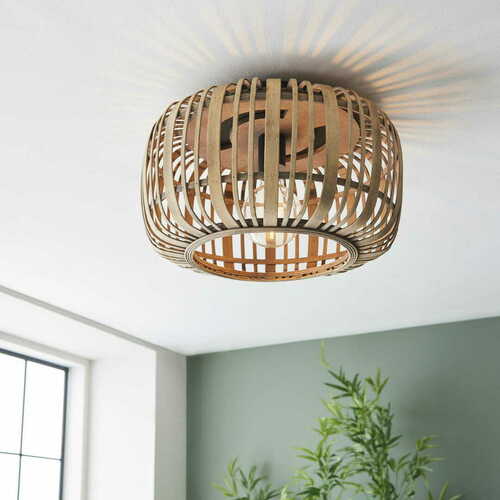
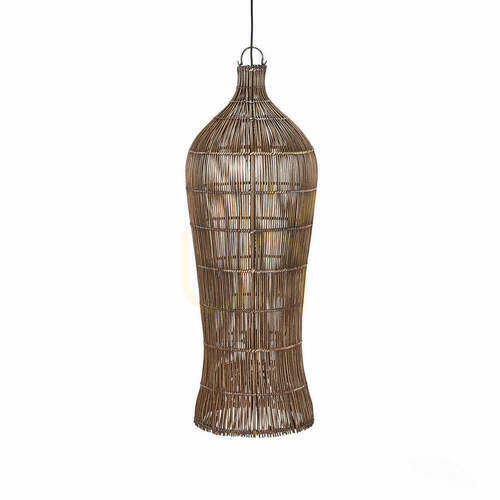
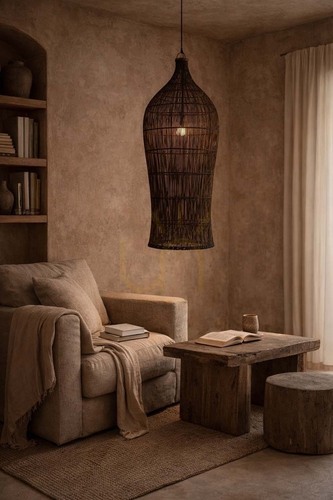
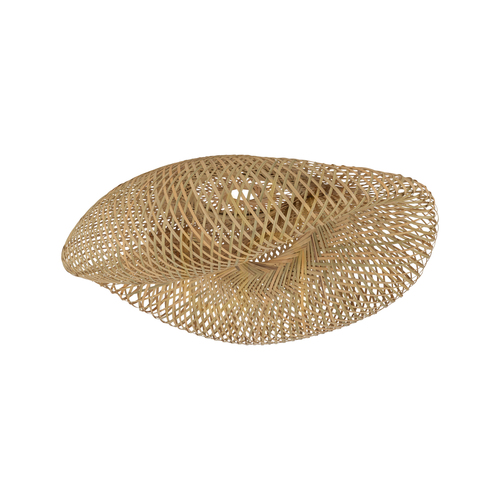
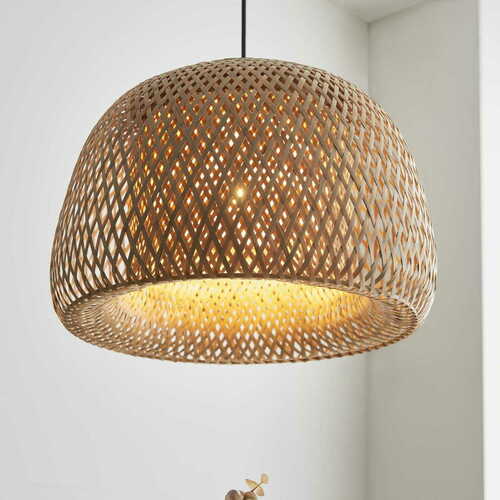
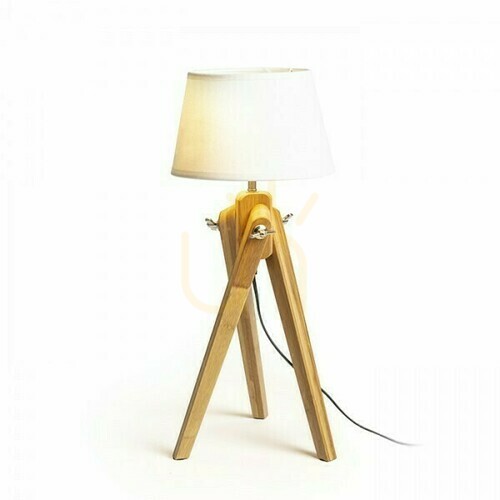
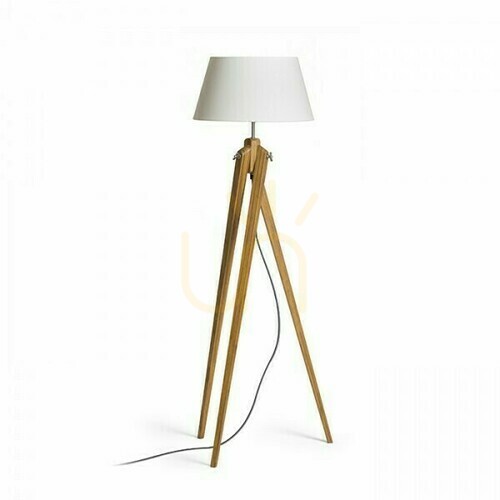
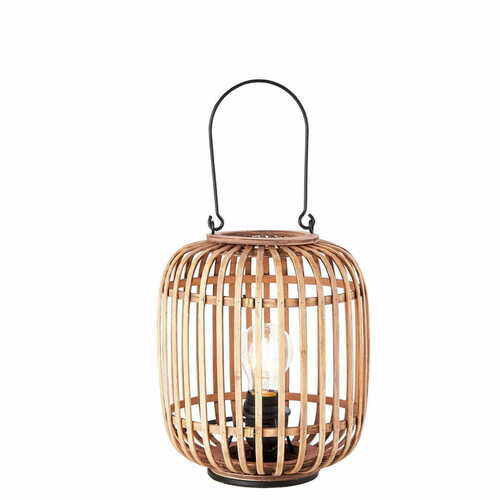
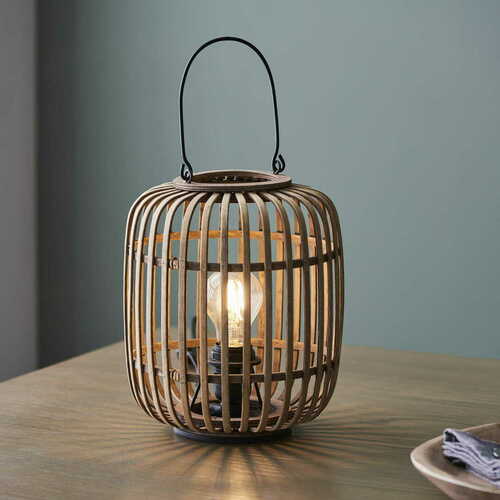
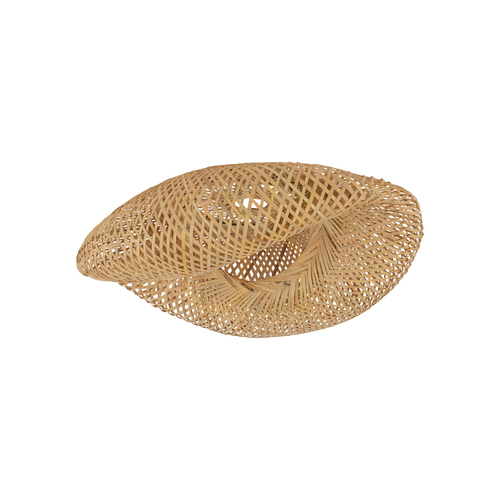
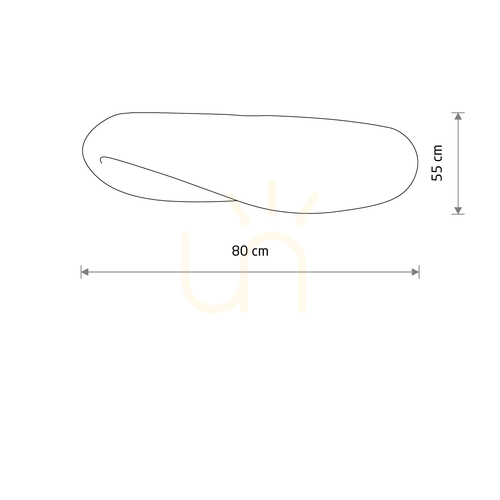
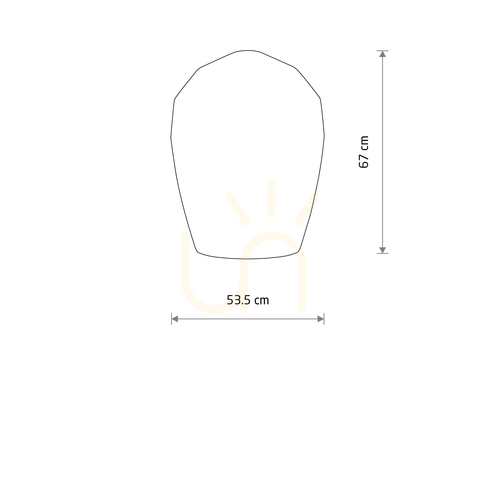
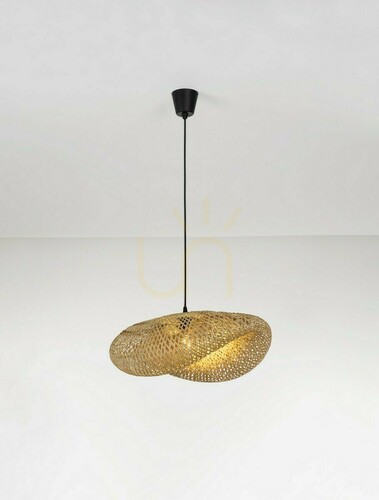
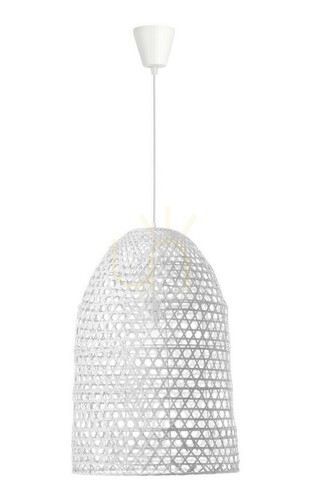
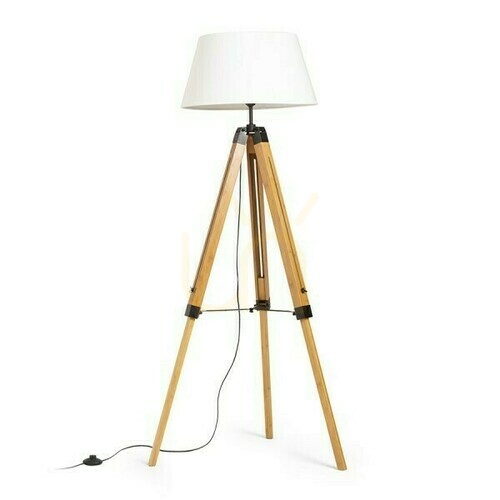
A bamboo light shade softens a bare bulb into a warm, filtered glow and scatters a pattern of light and shadow across the ceiling and walls. A bamboo shade lets through less light than glass or thin fabric, though, so the shade you pick, how tightly it is woven and the bulb behind it decide whether a room feels cosy or simply gloomy.
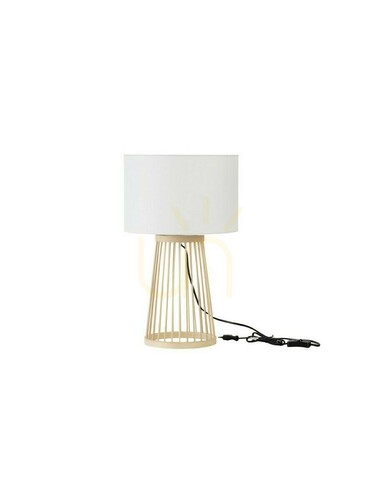
Bamboo turns up across indoor lighting: ceiling pendants and multi-shade fittings, flush ceiling lights made of slats, floor lamps, table and bedside lamps, and the occasional wall light. What they share is the material, and the material behaves the same wherever it is used.
What makes bamboo different from rattan and other natural fibres
Bamboo is a grass with hollow, jointed canes. For lighting it is split into flat strips, cut into slats or sliced into a thin veneer, which tends to give crisp, geometric shapes: domes, drums, tiered "pagoda" forms and ribbed cylinders. Rattan is a climbing palm with a solid, flexible core, so rattan shades are usually rounder and more freely woven. Seagrass and jute look more rustic still. Finishes run from pale natural straw through caramel (heat-treated) to stained black. Natural bamboo slowly deepens to a honey tone, which is part of its appeal.
The plant regrows from its root system after cutting and is ready to harvest again within a few years, which is why bamboo is seen as a renewable material. Lacquers, glues and metal frames still count, so a lightly finished shade is the greener choice.
Shade only, or a complete light?
In the UK many people buy a non-electric shade to hang from an existing ceiling pendant. Check three things first: the lampholder (bayonet B22 is common in British homes, screw E27 in many imported fittings), whether the shade comes with a reducer ring for your holder, and the maximum wattage printed on the shade. A complete fitting comes with its own flex, ceiling rose and canopy matched to the shade's weight, and fixed wiring to a ceiling point should be done by a qualified electrician in line with BS 7671.
Sizes and bulbs for a typical UK home
| Where |
Type |
Usual size |
LED bulb |
| Living room, 2.4 m ceiling |
pendant shade on a short drop, or flush slatted light |
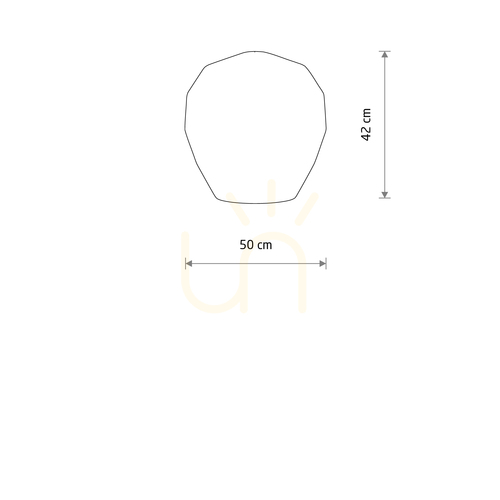
40–60 cm across |
1055–1521 lm if it is the main light |
| Dining table |
pendant, or two or three smaller shades on a long table |
35–50 cm |
806 lm each, bottom edge 60–80 cm above the table |
| Hallway or landing |
flush or semi-flush bamboo ceiling light |
30–45 cm |
806 lm, keep about 2 m head height |
| Next to the sofa |
floor lamp with bamboo shade |
120–170 cm tall |
470–806 lm |
| Bedside or sideboard |
table lamp |
20–40 cm shade |
250–470 lm, 2700 K |
Warm white at 2700–3000 K brings out the golden colour of the cane; cool 4000 K turns it grey and flat. For reference, 806 lumens matches an old 60 W bulb and 1521 lumens a 100 W one. An open weave lets out more light and throws a stronger pattern; a dense weave, close slats or a white inner diffuser give a gentler glow with less glare. Use a frosted bulb where you might catch sight of it through the gaps, and a filament bulb where the bulb is meant to be seen. Most bamboo fittings dim happily as long as both the bulb and the dimmer switch are rated for it.
Where it works, and where it does not
Living rooms, bedrooms, dining areas and studies suit bamboo well. It sits naturally with linen, pale oak, houseplants and black metal, and fits boho, Japandi, coastal and Scandinavian schemes. In a kitchen, hang it over the table rather than the hob, as steam and grease settle in the weave. Typical bamboo fittings are IP20, meaning dry rooms only, so keep them out of the bathroom unless the product states a suitable IP rating for the zone. In a small room, two smaller shades at staggered heights often look lighter than one oversized dome.
Looking after a bamboo shade
Dust it with a soft brush or feather duster, or run a vacuum on low with the brush attachment. Spot-clean with a barely damp, well wrung-out cloth and let it dry fully; never soak it. Strong sun will fade the colour over time, constant damp risks mould, and very dry heat right above a radiator makes the strips brittle. LED bulbs barely warm up, so the cane above the lampholder does not dry out or darken.
Bamboo light shades: your questions answered
Can I fit a bamboo light shade to my existing ceiling pendant?
Usually, yes. Make sure it suits your lampholder (B22 or E27), use the reducer ring if one is supplied and keep within the stated maximum wattage.
Is a bamboo pendant light shade bright enough for a living room?
With an open weave and a 1055–1521 lm bulb it can be. A tight weave works better as mood light alongside lamps or spotlights.
Can I use a bamboo lampshade on a table lamp?
Yes, provided the fitting type matches the lamp base. Choose a size roughly in proportion to the base and a low-glare bulb.
Is a bamboo floor lamp good for reading?
It gives a soft, ambient light. For reading, pair it with a directional lamp.
Are bamboo shades safe with light bulbs?
Yes, if the shade does not touch the bulb and you stay within the wattage on the label. LED bulbs are the sensible choice.
Bamboo or rattan light shade – which should I choose?
Bamboo gives crisper, more graphic shapes; rattan reads softer and rounder. Both cast patterned light and need the same gentle care.
If you are planning a hanging shade over a table or in the middle of a room, read on in bamboo pendant lights. For other materials and fitting types around the home, see indoor lights.