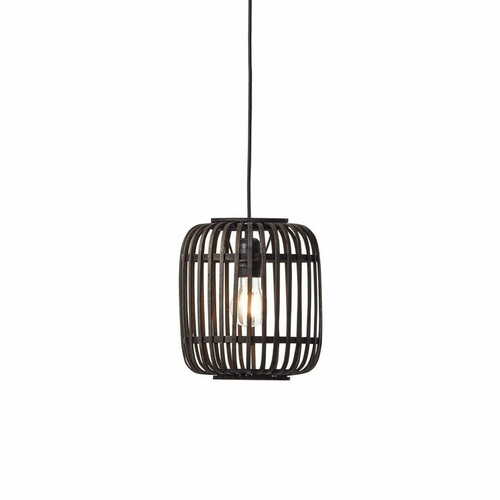
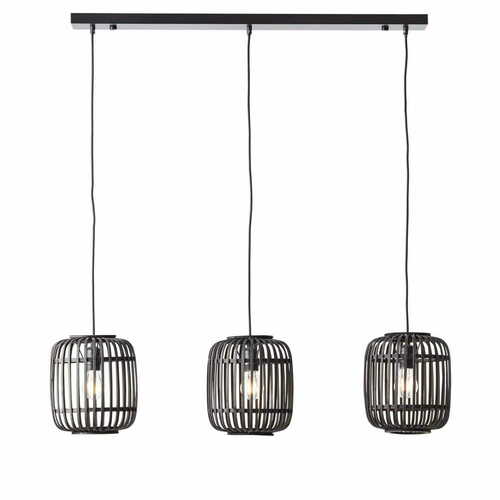
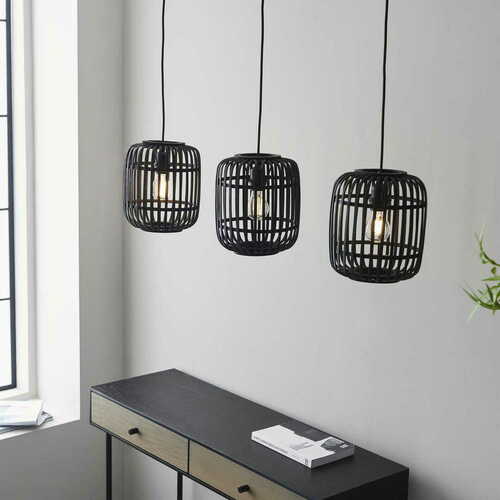
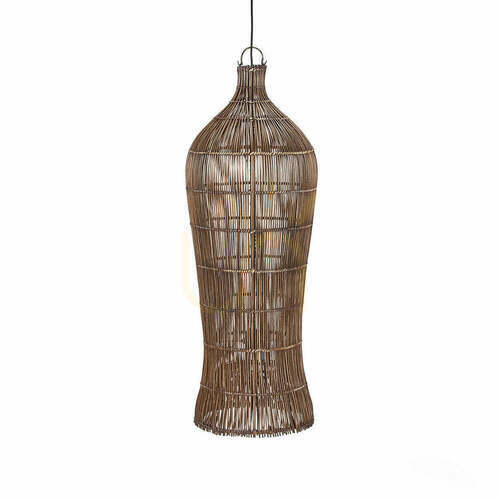
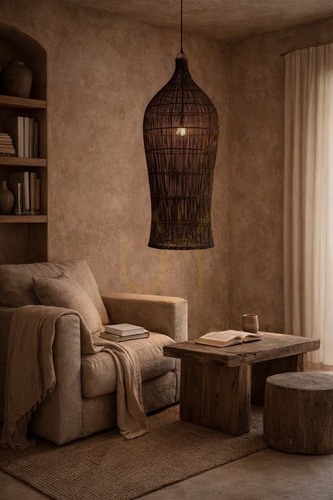
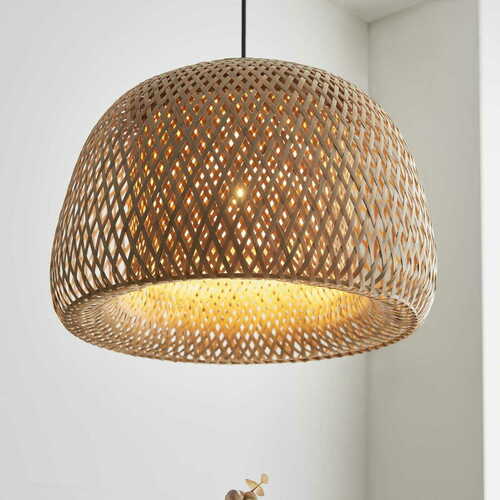
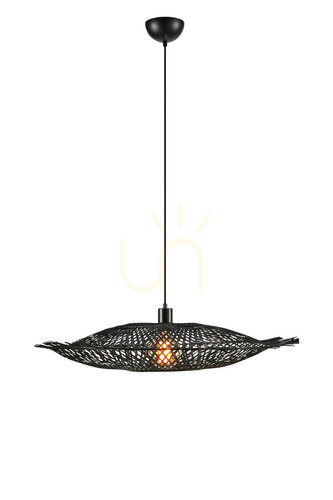
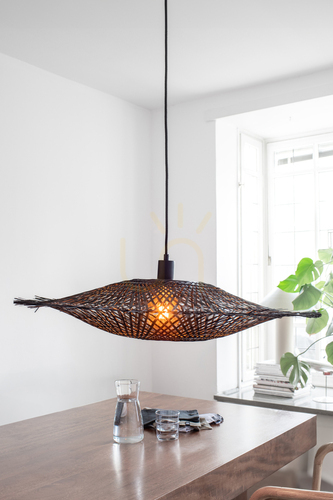
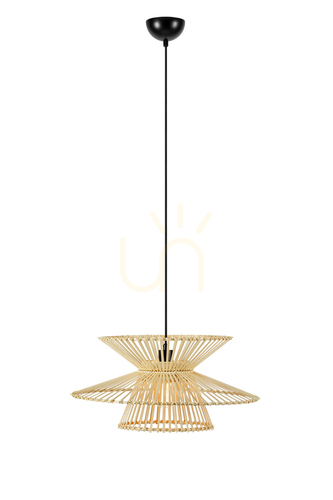
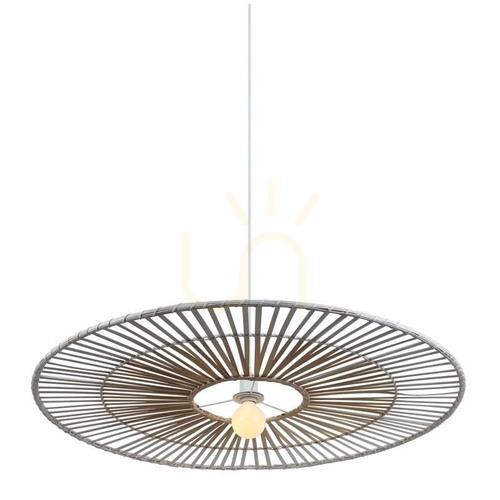
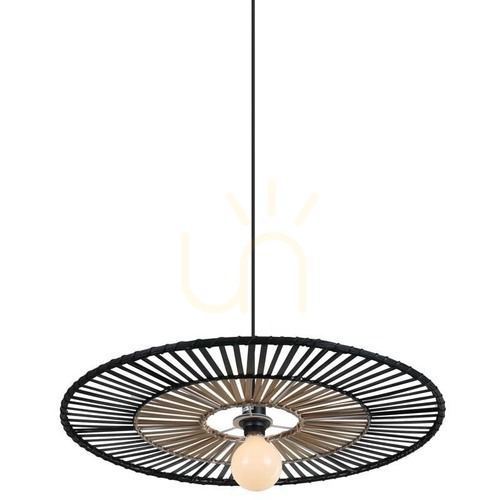
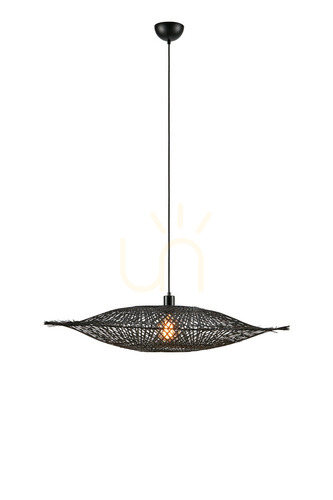
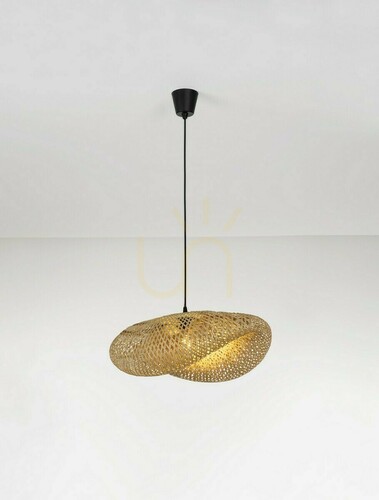
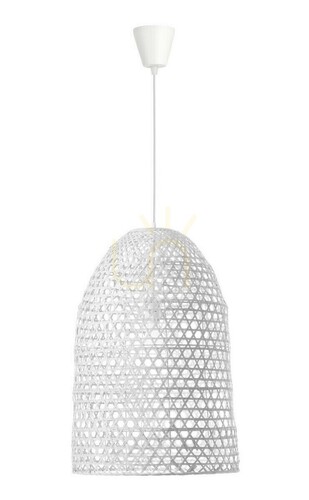
A bamboo lamp shade on a pendant turns a bare ceiling light into a woven lantern: light escapes through the gaps in the weave and throws a pattern of shadows across the walls and ceiling. You can buy it two ways – as a complete bamboo pendant light with its own flex and ceiling rose, or as a non-electric shade that clips onto the lampholder you already have. Either way the result is softer, warmer light from a shade that weighs very little, even at a generous size.
Shade only or a complete pendant?
A non-electric bamboo shade is the quick route in a rented flat or when the wiring is fine and only the look needs changing. It sits on a shade ring that screws onto the lampholder. UK ceiling pendants usually have a B22 bayonet holder, while many imported shades are sized for the European E27 screw holder, so check the ring diameter or whether a reducer ring comes with the shade. A complete pendant light brings its own ceiling rose, flex length and holder rated for the shade, and is the better choice for heavier multi-shade designs or anything over a dining table where you want to set the drop precisely.
What bamboo does to a pendant
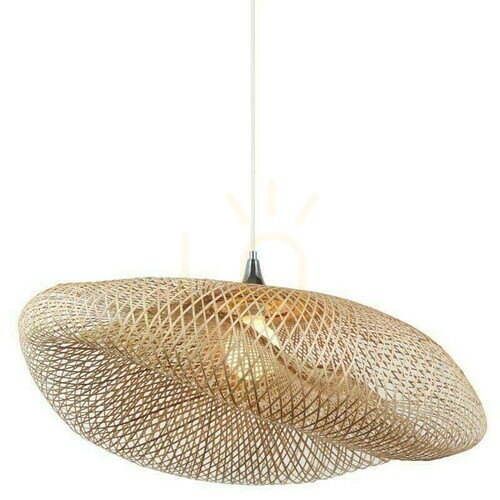
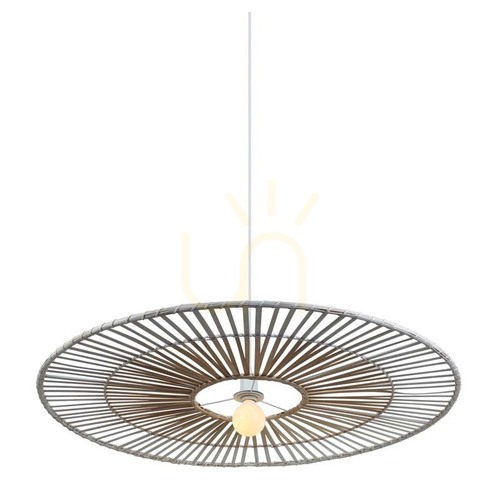
Bamboo is a grass rather than a wood. Its stems are hollow, so lamp makers split them into thin, flat strips or sticks and weave them by hand over a frame. Those strips are stiff, which gives bamboo shades crisp, graphic shapes: globes, domes, wide hat shapes, bells, ovals, cages and lanterns, plus linear bars with two to four shades for long tables. Rattan, by contrast, comes from a climbing palm with solid, pliable canes and is more often bent into soft, rounded forms.
How tight the weave is decides the mood. A dense weave pushes most of the light down through the open bottom and leaves the room in a gentle glow. An open, lattice-like weave lights the whole room and draws sharp patterns on the walls. Because the weaving is done by hand, no two shades throw quite the same pattern. Natural honey tones suit oak, linen and plants; black or dark-stained bamboo picks out the weave and sits comfortably in modern rooms.
Sizing a bamboo pendant for a UK home
Most British homes have ceilings of around 2.4 m, so a large shade on a long drop can feel low very quickly. Victorian and Edwardian rooms with higher ceilings take bigger shades in their stride.
| Where it hangs |
Shade diameter |
Drop |
| Over a dining table for four |
40–50 cm (about half to two-thirds of the table width) |
bottom of the shade 70–80 cm above the tabletop |
| Long table or kitchen island |
two or three shades of 25–35 cm, or a linear bar |
70–85 cm above the surface, shades 60–80 cm apart |
| Centre of a living room |
50–70 cm |
at least 2.1 m clear headroom underneath |
| Bedroom |
35–55 cm |
kept high, clear of the bed when you make it |
| Hallway or landing |
20–35 cm |
short drop; tall visitors walk beneath it |
Bulbs, safety and where not to hang one
Use LED bulbs in any natural-fibre shade: they run far cooler than incandescent or halogen bulbs. Stick to the maximum wattage marked on the fitting and make sure the bulb never touches the weave. Warm white up to about 3000 K brings out the colour of the bamboo. If the pendant is the main light in a room, aim for 806–1055 lumens; for mood lighting, less will do. A clear filament bulb gives a crisp shadow pattern, while a frosted bulb softens it.
Woven pendants are generally rated IP20 for dry rooms. Steam in a bathroom can warp the strips and encourage mould, and grease from a hob settles in the weave, so keep them away from the cooker. Fitting a new ceiling rose means work on the mains, which should be done by a qualified electrician to BS 7671.
Looking after the weave
Dust every few weeks with a soft paintbrush or the brush attachment of a vacuum on a low setting; a hairdryer on the cool setting clears the gaps. Keep water to a barely damp cloth and let the shade dry completely. Strong sun slowly darkens bamboo, usually to a richer honey shade.
Frequently asked questions
Will a bamboo lamp shade fit my existing ceiling light?
Usually, if the shade ring matches your lampholder. Check whether your pendant is B22 bayonet or E27 screw, and whether the shade comes with a reducer ring.
How big should a large bamboo pendant light be?
Over a table, half to two-thirds of the table width. In the middle of a living room, 50–70 cm works well under a standard 2.4 m ceiling.
Can a bamboo pendant look modern?
Yes. Simple cone or drum shapes in black or dark-stained bamboo read as contemporary, especially alongside metal and matt finishes.
Bamboo or rattan lampshade – which should I choose?
Bamboo gives a more regular, architectural pattern; rattan bends into softer curves. Both are light and long-lasting, so choose by the shape and pattern you like.
Can I use a bamboo shade in a kitchen or bathroom?
In a kitchen, over the table or island but away from the hob. In a bathroom, no – steam damages the fibres.
Does a vintage bamboo shade need rewiring?
The shade itself has no wiring. If it comes with an old flex or lampholder, have an electrician check or replace them before use.
For pendant lighting in general – drop heights, shade shapes and fittings – see pendant lights. For bamboo on table lamps, floor lamps and wall lights, see bamboo lamps.