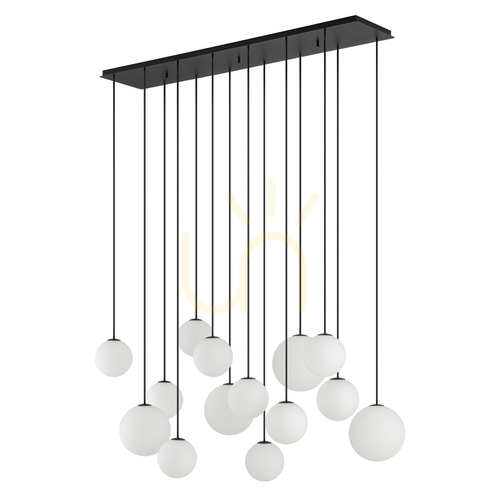
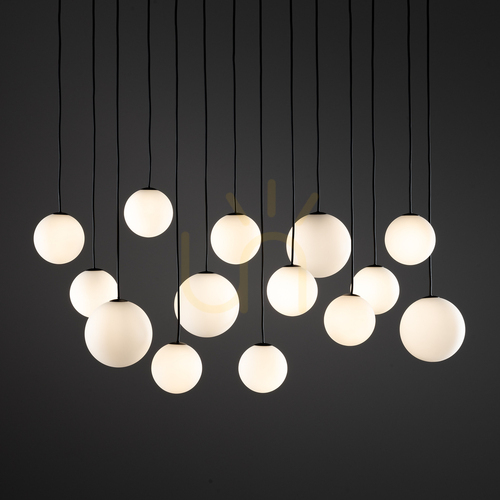
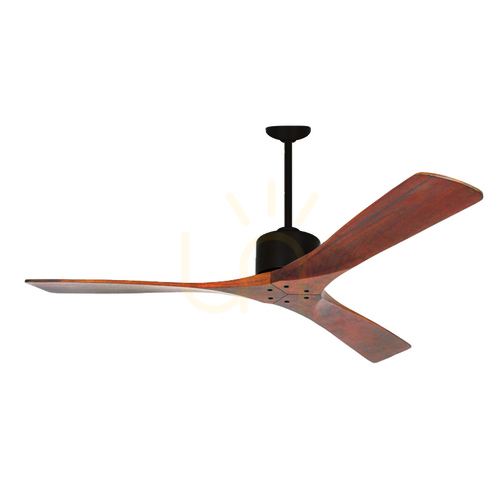
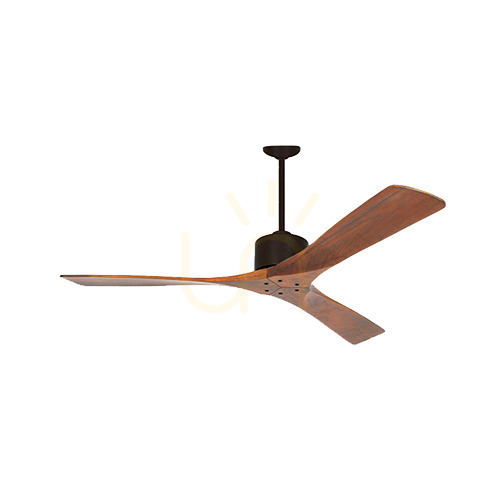
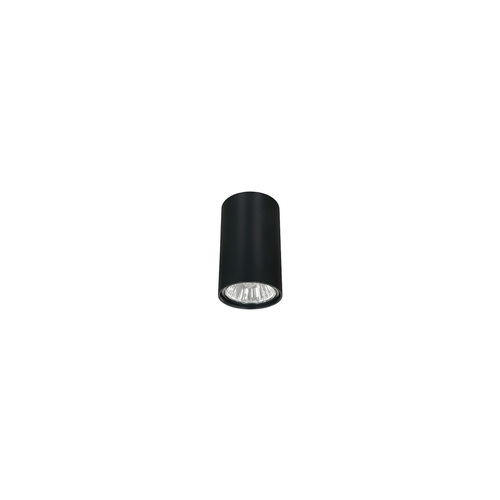
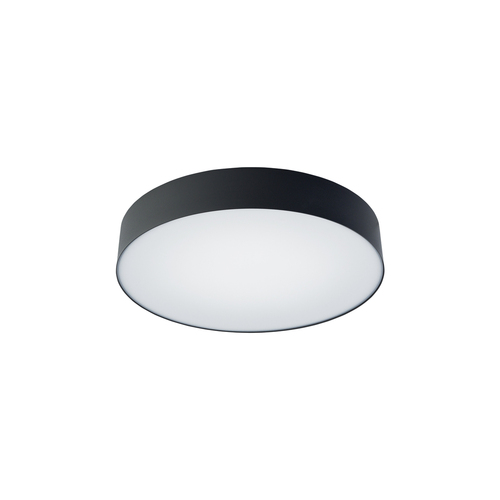
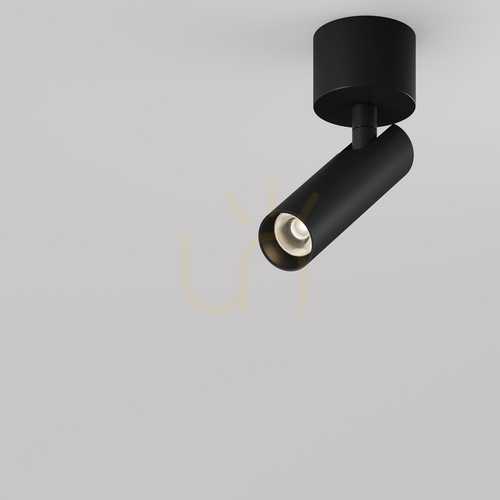
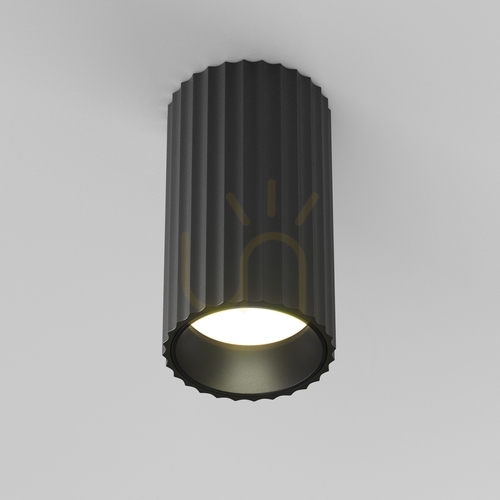
A black ceiling light gives a room a clear focal point: on white plaster it reads almost like a pen line, and next to oak, brick or brass it simply looks settled. The colour also changes how the fitting lights the room, because an opaque black shade sends light only through its opening, so the same pendant behaves differently in black than in white or glass.
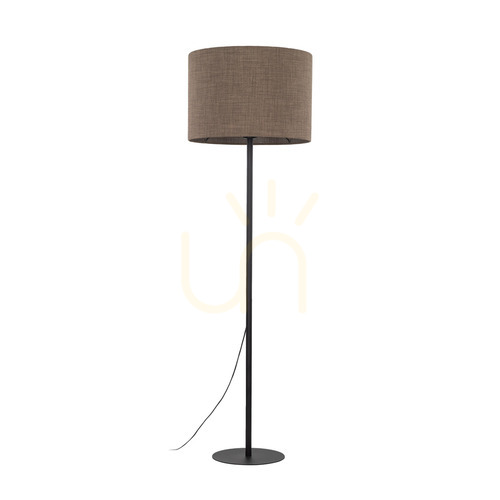
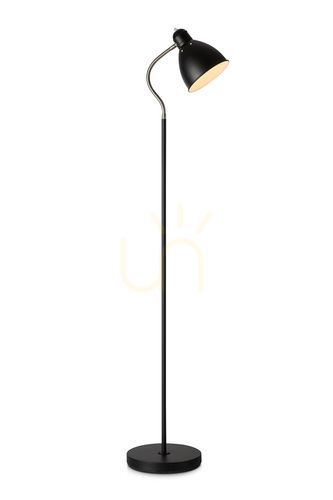
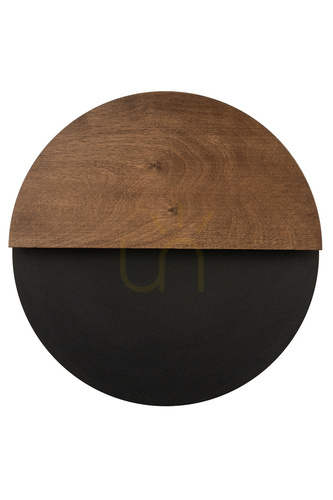
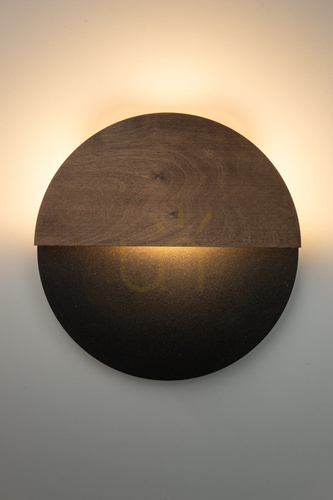
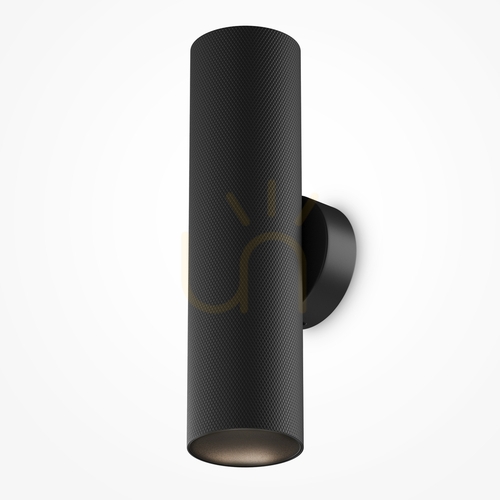
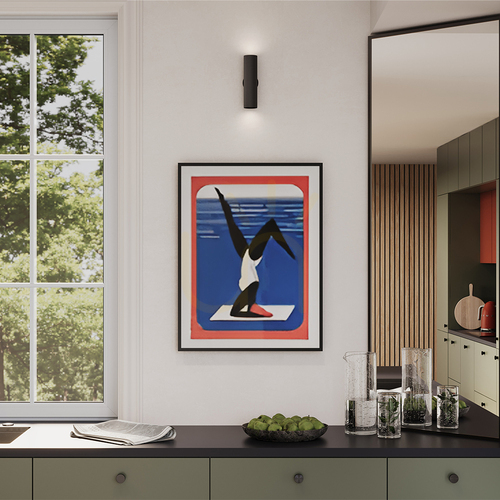
Black is not limited to the ceiling either. Wall lights, floor lamps and spotlights share the same finish, and a room tends to look more considered when two or three of them repeat it.
Flush, semi-flush or pendant: start with the ceiling
Most British homes have ceilings of around 2.4 m, older Victorian and Edwardian houses often well over 2.7 m. That one measurement decides more than style does. Where people walk underneath, keep roughly 2.1 m of clear headroom below the fitting.
| Ceiling height or room |
Fitting that works |
What to check |
| Under 2.4 m (flats, new builds, landings) |
Black flush fitting or spotlight bar |
An opal diffuser spreads the light; spots with 36–60° beams suit hallways |
| 2.4–2.7 m |
Semi-flush or short pendant |
In walkways, leave about 2.1 m clear underneath – a drop of 30 cm at most on a 2.4 m ceiling, up to about 60 cm at 2.7 m |
| Over 2.7 m (period homes) |
Pendant, multi-arm fitting or cluster |
Scale the fitting up – a small black shade gets lost in a tall room |
| Over a dining table or island |
One large or two to three smaller pendants |
Bottom of the shade around 75–85 cm above the surface |
| Bathroom |
Flush fitting rated IP44 or higher |
BS 7671 calls for at least IPX4 in zones 1 and 2 |
What a black shade does to the light
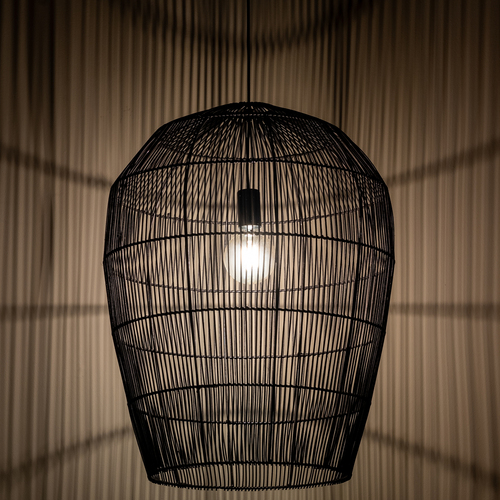
A metal shade painted black absorbs almost everything that hits it. Under a pendant you get a defined pool of light on the table and a darker ceiling above – flattering in a dining room, a bit moody if it is the only light in a living room. Look inside the shade before you buy: a white, gold or brushed-silver interior bounces light back out, while a shade that is black inside as well needs a brighter bulb or a second light source nearby.
Flush fittings with an opal glass or acrylic diffuser work the other way round. The black is only the rim or the frame, and the light comes out soft and even, which is why they suit bedrooms and low hallways. Smoked and amber glass give a warm, dimmed glow that looks lovely in the evening but rarely lights a whole room on its own.
Most black ceiling lights take E27 (Edison screw), B22 (bayonet), E14, G9 or GU10 bulbs, or come with integrated LED. Multi-globe designs often use E14 or G9, so check the cap type before you buy replacements.
Matching black lighting to the rest of the room
Black sits happily with almost any palette, but it changes character with its neighbours. Against white or warm grey walls it becomes the outline of the room. With brass and walnut it feels warmer and slightly mid-century; with concrete and exposed brick it leans industrial; with pale timber and linen it moves towards Japandi. On dark painted walls a black fitting disappears, which is fine if you want the light, not the lamp, to be seen.
The common mistake is too much of it. Several black fittings in a small room with a dark floor make the space feel heavy. Repeat the colour two or three times – a picture frame, cabinet handles, a tap – and leave the rest light.
Care, fitting and everyday niggles
-
Matt or gloss. Matt powder coat hides reflections but shows dust and fingerprints. Gloss wipes clean more easily and reflects the bulb and windows.
-
Kitchen grease. A pendant above the hob collects a film that shows on black; wipe it more often.
-
Cleaning. Switch off, let it cool, then use a dry or barely damp microfibre cloth. Skip alcohol, solvents and cream cleaners – they leave shiny patches on matt finishes.
-
Installation. Ceiling lights connect to 230 V wiring, so have a qualified electrician fit them. In England, new bathroom circuits fall under Part P of the Building Regulations.
Black ceiling lights: questions people ask
Are black downlights in style?
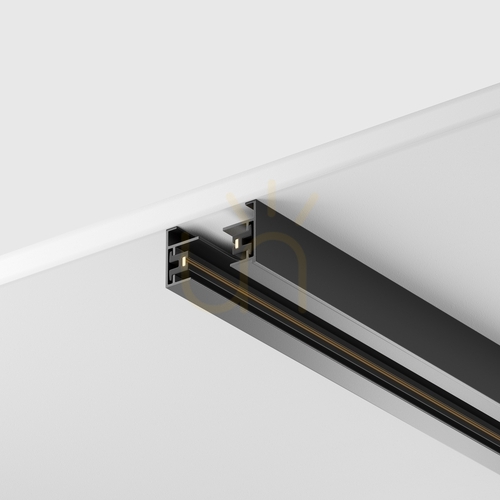
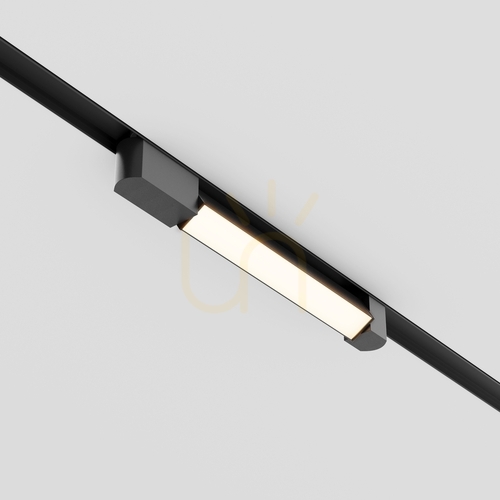
Black downlights and surface spots are a steady choice rather than a passing trend, especially on track or in kitchens. A black baffle inside the fitting also cuts glare, because you see the lit surface rather than a bright reflector.
What colour light is best for a living room?
Warm white, roughly 2700–3000 K, for general light; it keeps black metal and wood looking rich. Use neutral 4000 K only for task light such as a desk corner.
What colours look good with a black ceiling?
If the ceiling itself is painted black, choose fittings in brass, opal glass or white so they stand out, or go black-on-black and let the light pools do the work. Warm wood and off-white walls soften a dark ceiling.
Can I put a black ceiling light in a bathroom?
Yes, as long as it carries the right IP rating for its zone – IP44 or higher near the basin, bath and shower. A flush fitting with a frosted diffuser keeps the light even for shaving and make-up.
Does a black light fitting make a room look smaller?
Not by itself. A slim black flush fitting reads as a small dark point; a big black drum in a low room does crowd it. Scale and the colour of the walls matter more than the finish.
Which black ceiling light suits a bedroom?
Something that diffuses: a fabric shade, opal glass, or a semi-flush fitting with a frosted bowl. Avoid bare bulbs you can see from the pillow.
Black is one finish among many across indoor lights, so plan it alongside the rest of the room's lighting rather than on its own. If you would like the same look on your desk, read more about black desk lamps.