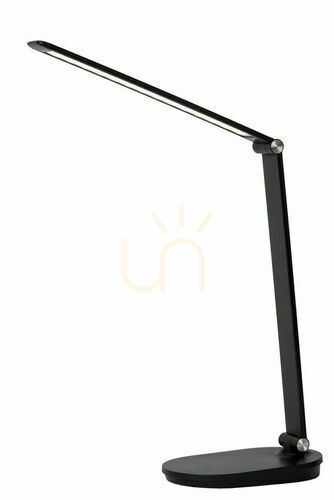
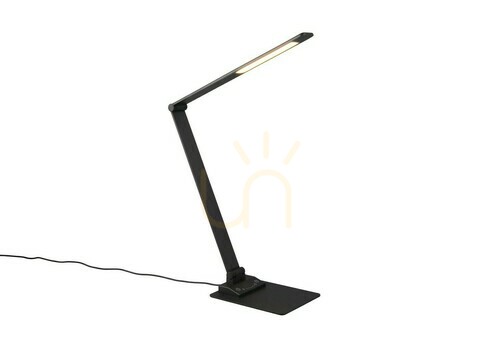
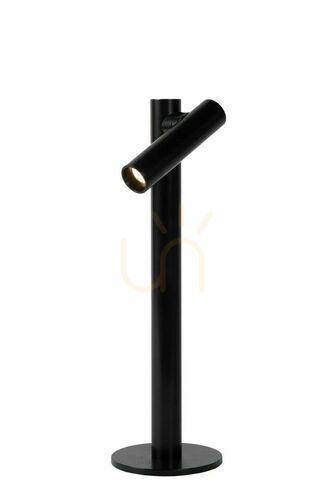
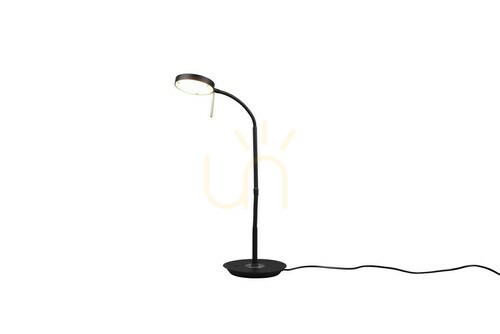
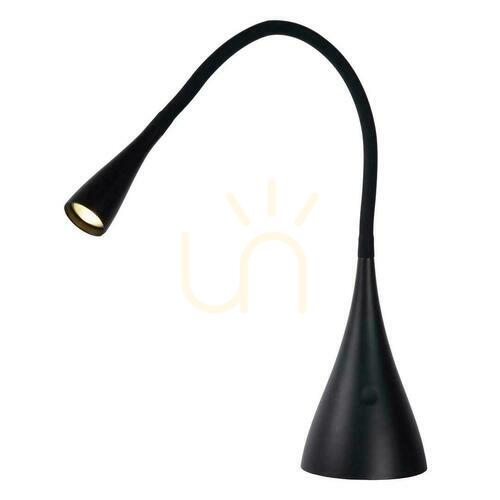
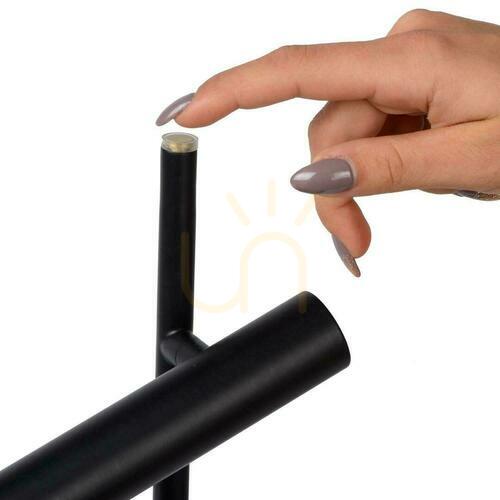
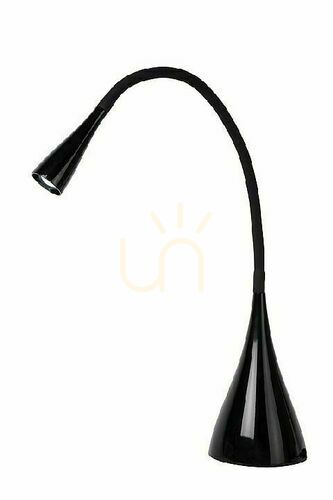
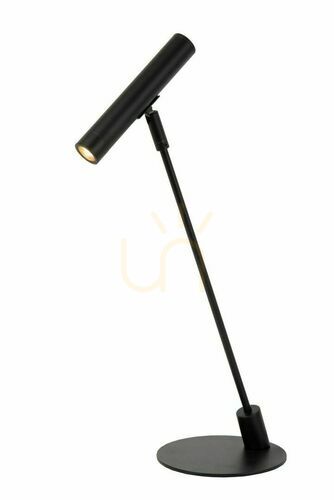
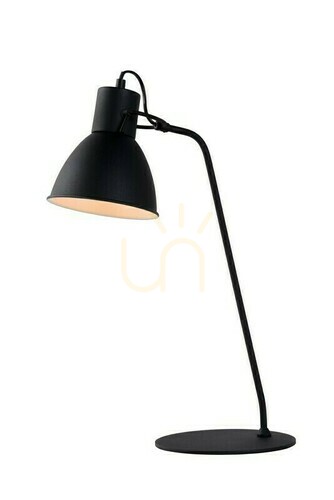
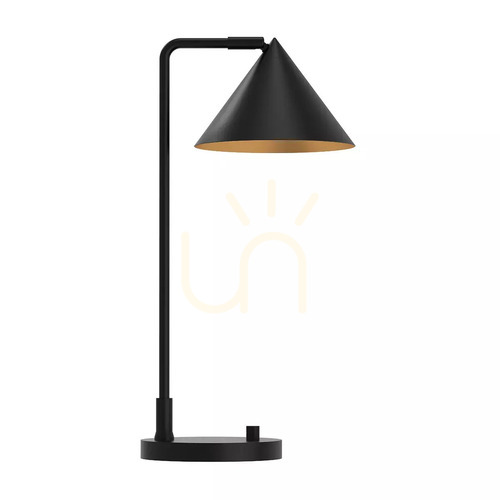
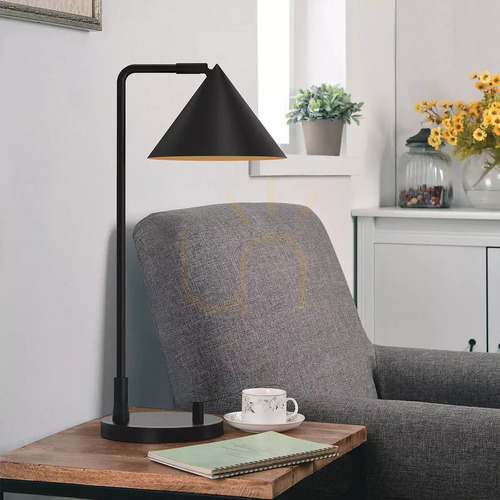
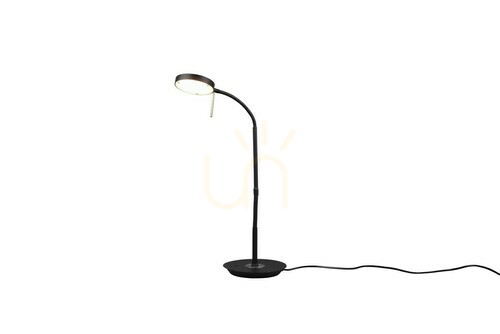
A black desk lamp is the quietest thing you can put next to a monitor. An opaque black shade sends light down onto the desk and nowhere else, a matt finish won't flash in your screen, and the colour sits as comfortably on pale oak as it does on a dark walnut top.
That said, black changes more than the look. It affects how much light actually reaches the page, how the lamp ages, how warm the shade gets and how often you'll be reaching for a cloth. Worth knowing before you choose between a slim modern task light and a heavy vintage one.
Do black lamp shades work on a desk?
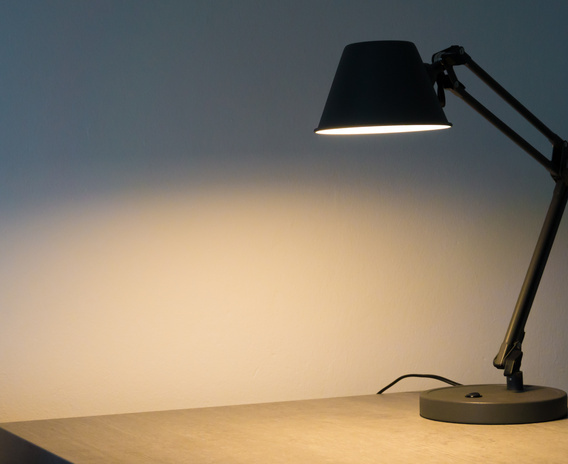
On a sofa table a glowing fabric shade is the point. On a desk you want the opposite: a bright pool on the work surface and nothing bright at eye level. A black metal shade does exactly that, because light leaves only through the opening. The beam has a crisp edge and, seen from the side, the lamp is simply a dark shape.
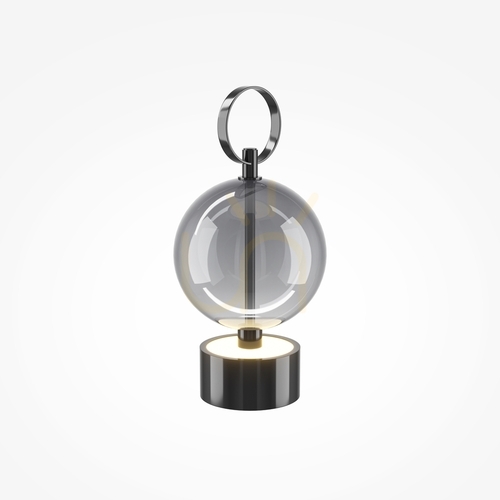
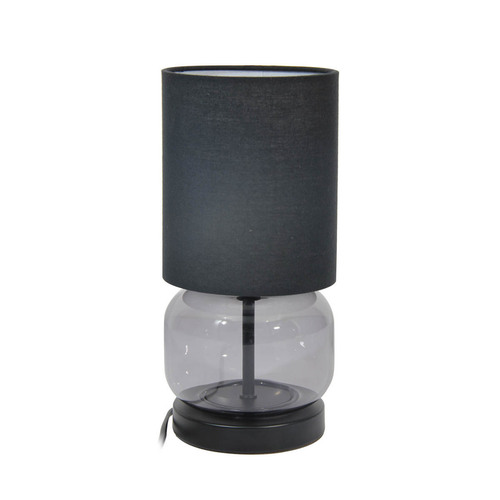
Look inside the shade before you buy. A white or silver lining bounces almost all of the bulb's output onto the desk. A black interior swallows part of it, so the same bulb gives a noticeably dimmer page. Smoked glass shades behave in a similar way – lovely as a soft glow in the evening, but they need a stronger bulb for proper reading.
Finish matters too. Powder-coated matt black hides fingerprints and doesn't reflect the screen, though dust shows sooner. Gloss and black chrome look smarter, yet every adjustment of the arm leaves a mark.
Styles that suit black
-
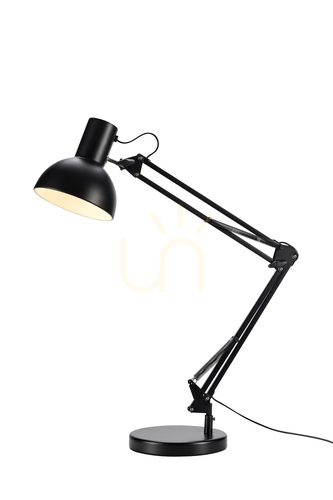
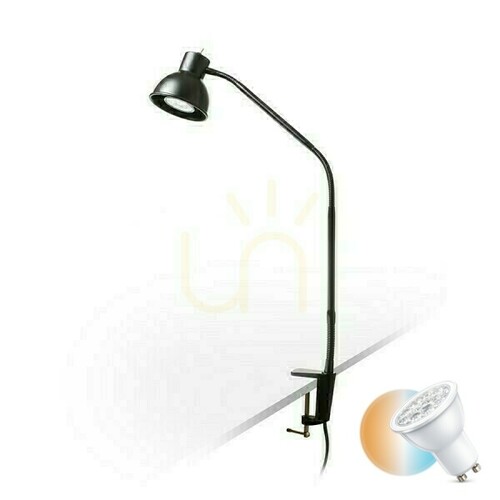
Balanced-arm task lamps – two or three joints, springs that hold the head wherever you leave it, often on a clamp. The most flexible option for drawing, model-making or a cramped desk.
-
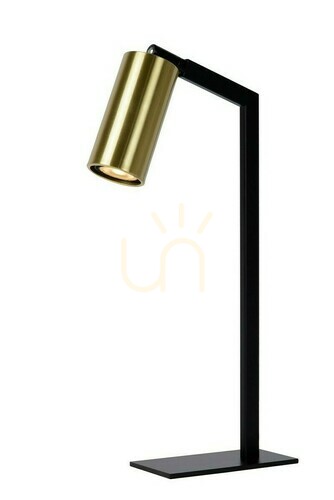
Mid-century modern – think conical or dome metal shades, slim tapered arms and contrasting brass details. Black with brass is the classic pairing.
-
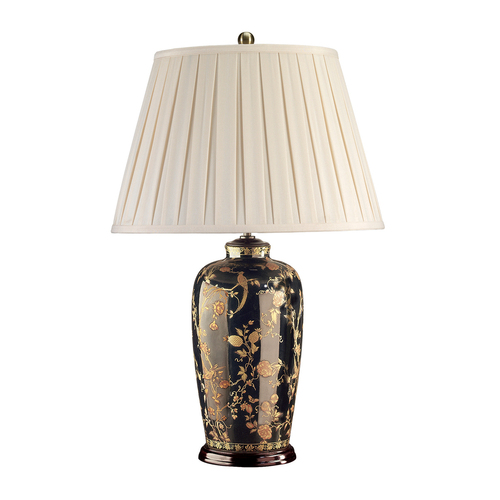
Vintage and industrial – heavy cast base, round shade, exposed screws, fabric-braided flex and a rotary or inline switch.
-
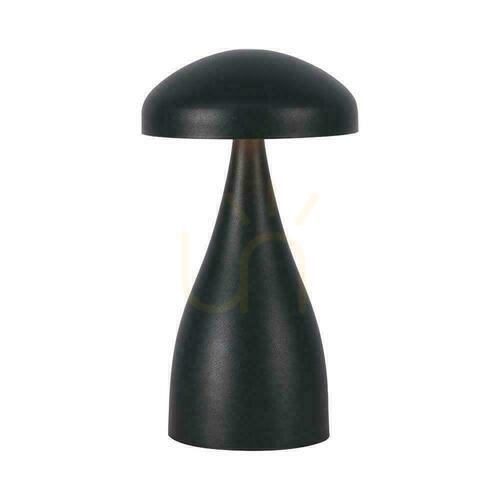
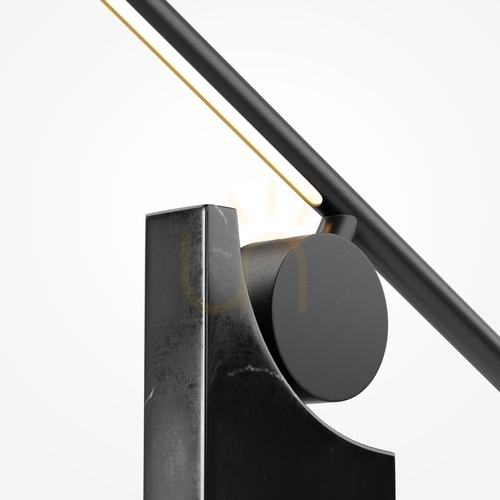
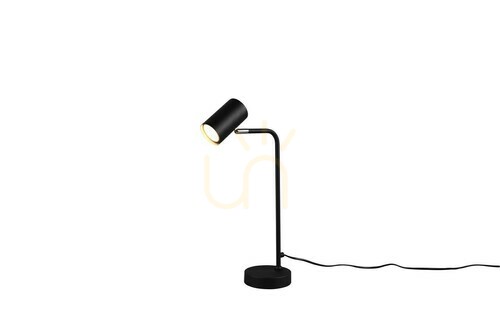
Modern minimal – a thin LED bar on a fine arm that all but disappears against a dark wall.
-
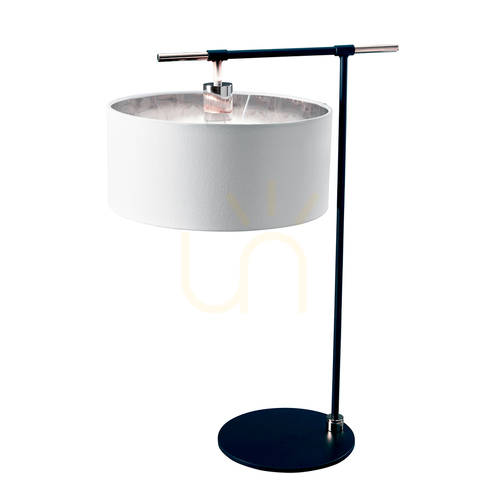
Luxury pieces – marble or stone bases, glass shades, black paired with gold. A heavy base also keeps a long arm steady.
Getting the light right
The European standard EN 12464-1 puts reading, writing and screen work at around 500 lux on the desk. A desk lamp tops up the room light, so it doesn't need to be blinding – it needs to land where you're working.
| What to check |
Typical range |
Why it matters with a black lamp |
| Light output |
400–800 lumens |
go for the upper end if the shade is black inside |
| Colour temperature |
4000 K for work, 2700–3000 K for the evening |
adjustable white earns its keep if the desk doubles as a reading spot |
| Colour rendering |
CRI 80+, CRI 90+ for art or photo work |
has nothing to do with the body colour – check the spec |
| Bulb cap |
ES (E27), SES (E14), BC (B22), GU10 or integrated LED |
an LED bulb keeps a metal shade far cooler than halogen |
| Head height |
roughly 35–45 cm above the desk |
bottom of the shade below eye level |
| Fixing |
weighted base, clamp or wall bracket |
check the clamp's maximum desk thickness |
Plug-in desk lamps sold for the UK come with a fused three-pin plug, so there's no wiring involved. A wall-mounted swing-arm version wired into a circuit is a job for a qualified electrician working to BS 7671.
Where to put it
If you're right-handed, keep the lamp on your left; left-handed, on your right – that way your hand doesn't shadow the page. Light should come from the side and slightly in front, never from behind, or it bounces off the monitor. Tilt the head until you can't see the bulb from your chair. And don't rely on the lamp alone in a dark room on a winter afternoon: a bright desk against a black background tires the eyes faster than a slightly dimmer one.
Caring for a black finish
Wipe matt black with a dry or barely damp microfibre cloth. Alcohol, solvents and cream cleaners polish it into shiny patches that won't come out. Clean gloss and black chrome with a soft cloth and no pressure. Only wipe the shade when the lamp is off and cool, and on bulb-fitted lamps never exceed the maximum wattage on the label – dark metal soaks up heat.
Frequently asked questions
Do black lamp shades give enough light?
For a desk, yes – they direct it rather than reduce it. The catch is the lining: pale inside reflects light down, black inside absorbs some, so pair a dark interior with a brighter bulb.
What did mid-century modern desk lamps look like?
Typically metal dome or cone shades, slender angled arms, tripod or round bases and brass accents, often in black or deep colours. The look is still widely reproduced.
What makes a good desk lamp in the UK?
Around 400–800 lumens aimed at the desk, a neutral 4000 K option for daytime work, a head you can angle away from your eyes and a base or clamp that keeps it steady at full stretch.
Is a vintage black desk lamp practical for work?
It can be, provided the shade covers the bulb and takes a modern LED. Many traditional designs use an ES or BC cap, so you can fit a bright, cool-running bulb.
Which colour temperature is best for a desk?
Neutral white around 4000 K suits concentration. Very cool daylight bulbs can feel harsh over long sessions; warm white is better once work is done.
Are black metal desk lamps hot to touch?
With LED, barely. With a halogen or old filament bulb the shade can get properly hot, so keep within the stated wattage and handle it by the arm.
If the lamp should match a black pendant or wall light in the same room, see black lamps and light fittings. For choosing a lamp regardless of colour, start with desk lamps.