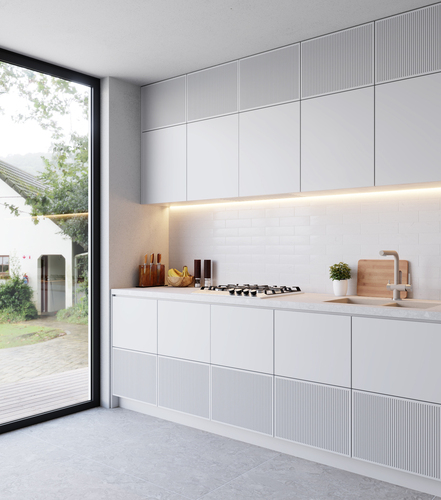
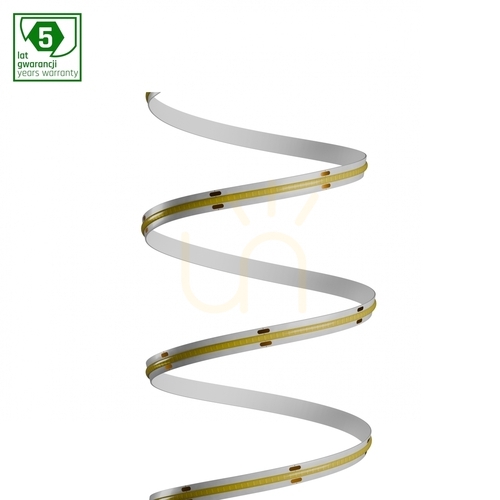
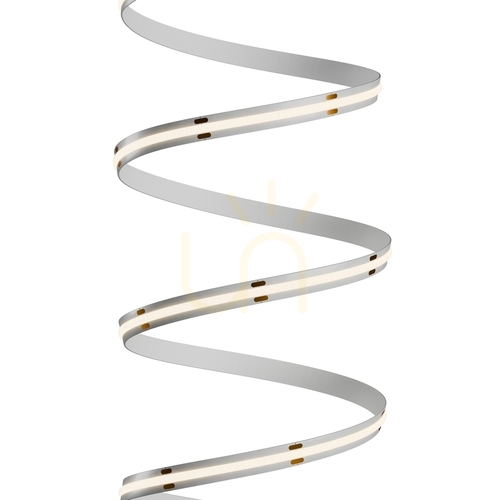
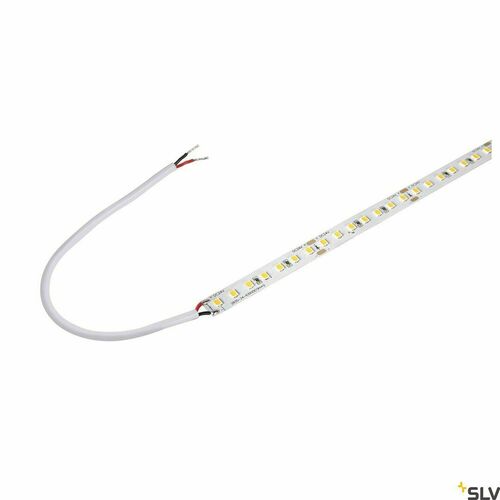
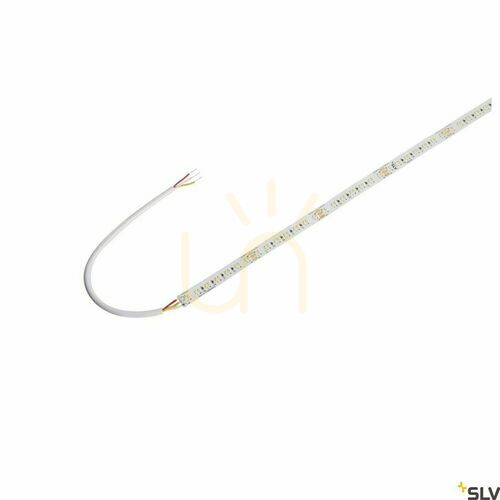
Under-cabinet LED strip is the single most effective lighting upgrade in a kitchen, because it puts light where you actually cut, in front of you rather than behind you. Overhead light alone means working in your own shadow.
Where to mount the strip
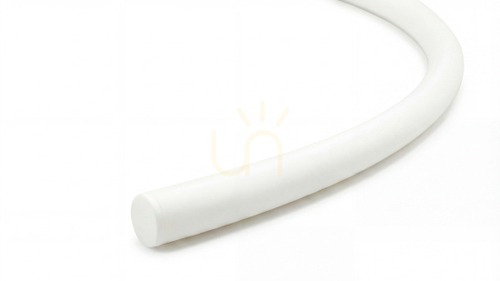
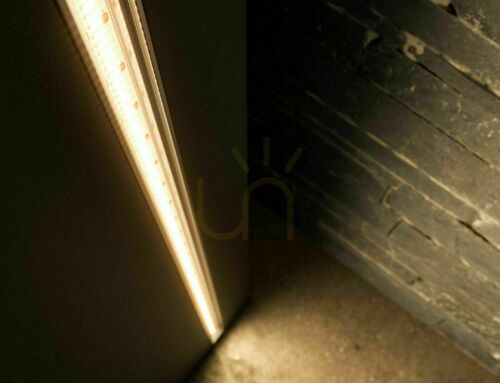
Fix the strip at the front edge of the underside of the wall unit, not the back. Mounted at the back it lights the splashback and leaves the worktop edge dim; at the front it throws light across the whole depth of the counter. An aluminium profile with a frosted diffuser hides the individual diodes — without one you get a row of dots reflected in a gloss worktop.
| Position |
Result |
| Front edge, angled slightly back |
Even worktop light, no reflection in the eye |
| Back edge, against the wall |
Bright splashback, shadowed worktop |
| Inside a recessed channel |
Cleanest look; needs planning before fitting units |
Brightness and colour
Around 800–1000 lm per running metre is right for a worktop — enough to work by without turning the counter into a light box. 3000–4000 K keeps food colours honest; 2700 K is too yellow for judging whether meat is cooked, and 6500 K makes the whole kitchen feel clinical.
Power supply and switching
Size the driver with headroom: total strip wattage plus about 20%. Put the strip on its own switch, ideally a door-frame or PIR switch inside the cabinet run, so it can be used alone in the evening without the ceiling light. IP20 strip is fine under a cabinet; use IP65 close to a sink or hob where it will be wiped and splashed.
Frequently asked questions
How bright should under-cabinet lighting be?
800–1000 lm per metre, at 3000–4000 K.
Do I need an aluminium profile?
Under a gloss worktop, yes — it is the difference between a line of light and a line of visible dots.
Can LED strip go behind a hob?
Not directly above it. Keep strip away from direct heat and use a rated fitting in the extractor hood instead.
See also LED Profiles and LED accessories.