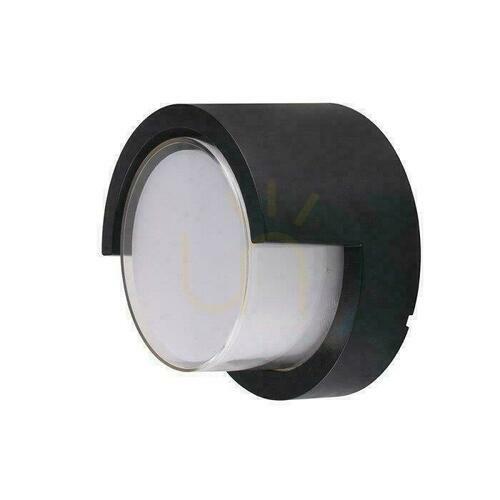
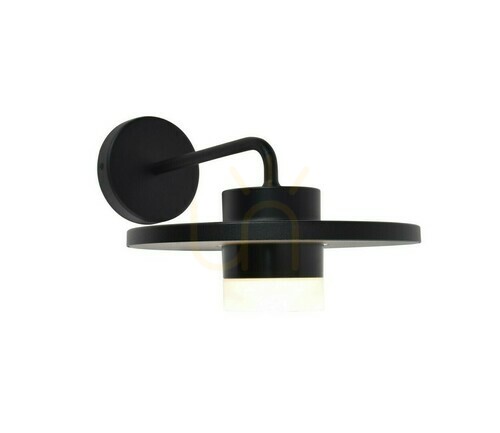
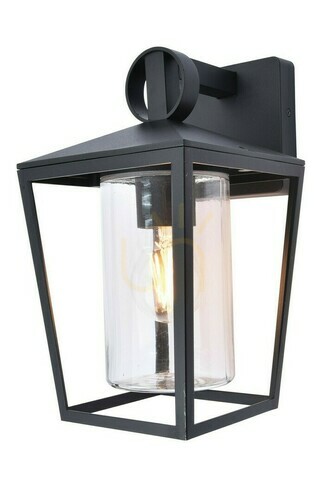
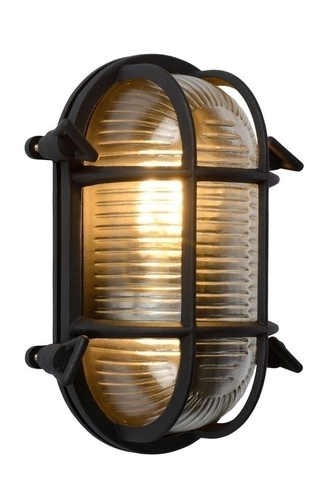
Black outdoor wall sconces - a style that organizes space and works for you every evening
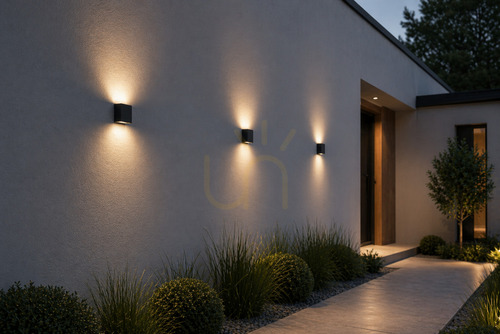
Black has been the strongest accent in contemporary architecture for years. On the facade it acts as an elegant frame: it emphasizes the lines of the building, organizes the composition and directs the eye to what is most important - light. Black outdoor wall sconces combine this aesthetic with everyday utility: they increase safety, make it easier to orient oneself after dark, and at the same time create a scenery for the terrace and garden. Against the background of light plaster they create a striking contrast, with clinker brick and architectural concrete they build a coherent, modern whole, and with wood - a pleasant, warm dialogue of materials.
Why black?
Black fixtures do not compete with the body of the house - they emphasize it. The dark body "hides" in the shadow, so you can see mainly the light sheaf, not the lamp itself. Color is also practical: it masks minor scratches and discoloration better than bright finishes, and matte powder paints do not betray streaks after rain. As a result, the wall sconce looks fresh for years, even when the facade is exposed to intense sun, dust from a busy street or extreme temperatures.
Aesthetics meets functionality
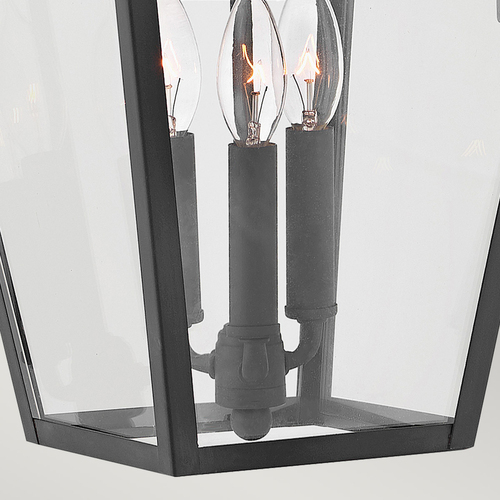
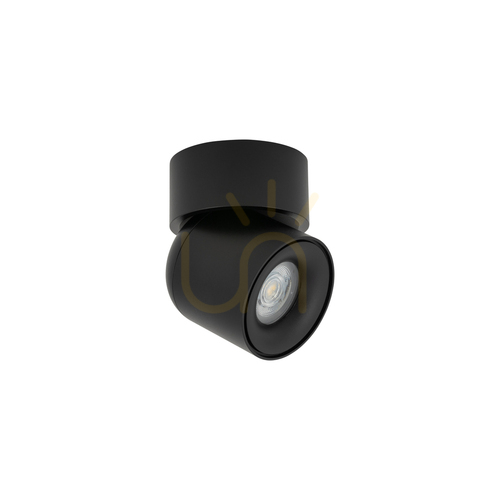
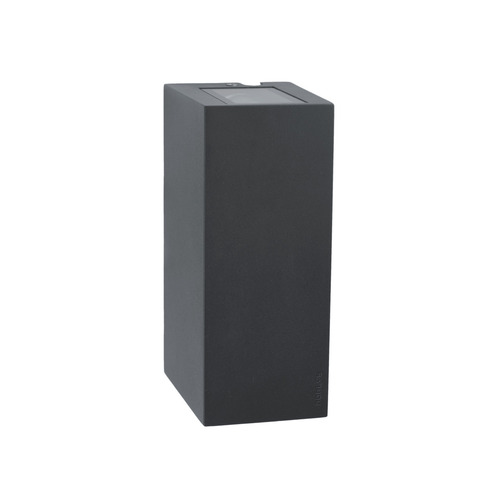
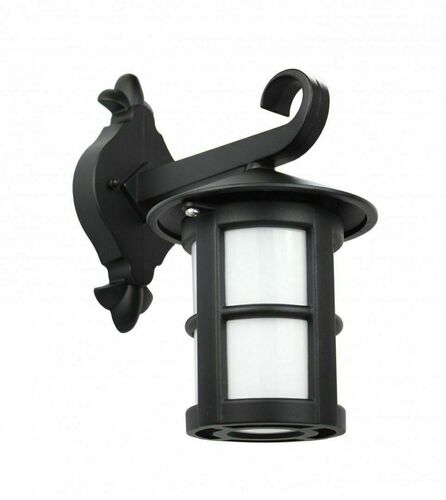
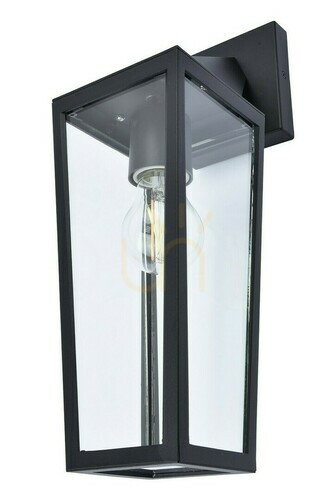
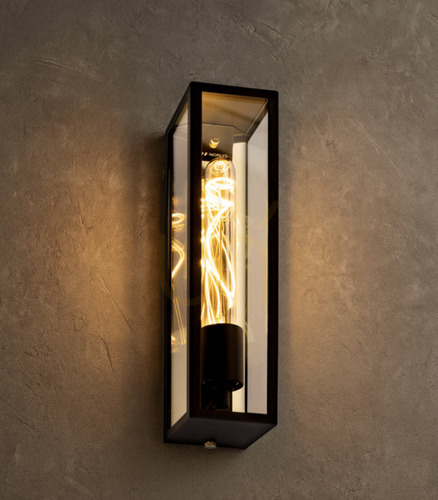
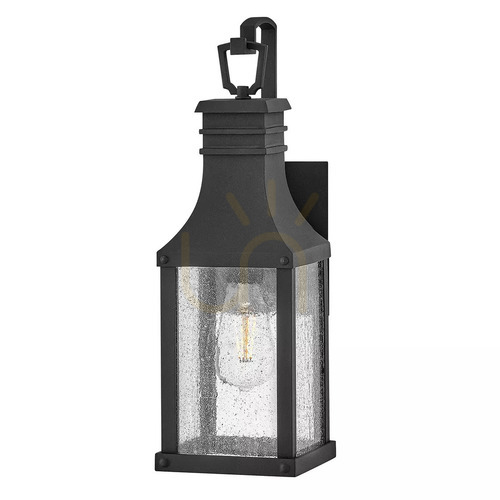
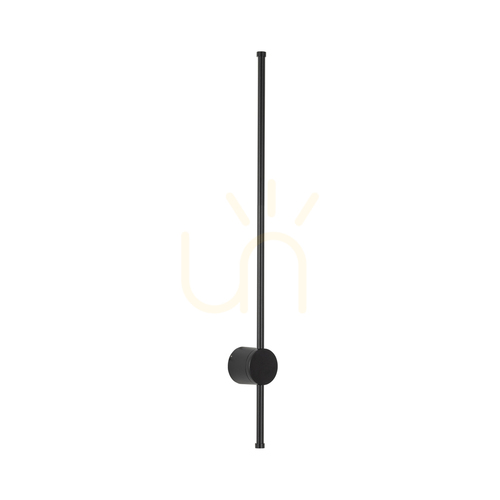
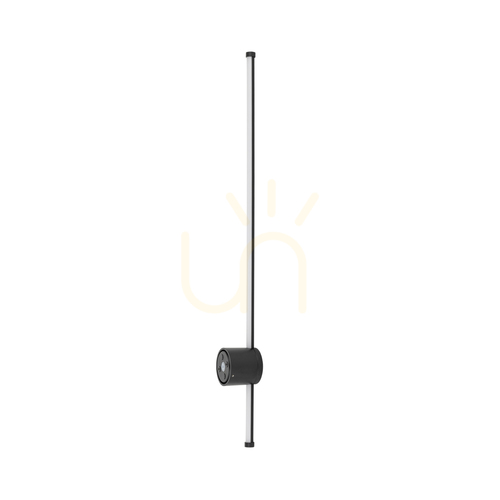
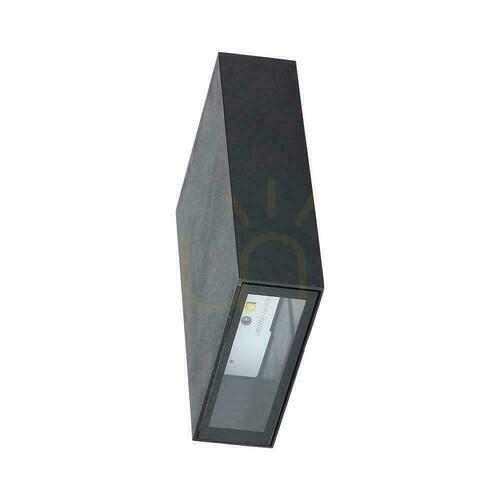
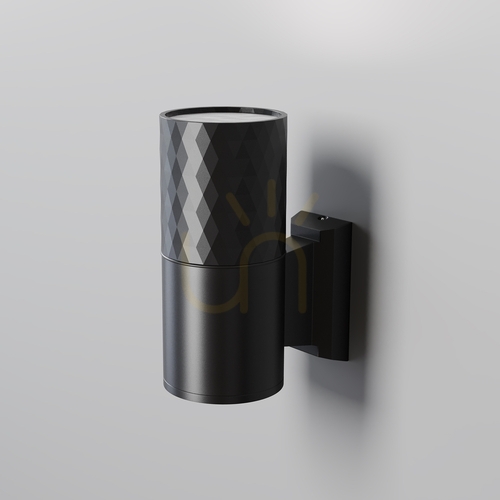
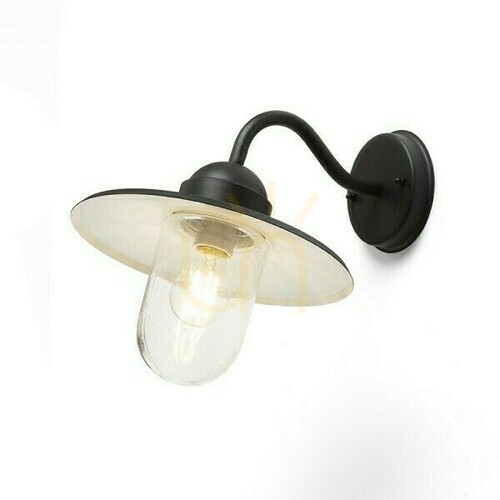
On the design side, the choices are vast - from raw cubes and cylinders, to ultra-thin "wall-washer" trim, to vintage-inspired lanterns. On the functional side, three elements are the most important: range and angle of light, light color, and control. Narrow sheaves (15-24°) allow you to accent house numbers and niches, medium sheaves (30-60°) will work well at the entrance and on the stairs, and wide sheaves (90-120°) will evenly illuminate the terrace. Choose the color to suit your mood: 2700-3000 K is for relaxing and dining outdoors; 3500-4000 K makes it easier to park and work with surveillance cameras. The control? Motion and dusk sensor, dimming, and increasingly app integration.
Where to install - and why?
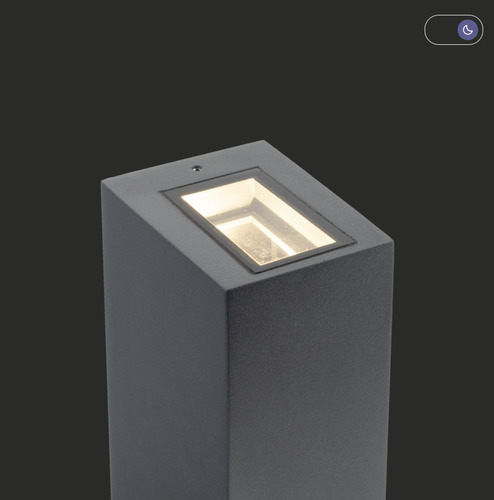
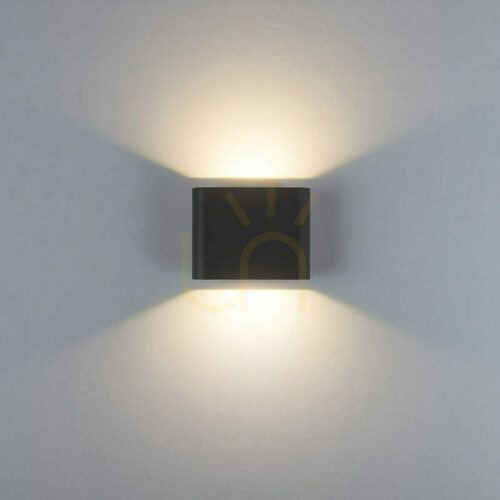
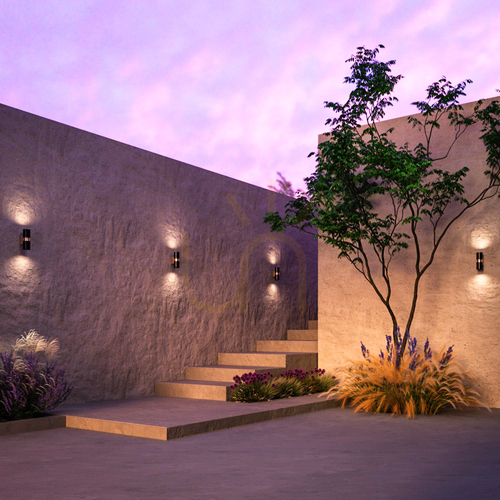
The entrance area gains symmetry: two sconces on the sides of the door will provide visual comfort and add a representative touch to the facade. The terrace will like the diffused, non-glare light; up-down tubes draw soft cones on the wall, creating an intimate atmosphere without harsh spots on the floor. Driveway and garage need precision - luminaires with neutral color 3500-4000 K will improve camera operation and license plate reading. Exterior stairs are safest with luminaires with asymmetrical downward distribution, mounted slightly lower than the entrance area to reduce glare. Fences and wickets will benefit from economical sensor lights that shine only when someone approaches.
Materials and durability - what sits inside?
A solid wall lamp is mostly 6063 T5 aluminum powder-coated in deep matte (usually RAL 9005 or 9004). Aluminum dissipates heat well from the LED modules, which translates into their lifetime. In demanding locations (proximity to the sea, heavy traffic), 304 or 316L stainless steel with an epoxy primer under the paint will work well - it is heavier and more impact resistant. Shades are tempered glass (clear, milky, prismatic) or polycarbonate/PMMA with UV filter. Silicone seals and cable glands maintain IP rating: under a canopy IP44 is enough, on an exposed wall aim for IP54-IP65.
LED that pays off
Today's LED modules offer efficiencies of 100-140 lm/W. This means that 8-10 wat ts are enough to safely light up an entrance, and 12 watts can handle a driveway. It is worth paying attention to the CRI (color rendering): in the garden, ≥80 is enough, but for representative areas, a CRI ≥90 will show the wood and plants more faithfully. Integrated LED gives a higher seal and slimmer body; versions with GU10 or E27 sockets let you easily change color and wattage - and even screw in a voice-controlled smart bulb.
Smart features, real savings
Twilight sensor keeps lamps off during the day; motion sensor turns on full power only when someone walks up. In practice, that's tens of percent less energy per year. If you like automation, choose luminaires or sources compatible with Zigbee, Bluetooth Mesh or Wi-Fi. In the app you set scenes: "Homecoming" (100% entrance and driveway), "Visitors" (70% terrace, 100% gate), "Night" (30-40% background, full power when motion is detected). You gain comfort and control without switches at the door.
Stress-free installation
It's best to plan for lighting while still at the façade stage, but good fixtures can also handle retrofitting. The rule of thumb is a height of 1.8-2.2 m from ground level and a sconce spacing of 2.5-3 m on long walls - unless the rhythm of windows and expansion joints dictates other points. Begin installation by turning off the circuit, drilling and attaching the plate, pulling the wire through the choke and connecting the L-N-PE in quick-connects. Once the body is bolted together, seal the cable exit point with neutral silicone and test the operation of the sensors. Use façade studs with spacers in the insulation so as not to "crush" the insulation.
Care and service, or what to do to make it shine for a long time
Matte black powder paint likes gentleness: a soft microfiber cloth and lukewarm water with mild detergent will do just fine. Remove dust and cobwebs once a quarter, inspect gaskets and tighten bolts once a year, and flush out salt and dust after winter. If you have smart lights, check for updates - improve stability and security of connections. Good luminaires with LEDs work ≥50 ,000 h, so with a few hours a day, that's a dozen years without replacing the source.
Common mistakes and quick fixes
Too high mounting combined with a narrow beam "casts" the light into the sky - lower the lamp or choose an up-down optic that "washes" the wall. Too cold a color on the terrace spoils the atmosphere - bet on 2700-3000 K. Too little airtightness of a luminaire on an exposed wall will shorten its life - choose IP65 in this zone. Too sparse placement generates "holes" in the lighting - better to use several weaker sources closer together than one very strong one.
A quick selection guide - what to keep in mind at the store.
Check material (aluminum/steel), IP rating, color and flux, CRI, smart-home compatibility, as well as warranty and parts availability. Pay attention to the quality of the coating: a thickness of ≥80-100 μm and a declaration of UV resistance is a good indication of a long, even color. At entrances and at the gate, bet on a motion detector; on the terrace, you'll appreciate a dimming or milky lampshade with less glare.
FAQ - answers to the most common questions
Do black wall sconces go well with a light-colored facade? Yes - they provide a distinctive, elegant contrast.
Does black heat up more than bright colors? The body may be warmer in the sun, but a correct heat sink and high-efficiency LED will maintain a safe operating temperature.
Is it better to choose an integrated LED or a GU10/E27 bulb? Integrated - slimmer, tighter fixture; GU10/E27 - easy change of color and wattage, also "smart" versions.
What color to choose for the terrace? 2700-3000 K for relaxation; 3500-4000 K for communication and driveway.
Are black sconces difficult to keep clean? No - all you need is a soft cloth; avoid abrasive products that could tarnish the coating.
Summary
Black outdoor wall sconces are a simple, yet extremely effective way to add class to your terrace and facade, improve security and control the evening atmosphere. With rugged construction, energy-efficient LEDs and a growing range of smart features, they remain the current choice for years to come. Choose a model that is consistent with the architecture, select the right optics and color, plan sensible placement - and every return home will be greeted with light that not only illuminates, but also emphasizes the character of the place.