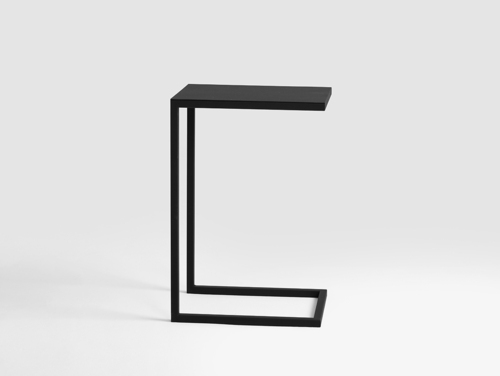
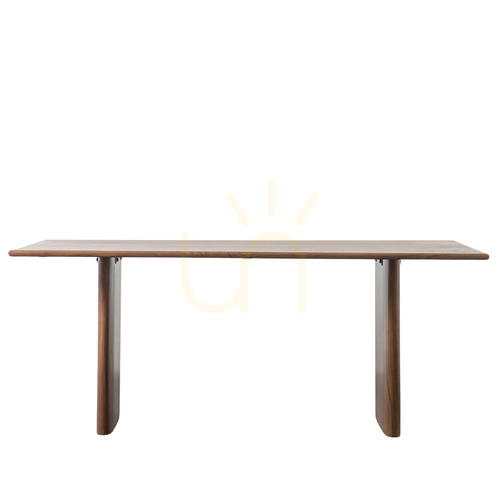
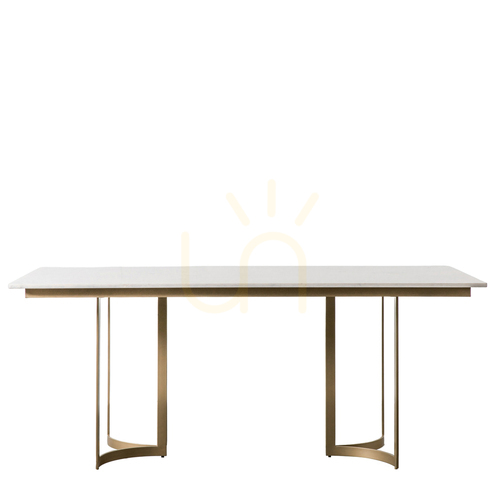
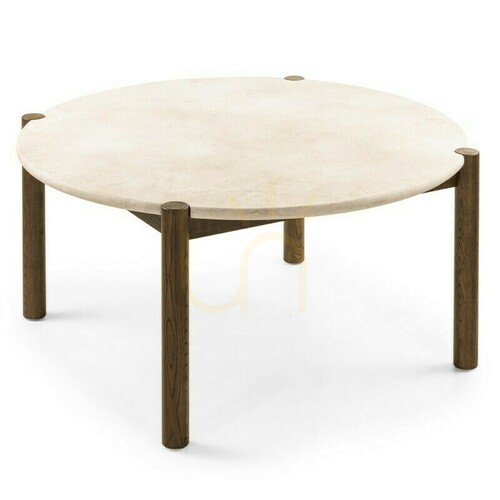
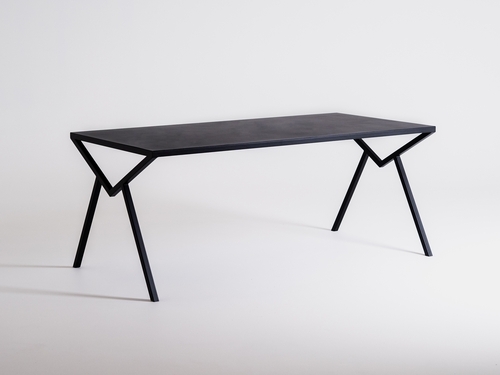
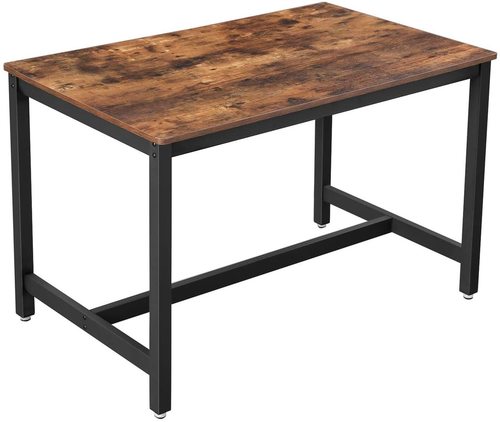
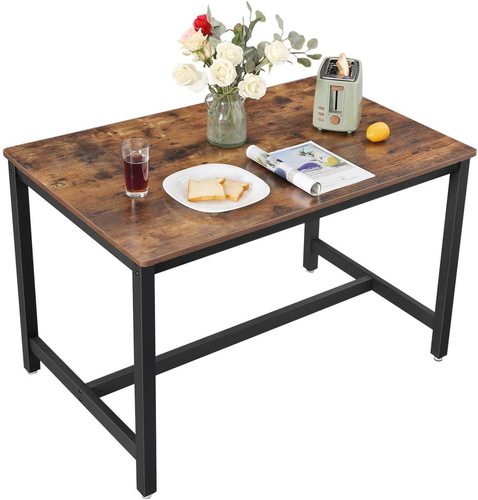
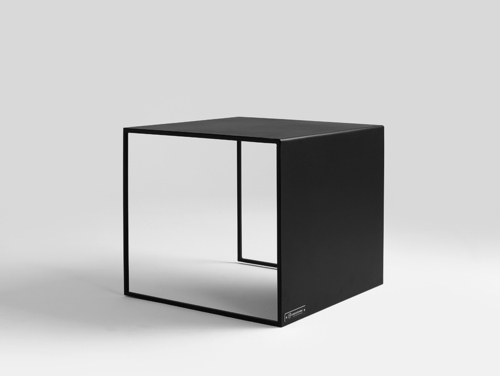
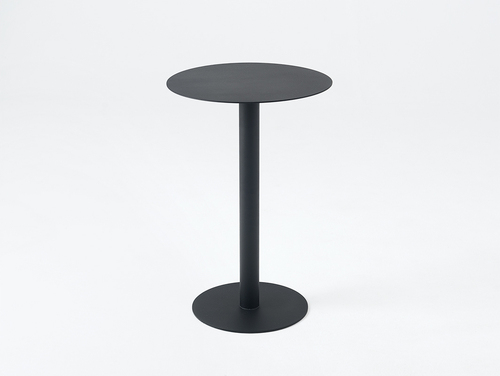
A metal table stands on a steel, aluminium or cast-iron base, with a top in wood, glass, ceramic, stone or metal itself. Steel stays rigid even in slim sections, so a base that looks almost drawn in pencil can carry a heavy oak or marble top without a wobble. That is why metal frames turn up in so many industrial, loft-style and pared-back dining rooms and living rooms.
What a metal frame changes
A wooden table relies on chunky legs and a deep apron under the top for its strength. A steel frame needs far less material for the same stiffness, which means a bigger overhang, more knee room and a lighter look. Welded frames arrive rigid; bolted ones flat-pack, which matters if the table has to go up a narrow staircase.
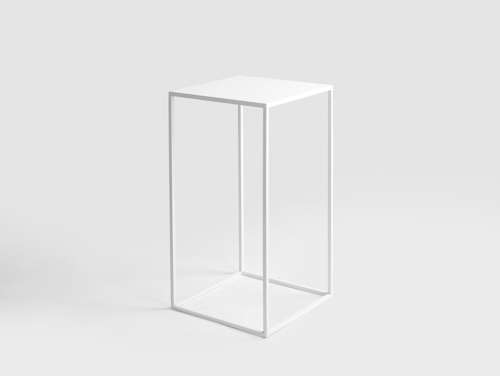
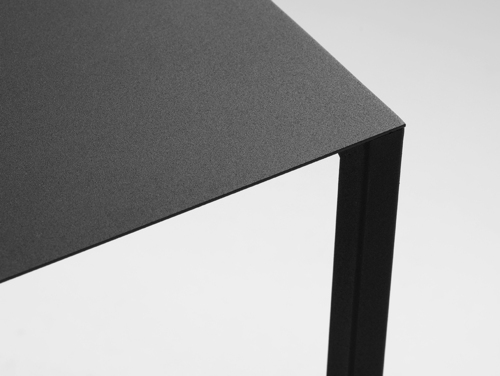
Most metal tables are finished in powder-coated steel – usually black, white, charcoal or a brass tone. The coating is tough and chip-resistant, and matt black hides fingerprints better than gloss. Raw steel under clear lacquer shows its weld seams and mill marks, which is the whole point of the industrial look. Chrome and stainless steel give a polished, café-like shine but show smears. Aluminium is light and does not rust, so it is used mostly for garden tables, while cast iron gives heavy bistro-style bases.
Metal tables room by room
Dining room and kitchen
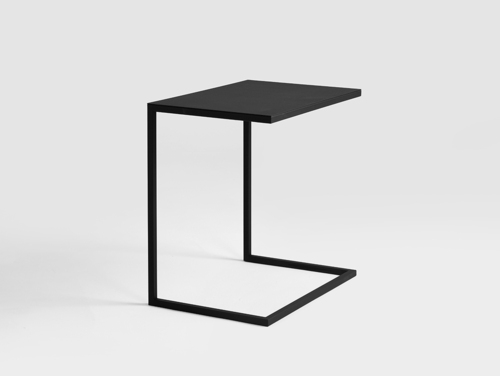
A metal dining table works best when the base suits the room. Four corner legs are the steadiest choice for long tops. A sled base (U- or A-shaped runners) or a central pedestal leaves the corners free, so an extra chair slips in easily at Sunday lunch. A trestle or X-frame looks good under glass, but check knee room at the ends.
Living room
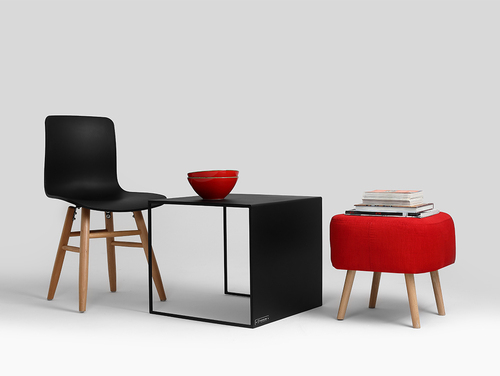
Coffee tables and side tables with metal frames balance a heavy upholstered sofa. Stone or glass on a slim black frame keeps the room feeling open, which helps in smaller British living rooms.
Hallway and bedroom
Console tables and bedside tables in metal are slim enough for tight spaces. A shallow console of 25–40 cm keeps a narrow hallway passable.
Choosing a top
Solid oak, ash or walnut warms up cold steel and gives the classic wood-and-metal look, but timber moves with the seasons, so a good frame has slotted screw holes that let the top shrink and swell. Toughened glass shows off the base and wipes clean, though every fingerprint shows. Ceramic and sintered stone shrug off hot pans and red wine. Marble and granite are the heaviest of all, and that is where a steel frame earns its keep.
Sizes at a glance
| Table |
Typical height |
What to check |
| Rectangular dining table |
74–76 cm |
about 60 cm of length per person, 80–100 cm deep; 140–160 cm seats 4–6 |
| Round pedestal table |
74–76 cm |
90–100 cm across for 4, 110–120 cm for 4–6 |
| Coffee table |
35–45 cm |
roughly two-thirds the sofa length, 40–45 cm from the seat edge |
| Side or lamp table |
45–60 cm |
top level with the sofa arm or just below it |
| Console table |
75–85 cm |
25–40 cm deep |
| Bar or poseur table |
100–110 cm |
stools with a seat 25–30 cm lower than the top |
Leave 28–30 cm between the chair seat and the underside of the top. If the frame runs just below the top, check that carver chairs with arms still tuck in.
Placement and lighting
Allow 75–90 cm of clear floor around a dining table so chairs can slide back and people can walk behind them. A pendant over the table usually hangs with its lower edge 70–80 cm above the top. Repeating the frame's black or brass in the light fitting ties the two together, for instance with metal chandeliers.
Care and common mistakes
- Bare steel feet scratch wooden floors and LVT. Add felt pads, or choose adjustable feet that also level the table on uneven tiles or old floorboards.
- Clean powder coating with a damp cloth and mild washing-up liquid, then dry it. Cream cleaners and scourers dull the finish.
- Touch up chips with matching paint before the steel underneath starts to rust.
- Re-tighten bolted frames after a few weeks; a solid wood top settles.
- Wax raw steel now and then, especially in a kitchen or a damp conservatory.
Frequently asked questions
Can I use an indoor metal table outdoors?
Only if the maker says so. Outdoor tables use aluminium or galvanised, powder-coated steel. An indoor table left on the patio through a British winter tends to rust at the welds and anywhere the coating is chipped.
Is a round metal dining table good for a small room?
Often, yes. A pedestal table 90–100 cm across seats four with no one stuck on a corner, and it is easier to walk around than a rectangle.
Can you get an extendable metal dining table?
Yes, usually on four legs or a sled base with leaves that slot in. Pedestal tables extend less often, because the extra length loads one side of the base.
Are metal tables with drawers practical?
For desks, consoles and bedside tables, a drawer is handy. On a dining table it eats into knee room, so check the clearance under it.
Does a metal table go with wooden dining chairs?
Easily. A black frame with an oak or walnut top bridges the two, and mixed sets often look less staged than a matching table and chairs.
How can I tell steel from aluminium?
Use a fridge magnet: it sticks to steel, not to aluminium. Steel is heavier and stiffer, aluminium lighter and rust-free.
For tables in other materials and shapes, see tables.