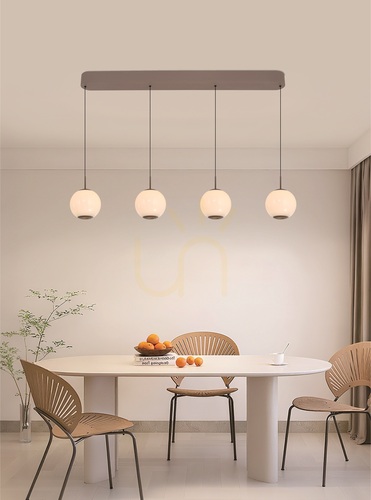
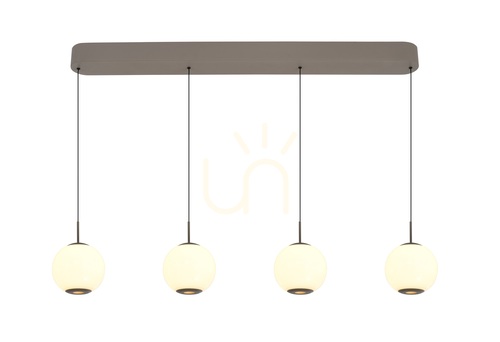
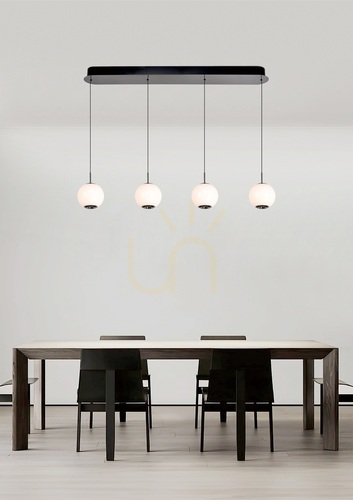
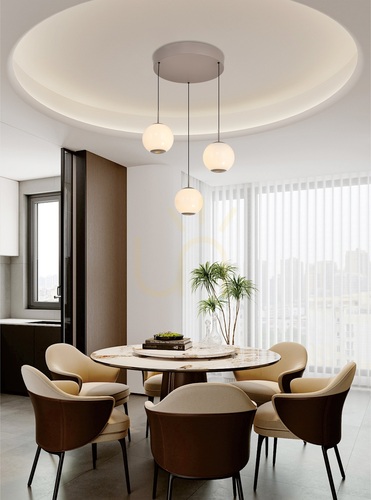
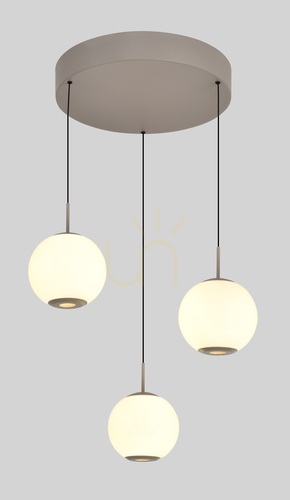
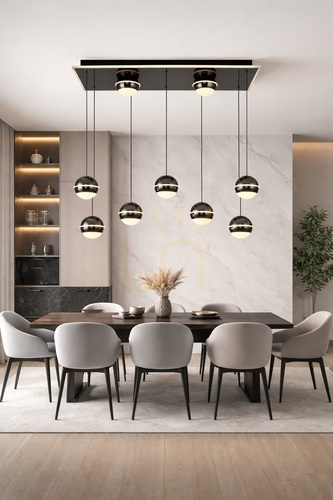
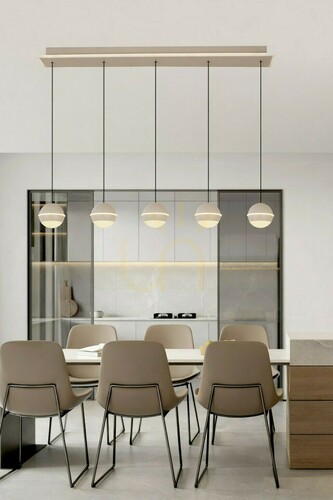
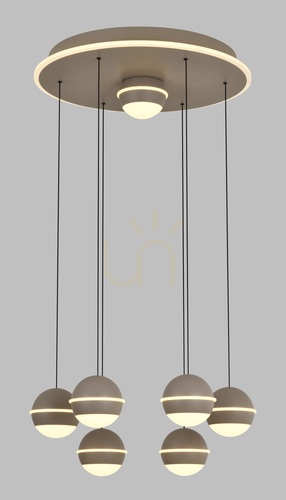
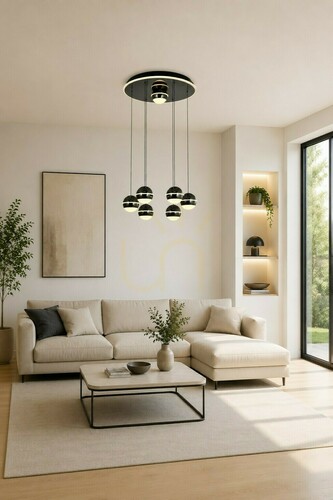
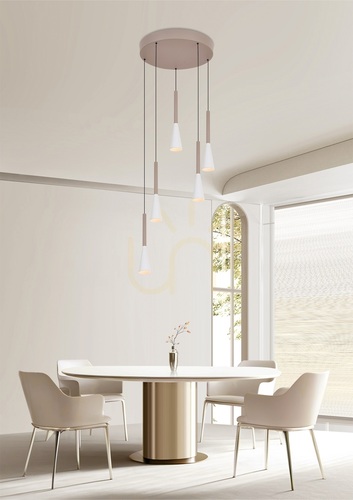
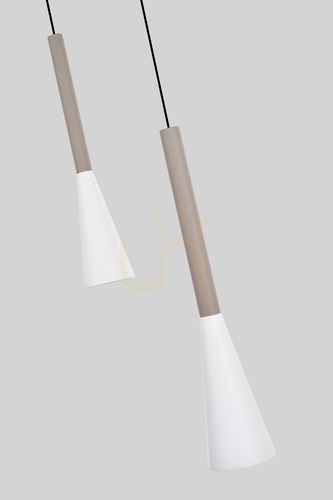
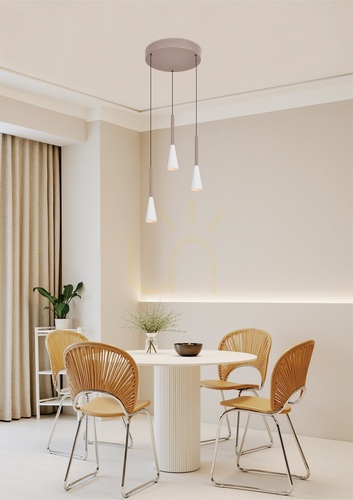
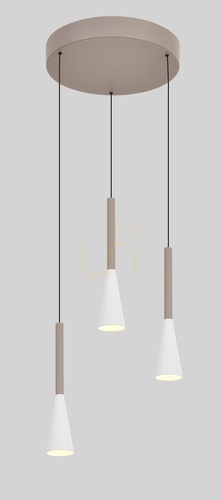
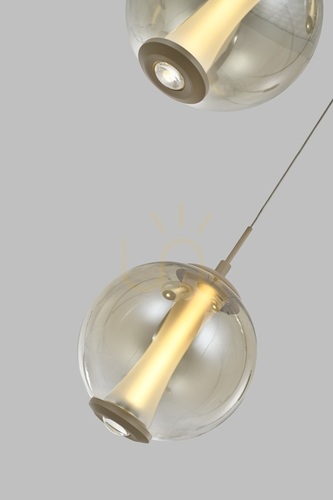
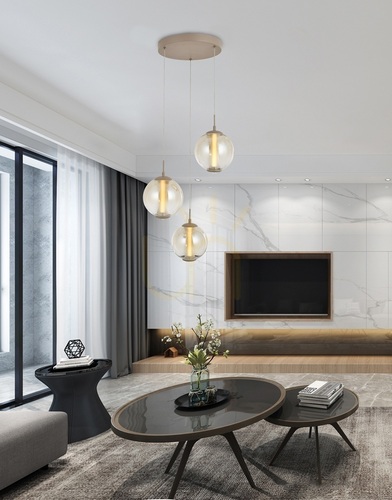
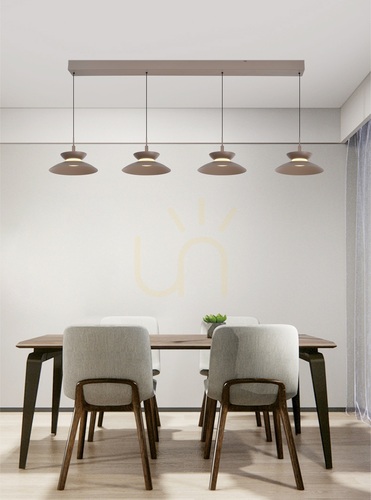
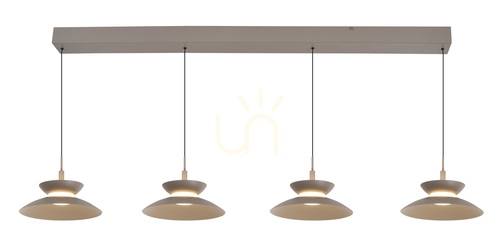
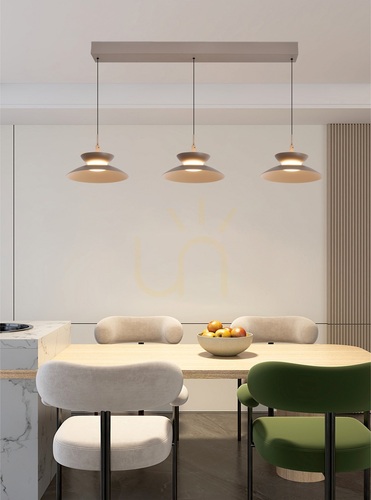
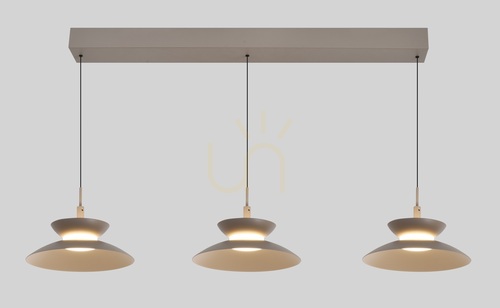
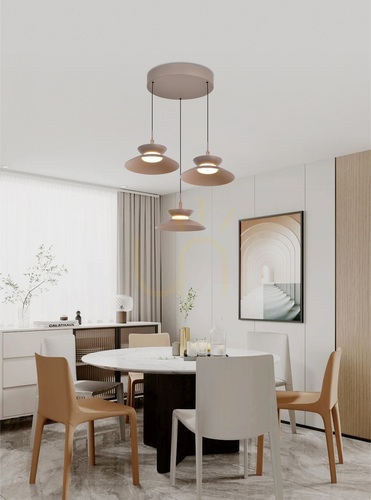
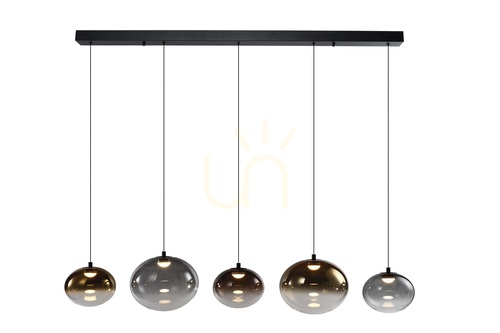
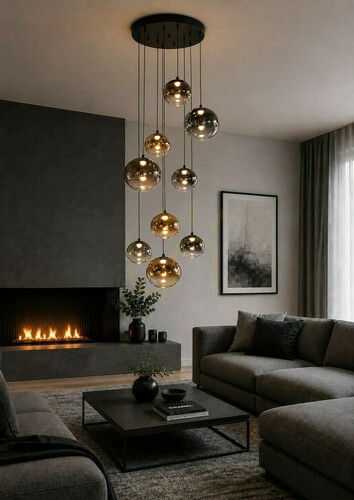
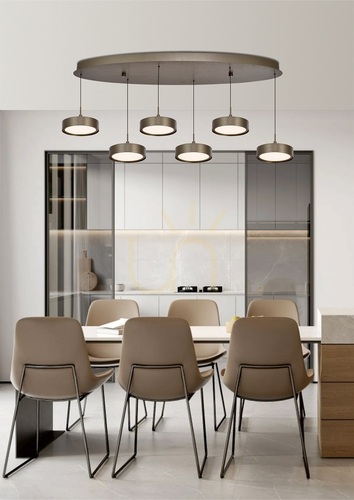
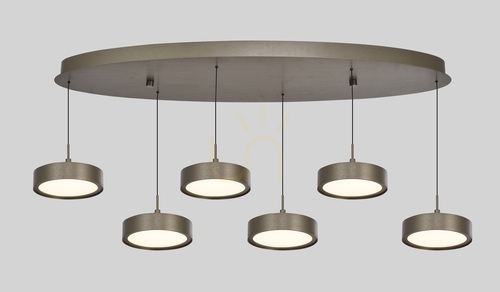
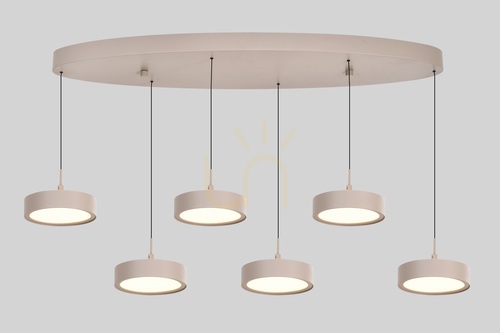
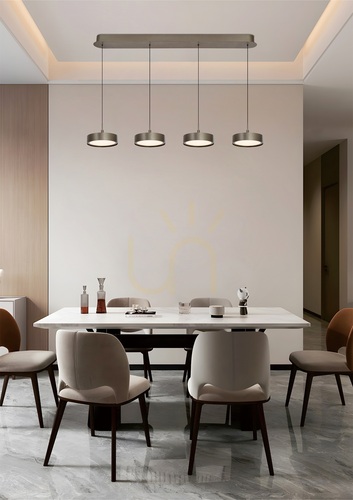
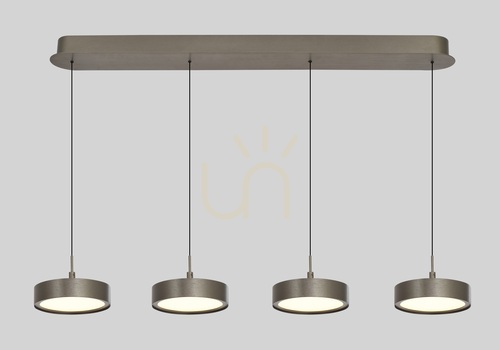
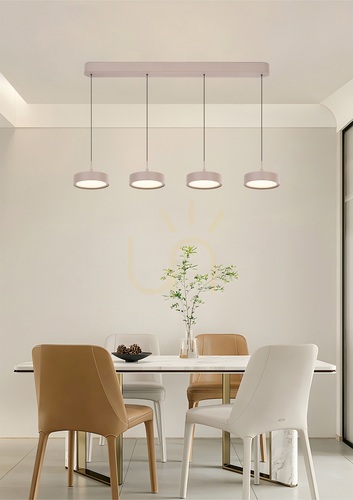
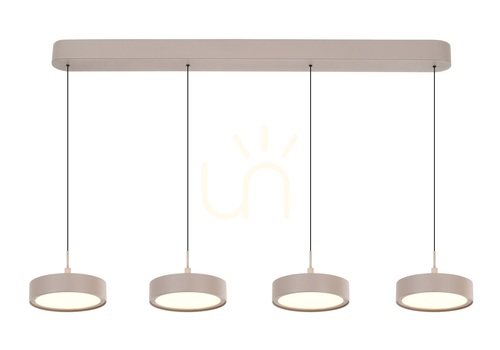
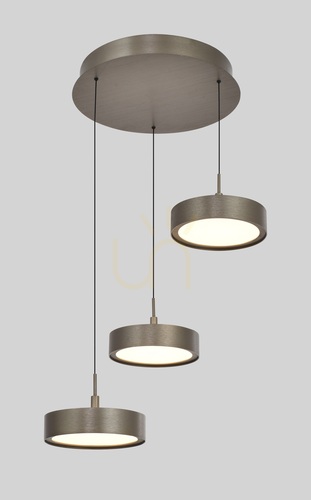
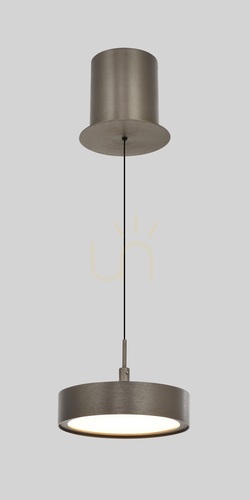
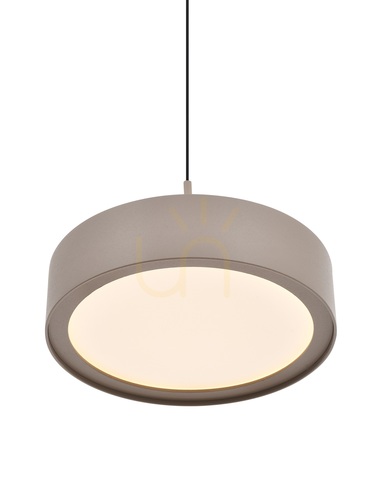
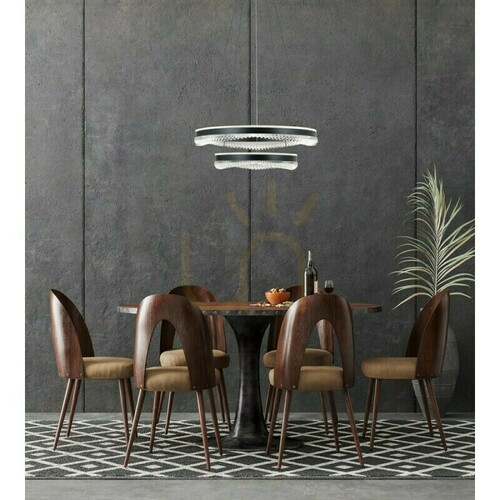
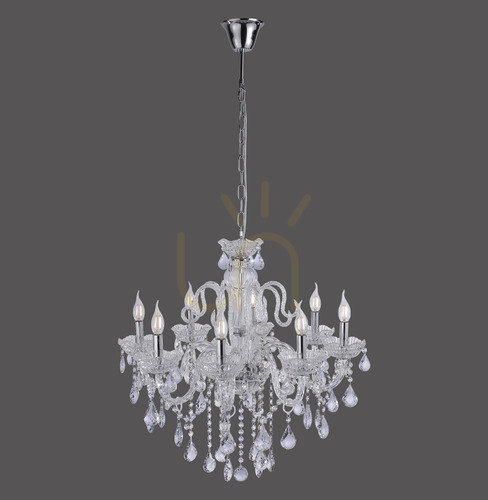
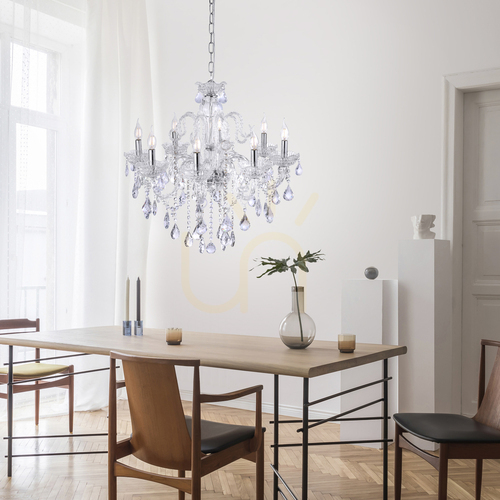
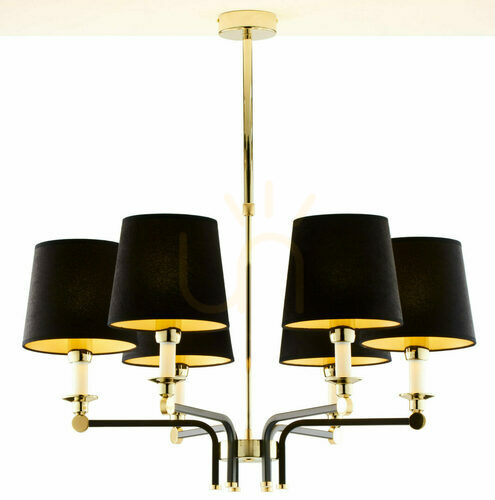
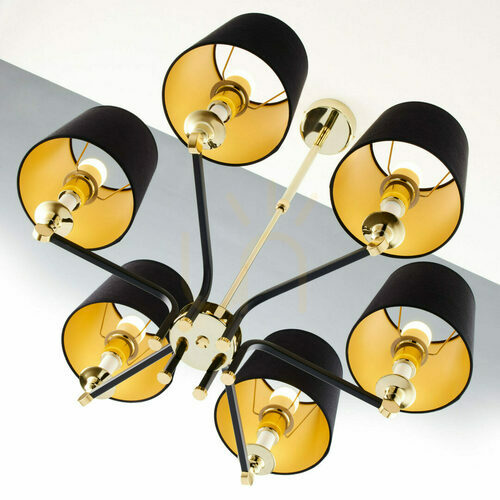
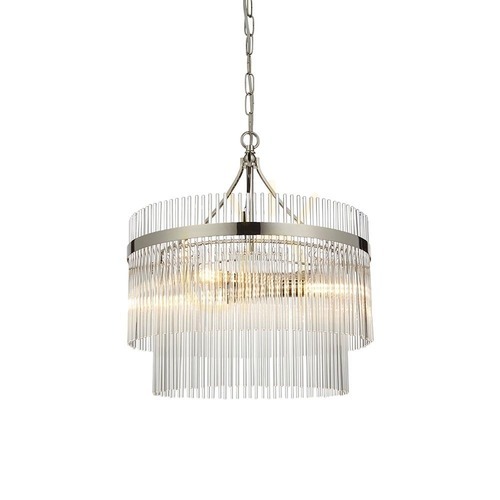
A metal chandelier is a multi-light ceiling fitting whose frame – arms, ring, cage or shades – is made of metal. That choice shapes far more than the look: it decides where the light goes, how much the fitting weighs and what your ceiling needs to hold it.
The category stretches from hand-forged cartwheels in a farmhouse kitchen to slim brass arms in a Georgian drawing room and matt black cages in a converted warehouse. What links them is a structure you can see, and that structure behaves differently from glass, crystal or fabric.
Wrought iron, steel, brass: what you are actually buying
Most chandeliers sold as ‘wrought iron’ today are mild steel shaped and finished to look forged. That is not a flaw – steel is lighter and more consistent – but genuine hand-forged iron, with hammer marks and slightly irregular scrolls, is a different, heavier and pricier object. If authenticity matters to you, ask the question before you buy.
-
Powder-coated steel – the everyday base: black, white, graphite or gold, a tough even finish.
-
Wrought or forged iron – rustic and traditional styles: cartwheels, birdcages with scrolled candle arms, gothic lanterns.
-
Brass – solid or plated; brushed for a soft glow, polished for shine, antiqued for period homes.
-
Chrome and nickel – cool and reflective, often paired with glass or crystal drops.
-
Aluminium – light enough for large rings and linear designs, usually with integrated LEDs.
Sizing for British rooms
Ceiling height is the starting point. New-build homes often sit around 2.4 m, while Victorian and Edwardian rooms commonly reach 2.7–3.3 m. A chandelier that looks generous under a period ceiling can feel oppressive in a modern semi.
| Situation |
Rule of thumb |
Example |
| Living room diameter |
(room length + width in m) × 8–10 = diameter in cm |
4 × 5 m room → roughly 70–90 cm |
| Over a dining table |
1/2 to 2/3 of the table width |
90 cm table → 45–60 cm fitting |
| Drop over the table |
bottom edge 75–85 cm above the top |
shorten chain or rod before fitting |
| Walkways and halls |
at least around 2.1 m clear headroom |
2.4 m ceiling → flush or semi-flush |
| Lamp holders |
E14 SES (small Edison screw) candle, E27 ES, B22 bayonet, B15 small bayonet, G9 or integrated LED |
check before buying spare bulbs |
| Colour temperature |
2700–3000 K with brass and black |
up to 4000 K for a kitchen work light |
How metal shapes the light
Metal is opaque, so the light goes only where the shades or bulbs point. Downward shades put a strong pool of light on a table but leave the ceiling dim. Upturned bowls bounce light off the ceiling and spread it softly – the better choice where the chandelier is the main light in a living room. Bare bulbs on open arms look striking but can glare, so decorative filament LEDs and a dimmer help.
The finish matters too. Matt black absorbs some light and reads as a strong silhouette against a white ceiling. Brass and gold warm the light; chrome scatters cooler highlights.
Fitting a metal chandelier safely
Metal fittings are almost always Class I, which means the earth conductor must be connected. Some older homes, particularly those whose lighting circuits were wired before about 1966, may have no earth at the ceiling rose. Wiring must meet BS 7671, and if you are unsure about the circuit or how to connect it, use a registered electrician.
Weight is the other issue. Forged iron and solid brass can easily exceed 10 kg, which is more than a standard ceiling rose is designed to carry. A heavy fitting needs a secure fixing into a joist or a strong bracket between joists; plasterboard alone will not do.
Care and common mistakes
- Switch off and let the lamps cool before cleaning.
- Dust powder-coated and black finishes with a dry microfibre cloth; remove kitchen grease with a damp cloth and a drop of washing-up liquid, then dry straight away.
- Never use metal polish on lacquered brass – it strips the lacquer. Unlacquered brass darkens over time; polish it or enjoy the patina.
- Dry chrome after wiping or it will show water marks.
- Keep iron and bare steel out of bathrooms unless the fitting has a suitable IP rating – typical indoor chandeliers are IP20.
- Check the maximum wattage on the label; LED bulbs keep metal shades far cooler.
Frequently asked questions
Do I need an electrician to fit a chandelier?
Replacing a like-for-like light fitting is within reach of a competent DIYer, but a heavy metal chandelier involves both an earth connection and a load-bearing fixing. If either is in doubt, a registered electrician is the sensible route.
What size metal chandelier suits a living room?
Use the rule in the table, then check it against your ceiling height. In a room with a 2.4 m ceiling, a wide but shallow design usually works better than a tall, tiered one.
Are large metal chandeliers too heavy for a ceiling?
Not if they are fixed properly. Find the weight on the specification, then make sure the fixing goes into a joist or a bracket rated for it.
Is a vintage wrought iron chandelier safe to use?
The ironwork usually lasts for generations, but old cable and lamp holders become brittle. Have it rewired and earthed by an electrician before hanging it.
What makes a modern metal chandelier look modern?
Simpler geometry – rings, linear bars, wire cages, exposed bulbs – and finishes such as matt black or brushed brass, often with integrated LEDs instead of candle bulbs.
How do I clean a black metal chandelier?
A dry microfibre cloth or soft duster for routine dusting, a barely damp cloth for marks. Avoid abrasive pads and solvent-based cleaners, which leave shiny patches on matt finishes.
To compare metal with other materials, start with indoor chandeliers. For the radiating, mid-century take on a metal frame, see Sputnik chandeliers.