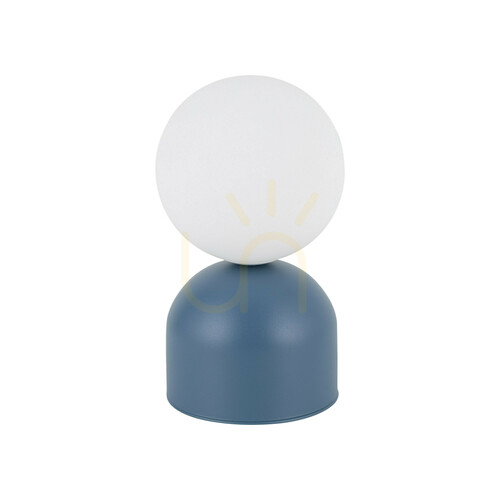
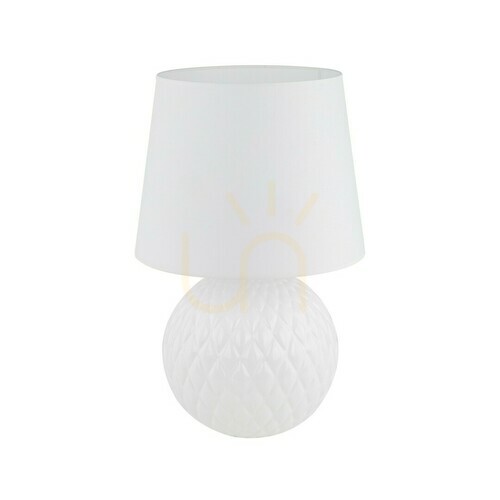
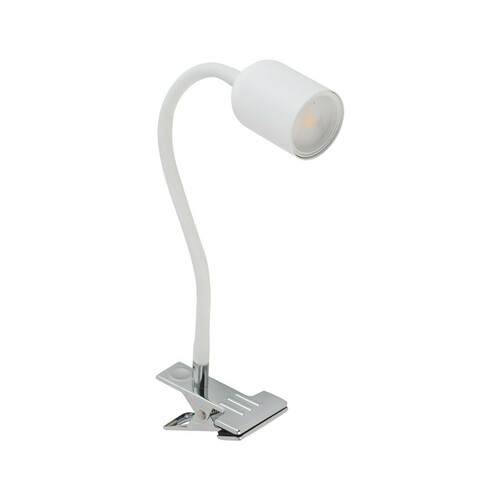
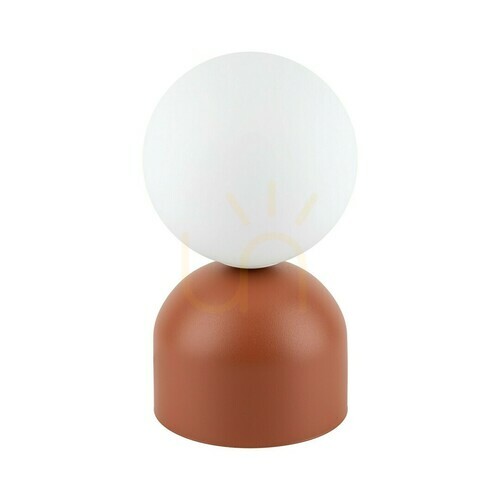
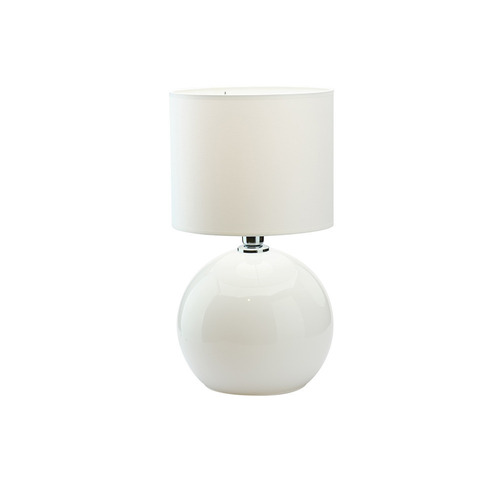
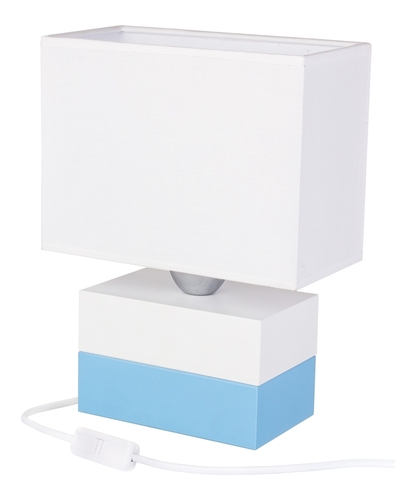
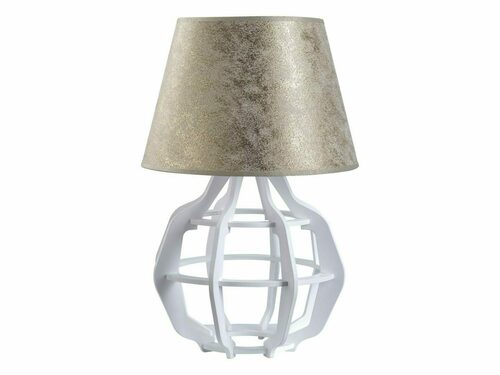
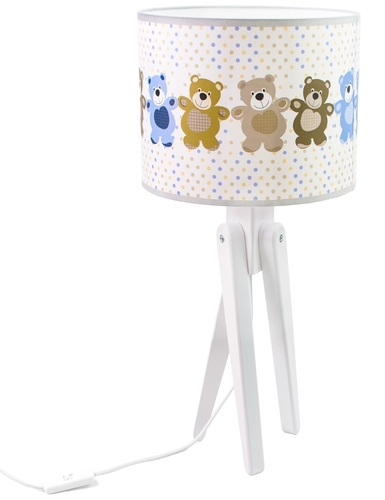
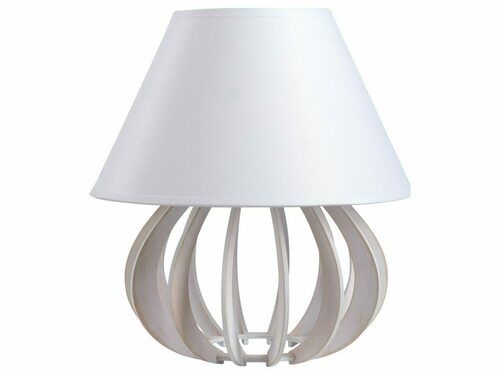
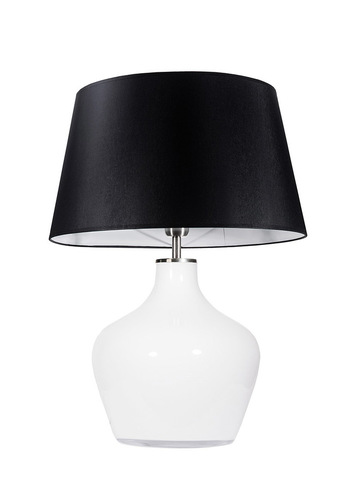
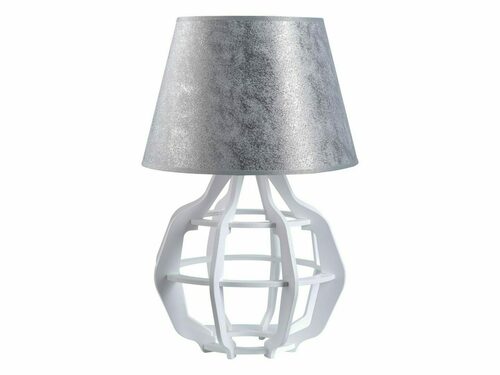
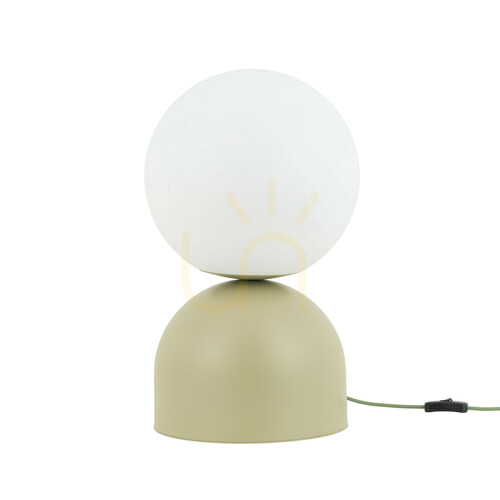
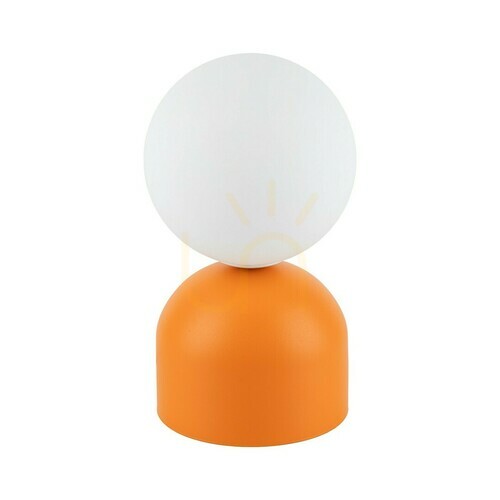
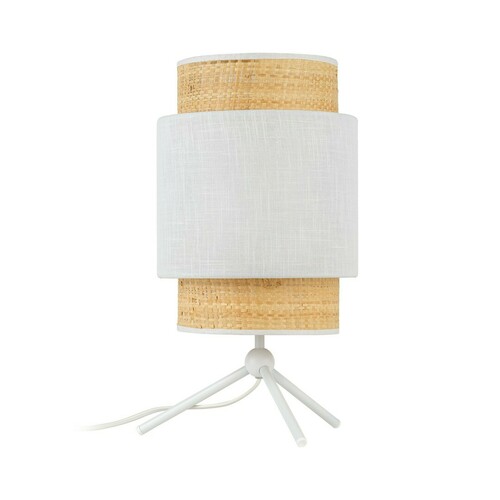
A white bedside lamp is a small table lamp sized for the bedside table, finished in white so it sits quietly against pale walls and bedding. White also has a practical effect on the light: a white shade or a white-lined interior adds no colour of its own, so the lamp gives off exactly the warmth of the bulb inside it, spread softly and evenly.
What "white" means varies a lot, though. Opal glass, glazed ceramic, cotton or linen shades and powder-coated metal all look white in a photo, yet next to the bed one glows like a lantern, another throws a tight pool of light onto your book. Picking the right one comes down to how you use the lamp after dark.
Bedside lamp or table lamp?
There is no technical line between the two. A bedside lamp is simply a table lamp chosen for a smaller surface and a closer viewer: usually shorter, with a narrower base, a switch you can reach lying down and a shade that keeps the bulb out of your eyes. A tall lamp from the living room often dazzles once it is half a metre from your pillow.
How the white finish changes the light
-
Fabric shades in cotton, linen or laminated fabric let some light through the sides and push the rest up and down. Cosy and familiar, but a bright bulb behind a thin white shade will light up your partner's side too.
-
Opal (milk) glass diffuses light evenly with no visible bulb. Switched on, the whole globe or cylinder glows. Lovely as mood lighting, less good for reading, because you cannot aim it.
-
Metal shades, white outside and bright inside, block light completely. The beam falls downward or can be angled on a hinged head – the best set-up if one of you reads while the other sleeps.
-
Ceramic bases in gloss white read as classic and wipe clean easily; matt white ceramic looks softer and more Scandinavian, but shows fingermarks sooner.
Sizing, bulbs and switches
Start with the bedside table rather than the lamp. Most sit roughly level with the top of the mattress, and the bottom edge of the shade should land around chin height when you sit up against the headboard.
| What to check |
Typical for a bedside |
Why it matters with white |
| Overall height |
around 35–55 cm; mood lamps 15–30 cm |
An opal globe at eye level glares more than a fabric shade |
| Shade width |
roughly 18–35 cm, never wider than the table |
A large white shade looks bigger than a dark one of the same size |
| Bulb fitting |
B22 bayonet, E27 (ES) or E14 (SES); some have built-in LEDs |
Check the maximum wattage printed near the lamp holder |
| Colour temperature |
warm white, 2700–3000 K |
From 4000 K a white shade starts to look clinical |
| Brightness for reading |
about 400–500 lm |
Translucent shades lose some of that to the sides |
| Switch |
inline on the flex, on the base or touch |
Matt white touch bases pick up marks where you tap |
Bayonet (B22) holders are still common on UK lamps, and screw fittings are everywhere on lamps designed for continental Europe, so note the fitting before you buy spare bulbs. A lamp with a replaceable bulb is easy to tune: swap to a warmer or brighter LED any time. Integrated LEDs allow slimmer shapes, but when the module fails, the whole lamp usually has to go. Plug-in table lamps need no electrician – just a UK plug, typically fused at 3 A for lighting.
Matching white to your bedroom
Pure, cool white can look grey or slightly blue against a warm off-white wall. Hold a sheet of printer paper against the wall and your bedding in daylight: if both look creamy next to it, an ivory or natural-white shade will sit better than a stark one. Against dark painted walls the opposite happens and a white lamp becomes the accent – a matching pair either side of the bed frames it neatly. Pale oak with white gives a Scandi feel; brass or gold details warm the look and suit more traditional rooms.
Care and common mistakes
Dust shows on white straight away. Go over fabric shades with a soft brush or lint roller and spot-clean marks with a barely damp cloth; never soak a shade glued to a rigid liner. Lift glass shades off and wash them in warm soapy water, then dry thoroughly. Metal and ceramic just need a damp wipe.
Heat is what yellows white fabric and plastic over the years, so never exceed the maximum wattage on the lamp – LED bulbs run far cooler than old incandescents. The other classic mistake is an over-bright bulb in an opal lamp, which turns a gentle glow into a glaring blob.
Frequently asked questions
Are touch lamps any good for bedside use?
Very much so if you hate fumbling for a small switch in the dark. Most touch lamps step through three or four brightness levels, handy for winding down. On matt white bases the touch spot can show marks, so gloss or metal is easier to keep clean.
What is the difference between a table lamp and a bedside lamp?
Mainly size and position. A bedside lamp is smaller, shaded to avoid glare at close range and has its switch within reach of the bed.
Can a desk lamp work as a bedside lamp?
Yes, and an adjustable arm is great for reading in bed. Just check it does not shine in the face of whoever sleeps next to you; a white desk lamp with a hooded head handles this well.
Which bulb colour suits a white lamp?
Warm white at 2700 K keeps a white shade looking soft. For late evening, 2200–2400 K bulbs feel even calmer.
Will a white shade turn yellow?
It can, mostly from heat and direct sun. LED bulbs and a spot away from the window slow it down a great deal.
Do I need a pair?
For a double bed, usually yes – each side gets its own light, and two identical white lamps make the room look calm and ordered.
For other colours, shapes and power options by the bed, head back to bedside lamps.