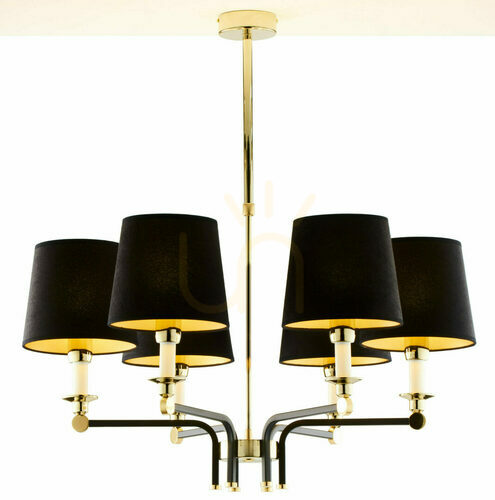
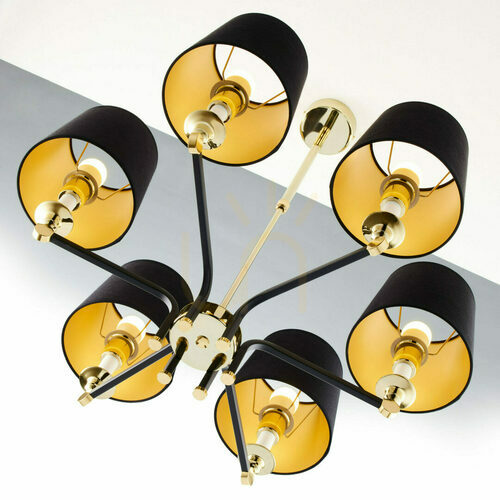
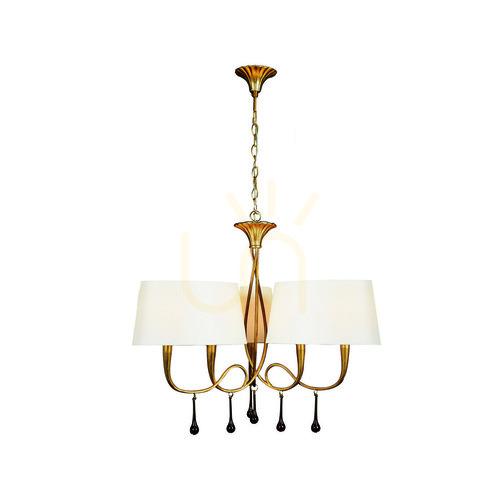
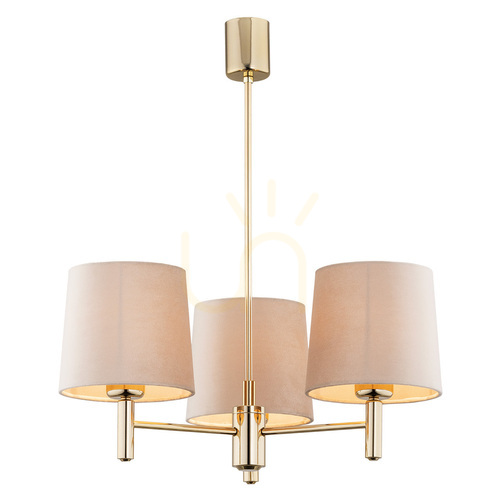
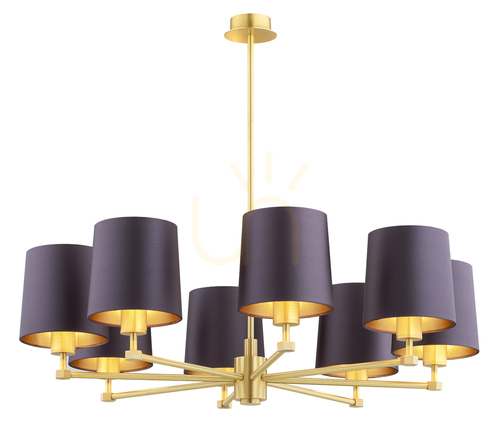
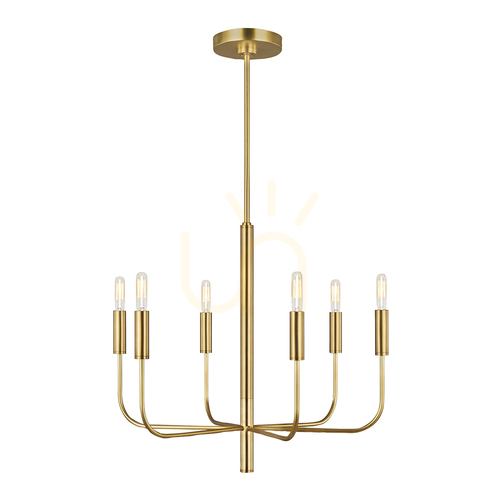
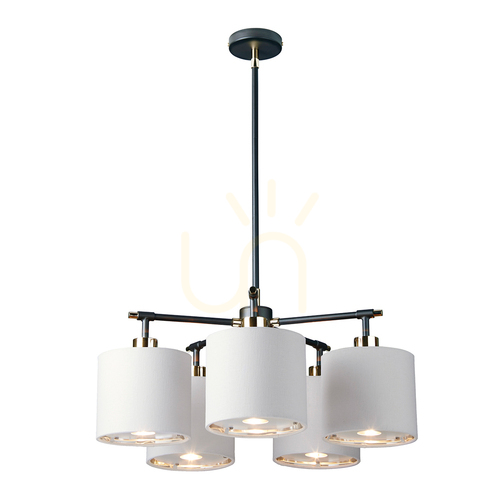
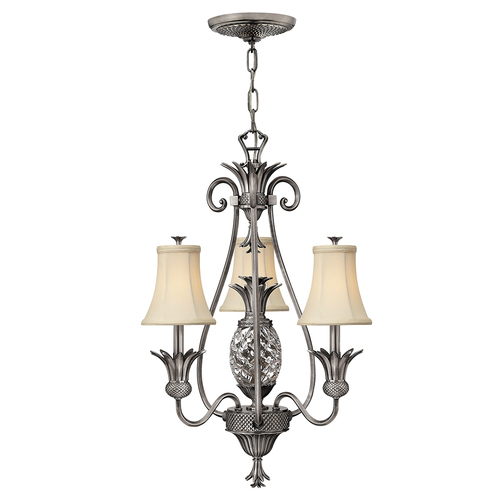
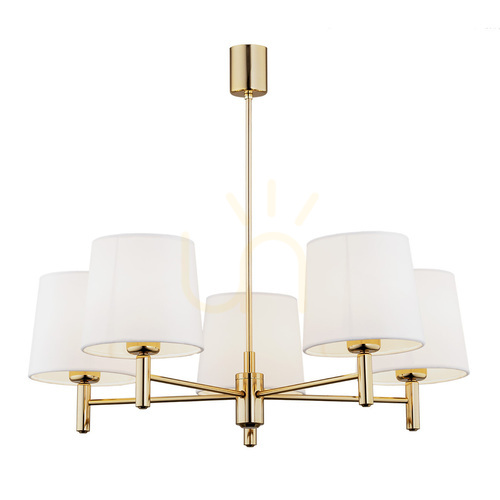
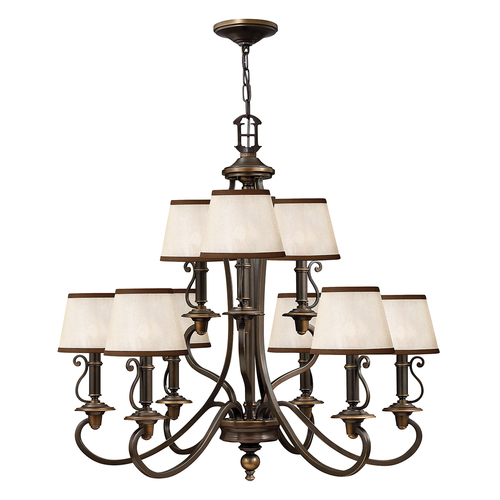
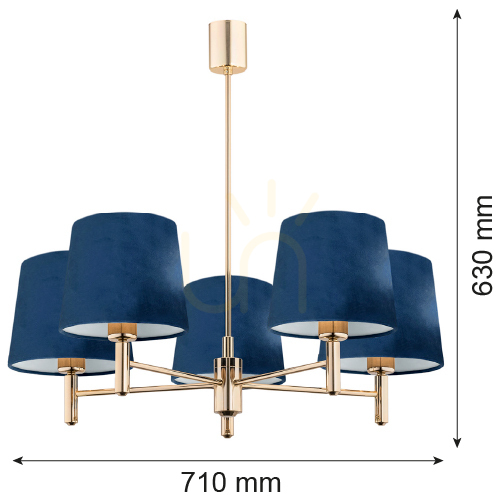
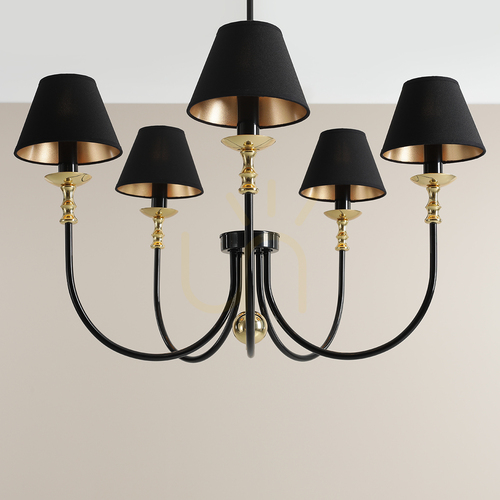
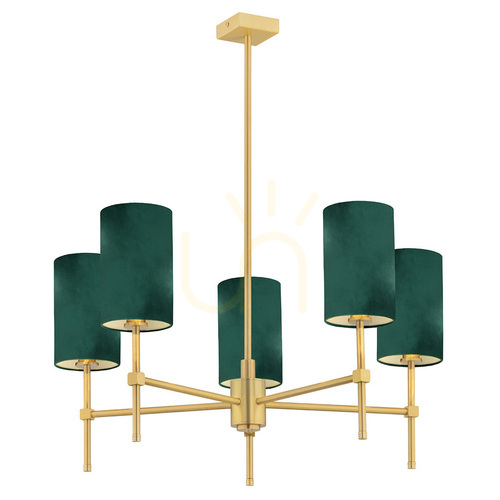
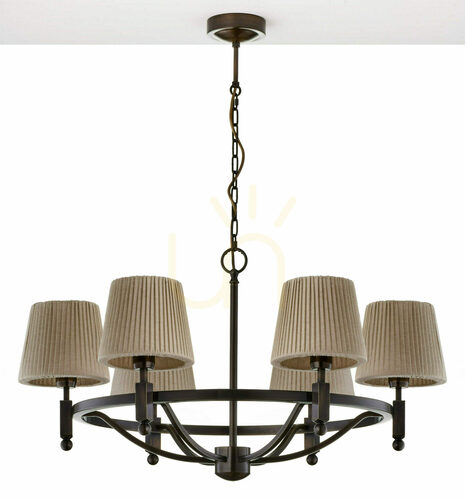
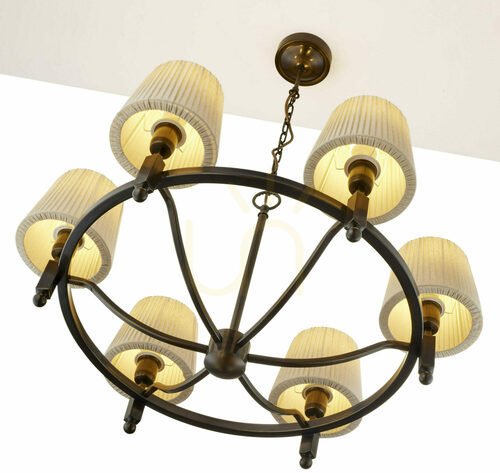
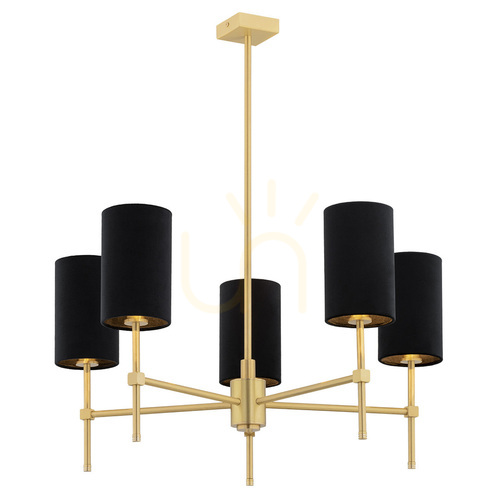
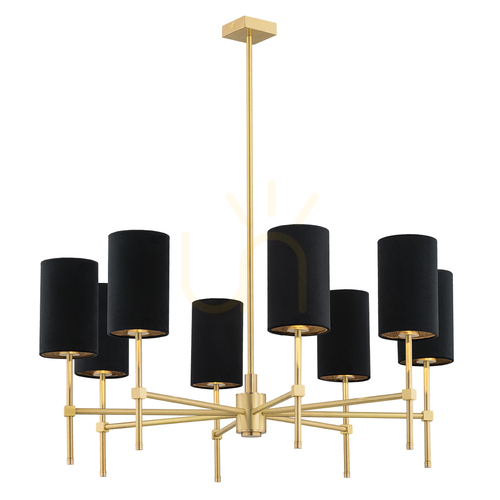
A chandelier with shades is a multi-light fitting in which fabric wraps the bulbs, either a small shade on every arm or one large drum around the whole cluster. The fabric softens the glare of bare bulbs into an even, warm glow, while the open top and bottom of each shade throw pools of light onto the ceiling and the table below.
Choosing fabric over glass or crystal changes more than the look. It sets how much light actually reaches the room, what colour that light takes on, and which bulbs you should be fitting.
Candle shades, drums and pleats
-
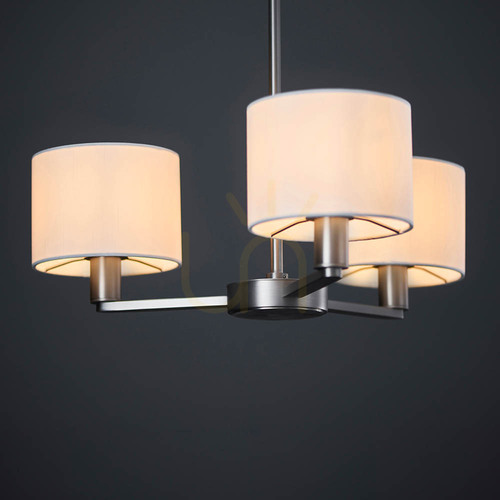
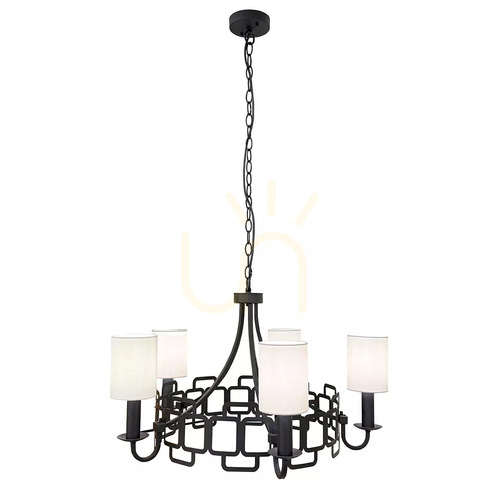
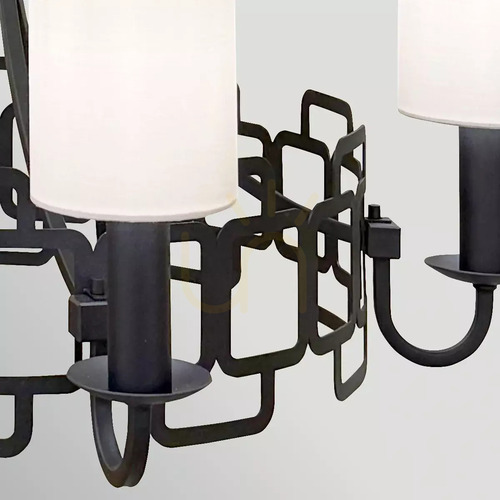
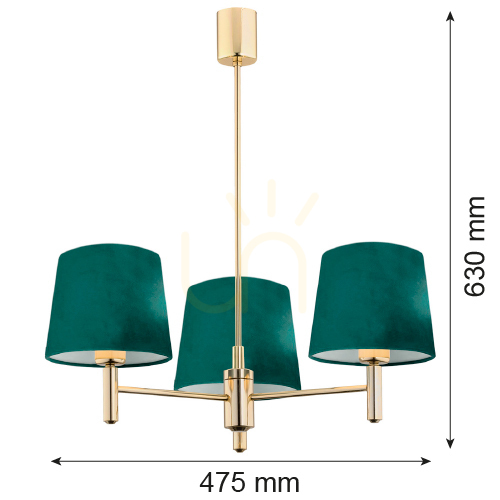
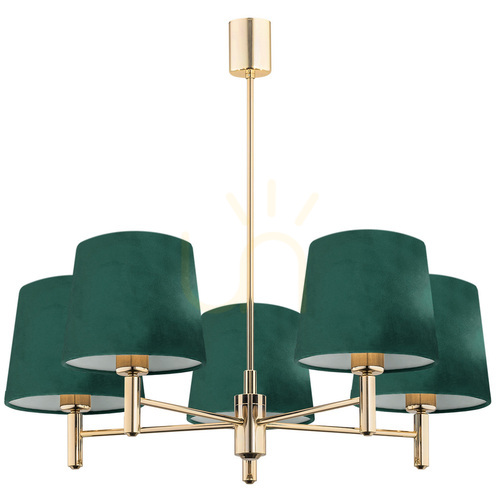
Arm chandelier with candle shades – the traditional shaded chandelier: usually three to five arms, larger pieces many more, each with its own small shade over a candle bulb. It suits period rooms, country-style dining rooms and anything with a touch of glamour.
-
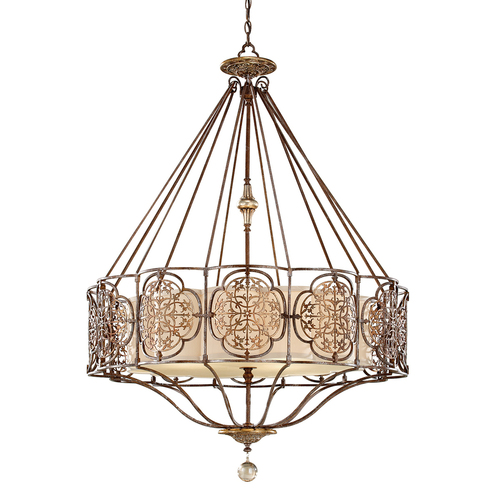
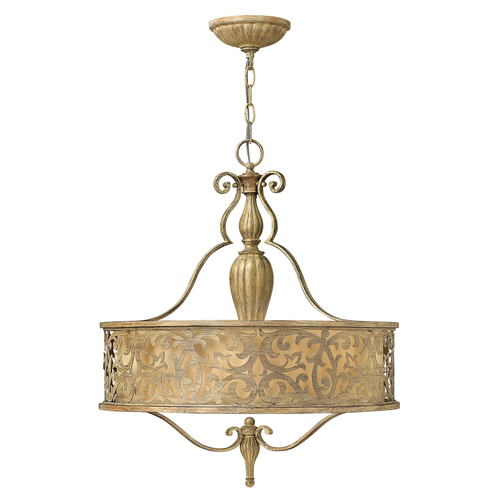
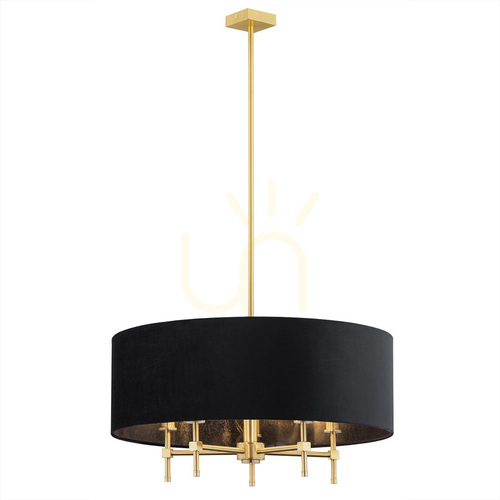
Drum shade chandelier – one wide drum, sometimes tiered, hides several lampholders. A diffuser underneath stops you looking straight into the bulbs, and dressier versions add crystal or glass drops beneath it. It gives a calm, even spread and sits happily in contemporary living rooms and bedrooms.
-
Pleated and shaped shades – pleated linen or silk-look fabric, empire and tapered shapes, oval drums for long dining tables.
Shades come in linen and linen mixes, cotton, velvet, faux silk and pleated fabrics. A white laminate lining bounces light back out; a metallic lining pushes more of it downwards.
How the shade colour affects brightness
A pale fabric shade passes roughly 20–40% less light than opal glass; dark fabrics block far more. White shades let the most through and lift the whole room. Cream and ivory warm the tone. Grey, charcoal and black shades let very little pass, so the light escapes up and down and you get dramatic pools rather than general brightness. A tight weave glows evenly; an open linen weave shows the bulb as a faint pattern. If the shades are dark, plan a floor lamp or wall lights for reading.
Sizing for British rooms
| Situation |
Typical guide |
| Standard modern ceiling, about 2.4 m |
flush or semi-flush shaded fitting, or a short drop |
| Period property, 2.7–3.2 m |
full drop on chain or rod, a larger diameter |
| Head clearance in a walkway |
at least about 2.1 m from floor to the bottom of the fitting |
| Diameter for the room |
room length + width in metres × 10 = diameter in cm |
| Over a dining table |
½–⅔ of the table width, bottom 75–90 cm above the top |
| Lampholders |
SES (E14) for candle bulbs; ES (E27) or BC (B22) for larger drums |
| Colour temperature |
warm white, 2700–3000 K |
Before buying replacement bulbs, check the cap. British homes still use plenty of bayonet fittings, while shaded chandeliers are more often screw-cap, and the two are not interchangeable.
Installation and where fabric works
In England and Wales, electrical work in the home falls under Part P of the Building Regulations, and fixed wiring should meet BS 7671. Even a straight swap at an existing ceiling rose is best left to a registered electrician, who will also check that the ceiling fixing can take the weight of a heavier chandelier. Most chain, rod or cable drops can be shortened on site.
Fabric shades are ideal in living rooms, dining rooms, bedrooms and generous hallways. Keep them away from the hob, where grease settles into the weave, and out of bathrooms, where steam warps shades and encourages mould. In an open-plan kitchen, hang the chandelier over the table rather than the cooking zone.
Bulbs and cleaning
LED bulbs are the right choice under fabric. They run far cooler than incandescent or halogen, so the shade will not yellow or scorch from the inside. Never exceed the maximum wattage on the fitting, and keep the bulb clear of the fabric. For dimming you need dimmable bulbs and a compatible dimmer.
Dust on a shade can noticeably dull the light. Switch off at the wall first, then go over the fabric with a lint roller, a soft brush or the upholstery tool of your vacuum on low suction. Never machine-wash a shade, and do not rub linen with a wet cloth, which leaves tide marks. Treat stains locally with a barely damp sponge.
Frequently asked questions
What's the difference between a pendant light and a chandelier?
A chandelier has several light sources, on arms or under a shared shade, and lights the whole room. A pendant usually hangs a single shade over one spot, such as a table or kitchen island.
How do you make a chandelier look modern?
Go for contrast and clean lines: plain drum or cylinder shades, slim black or brass arms, and pale fabric against a dark frame. Swapping fussy pleated shades for simple ones can update an older piece.
Is a drum shade chandelier bright enough for a living room?
With a white or ivory drum and three to five LED bulbs it usually lights a medium living room well. Darker drums are better treated as mood lighting with lamps alongside.
Can I add fabric shades to an existing chandelier?
Usually, yes. Clip-on shades grip the glass of a candle bulb; ring-fitting shades sit on the lampholder and are clamped by its threaded shade ring, in SES or ES sizes. Check the bulb shape and the fixing before buying.
Do pleated shade chandeliers suit a modern home?
They can. Fine pleats in plain linen on a simple frame look relaxed and current; tight pleats in silk-look fabric lean more traditional.
What size should a large shade chandelier be?
Use the length-plus-width rule as a starting point and go slightly bigger over a dining table in a high-ceilinged room, keeping the bottom of the drum at a comfortable height.
If a single shade over the table is all you need, have a look at fabric pendant lights. For chandeliers in glass, crystal and metal, head to chandeliers.