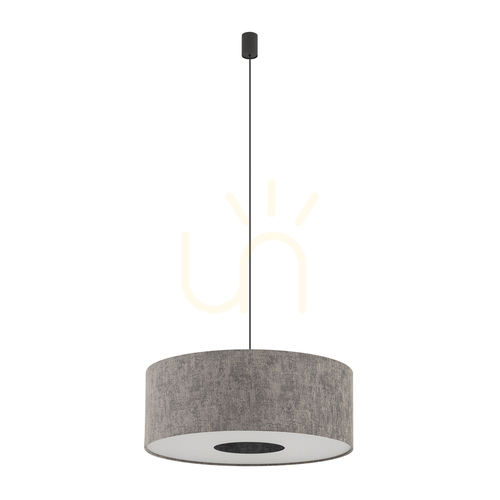
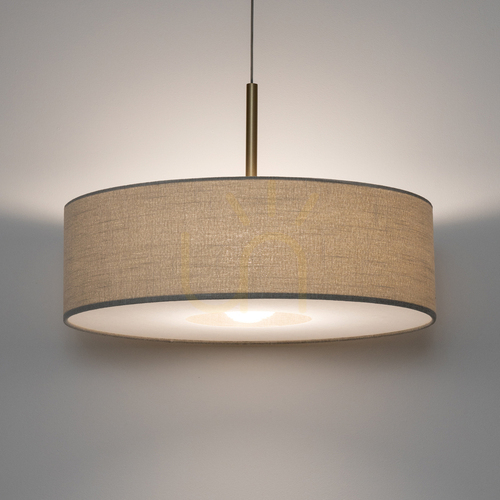
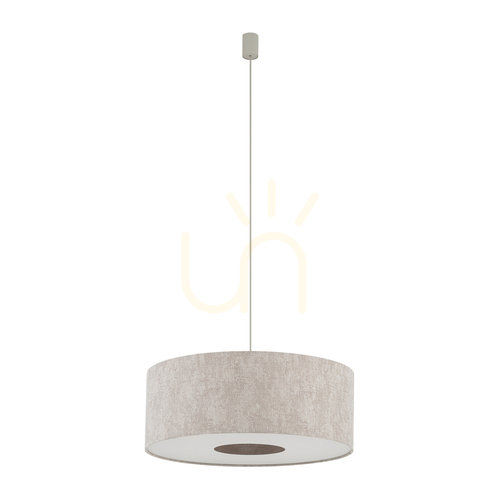
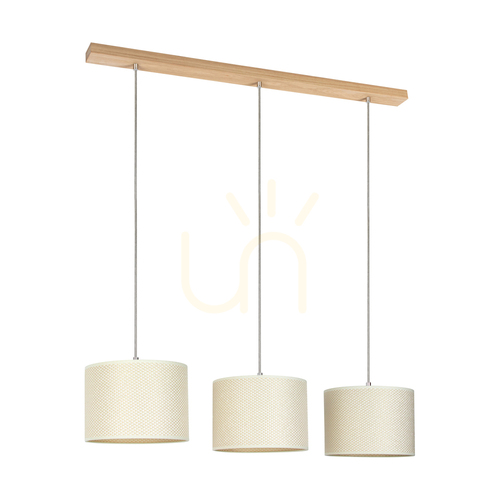
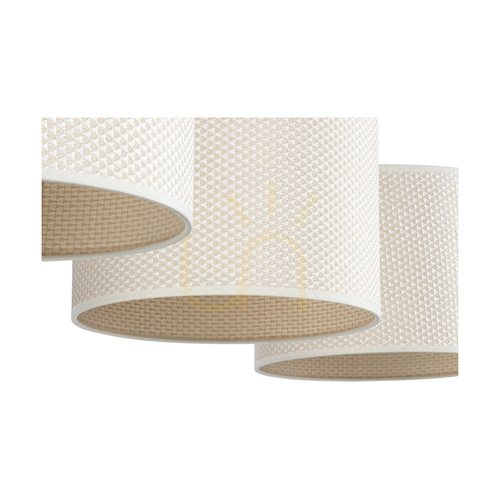
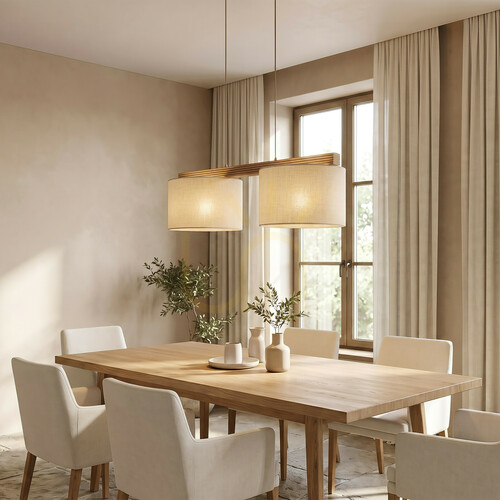
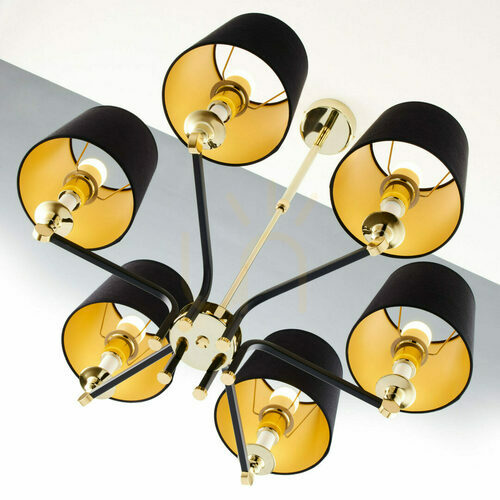
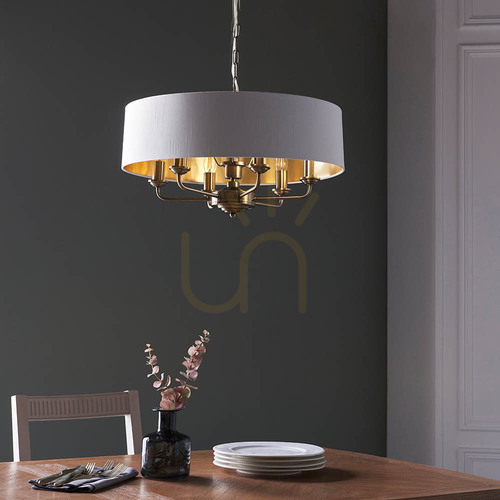
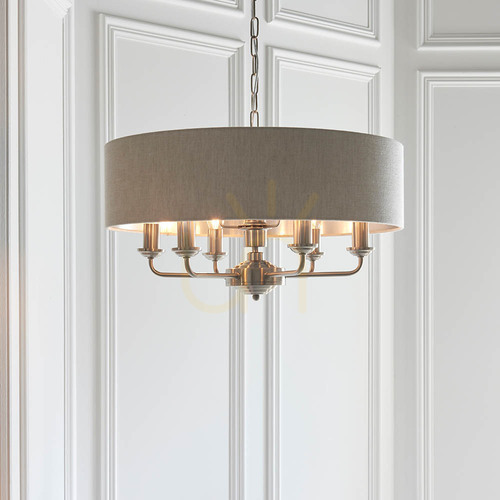
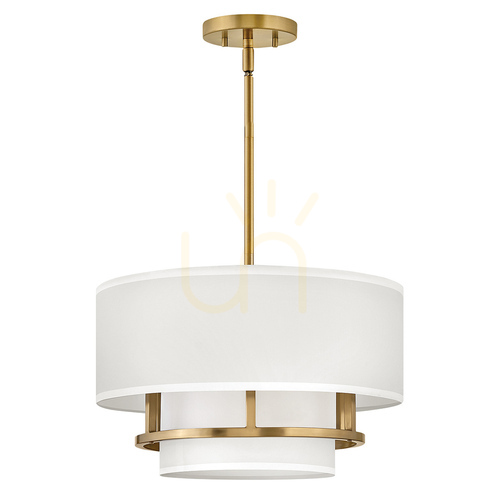
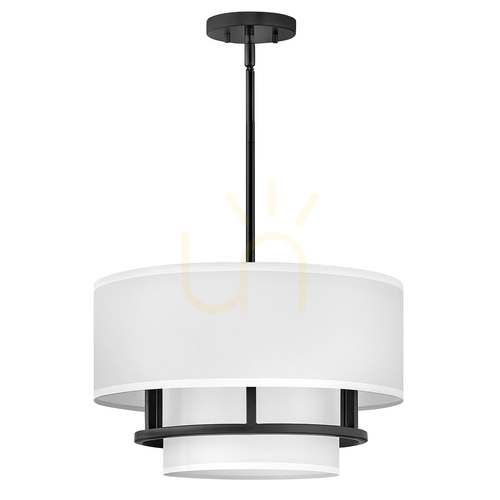
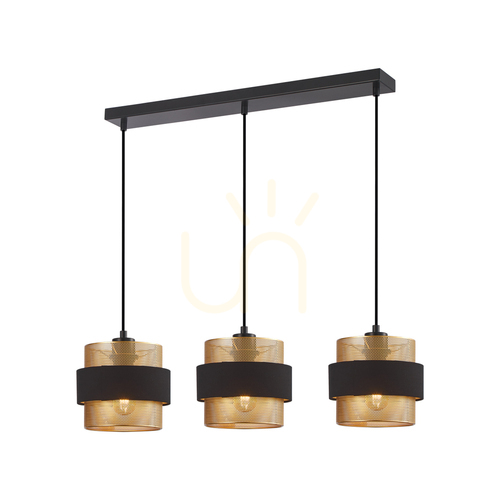
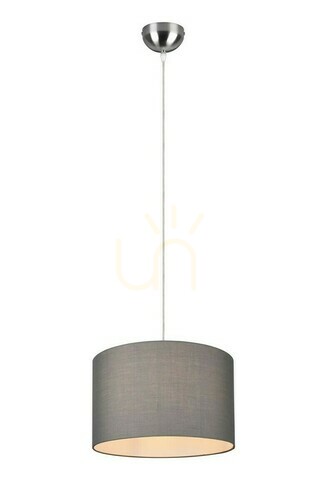
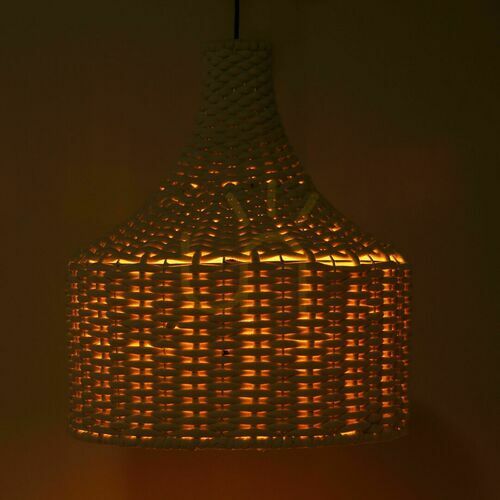
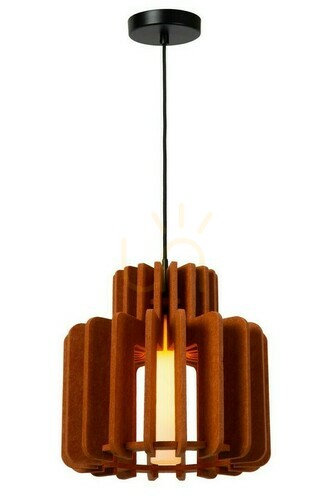
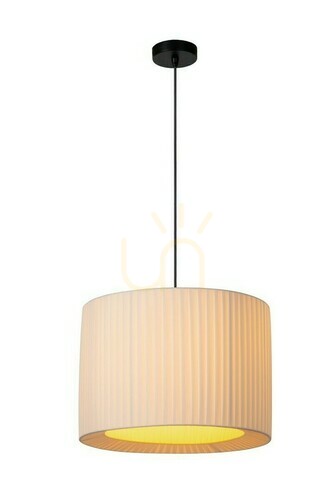
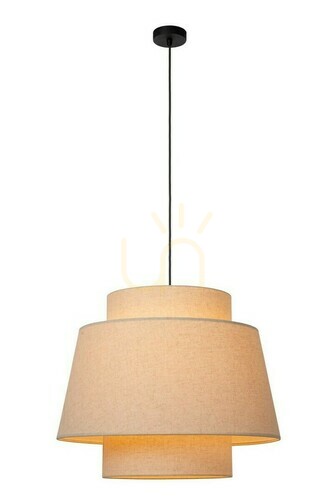
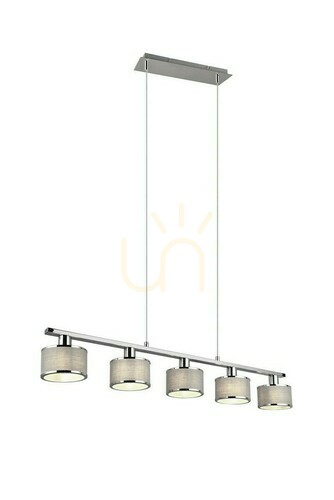
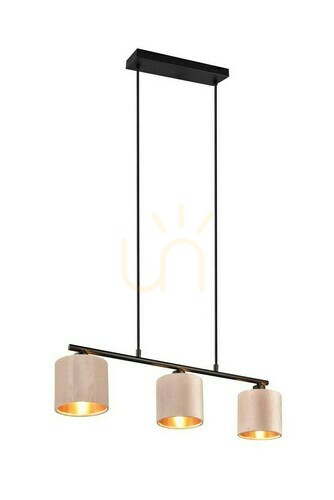
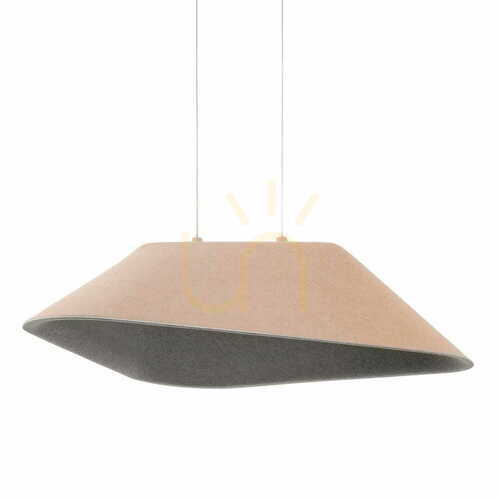
A fabric pendant light is a ceiling light that hangs on a flex or cable, with the bulb wrapped in a textile shade – linen, cotton, velvet, faux silk or a heavier weave such as jute. The fabric filters the light, so the whole shade glows instead of one bright point, shadows soften and the room feels calmer the moment it is switched on.
That is the real difference from glass or metal. A metal dome throws a hard pool of light downwards, clear glass shows off the bulb, while a fabric shade spreads light gently and works almost like another soft furnishing, alongside the curtains, cushions and rug.
Wired pendant or easy-fit shade?
In UK homes there are two ways to end up with fabric overhead, and it is worth knowing which one you are buying.
-
Wired pendant: a complete fitting with its own ceiling rose or canopy, flex and lampholder. It replaces whatever is on the ceiling now, so it needs to be connected to the lighting circuit.
-
Easy-fit or non-electric shade: just the shade and its frame, which slips over the lampholder of an existing pendant and is held by the shade ring. No wiring involved – the quickest way to change the look of a rented flat or bedroom.
Lampholders matter too. Many UK ceiling pendants take a B22 bayonet bulb, while most continental fittings use the E27 screw cap, and smaller multi-light designs often use E14. Check before ordering bulbs. If a new wired pendant is going in, the connection to the 230 V circuit should be made by a qualified electrician working to BS 7671; heavier fittings also need a fixing that can take the weight rather than relying on the rose alone.
Sizing a fabric pendant to your ceiling
Most mistakes come from a shade that is too small for the room or hangs too low for the ceiling. These are typical starting points.
| Ceiling height |
Suggested shade width |
Drop and clearance |
Good fit |
| around 2.3–2.4 m (most modern homes) |
35–50 cm |
short drop; keep the bottom at least 2 m above the floor where people walk |
drum or shallow oval, or a flush fabric shade |
| around 2.5–2.7 m |
45–60 cm |
bottom roughly 2.1 m above the floor in a living room |
large drum, pleated or cone |
| 3 m or more (period properties, double-height spaces) |
60–80 cm or a cluster of shades |
longer flex so the light sits in the room, not lost near the ceiling |
extra large drum, tiered or layered shade |
| over a dining table or island |
half to two-thirds of the table width |
bottom roughly 70–85 cm above the surface |
cone or dark fabric with a white lining |
Fabric, colour and lining
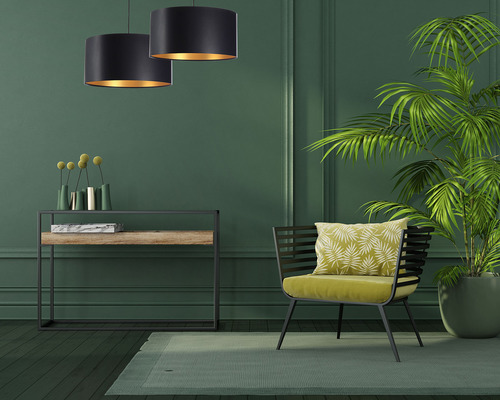
Pale linen and cotton let plenty of light through the sides and brighten the whole room. Velvet and dark fabrics block most of it, sending light down onto a table and up onto the ceiling, which is lovely for atmosphere but less useful as your only light. A white lining bounces more light out; a gold or copper lining gives a warm, slightly dimmed glow. Because a pendant hangs above eye level, a diffuser across the bottom of the shade is worth having in a bedroom or above a sofa, so nobody looks straight up into a bare bulb.
For bulbs, use LED: it runs far cooler than old incandescent or halogen lamps, so the fabric will not scorch or discolour. Warm white, around 2700–3000 K, suits textile shades best. As a guide, 800–1000 lumens works for a bedroom pendant and 1000–1500 for a living room main light, with roughly a fifth to a third more if the fabric is dark. Never exceed the maximum wattage marked on the fitting, and pair dimmable LEDs with a compatible dimmer.
Looking after a fabric shade
Dust is the main enemy. Once a month, run a lint roller or a soft brush attachment over the shade; a clean make-up or paint brush gets into pleats. Treat marks by dabbing with a barely damp cloth after testing an unseen patch, and always switch off and let the bulb cool first. Keep fabric away from the hob – grease and steam soak into the weave – and remember that strong colours and natural linen fade if they sit in direct sun for years.
Frequently asked questions
What size fabric pendant for a high ceiling?
Go bigger than feels natural: with ceilings of 3 m or more, a shade of 60–80 cm or a group of two or three smaller pendants at staggered drops keeps the light from looking lost.
Can I hang fabric pendants over a kitchen island?
Yes, as long as they are away from the hob. Two or three smaller cone or drum shades in a row usually work better than one large shade, and a tighter, darker weave hides kitchen grime.
Is a fabric pendant a good bedroom ceiling light?
It is one of the best. Choose a shade with a diffuser underneath, warm white bulbs and a dimmer, and the same light covers both getting dressed and winding down.
Are pleated fabric pendants hard to clean?
Not if you dust little and often. A soft brush run along each fold takes a minute; leaving it for months lets dust settle into the creases.
Linen or cotton for a living room?
Both diffuse well. Linen has a visible slub and a relaxed, natural look; cotton reads smoother and more even. Choose by texture and colour rather than brightness.
Can I just replace the shade on my existing pendant?
Usually, yes. Check that the new shade's ring matches your lampholder – B22 and E27 rings differ – and that the shade is suitable for ceiling use.
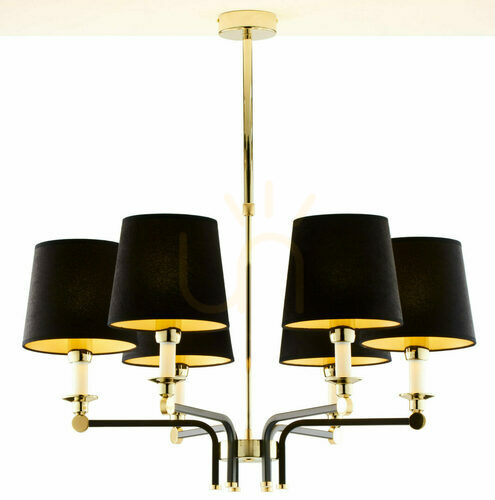
Still weighing up fabric against glass or metal? More on pendant lights in general. If you want more than one shade on a single fitting, fabric shade chandeliers are the natural next step.