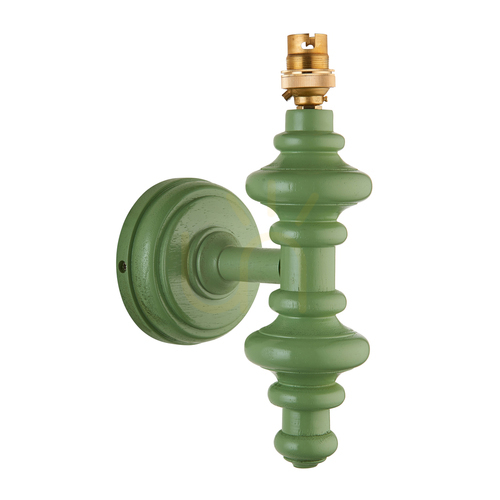
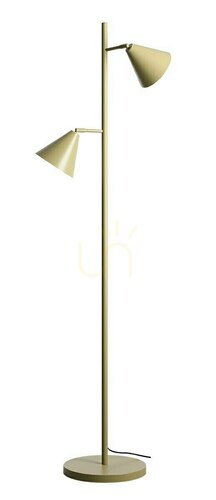
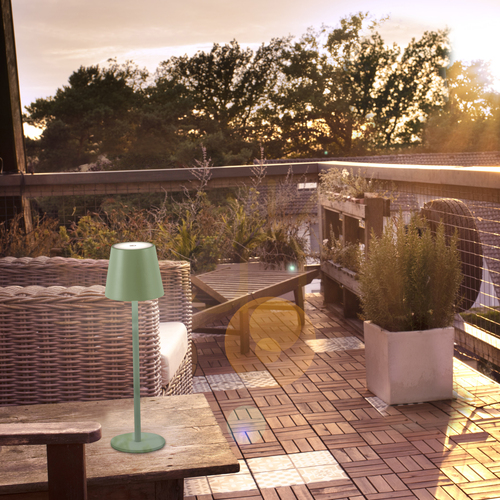
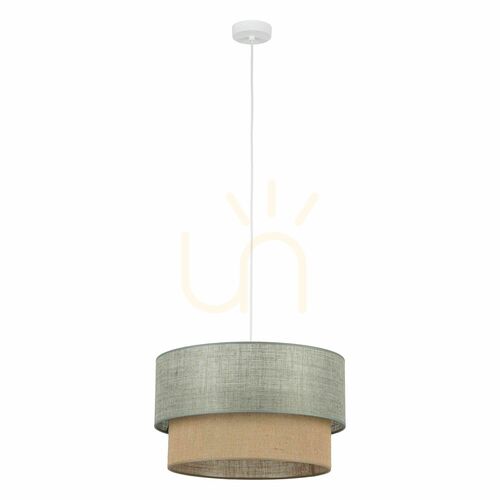
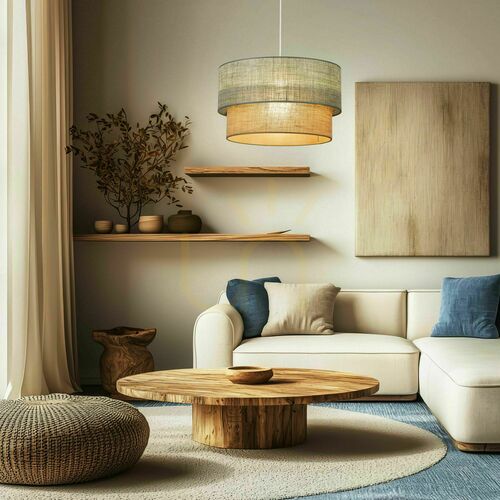
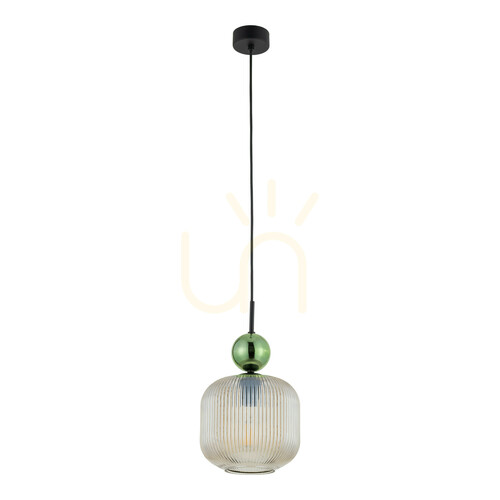
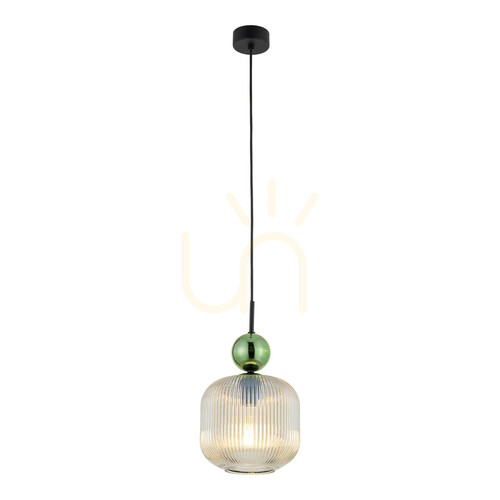
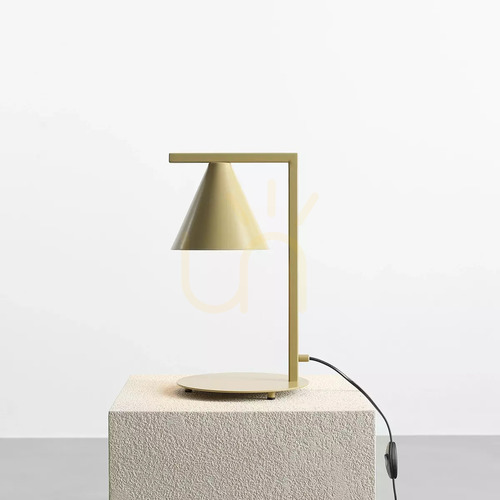
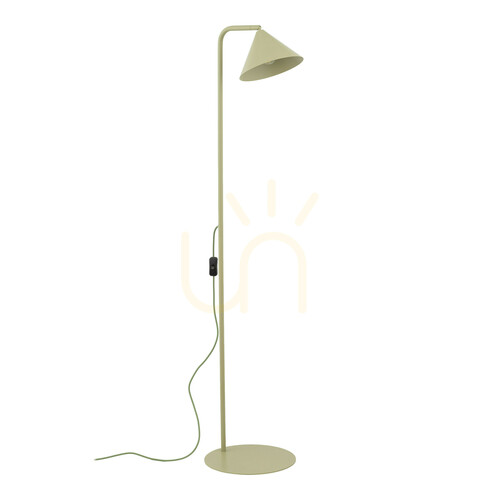
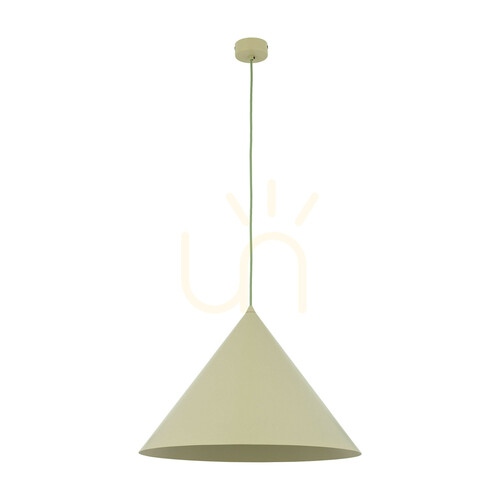
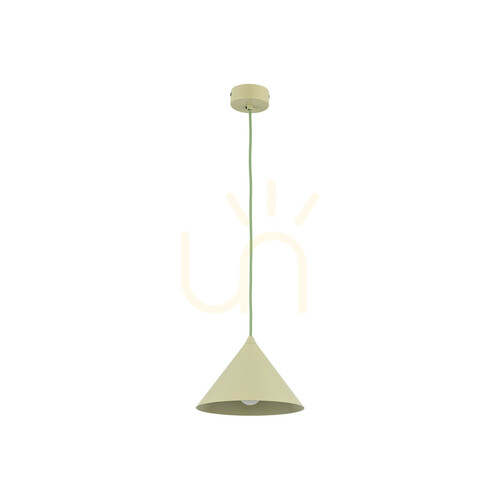
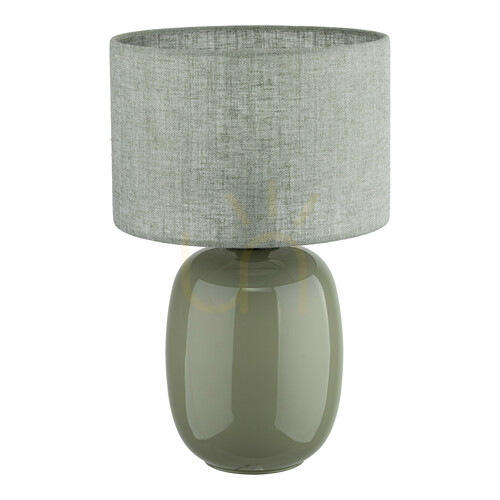
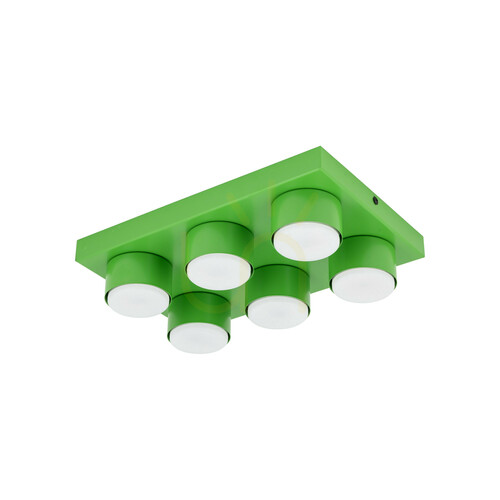
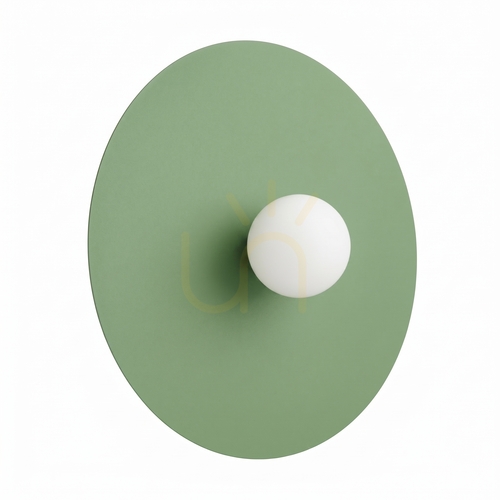
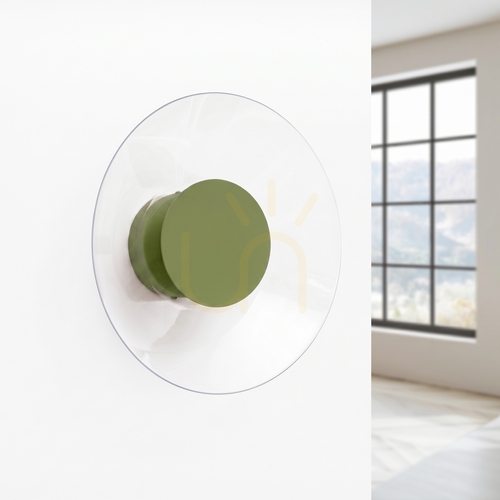
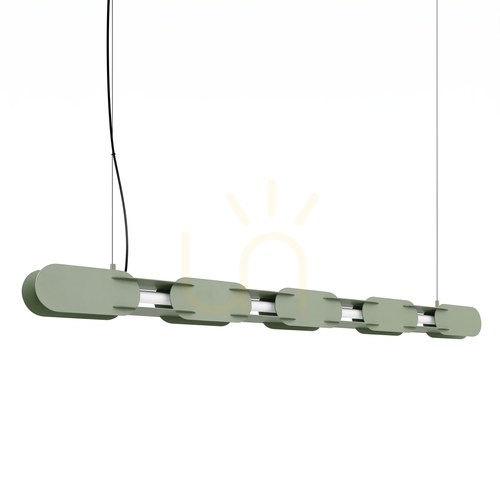
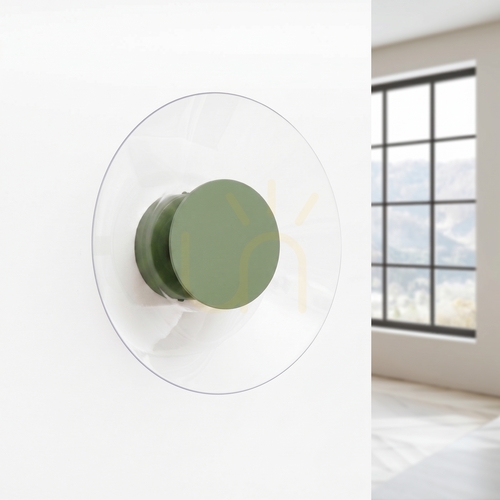
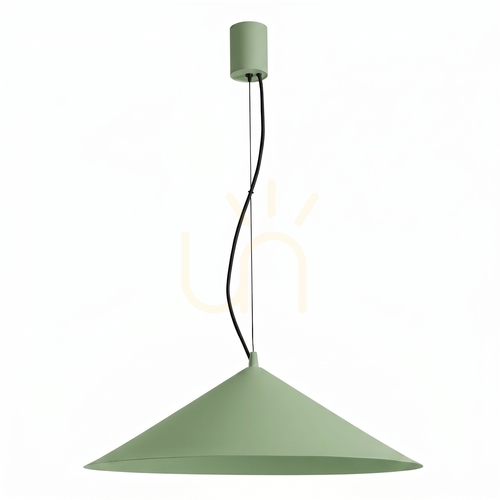
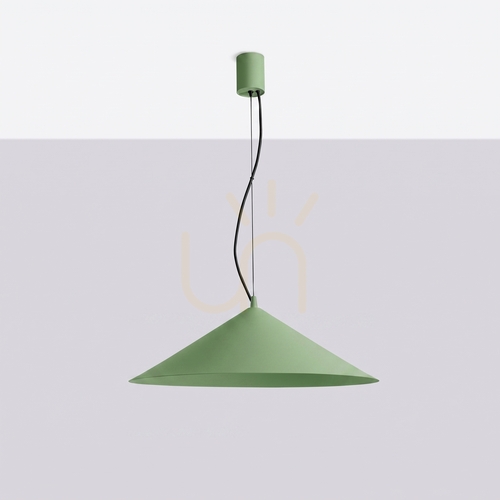
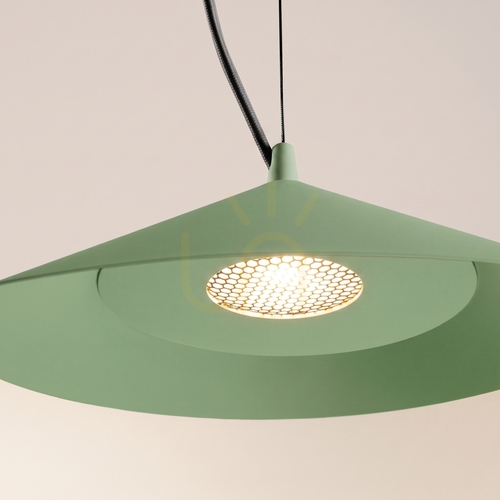
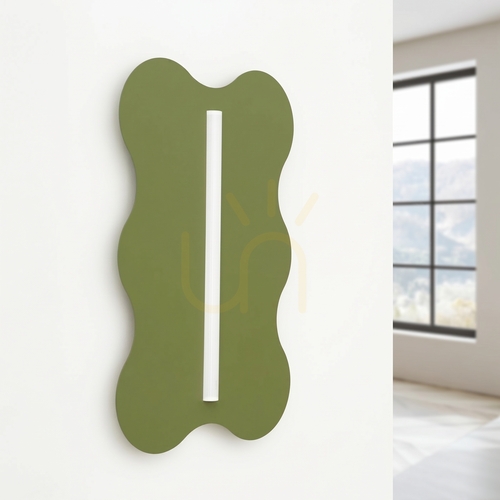
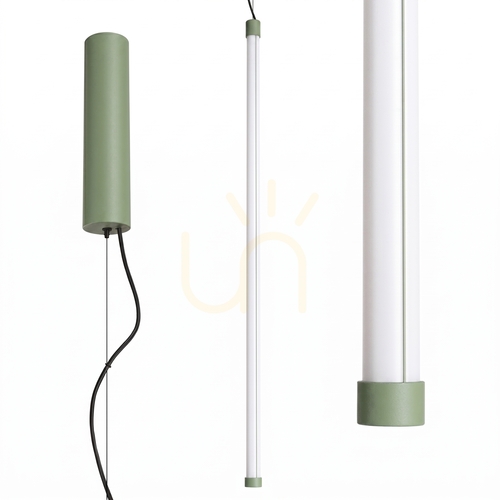
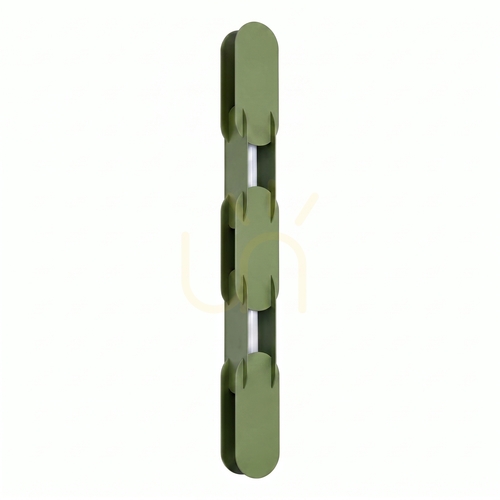
A green lamp brings colour to a room in two very different ways: as a painted, glazed or patinated object that stays green when switched off, or as tinted glass and fabric that colour the light itself. Which of the two you want decides almost everything else – the shade of green, the material, the bulb and where the lamp should sit.
Green has become one of the easiest accent colours to live with in British homes. It sits comfortably next to oak floors, linen, brass and houseplants, and it works across pendants, table lamps, floor lamps and wall lights alike.
Base, shade or glass: where the green sits
When the colour is on the base, stem or the outside of a metal shade, the light that reaches your sofa or desk is ordinary warm white. A sage ceramic base under an ivory linen drum is the classic example: the lamp reads as green, the room does not.
A green fabric shade or tinted glass works differently. Light passes through the colour, so you lose a good share of the output – with deep bottle glass it can be roughly a third – and the wall behind takes on a greenish wash. Faces and food look less flattering under it. That is lovely for an evening glow in a corner and less helpful over a dining table.
The banker's lamp shows the clever middle route. Its shade is cased glass: green on the outside, white or opal inside. From across the room it is unmistakably green, yet the pool of light on the desk stays white. Enamelled metal pendants with a white inner face do the same job over a kitchen island.
Picking a green for the room
Most greens fall into three groups. Muted, grey-based tones such as sage, eucalyptus and mint behave almost like a neutral. Warm greens with a yellow undertone – olive, moss, khaki – love wood and earthy colours. Saturated greens such as bottle, emerald and racing green are statement colours and look best against a calm wall. Verdigris, the blue-green patina of aged copper and brass, sits in a family of its own and suits traditional and rustic rooms.
| Green |
Undertone |
Pairs well with |
Bulb colour that flatters it |
| Sage, mint, eucalyptus |
grey, soft |
pale oak, linen, white and stone walls |
2700–3000 K |
| Olive, moss, khaki |
yellow, warm |
walnut, rattan, terracotta, cream |
2700 K |
| Bottle, emerald, forest |
deep, saturated |
brass, marble, velvet, dark timber |
2200–2700 K |
| Petrol, teal green |
blue, cool |
black metal, chrome, concrete |
3000 K |
| Verdigris |
blue-green patina |
aged brass, reclaimed wood, plaster |
2700 K |
Material changes the green as much as the pigment does. Glazed ceramic has depth and small tonal shifts; powder-coated steel gives a flat, even colour; mouth-blown glass varies in thickness and glows more lively than pressed glass. Opal glass softens light, while clear tinted glass throws coloured reflections around the room.
Bulbs and fittings in UK homes
Green lamps use the same fittings as any other: E27 and E14 screw caps, the B22 bayonet still common in British table and pendant lamps, GU10 in spotlights, G9 in small glass shades, and integrated LED modules. Warm white of 2700–3000 K is the safest choice – it deepens olive and bottle green and stops sage looking grey. Cool 4000 K light suits a kitchen worktop or a study, but muted greens can look cold under it. If you care about colours looking true, choose LEDs with a colour rendering index of 90 or more.
Under a tinted shade, pick a slightly brighter bulb than you would for a white one. Check the maximum wattage printed near the lamp holder and keep fabric shades clear of hot bulbs. Many lamps are double insulated (Class II) and need no earth connection, which makes them the right choice for a ceiling point in an older home whose lighting circuit has no earth. Any new ceiling or wall fitting wired into the mains should be installed by a qualified electrician working to BS 7671.
Where a green lamp works best
-
Living room – a green floor lamp behind an armchair or a ceramic table lamp on a sideboard. Use a light shade if it doubles as reading light.
-
Bedroom – a matched pair of bedside lamps in a soft sage or olive. A green shade gives a dim, restful glow; add a separate reading light if you read in bed.
-
Kitchen and dining – pendants over an island or table, typically 60–80 cm above the surface, in smooth wipeable metal or glass with a white inside.
-
Study – a green base and an opal or white-lined shade. Coloured light on paper tires the eyes.
-
Hallway – a green wall light or flush ceiling fitting adds colour in a space that rarely gets furniture.
Common mistakes and care
A saturated green lamp against a wall painted in another strong colour rarely works: the two compete. Neutral walls are the safe backdrop, or choose a green clearly lighter or darker than the paint. Another trap is relying on one tinted glass pendant as the only light in a room – atmospheric, but too dim to live with.
Wipe powder-coated metal with a damp cloth and mild washing-up liquid, never solvents or cream cleaners. Wash glass shades off the fitting, once cool. Brush fabric shades with a soft brush or the vacuum upholstery tool, and remember that strong sun can fade textiles over time. Matt finishes hide dust better than gloss.
Green lamp questions
Is a sage green lamp a good choice for a living room?
Yes. Sage behaves almost like a neutral, so it suits grey, cream or white walls, light timber and linen. Pair it with warm white bulbs so it does not look washed out.
What goes with a dark green lamp?
Brass and gold details, walnut, marble and velvet. Against a pale wall a bottle or forest green base becomes the focal point of the room.
Does a light green lamp suit a small room?
It does – mint and pale green read as fresh rather than heavy. Choose a pale shade so the room keeps most of the bulb's output.
Should I buy a sage green lamp shade or a sage green base?
The base colours the room; the shade colours the light. For reading go for the base, for mood lighting a green shade works well.
Are green bedside lamps relaxing?
Muted greens combined with warm 2700 K bulbs and a dimmer make a calm bedside light. Keep the brightness low in the evening.
Why are banker's lamps green?
Green was long thought to be restful on the eyes during long hours in banks, offices and libraries. The white inner layer of the cased glass is what keeps the light on the page neutral.
For choosing lighting room by room in any colour, see indoor lights. If the lamp is going next to the bed, read on about green bedside lamps.